

Executive Overview
As the 2026 midterm elections approach, the political landscape in Michigan has transformed into a high-stakes crucible for the future of the Democratic Party. At the center of this storm is Dr. Abdul El-Sayed, the Democratic nominee for the United States Senate, a former public health director, and a self-described firebrand progressive. Polling slightly ahead of his Republican opponent, former U.S. Representative Mike Rogers—though consistently within the statistical margin of error—El-Sayed stands on the precipice of history. If victorious, he would become the first Muslim elected to the U.S. Senate from a state that has not sent a Republican to the upper chamber in 32 years.
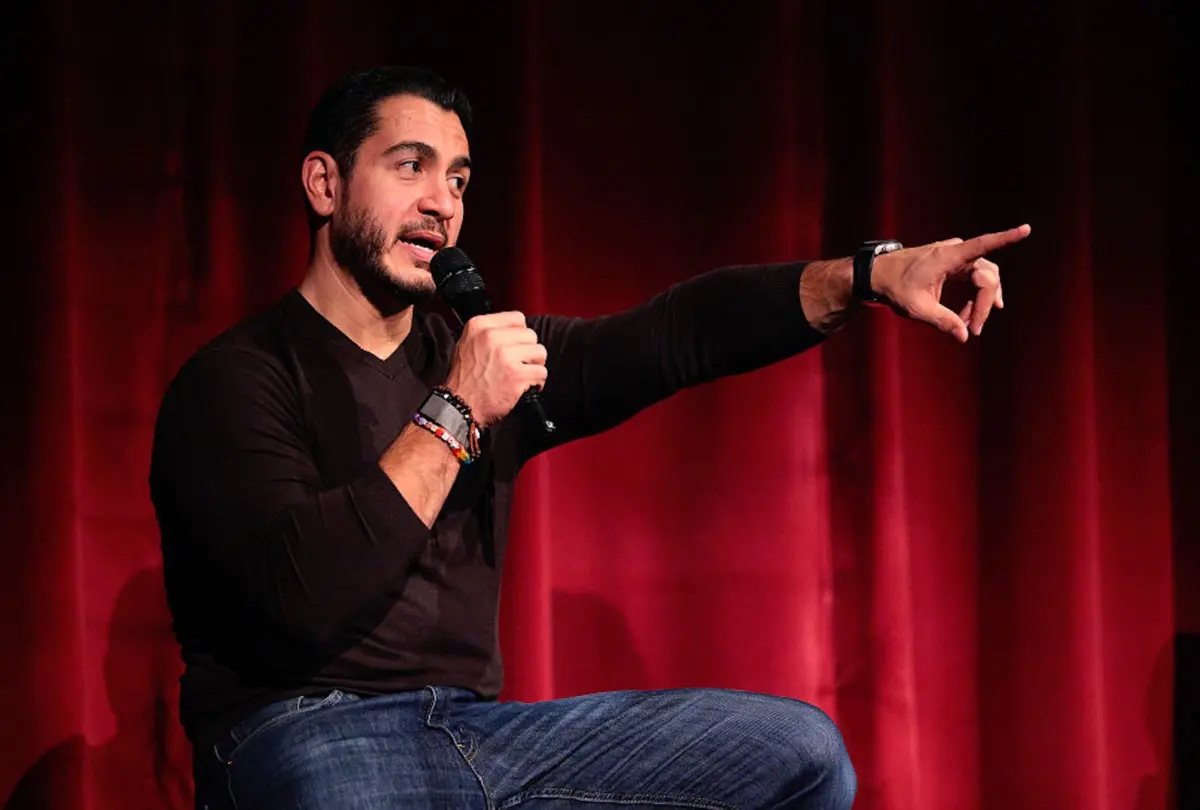
Yet, El-Sayed’s significance extends far beyond historical milestones. He represents an existential challenge to the modern Republican apparatus. For years, conservative media and national Republican strategists have weaponized a neat, reliable caricature of the Democratic Party: cautious, elite, overly academic, and ultimately weak. El-Sayed shatters this mold entirely. Combining a sharp, aggressive populist "bro style," bulldog debate tactics, and an unyielding commitment to progressive policies like Medicare for All, he has systematically confounded conservative media outlets and thrown the MAGA political machine off-balance.
From earning reluctant praise from Fox News hosts like Jesse Watters to provoking outright panic from Donald Trump and Vice President JD Vance, El-Sayed has pioneered a counter-offensive. He proves that progressives can engage hostile media environments not by softening their stances, but by out-communicating, out-maneuvering, and out-brawling their opponents.
Detailed Chronology of a Political Phenomenon
Summer 2026: The Primary Upset and the Watters Paradox
The national political consciousness first began grappling with the phenomenon of Abdul El-Sayed during the hard-fought Democratic primary in Michigan. Defying the party establishment’s favored candidate, Representative Haley Stevens, El-Sayed leveraged his deep grassroots roots and public health background to secure the nomination.
His emergence quickly caught the attention of conservative media. In August, Fox News host Jesse Watters invited El-Sayed onto his program, anticipating an easy target. Instead, Watters found himself disarmed by the candidate’s quick wit, blunt phrasing, and unflappable confidence. El-Sayed famously labeled his future Republican opponent, Mike Rogers, a "beta," and bantered effortlessly with Watters when cornered on wedge cultural issues. The following day, a bewildered Watters confessed on air: "I like him. I don’t want to like him. I like him for some stupid reason."
Watters’ paradoxical admiration underscored a deeper reality: El-Sayed’s aggressive, unapologetic communication style projects a strength that conservative commentators are unaccustomed to seeing from Democrats. However, the initial amusement of Fox News hosts quickly curdled into strategic alarm as producers realized the candidate’s crossover appeal threatened the network’s carefully constructed narrative of progressive weakness.
October 2026: The Vance Confrontation and the White House Reaction
By October, the race tightened into a dead heat, drawing heavy hitters from the national Republican ticket into Michigan. During a rally in Monroe, Michigan, in mid-October, Vice President JD Vance attempted to undercut El-Sayed with a personal and aggressive line of attack, dismissing the Democrat as "a little weasel who should shut his mouth and show a little gratitude."
The remark was widely recognized as a variation of a recurring, racialized trope often deployed by Vance against non-white progressives—framing them as undeserving interlopers who owe deference to a conservative social order. The contrast in their respective backgrounds made the attack ring especially hollow: while El-Sayed left an academic post at Columbia University to manage public health crises and earned environmental accolades for protecting children from pollution, Vance spent his pre-political years as a venture capitalist closely tied to tech billionaire Peter Thiel.
Rather than falling into the trap of a defensive, "well, actually" policy rebuttal, El-Sayed pivoted instantly. Responding with characteristic bravado, he dismissed Vance and his allies as "carnival barkers" who "are small and want to make us small like them." Turning the insult on its head, El-Sayed quipped, "JD Vance called me a little weasel today. I’m like, ‘No, no, no. What you’re talking about is a Wolverine,’" invoking the beloved mascot of his alma mater, the University of Michigan.
The White House Intervention and Media Scramble
El-Sayed’s strategy of taking his message directly into the lion’s den—appearing on Fox News programs without diluting his progressive platform—soon provoked a panic at the highest levels of the federal government. In early October, Axios reported that the White House directly contacted Fox News leadership to register furious complaints regarding El-Sayed’s favorable coverage.
President Donald Trump openly vented his frustrations on Truth Social and at campaign rallies, incensed by the candidate’s poise during interviews. The breaking point for the administration appeared to be an interview between El-Sayed and Fox anchor Martha MacCallum. When MacCallum attempted to bait the candidate into a radical soundbite, the effort backfired. Instead, MacCallum found herself defending systemic wealth hoarding, prompting El-Sayed to calmly state that he would rather fund public schools than obsess over "allowing a billionaire to make another billion."
Stung by the administration’s reprimand, Fox producers scrambled to course-correct. Desperate to damage El-Sayed without risking another direct interview disaster—where the candidate invariably charmed viewers—the network attempted an awkward proxy battle. In a subsequent segment, MacCallum interviewed progressive activist Corbin Trent, deliberately attempting to frame him as a stand-in for El-Sayed. Trent took the bait by defending the Muslim Brotherhood, a trap El-Sayed had repeatedly avoided. However, the ploy immediately fell apart when political analysts pointed out that Trent had no discernible professional relationship or coordination with El-Sayed’s campaign, exposing Fox’s manufactured smear for what it was.
Supporting Context & Metrics: The Shifting Demographics
The anxiety gripping the Republican Party is rooted in hard data regarding voter behavior and shifting demographic trends in the Midwest.
The Young Male Demographic Realignment
One of the most profound vulnerabilities for the GOP in the 2026 midsets lies among young male voters. While Donald Trump successfully captured a narrow majority of male voters under 30 during the 2024 presidential election, subsequent polling demonstrates a severe erosion of that support. Data compiled in late 2024 and throughout 2026 by political analysts indicates that young men are rapidly splitting from the MAGA coalition and increasingly favoring Democratic candidates.
El-Sayed’s "bro style," combined with populist economic messaging, resonates powerfully within this demographic. Unlike traditional politicians who rely on sanitized focus-group language, El-Sayed communicates with a directness and competitive energy that appeals to young men disillusioned by partisan stagnation.
Focus Group Revelations
The real-world impact of this messaging was underscored by an MS NOW focus group conducted in Michigan in October 2026. Researchers gathered a group of regretful Trump voters to evaluate the Senate contest. The results stunned observers: five out of six participants stated they were voting for El-Sayed, while former Representative Mike Rogers failed to generate any substantive enthusiasm among the group.
Progressive Populism and Healthcare Advocacy
El-Sayed’s core political strength remains his deep expertise in public health. Having spent years running healthcare programs in the Detroit metropolitan area and authoring a prominent book on Medicare for All, he possesses a rare ability to translate complex socio-economic policy into human terms.
A viral video from his campaign trail illustrates this knack: El-Sayed breaks down for conservative-leaning voters exactly why a universal healthcare system is fundamentally cheaper than the private insurance apparatus, stripping away executive salaries and profit motives without talking down to his audience. For many working-class voters who lean conservative on cultural issues, it marks the first time a progressive has explained systemic economic exploitation in plain, accessible language.
Official Statements and Public Reactions
The ideological war over El-Sayed’s candidacy has drawn sharp commentary from across the political spectrum, illuminating the deep anxieties of the conservative establishment.
-
Vice President JD Vance, during a campaign rally in Monroe, Michigan:
"He’s a little weasel who should shut his mouth and show a little gratitude."
-
Dr. Abdul El-Sayed, firing back at the Vice President’s remarks:
"JD Vance called me a little weasel today. I’m like, ‘No, no, no. What you’re talking about is a Wolverine.’ … These people are carnival barkers. They are small and want to make us small like them."
-
Fox News Host Jesse Watters, reflecting on his interview with the Michigan Democrat:
"I like him. I don’t want to like him. I like him for some stupid reason."
-
G. Elliott Morris, analyzing voter sentiment data from Strength In Numbers/Verasight polling:
"[T]he single most common complaint about [the Democratic] party is that it is too weak, too cautious, or not fighting hard enough."
Future Outlook: A New Template for Democratic Politics
As the 2026 midterms enter their final stretch, the race between Abdul El-Sayed and Mike Rogers serves as a national laboratory. Regardless of whether El-Sayed crosses the finish line to secure a historic Senate seat, his campaign has already provided a vital masterclass for the Democratic Party at large.
For years, internal party polling—including studies by Strength In Numbers and Verasight—has revealed that the Democratic base suffers from profound frustration with its own leadership. The critique from voters is rarely that the party’s platform is too progressive; rather, it is that the party is too timid, too cautious, and structurally incapable of fighting back against aggressive opposition.
El-Sayed’s rise proves that a path forward exists. By fusing unapologetic progressive populism with cultural fearlessness, street-smart rhetorical brawling, and a refusal to cede hostile media spaces like Fox News, candidates can rewrite the rules of engagement.
If Democrats across the country adopt El-Sayed’s model—abandoning defensive shell-casing in favor of aggressive, authentic communication—they may finally build the durable, cross-cutting coalitions necessary to win over working-class voters, capture the allegiance of young men, and permanently alter the American political topography. For now, the Republican panic in Michigan stands as a testament to the potency of that formula.