

Executive Overview
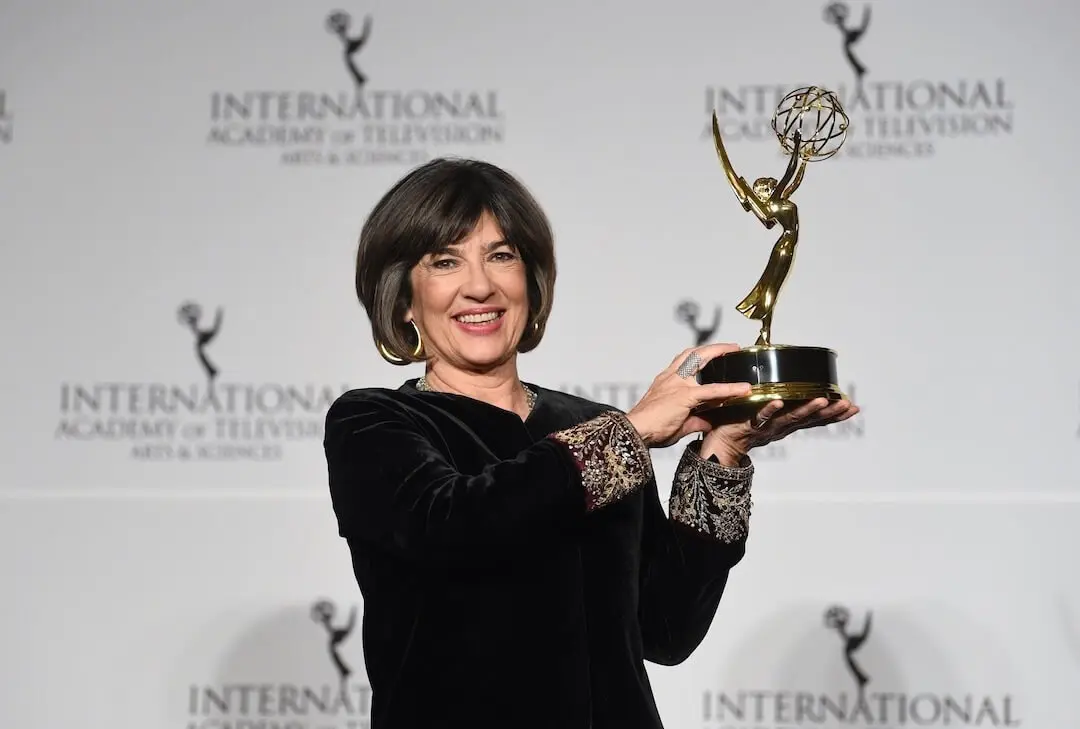
The global media landscape is undergoing a profound, tectonic shift. On a single Monday, the industry witnessed seismic developments that underscore the intersection of corporate consolidation, editorial independence, and the changing habits of news consumers worldwide. Legendary chief international anchor and foreign correspondent Christiane Amanpour announced her impending departure from CNN after a monumental 43-year tenure. Her exit marks the end of an era for a network whose global identity was forged in the crucibles of the Gulf War, Bosnia, Rwanda, and Afghanistan by Amanpour’s fearless reporting.
Simultaneously, the industry absorbed major strategic maneuvers across the entertainment and news sectors. Comedian and political commentator Jon Stewart confirmed he will remain at the helm of Comedy Central’s The Daily Show through the 2028 U.S. presidential election, bucking a broader contraction across the late-night television ecosystem. Meanwhile, in the Middle East, the escalating dangers faced by frontline reporters were violently highlighted when Washington Post photojournalist Heidi Levine was assaulted by masked Israeli settlers in the occupied West Bank—an incident that prompted the swift arrest of ten suspects by Israeli police amid mounting international pressure.
These headlines do not exist in a vacuum. They are deeply intertwined with the freshly completed mega-merger between Paramount Skydance and Warner Bros. Discovery. This corporate consolidation has brought iconic institutions like CNN and CBS News under a unified corporate umbrella, sparking profound anxieties among veteran journalists regarding ideological realignments, editorial integrity, and the future of accountability journalism. As executive suites redefine corporate structures and new owners reshape legacy media properties, the foundational tenets of a free and independent press face unprecedented financial, political, and physical pressures.
Detailed Chronology: A Monday of Monumental Announcements
The cascading series of announcements on Monday reshaped the conversation around modern journalism and entertainment, carrying ripple effects that will be felt for years to come.
The Amanpour Departure
The day’s most stunning media revelation came from Christiane Amanpour herself. In a carefully measured statement, the network’s chief international anchor revealed she would part ways with CNN next June.
- The Decision-Making Process: Amanpour noted that the choice followed months of careful deliberation and sleepless nights. She and CNN CEO Mark Thompson had been quietly discussing her departure for months prior to the public announcement.
- The Phase-Out Timeline: Viewers will see a gradual wind-down of her presence. Her CNN International program will scale back to a weekly broadcast at the beginning of 2027 before concluding entirely in May. Her long-running PBS collaboration, Amanpour & Company, is scheduled to end in December.
- Next Chapters: Beyond her departure from day-to-day anchoring, Amanpour stated she looks forward to exploring new creative projects and will continue co-hosting her podcast, The Ex Files, alongside her ex-husband, Jamie Rubin.
Jon Stewart’s Commitment Through 2028
While CNN prepares to lose its most tenured international voice, Comedy Central secured its biggest star for the long haul. Jon Stewart announced that he has extended his contract to host The Daily Show through the 2028 election cycle.
- The Return and Impact: Stewart returned to the Monday night hosting chair in February 2024 following a nine-year hiatus. His return has revitalized the franchise, delivering its best third-quarter audience metrics in eight years and generating 1.6 billion social media views over the course of the year.
- Navigating Corporate Realities: The renewal carries unique weight because Comedy Central is now folded into the newly minted Skydance media giant. Stewart has consistently used his platform to skewer political figures and corporate leadership alike, openly questioning Paramount’s narrative surrounding the cancellation of The Late Show with Stephen Colbert and maintaining a skeptical eye toward his own corporate overseers.
The West Bank Assault and Arrests
In a stark reminder of the physical dangers confronting journalists on the ground, Israeli police announced the arrest of ten unidentified suspects in connection with a series of violent weekend incidents in the occupied West Bank.
- The Attack: Among the victims was Washington Post photojournalist Heidi Levine. On Friday, Levine—clearly identifiable in a protective vest marked "PRESS" on both front and back—was knocked to the ground and repeatedly kicked by a group of masked Israeli settlers.
- Systemic Violence: The Washington Post characterized the incident as a coordinated assault reflecting a broader escalation of settler violence in the territory. Following the attack, the United States joined international voices in demanding a rigorous crackdown, though human rights advocates note that prosecutions of Israeli settlers remain historically rare.
Supporting Context & Metrics: Corporate Consolidation and Industry Pressures
To understand the weight of Amanpour’s exit and Stewart’s renewal, one must examine the macroeconomic and structural transformations reshaping the media industry.
The Paramount Skydance-Warner Bros. Discovery Merger
The recent completion of the Paramount Skydance-Warner Bros. Discovery merger—spearheaded by David Ellison—has fundamentally reconfigured the media landscape. For the first time, historic competitors and heavyweights like CNN and CBS News find themselves bound to the same parent entity, now operating simply as Skydance.
This corporate marriage has injected deep uncertainty into newsrooms. Prior to the finalization of the deal, media figures openly voiced alarms regarding editorial independence. Amanpour herself expressed acute concerns in May over what she termed the "ideological realignment of CBS and the destruction, potentially, of 60 Minutes."
These fears were not unfounded. Following the installation of Bari Weiss as editor-in-chief of CBS News—a move that brought an outsider with no traditional television news background into a top leadership role—the network experienced a rapid wave of structural overhauls. Veteran staffers were shown the exit or resigned, most notably at 60 Minutes. Among them was Anderson Cooper, who walked away from the venerable Sunday-night newsmagazine in July after more than two decades as a correspondent. (Cooper, however, subsequently signed a contract extension to remain a fixture at CNN.)
Late-Night Television in Crisis
Jon Stewart’s multi-year renewal stands in stark contrast to the broader contraction bleeding through late-night television. The television landscape has suffered severe cutbacks as traditional broadcast networks grapple with shifting viewing habits and declining linear television revenues.
- CBS pulled the plug on The Late Show with Stephen Colbert in May, permanently ending a 33-year institutional franchise.
- ABC’s footprint in the late-night slot remains volatile as Disney executives negotiate a new agreement with Jimmy Kimmel. Disney President Dana Walden recently categorized the late-night daypart as "very challenging," signaling that further contractions may lie ahead.
Despite these headwinds, Stewart’s Monday-only residency has proven that appointment-viewing and biting political commentary still hold immense cultural and commercial value when paired with robust digital distribution strategies.
Official Statements & Industry Perspectives
The reactions of key executives and journalists illuminate the delicate balancing act between corporate reassurance and individual journalistic autonomy.
-
Christiane Amanpour on Journalistic Independence:
Though she avoided directly naming David Ellison or detailing internal merger disputes in her farewell address, Amanpour leaned heavily on the necessity of editorial freedom:"You know that I’ve always been fiercely independent, and I will continue to be that for you for as long as I am here and beyond. That’s especially important today as we face unprecedented pressures from all sides — political, financial, and also from the rising dangers in the field."
She added that she "will always be rooting for CNN and maintaining its history of independent journalism." -
CNN Leadership:
Seeking to project stability during a transitional period, CNN CEO Mark Thompson confirmed that discussions regarding Amanpour’s departure had been underway for several months, distancing the move from any knee-jerk reaction to the Skydance merger. Thompson remains at the helm of CNN, providing leadership continuity that contrasts sharply with the sweeping upheaval at sister network CBS News. Furthermore, as part of legal settlements with states challenging the merger, Skydance agreed to establish an independent board of journalists specifically tasked with safeguarding the editorial integrity of both CNN and CBS News. -
International Condemnation and Policing:
Regarding the violence in the West Bank, Israeli police officials emphasized their commitment to investigating attacks on civilians and working press, culminating in the swift apprehension of ten suspects. International press freedom organizations, meanwhile, continue to demand absolute accountability and unhindered safety guarantees for journalists covering conflict zones.
Future Outlook: Navigating the Post-Amanpour Era
As the media industry looks toward the horizon, the departure of Christiane Amanpour and the consolidation under Skydance signal a definitive turning point for legacy news organizations.
- The Evolution of International Reporting: Amanpour’s 43-year arc—from an entry-level assistant on the international desk in 1983 to the definitive face of global foreign correspondence—illustrates how individual star power once built cable news empires. As she steps away, CNN faces the monumental task of sustaining its global reporting prestige without the anchor who practically defined its international footprint.
- The Test of Corporate Safeguards: The newly established independent board of journalists for CNN and CBS News will face immediate scrutiny. Observers, media critics, and news consumers will closely monitor whether these structural guardrails can successfully insulate newsrooms from corporate interference, political pressures, and ideological realignments.
- The Resilience of Satirical and Alternative Commentary: Jon Stewart’s decision to stay through 2028 demonstrates that audiences still crave sharp, unvarnished critique, particularly during high-stakes political cycles. However, as traditional television formats shrink, the economic models supporting deep-dive investigative journalism and late-night satire will continue to evolve toward digital-first ecosystems.
Ultimately, Amanpour’s parting words serve as both a warning and a mandate for the next generation of storytellers. In an era defined by political polarization, financial instability, and escalating physical dangers on the ground, the defense of a fiercely independent press remains the ultimate benchmark for journalistic survival.