

Executive Overview
When the Rescissions Act of 2025 was signed into law, the landscape of American public media faced an existential crossroads. Spearheaded by President Donald Trump and congressional allies, the legislation enacted a historic policy reversal: it clawed back nearly all federal funding for public broadcasting—totaling roughly $1.1 billion in subsidies distributed through the Corporation for Public Broadcasting (CPB). For nearly six decades, federal appropriations had served as the foundational bedrock for a national network of educational, cultural, and local news programming. Critics of the system had long accused outlets like NPR and PBS of partisan and ideological bias, setting the stage for a political confrontation that culminated in the formal wind-down of the CPB in August 2025.
In the immediate wake of the decision, media observers predicted widespread station closures, severe contractions in local journalism, and the rapid acceleration of "news deserts" across rural and underserved regions. Yet, the anticipated catastrophic collapse did not occur. Instead, an unprecedented wave of grassroots financial mobilization—colloquially termed "rage giving"—swept across the United States. Propelled by citizen anger over Washington’s actions and bolstered by multi-million-dollar interventions from major philanthropic organizations, public broadcasters successfully engineered a temporary financial safety net.
Nevertheless, this reprieve masks deep vulnerabilities. While prominent stations and urban networks have not only survived but occasionally expanded, smaller rural outlets, Native American tribal broadcasters, and university-affiliated stations continue to face severe operational jeopardy. As the initial wave of retaliatory donations cools and structural deficits reassert themselves, the public broadcasting ecosystem finds itself navigating an uncertain future defined by aggressive cost-cutting, structural mergers, and a race to achieve long-term financial sustainability.
Detailed Chronology: From Legislative Clawback to Community Mobilization
The Prelude to the Rescission (Summer 2025)
The path to defunding public broadcasting accelerated rapidly in mid-2025. For months, political pressure had mounted from conservative lawmakers arguing that taxpayers should not subsidize media entities they deemed ideologically skewed. President Trump formally urged Congress to enact a rescission package—a mechanism designed to cancel previously approved budget authority—targeting the $1.1 billion allocation designated for public broadcasting.
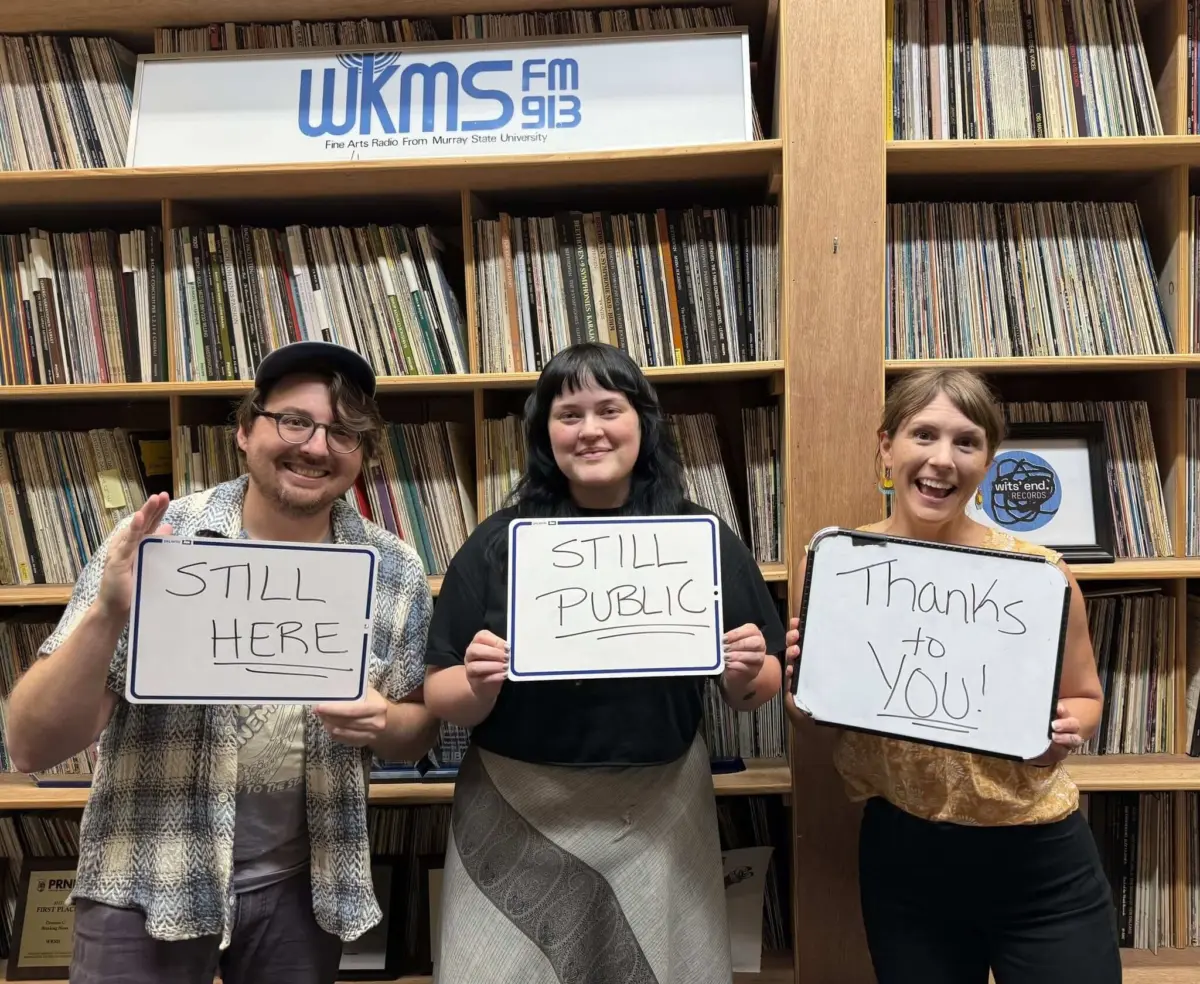
For local station managers, the prospect was devastating. Asia Burnett, manager of WKMS in southwestern Kentucky, faced an impending financial abyss. Operating in a region where per capita income barely reaches $30,000, Burnett relied on the CPB for $215,000 annually—roughly 15% of the station’s operating budget. Similar anxieties rippled through stations nationwide, from major metropolitan hubs to remote outposts in Alaska and the Southwest.
The Hammer Falls: July and August 2025
In July 2025, Congress passed the Rescissions Act, and President Trump signed it into law. Within a fortnight, the CPB announced it would formally wind down its operations, cutting off the financial pipeline that had sustained thousands of local transmitters, educational programs, and regional newsrooms since the passage of the Public Broadcasting Act of 1967.
Almost immediately, the ripple effects materialized. National institutions and major producers began scaling back operations. NPR implemented layoffs and buyouts; WETA in suburban Washington, D.C., slashed its staff by 10% and canceled the weekend edition of the PBS NewsHour; and Boston’s GBH eliminated 15 positions. In rural California, KEET-TV in Humboldt County lost nearly half its budget, forcing it to cancel its flagship Headline Humboldt newscast and reduce its staff from 13 to six.
The Grassroots Counter-Offensive
Despite these institutional contractions, public media experienced a simultaneous counter-surge of public support. Mobilized by the sudden federal defunding, everyday listeners and viewers responded with unprecedented generosity.
In Kentucky, WKMS listeners contributed more than $900,000 in the months following the cut—representing roughly two-and-a-half times the station’s typical annual fundraising total. Donations ranged from modest contributions by working-class residents to a single $250,000 gift. This unexpected windfall allowed Burnett to preserve her eight-person newsroom, maintain full staffing levels, and build out the station’s endowment.
Data collected by the Contributor Development Partnership (CDP), which analyzes fundraising metrics across 170 public stations, revealed that revenue rose by an average of 44% in the months immediately following the federal clawback. Oregon Public Broadcasting (OPB), which suffered a $5 million loss in CPB funds (about 9% of its budget), reported that surges in individual contributions more than offset the shortfall, allowing the organization to hire four additional journalists.
Supporting Context & Metrics: The Dual Realities of Survival
While the fundraising surge cushioned the blow for many larger network affiliates, the public broadcasting ecosystem remains fractured, exposing deep disparities between well-resourced urban stations and fragile rural institutions.
The Vulnerability of Rural and Tribal Outposts
For decades, federal subsidies constituted a vital lifeline for remote stations operating in economically depressed regions. According to industry analyses, taxpayer money channeled through the CPB accounted for 40% or more of operating budgets for dozens of rural stations.
Without access to wealthy donor bases, these stations faced an existential crisis. Outlets such as KNBA-FM in Anchorage, which broadcasts daily Alaska Native newscasts, and KGLP-FM in Gallup, New Mexico, which serves Navajo and Zuni communities, found themselves disproportionately exposed. The potential collapse of these stations threatened to widen news deserts in regions where public radio serves as the sole remaining professional newsgatherer.
The Philanthropic Safety Net
To prevent systemic collapse, institutional philanthropy mobilized on an unprecedented scale. Spearheaded by the Public Media Bridge Fund, a coalition of major charitable foundations—including the Knight Foundation, the Carnegie Corporation, the MacArthur Foundation, the Ford Foundation, and the Mellon Foundation—directed approximately $26 million in emergency stabilization grants and low-interest loans to the most precarious stations.
Concurrently, the federal Bureau of Indian Affairs stepped in with $9.4 million in targeted grants for 35 stations operated by Native American organizations. According to Erik Langner, executive director of the Public Media Bridge Fund, institutional donors and philanthropic partners ultimately committed over $86 million across roughly 1,500 individual commitments, preserving core reporting infrastructure through the immediate crisis.
Workforce Contractions and Structural Restructuring
Despite these rescue packages, the macroeconomic toll on public media personnel has been severe. Tracking data from Semipublic indicates that federal funding cuts and simultaneous reductions in state-level support have led to approximately 550 layoffs across public media organizations—representing roughly 3% of the sector’s total workforce.
Furthermore, financial pressures have forced some institutions to shed national programming affiliations. Several universities and independent licensees dropped their PBS or NPR memberships entirely to avoid escalating annual program fees, while others curtailed local news gathering to prioritize basic transmission costs.
Official Statements and Industry Perspectives
Public media leaders and industry analysts have offered nuanced assessments of the post-rescission landscape, balancing gratitude for the initial wave of public support against long-term operational anxieties.
-
Asia Burnett, Manager of WKMS (Kentucky):
Reflecting on the community response that yielded $900,000 for her rural station, Burnett emphasized the enduring value of trusted local journalism:"That’s a lot of money for a small, rural station to lose. It was a large hit… But I think it shows how important local journalism is. Journalism is always changing, but this speaks to how people still need a trusted source, a trusted voice."
-
Rachel Smolkin, CEO of Oregon Public Broadcasting:
Detailing how OPB converted "rage givers" into long-term organizational sustainers, Smolkin underscored the necessity of delivering high-quality, universally accessible public service journalism:"The kind of news and other information public stations provide—free to all and usually of high quality—is critical to converting rage-givers into sustainers."
-
Alex Curley, Executive Director of Semipublic:
Providing an analytical overview of the sector’s fiscal health, Curley cautioned that the reprieve granted by philanthropic donations and individual giving may be temporary:"The end of federal funding was an incredibly dramatic event. People were motivated to give… It’s not the imminent crisis that everyone thought it would be a year ago. It doesn’t mean the crisis has been resolved. It just means it’s delayed."
-
Ashley Alvarado, CEO of Texas Public Radio:
Discussing the strategic imperatives driving recent structural mergers, Alvarado pointed to the necessity of organizational resilience in a fragmented media economy:"The reality across local journalism is that resources are tight, philanthropic dollars are competitive and audiences are fragmented… The goal wasn’t just to save a dollar today. It was to build an organization with the scale and resilience to sustain robust, independent local reporting… for decades to come."
Future Outlook: Collaboration, Consolidation, and the Road Ahead
As the initial shock of the 2025 rescission recedes, the long-term viability of American public broadcasting will depend on strategic adaptation, inter-agency collaboration, and new economic models. Industry experts anticipate several defining trends shaping the sector over the coming decade.
1. The Acceleration of Media Mergers
To mitigate administrative overhead and maximize reporting capacity, public broadcasting stations are increasingly partnering with or acquiring independent digital news organizations. A prominent example includes Texas Public Radio’s operational combination with the San Antonio Report, creating an integrated 31-person newsroom capable of spanning audio and digital platforms. Similar cross-medium integrations have previously taken root in Chicago, St. Louis, Los Angeles, and New York, signaling a permanent departure from traditional, siloed broadcasting models.
2. Regional Collaborative Networks
Resource-sharing networks modeled after The Texas Newsroom—which coordinates reporting across 20 public stations and feeds regional coverage directly to NPR—are expanding rapidly. These hubs enable stations to pool reporting assets covering state politics, immigration, education, and environmental policy. Specialized emergency networks, such as the Florida Public Radio Emergency Network, demonstrate how low-cost, state-supported infrastructure can deliver essential public safety and weather updates efficiently across multiple affiliate stations.
3. Institutional Pressures and the "Enrollment Cliff"
A significant structural vulnerability moving forward lies in institutional ownership. More than half of all public radio stations and roughly a quarter of public television stations are owned and operated by colleges and universities. Many of these institutions are confronting severe budgetary pressures driven by declining state appropriations and an impending demographic "enrollment cliff," raising questions about whether universities will maintain their broadcast licenses as financial constraints tighten.
4. Normalization of Fundraising Trends
Data from the Contributor Development Partnership indicates that the post-rescission surge is beginning to level off. An index of new donors tracked by CDP recorded a 16% decline in July 2026, marking the first year-over-year decrease since the federal clawback. As public broadcasting fades from the immediate political spotlight, sustaining audience engagement and converting reactive donors into long-term financial sustainers will present a formidable challenge.
Conclusion
The defunding of public broadcasting in 2025 forced an immediate reckoning upon an institution that had relied on federal patronage for nearly 60 years. While an extraordinary wave of grassroots philanthropy and institutional intervention averted total systemic collapse, the underlying financial vulnerabilities of the network remain largely unaddressed. For public media organizations nationwide, survival will no longer be guaranteed by federal appropriations, but rather earned daily through digital innovation, cross-sector collaboration, and an unyielding commitment to serving local communities.