

By the Global Media Desk
Published: October 20, 2026
Executive Overview
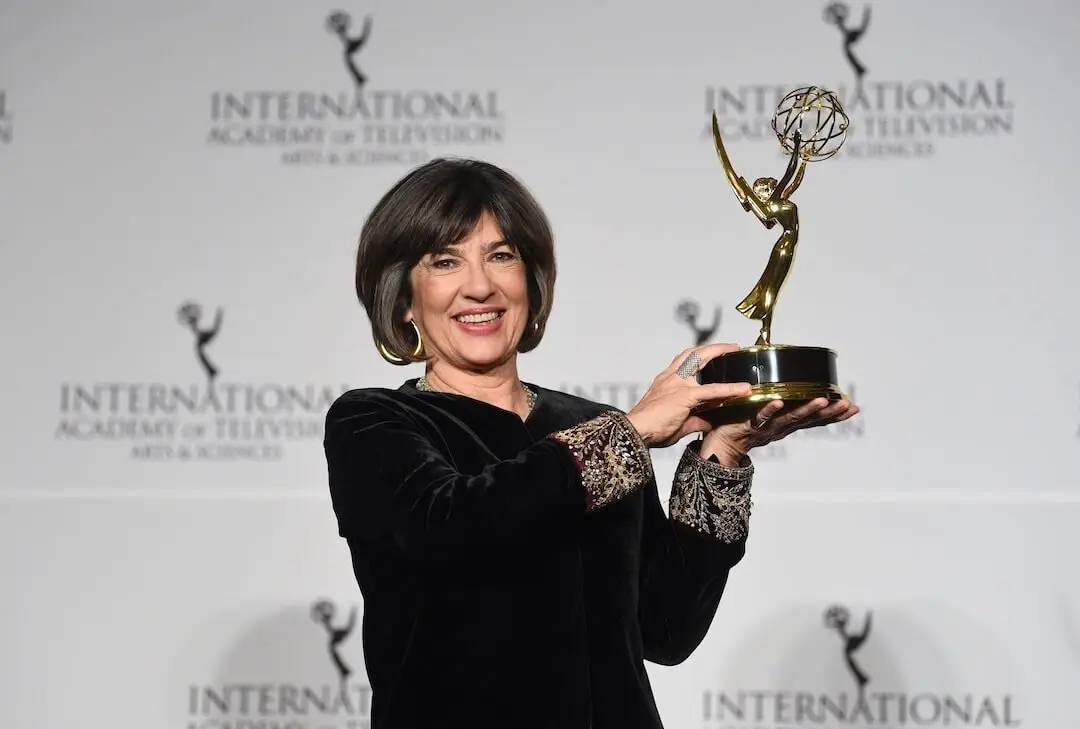
In a seismic shift for international journalism, legendary anchor and foreign correspondent Christiane Amanpour announced Monday that she will step down from CNN next year, concluding an illustrious 43-year tenure. Amanpour, who began her career as an entry-level assistant on the international assignment desk in 1983 when the network was just three years old, shaped CNN’s global identity through fearless reporting from the frontlines of the Gulf War, Bosnia, Rwanda, and Afghanistan. Her departure, scheduled for next June following a phased reduction of her programming, marks the end of an era for the cable network.
The announcement arrives at a pivotal juncture in the media landscape. It represents the first major departure of a cornerstone CNN personality following the landmark acquisition of parent company Warner Bros. Discovery by David Ellison’s Paramount Skydance earlier this month. While CNN CEO Mark Thompson has emphasized that discussions regarding Amanpour’s exit have been underway for months, the timing coincides with intense industry-wide anxiety over corporate restructuring, shifts in editorial oversight, and the safeguarding of journalistic independence.
Concurrently, the broader media ecosystem is experiencing profound turbulence. On the same day as Amanpour’s announcement, Jon Stewart committed to remaining with Comedy Central’s The Daily Show through the 2028 election, navigating his own path within the newly formed Skydance media conglomerate. Meanwhile, international press freedom faced another grim milestone over the weekend as Israeli police arrested ten suspects following a coordinated settler attack on Washington Post photojournalist Heidi Levine in the occupied West Bank. Together, these developments underscore a turbulent period for global journalism, defined by corporate consolidation, executive restructuring, and rising physical and political pressures on reporters.
Detailed Chronology: Amanpour’s Departure and the Skydance Merger
The trajectory of Christiane Amanpour’s exit is deeply intertwined with both her personal reflections on the profession and the sweeping structural changes reshaping the television news industry.
The Announcement and Phase-Out Timeline
In a statement released Monday, Amanpour revealed that the decision followed months of careful deliberation:
"After thinking carefully for several months and experiencing a few sleepless nights, as you can imagine, I have decided to separate from CNN, my partner of 43 fantastic fantastic years."
Her departure will not happen overnight. To ensure a smooth transition for viewers and the network, Amanpour’s CNN International program will scale back to a weekly broadcast at the beginning of 2027 before concluding entirely in May. Her companion program on PBS, Amanpour & Company, is set to wrap up its run in December. She will officially sever ties with CNN next June, though she intends to continue her podcast, The Ex Files, co-hosted with her ex-husband, Jamie Rubin, and pursue new independent projects.
The Skydance Acquisition and Corporate Realignment
Amanpour’s exit cannot be viewed in a vacuum. Earlier this month, David Ellison’s Paramount Skydance finalized its acquisition of Warner Bros. Discovery, bringing CNN and CBS News under a singular corporate umbrella.
While CNN CEO Mark Thompson asserted that Amanpour’s departure was unrelated to the buyout—noting that he and the anchor had been discussing her exit "for some months"—the transaction has injected profound uncertainty into both newsrooms. Amanpour herself voiced explicit concerns earlier in May before the deal’s completion. She publicly criticized what she termed the "ideological realignment of CBS and the destruction, potentially, of 60 Minutes," pointing directly to the controversial installation of Bari Weiss as editor-in-chief of CBS News.
Weiss’s rapid restructuring of CBS News prompted a wave of high-profile departures, most notably veteran correspondent Anderson Cooper, who left 60 Minutes in July after more than two decades with the program. (Cooper, notably, signed a contract extension to remain with CNN in December).
Although Amanpour did not explicitly reference Ellison or the merger in her final departure statement, her remarks carried a clear defense of journalistic integrity:
"You know that I’ve always been fiercely independent, and I will continue to be that for you for as long as I am here and beyond. That’s especially important today as we face unprecedented pressures from all sides — political, financial, and also from the rising dangers in the field."
Supporting Context & Metrics: A Shifting Media Ecosystem
The ripples of the Skydance merger extend far beyond CNN and CBS News, fundamentally altering the economics and creative strategies of late-night television and cable programming.
Jon Stewart’s Commitment to The Daily Show
In a parallel announcement on Monday, Jon Stewart confirmed he will remain the host of Comedy Central’s The Daily Show through the 2028 election. Stewart returned to the satirical news program in February 2024 after a nine-year hiatus, hosting exclusively on Monday nights.
His return has proved to be a major ratings and digital triumph for Comedy Central. The network reported that The Daily Show recently posted its best third-quarter audience figures in eight years, alongside a staggering 1.6 billion views across social media platforms over the past year.
However, Stewart’s renewal under the newly consolidated Skydance corporate banner is laden with irony and tension. Stewart has long been a sharp critic of conservative media, political figures, and his own corporate leadership. Following CBS’s decision last year to cancel The Late Show with Stephen Colbert—ending a 33-year franchise—Stewart openly challenged executive justifications that the cancellation was purely financial. The move had coincided with Paramount seeking government approval for the Skydance merger and occurred shortly after the company agreed to a $16 million settlement over a disputed 60 Minutes interview.
Stewart’s continued presence stands in stark contrast to a contracting late-night landscape. With CBS shuttering Colbert’s flagship show and Disney executives, including President Dana Walden, openly labeling late night a "very challenging day part" amid ongoing contract negotiations with Jimmy Kimmel, Stewart remains an influential outlier.
Violence Against Journalists in the West Bank
While corporate boardrooms grapple with mergers and executive shuffles, journalists in the field continue to face acute physical dangers. On Monday, Israeli police announced the arrest of ten unidentified suspects in connection with violent incidents in the occupied West Bank over the weekend.
Among the targeted individuals was Washington Post photojournalist Heidi Levine. According to reports from The Post, Levine was wearing a clearly marked "PRESS" protective vest on both the front and back when she was knocked to the ground and repeatedly kicked by a group of masked Israeli settlers.
The assault has been characterized by The Post as part of a disturbing, coordinated pattern of escalating settler violence across the occupied territory. While international bodies and the United States government have urged Israeli authorities to crack down on such violence, legal watchdogs note that prosecutions of Israeli settlers remain exceedingly rare, underscoring the severe risks highlighted by Amanpour regarding "rising dangers in the field."
Official Statements & Institutional Responses
The leadership teams at both CNN and the newly formed Skydance conglomerate have moved quickly to reassure audiences, regulators, and staff regarding the editorial autonomy of their news divisions.
CNN Leadership on Amanpour’s Legacy
CNN CEO Mark Thompson lauded Amanpour’s unmatched contributions to global journalism, emphasizing her foundational role in building the network’s international reputation:
"Christiane Amanpour is not just a cornerstone of CNN; she is a titan of modern journalism. Her reporting from the world’s most perilous conflict zones set a standard for courage, rigor, and moral clarity that few will ever match. While we are saddened by her decision to step down, we respect her wishes and celebrate her extraordinary legacy."
Navigating the Ellison Era
To address antitrust and editorial independence concerns raised during the merger process, Skydance agreed to establish an independent board of journalists tasked with safeguarding the editorial integrity of both CNN and CBS News. Additionally, management confirmed that Mark Thompson will remain chairman and editor-in-chief of CNN, providing a degree of executive continuity that contrasts with the upheaval at CBS.
Despite these structural safeguards, media analysts argue that Amanpour’s departure serves as an unmistakable symbolic loss. CNN is parting ways with a figure who embodied the network’s core mission of foreign reporting and uncompromising independence from its inception.
Future Outlook: What Lies Ahead for CNN and Global News
As the media industry looks toward 2027, the departures of figures like Christiane Amanpour and the contraction of traditional broadcast formats signal a period of profound structural reinvention.
- The Evolution of International Coverage: With Amanpour’s departure and the phasing out of her signature programs, CNN faces the challenge of maintaining its reputation as a premier destination for foreign affairs reporting. The network will need to cultivate a new generation of correspondents capable of commanding global respect in an increasingly hostile information environment.
- Corporate Oversight and Independence: The efficacy of Skydance’s newly established independent board of journalists will be closely monitored by media watchdogs. As corporate consolidation tightens its grip on traditional media outlets, the tension between commercial imperatives and editorial freedom will remain a defining battleground.
- The Changing Consumption Landscape: The dual realities of digital expansion—typified by The Daily Show’s billions of social media views—and the physical perils faced by field reporters like Heidi Levine demonstrate that the news industry is navigating a multi-front transformation.
For viewers, the upcoming months offer a final opportunity to witness a masterclass in foreign correspondence as Amanpour signs off from a career that fundamentally redefined how the world consumes international news. For the industry at large, her exit sounds a clarion call about the enduring value—and vulnerability—of independent journalism in the 21st century.