

Originally published by Northwestern University’s Medill Local News Initiative and republished with permission.
Executive Overview
Last summer, public broadcasters across the United States stared into a financial abyss. Following a historic legislative push by President Donald Trump and congressional allies, the federal government enacted the Rescissions Act of 2025, wiping out nearly all federal funding for public broadcasting—a staggering $1.1 billion in annual subsidies. Critics framed PBS and NPR as politically biased, but the practical mechanism of the cut—a formal clawback of funds appropriated by a previous Congress—was a watershed moment. It marked the first time Washington completely withdrew the financial bedrock that had built, nurtured, and sustained the national network of educational and local journalism for nearly six decades.
For stations like WKMS in southwestern Kentucky, the specter of defunding threatened immediate ruin. Relying on the Corporation for Public Broadcasting (CPB) for $215,000 annually—roughly 15% of its operating budget—station management anticipated catastrophe in a region where per capita income barely touches $30,000. When the CPB officially announced it would wind down operations within weeks of the bill’s signing, media analysts predicted an apocalyptic wave of station closures and the rapid expansion of news deserts nationwide.
Yet, contrary to apocalyptic predictions, the anticipated wave of mass closures never materialized. Instead, a powerful convergence of grassroots "rage giving," major philanthropic interventions, structural station mergers, and innovative regional journalism collaboratives forged an unlikely safety net. While major newsrooms faced painful layoffs and smaller rural outlets remain in profound peril, the public media system as a whole has displayed unexpected resilience.
However, as the initial shockwave fades and fundraising metrics begin to normalize, industry leaders are left confronting an uncomfortable truth: the existential crisis has not been resolved; it has merely been delayed.
Detailed Chronology: The Anatomy of a Defunding Crisis
The path to the 2025 rescission was paved by decades of political rhetoric, culminating in a swift and devastating legislative sequence that permanently altered the American media landscape.
The Legislative Assault
For years, conservative lawmakers argued that taxpayer-funded media entities possessed an inherent ideological bias. Following his return to the White House, President Trump escalated this rhetoric, urging Congress to pass a sweeping rescission package targeting public media. Supporters of the cut claimed the measure restored fiscal discipline and ended government backing of politically partisan outlets.
Opponents and media advocates countered that the funding was a vital public good, democratizing access to news, emergency alerts, and educational programming for millions of Americans, particularly in isolated rural communities. Despite fierce opposition, Congress passed the Rescissions Act of 2025, and President Trump signed it into law in July 2025.
The CPB Dissolution and Immediate Fallout
Within two weeks of the bill’s enactment, the Corporation for Public Broadcasting announced it would initiate a phased winding down of its operations. As the central administrative and distribution hub for federal subsidies to hundreds of local television and radio stations, the CPB’s closure sent immediate shockwaves through the industry.
Stations dependent on CPB grants—which often comprised anywhere from 15% to over 40% of their operating budgets—scrambled to assess their survival timelines. National producers and regional broadcasters alike announced cost-saving measures. NPR cut positions and offered buyouts; major production houses like WETA in suburban Washington, D.C., slashed staff by 10% and canceled the weekend edition of NewsHour; and Boston’s GBH eliminated 15 jobs following the loss of federal support.
The Grassroots and Philanthropic Counter-Offensive
Even as national institutions contracted, an extraordinary counter-reaction was taking shape at the grassroots level. Outraged by the federal government’s actions, everyday citizens launched a wave of donations dubbed "rage giving." Simultaneously, elite philanthropic foundations mobilized with unprecedented speed. Major institutional donors—including the Knight Foundation, Carnegie Corporation, MacArthur Foundation, Ford Foundation, and Mellon Foundation—poured tens of millions of dollars into emergency stabilization funds, effectively acting as a financial shock absorber for the most vulnerable stations.
Supporting Context & Metrics: The Numbers Behind the Survival
While the public media system weathered the initial storm, aggregate statistics reveal a complex and uneven reality. The system’s survival has not been uniform; it has exposed stark disparities between well-resourced urban stations and isolated rural outlets.
The "Rage Giving" Phenomenon and Surging Revenue
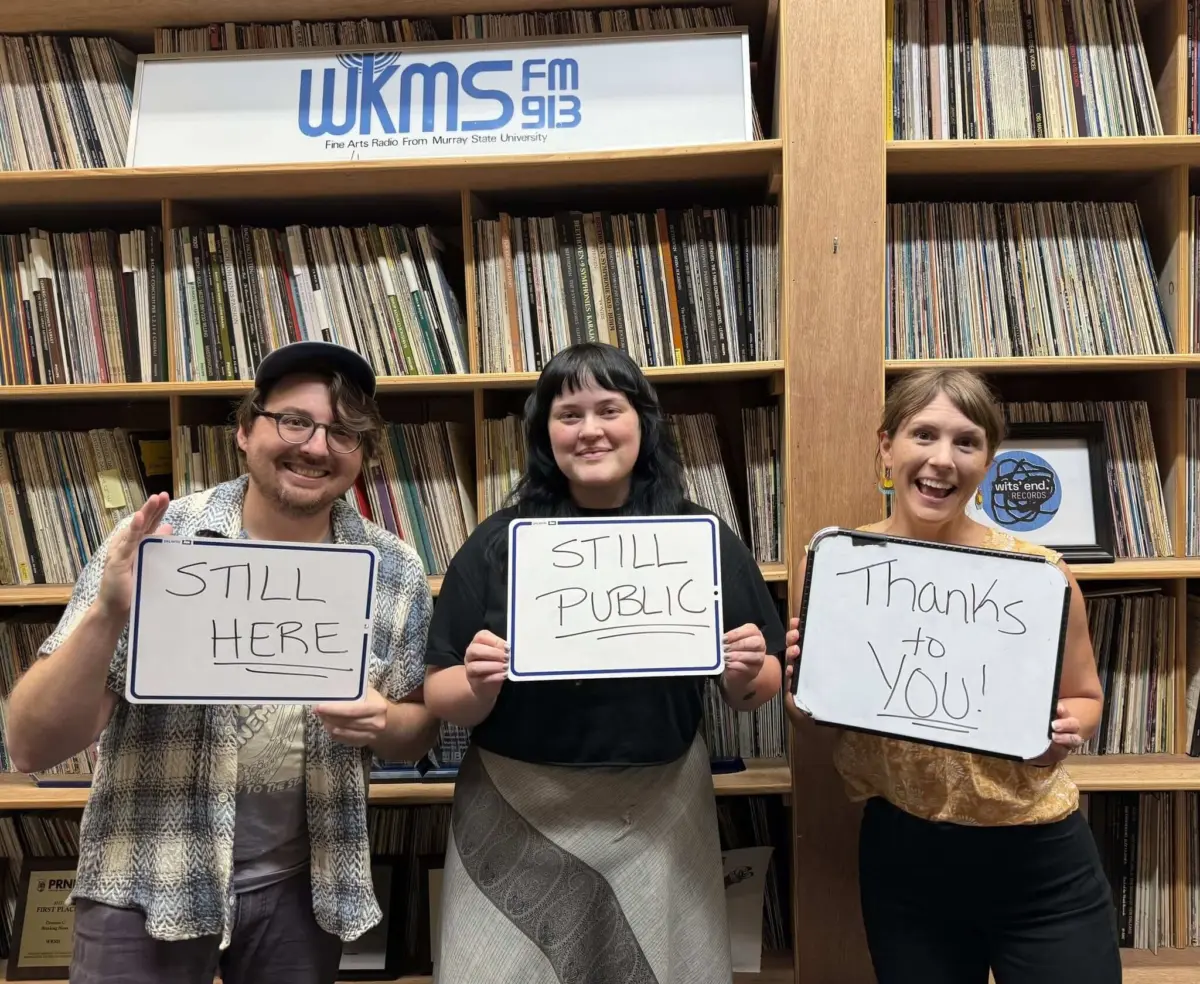
At WKMS in Kentucky, the community response defied all expectations. In the months following the federal cuts, listeners contributed more than $900,000—roughly two-and-a-half times the station’s typical annual fundraising total. The influx included everything from modest donations by farmers and cashiers to a single $250,000 gift. This windfall allowed manager Asia Burnett to protect her eight-person full-time staff and bolster the station’s endowment.
Data from the Contributor Development Partnership (CDP), a research organization tracking public media fundraising, underscores this trend. Over the first year following the rescission, revenue rose an average of 44% across 170 surveyed public stations. Oregon Public Broadcasting (OPB) lost $5 million in CPB funds (about 9% of its budget), yet saw an increase in donations that more than covered the shortfall, enabling CEO Rachel Smolkin to expand her journalism staff by four reporters.
The Rural Divide and Vulnerable Outlets
Despite these success stories, the patchwork nature of public broadcasting left many smaller entities exposed. Dozens of rural stations in sparsely populated regions—which historically relied on federal funds for 40% or more of their budgets—remain in existential peril.
Stations such as KNBA-FM in Anchorage, which broadcasts daily Alaska Native newscasts, and KGLP-FM in Gallup, New Mexico, serving Navajo and Zuni communities, lack the wealthy donor bases of their big-city counterparts. Without emergency grants from specialized entities like the Public Media Bridge Fund—which directed $26 million in stabilization grants and loans to vulnerable stations—many of these cultural and journalistic lifelines would have already collapsed.
Philanthropic Stabilization and the Enrollment Cliff
To date, roughly 1,500 donors led by major institutional foundations have committed $86 million through coordinated bridge funds. Yet, analysts warn that this capital represents a temporary patch rather than a permanent structural solution.
Compounding the problem is the vulnerability of university-owned stations. More than half of all public radio stations and a quarter of public television stations are operated by colleges and universities. Many of these academic institutions are currently bracing for an impending "enrollment cliff" and declining state financial support, placing secondary financial pressure on campus-affiliated media outlets.
Official Statements and Industry Perspectives
Industry leaders, data analysts, and station managers have offered sobering assessments of the post-rescission landscape, balancing gratitude for immediate community support with long-term anxiety.
"The end of federal funding was an incredibly dramatic event. People were motivated to give… It doesn’t mean the crisis has been resolved. It just means it’s delayed."
— Alex Curley, Executive Director, Semipublic
Curley’s organization, which tracks workforce data and operational metrics across public media, notes that despite the fundraising surge, systemic restructuring has still resulted in approximately 550 layoffs—roughly 3% of the total public media workforce nationwide.
Rachel Smolkin, CEO of Oregon Public Broadcasting, emphasized the ongoing challenge of converting angry donors into long-term financial sustainers:
"The kind of news and other information public stations provide—free to all and usually of high quality—is critical to converting rage-givers into ‘sustainers,’ public-media-speak for regular contributors."
Meanwhile, Erik Langner, executive director of the Public Media Bridge Fund, highlighted the fundamental fragility of the system:
"Many stations remain significantly vulnerable. The system will have fewer originating organizations in the future."
Local managers like Asia Burnett point to the deep cultural necessity of their work as the driving force behind their survival:
"I think it shows how important local journalism is. Journalism is always changing, but this speaks to how people still need a trusted source, a trusted voice."
Future Outlook: Structural Evolution and Collaboration
As the initial wave of post-rescission anger subsides—evidenced by CDP index data showing a 16% decline in new donor growth following the initial spike—public broadcasters are accelerating structural transformations to ensure long-term viability.
The Rise of Newsroom Mergers and Cross-Platform Collaborations
To reduce administrative overhead and protect reporting capacity, an increasing number of public stations are merging with digital news organizations. Notable examples include Chicago Public Media’s acquisition of the Chicago Sun-Times and Texas Public Radio’s recent combination with the digital-native San Antonio Report. By uniting audio expertise with digital reporting chops, these merged entities create resilient, multi-platform newsrooms capable of weathering financial volatility.
Regional Journalism Hubs
Cooperative resource-sharing models are also expanding rapidly. Building on the success of initiatives like The Texas Newsroom, NPR’s Collaborative Journalism Network has expanded hubs into the American South, California, the Midwest, New England, Appalachia, and the Mountain West. These networks pool regional reporting resources to cover state politics, education, health, and climate issues, effectively filling the vacuum left by the contraction of for-profit local newspapers.
Furthermore, state-level partnerships—such as the Florida Public Radio Emergency Network, which delivers lifesaving public-safety alerts across 14 stations for a minimal state allocation—demonstrate the immense cost-efficiency of cooperative public media infrastructure.
Conclusion: A Delayed Reckoning
Public broadcasting has undeniably dodged a bullet. The combination of fierce community loyalty, agile philanthropic intervention, and aggressive cost-saving structural reforms prevented the systemic collapse predicted in the wake of the 2025 rescission.
However, as the industry moves further away from the immediate spotlight of the federal funding cutoff, the underlying financial vulnerabilities remain. With audience rage cooling, institutional grants finite, and university-backed stations facing demographic headwinds, public media’s long-term survival will depend entirely on its ability to permanently transform from a government-subsidized institution into an independent, deeply integrated community asset. The crisis has not vanished; it has simply migrated to the next frontier of American journalism.