

Originally published by Northwestern University’s Medill Local News Initiative. Republished with permission.
Executive Overview
When the federal government pulled the rug out from under public broadcasting, industry analysts braced for an extinction-level event. Last year, the passage and signing of the Rescissions Act of 2025 abruptly wiped out approximately $1.1 billion in federal subsidies, culminating in the historic dissolution of the Corporation for Public Broadcasting (CPB) after nearly six decades of operation. For local stations accustomed to relying on federal appropriations for up to 40% of their operating budgets, the financial abyss appeared inescapable.
Yet, counter to apocalyptic predictions of widespread station blackouts, the anticipated wave of sudden closures never materialized. Instead, public media experienced an extraordinary, grassroots-driven financial resurgence. Propelled by a phenomenon dubbed “rage giving”—whereby everyday citizens, deeply angered by Washington’s political maneuvers, opened their wallets—alongside a multi-million-dollar philanthropic safety net, public broadcasting dodged an immediate catastrophe. Major foundations, regional donors, and innovative station-level mergers helped cushion the blow, allowing many public radio and television networks not only to survive but, in select cases, to expand their local news reporting.
Nevertheless, this financial reprieve may be temporary. As the initial wave of retaliatory donations cools and normalization sets in, systemic vulnerabilities remain. Hundreds of layoffs across major networks, ongoing programmatic cuts, and the compounding pressures of an impending higher education "enrollment cliff"—which threatens university-backed stations—reveal an industry still fighting for its long-term survival. While public broadcasters have successfully delayed an acute crisis, the underlying structural challenges have not vanished; they have simply been postponed.
Detailed Chronology: From the Threat of Defunding to the Rescission Crisis
The dismantling of federal support for public media unfolded over a tense, high-stakes political timeline that permanently altered the American media landscape.
The Spring and Summer of 2025: The Political Push
The threat materialized early in 2025 when President Donald Trump actively urged Congress to enact a formal "rescission package." Pushing to claw back funds previously appropriated by past legislative sessions, the administration targeted the roughly $1.1 billion in federal subsidies allocated to the Corporation for Public Broadcasting. Echoing longstanding conservative criticisms, proponents of the cuts characterized networks like PBS and NPR as systematically biased against conservative viewpoints.
This effort, however, was fundamentally different from past budgetary battles. It marked the first time Washington sought to systematically dismantle the foundational financial framework that had sustained America’s educational, emergency, and local broadcasting networks since the passage of the Public Broadcasting Act of 1967.
July 2025: The Hammer Drops
Despite vehement pushback from media advocacy groups, rural communities, and industry leaders, Congress passed the Rescissions Act of 2025, which President Trump swiftly signed into law. The consequences were immediate and institutional. Within a fortnight of the bill’s enactment, the Corporation for Public Broadcasting announced that it would formally wind down its operations, abruptly severing the financial and administrative conduit that distributed federal grants to hundreds of local radio and television stations nationwide.
Media watchdogs warned that stations operating on thin margins, particularly in rural and underserved areas, would face immediate insolvency. Yet, even as structural shutdowns loomed, an unexpected counter-current began to build across the American populace.
Supporting Context & Metrics: The Mechanics of Survival
The survival of public broadcasting through the immediate post-rescission era was not uniform; it was defined by stark contrasts between well-resourced urban affiliates and fragile rural outlets, buffered by a historic convergence of grassroots activism and institutional philanthropy.
The Anatomy of "Rage Giving"
In the months immediately following the federal clawback, public stations experienced unprecedented surges in individual contributions. According to data from the Contributor Development Partnership (CDP), which tracks fundraising metrics across 170 public stations, revenue rose by an average of 44% during the initial post-rescission period.
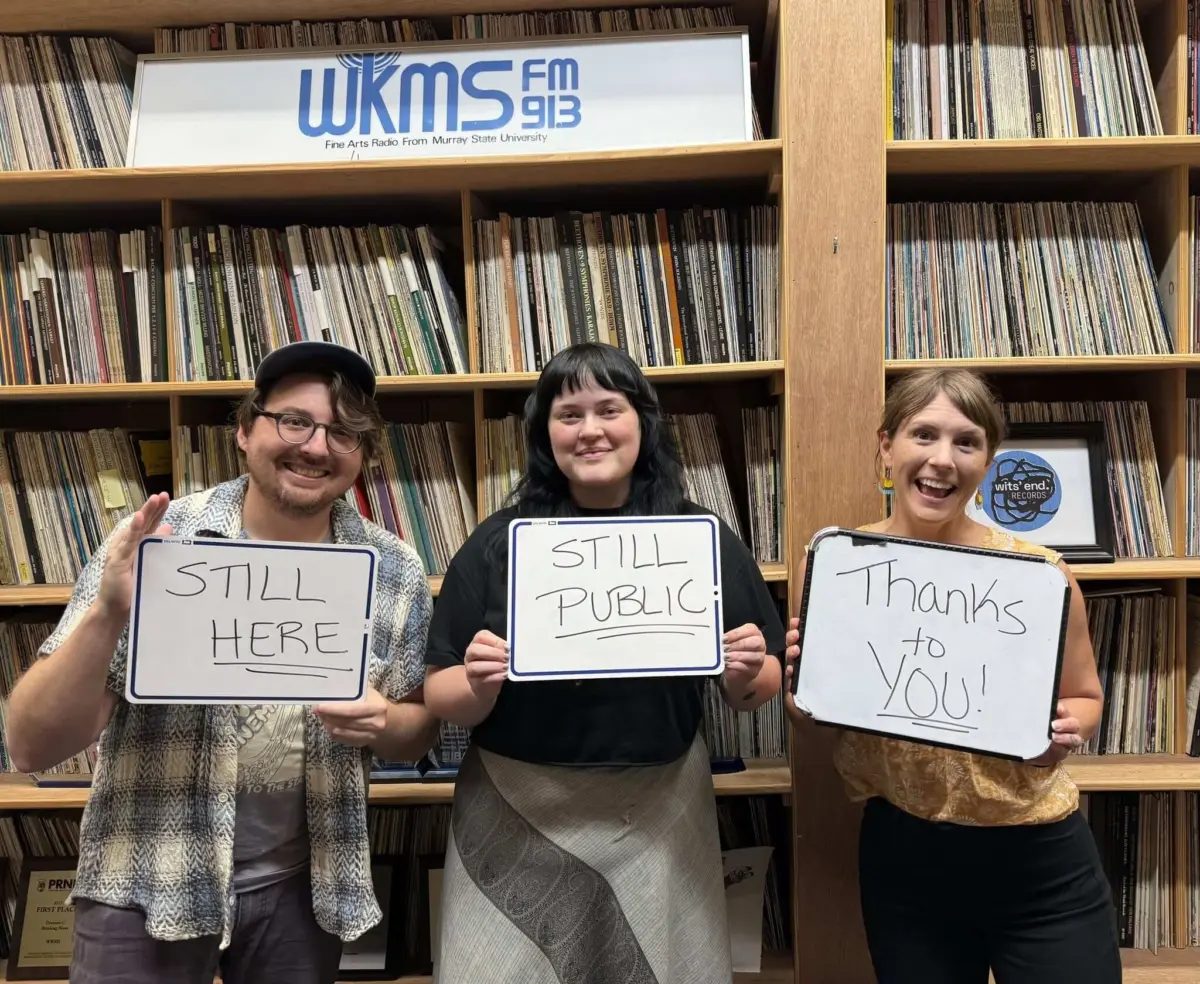
- WKMS (Southwestern Kentucky): Managing Director Asia Burnett faced the loss of $215,000 annually—roughly 15% of the station’s total budget—in a region where per capita income barely reaches $30,000. In response, local listeners and supporters donated over $900,000 within months—amounting to two-and-a-half times the station’s normal annual fundraising. This windfall not only preserved the station’s eight-person full-time staff but allowed WKMS to bolster its endowment.
- Oregon Public Broadcasting (OPB): Facing a $5 million shortfall—equaling roughly 9% of its overall operating budget—OPB’s leadership leveraged audience loyalty to surpass its deficit targets, utilizing the incoming funds to hire four additional journalists.
The Philanthropic Bridge
Recognizing that community donations alone could not save every station, institutional philanthropy mobilized at an unprecedented scale. The Public Media Bridge Fund—a collaborative vehicle uniting philanthropic heavyweights such as the Knight Foundation, the Ford Foundation, the Carnegie Corporation, the MacArthur Foundation, and the Mellon Foundation—funneled approximately $26 million in emergency stabilization grants and low-interest loans to the nation’s most precarious stations.
Concurrently, the federal Bureau of Indian Affairs stepped in with $9.4 million in targeted grants for 35 stations operated by Native American organizations, shielding vital community lifelines like KNBA-FM in Anchorage and KGLP-FM in Gallup, New Mexico. In total, a coalition of roughly 1,500 donors and institutional funders committed $86 million to ensure foundational continuity.
The Cost of Survival: Layoffs and Programmatic Retrenchment
Despite these heroic rescue efforts, the systemic loss of federal funds forced deep institutional contractions across the public media ecosystem:
- NPR eliminated 10 journalism positions and offered buyouts to 18 others in mid-2025.
- WETA, a major television production powerhouse in the Washington, D.C., suburbs, cut its staff by 10% in late 2025 and canceled production of the weekend edition of the PBS NewsHour.
- GBH in Boston, producer of national mainstays like Frontline and Antiques Roadshow, eliminated 15 jobs following its federal funding cuts.
- KEET-TV in Humboldt County, California, lost nearly half its operating budget, leading to the cancellation of its Headline Humboldt newscast and a payroll reduction from 13 staff members down to six.
Official Statements & Industry Perspectives
Key leaders across the public media, journalism, and philanthropic sectors have offered candid assessments of the post-rescission landscape, balancing immediate relief against long-term structural anxieties.
"The end of federal funding was an incredibly dramatic event. People were motivated to give… It’s not the imminent crisis that everyone thought it would be a year ago. [But] it doesn’t mean the crisis has been resolved. It just means it’s delayed."
— Alex Curley, Executive Director, Semipublic
Reflecting on the psychological shift among listeners who converted from passive audience members into active financial sustainers, Rachel Smolkin, CEO of Oregon Public Broadcasting, emphasized the intrinsic value of trustworthy information:
"The kind of news and other information public stations provide—free to all and usually of high quality—is critical to converting rage-givers into sustainers."
Speaking to the broader structural fragility that necessitated emergency interventions, Erik Langner, executive director of the Public Media Bridge Fund, underscored the persistent vulnerability of remote stations:
"Many stations remain significantly vulnerable… The system will have fewer originating organizations in the future."
Locally, station managers like Asia Burnett of WKMS pointed to the cultural validation underlying the community response:
"I think it shows how important local journalism is. Journalism is always changing, but this speaks to how people still need a trusted source, a trusted voice."
Future Outlook: Collaboration, Consolidation, and the Road Ahead
As the initial shock of the rescission recedes, public broadcasting is accelerating structural transformations designed to ensure long-term viability in an increasingly fragmented media marketplace.
The Rise of Newsroom Mergers and Regional Collectives
To eliminate administrative redundancies and pool journalistic resources, public broadcasters are increasingly merging with digital-native nonprofit newsrooms. A prominent recent example is the integration between Texas Public Radio and the San Antonio Report, which forged a unified newsroom of 31 journalists. Similar cross-pollinations have successfully revitalized regional reporting in cities like Chicago, St. Louis, Los Angeles, and New York.
Furthermore, collaborative networks modeled after NPR’s Collaborative Journalism Network—pioneered by The Texas Newsroom—have expanded into multi-state regional hubs across the South, California, New England, Appalachia, and the Mountain West. These resource-sharing initiatives allow smaller stations to punch above their weight, providing rigorous coverage of state politics, climate policy, and public health without duplicating operational overhead.
The Looming Threats: The Enrollment Cliff and Normalization
Despite these innovative adaptations, major headwinds threaten the horizon:
- The College and University Vulnerability: More than half of public radio stations and roughly a quarter of public television stations are owned and operated by institutions of higher education. Many of these universities are bracing for an impending "enrollment cliff" and facing sustained declines in state appropriations, putting their dependent broadcasting assets at severe risk.
- Fundraising Normalization: Data from the Contributor Development Partnership indicates that audience engagement is beginning to cool. A 16% year-over-year decline in new donor acquisition indexes observed mid-year suggests that as public broadcasting fades from the immediate political spotlight, audience outrage—and the associated "rage giving"—cannot be treated as a permanent funding model.
Conclusion
Public broadcasting in America has successfully navigated the most perilous chapter in its history through a potent combination of grassroots civic mobilization, institutional philanthropy, and aggressive structural adaptation. Yet, as industry observers caution, the financial stability bought by the post-rescission fundraising surge is a bridge, not a permanent destination. For local newsrooms striving to prevent the expansion of news deserts, the coming years will demand continuous innovation, deeper cross-sector collaboration, and an unwavering commitment to proving their indispensable value to the communities they serve.