

Executive Overview
For decades, the digital landscape has been defined by friction. Ever since the commercialization of the Graphical User Interface (GUI) by systems like the Xerox Star and its subsequent popularization by the original Apple Macintosh, software has relied heavily on point-and-click interactions. If users wanted to book a flight, purchase shoes, or research medical symptoms, they were forced to navigate a labyrinth of complex user interfaces. They clicked through menus, adjusted range sliders, completed multi-step forms, accepted cookie banners, and managed dozens of browser tabs just to cross-reference basic data.
In this traditional paradigm, humans spent more time managing the software than achieving their actual goals. The computer acted as a passive container of data, while the user served as the manual orchestrator, inputting parameters and executing micro-steps.
Today, that foundational contract is breaking down. Driven by rapid advances in artificial intelligence and large language models (LLMs), a new design philosophy is emerging: Intent-Driven Design. Instead of forcing users to learn elaborate menus and conversion funnels, modern web platforms capture high-level human goals and silently execute the complex work in the background. As the industry shifts from command-based interaction to outcome-specification, the ultimate goal of modern web design is no longer to build prettier buttons or flashier animations; it is to eliminate the interface entirely.

Detailed Chronology: From the Graphical Interface to Autonomous Agents
To understand where web design is heading, it is necessary to examine how digital interactions have evolved through successive eras of human-computer interaction (HCI).
[1980s: GUI Pioneered] ---> [1990s-2010s: Point-and-Click Web] ---> [Present: Intent-Driven & Generative UI]
 Xerox Star / Mac            Tabs, Forms, Dropdowns & Sliders          Natural Language & AI Agents
1. The Dawn of the GUI (1980s)
The introduction of graphical user interfaces replaced cryptic command-line interfaces with visual metaphors like desktops, windows, and icons. This monumental shift democratized computing by making digital systems intuitive for non-technical users, establishing point-and-click paradigms as the gold standard.
2. The Point-and-Click Web Era (1990s–2010s)
As the internet commercialized, websites adopted hyper-interactive workflows. Booking a flight, for instance, became a multi-stage ordeal:
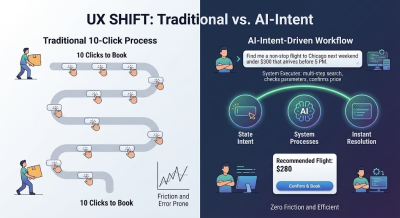
- Navigating to an airline aggregator.
- Manually selecting departure and arrival cities via dropdown menus.
- Adjusting calendar pickers for dates.
- Setting filters for stops, baggage, and departure times.
- Reviewing a cluttered list of pricing grids.
- Selecting seats, adding insurance options, and filling out multi-field checkout forms.
This hyper-interactive workflow defined digital success by maximizing "time spent in app" and interaction volume, forcing users to adapt to machine logic.
3. The Rise of Natural Language and Ambient Computing (Present)
With the maturity of conversational AI and machine learning, software is abandoning rigid navigational structures. Instead of asking “How do you want to filter this data?”, intent-driven systems ask a fundamental question: “What are you trying to accomplish?”
When a user expresses a high-level goal—such as "Find me a non-stop flight to Chicago next weekend under $300 arriving before 5 PM"—the software reads the intent, executes the multi-step search behind the scenes, compares options, and delivers a single, actionable resolution. Ten clicks dissolve into a single intent outcome.
Supporting Context & Metrics: Real-World Implementations
This shift is not a theoretical vision of the distant future; it is already transforming foundational web platforms across search, development, and productivity.
1. Perplexity AI: Search Without Open Tabs
Traditional search engines were built as digital directories. Users typed keywords, and interfaces returned pages of blue links. The cognitive labor of opening five tabs, skimming long articles, dodging intrusive ads, and synthesizing an answer fell entirely on the user.
Platforms like Perplexity AI bypass this friction. By capturing immediate informational intent, the interface synthesizes context-aware answers in real-time, removing the need to manage multiple browser windows or filter through search engine optimization (SEO) clutter.
2. Vercel v0: Web Design Without Dragging and Dropping
For years, digital product creation required visual builders, wireframing suites like Figma, and manual layout tools. Designers spent hours drawing rectangles, picking hexadecimal color codes, and adjusting CSS padding values.
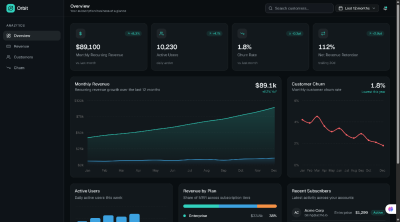
Generative platforms like Vercel v0 allow users to generate functional user interfaces instantly via natural language prompts. By simply describing a desired layout—such as a SaaS analytics dashboard—the system dynamically renders fully functional UI components and production-ready code on the fly.
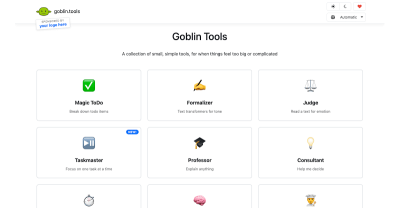
3. Goblin.tools: Breaking Down Cognitive Overload
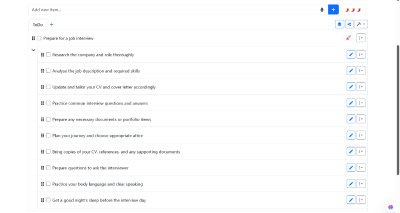
Traditional productivity tools require users to manually construct task lists, drag items across Kanban boards, and assign strict micro-deadlines. Applications like Goblin.tools utilize single-task AI suites designed to take unstructured, overwhelming thoughts and automatically parse them into manageable, step-by-step checklists, dramatically lowering the barrier to execution.
Comparative UX Framework
| Pillar | Traditional UX Approach | Intent-Driven UX Approach |
|---|---|---|
| User Input | Micro-actions (Clicks, dropdowns, toggles) | High-level goals (Natural language, context, habits) |
| Interface State | Static layouts (Every user sees the exact same page) | Generative UI (Layouts created dynamically on the fly) |
| Task Execution | Manual execution orchestrated step-by-step by the user | Autonomous execution managed by background AI agents |
Official Industry Perspectives and Usability Principles
Pioneering this space requires a re-evaluation of established human-computer interaction principles. Industry leaders and research institutions have increasingly focused on eliminating user friction:
- The Best Interface Is No Interface: HCI pioneer Golden Krishna argued decades ago that digital products should prioritize solving human problems over trapping users behind flashy buttons and unnecessary screens.
- Nielsen Norman Group on the AI Paradigm: Research from NN/g highlights that computing is shifting from command-based interaction to outcome-specification. This evolution enables Generative UI, where interfaces adapt instantly to user context rather than forcing users through rigid, pre-designed templates.
- Humane Technology Frameworks: Organizations such as the Center for Humane Technology advocate for a "Time Well Spent" movement, redefining software success away from addictive engagement loops and toward efficient problem resolution.
The Hidden Risks of Invisible Design
While removing interface friction offers unprecedented efficiency, stripping away visual controls introduces complex ethical, technical, and psychological challenges.
1. The Illusion of Control
When software makes decisions autonomously, users can easily feel alienated, patronized, or invasively monitored. Research from the Stanford Human-Computer Interaction (HCI) Group emphasizes that automation must maintain strict boundaries to prevent user frustration. Designers must balance convenience with autonomy, ensuring that high-stakes actions—such as financial transactions, publishing public content, or altering privacy settings—always trigger explicit user confirmation.
2. The Black Box Problem
In traditional user interfaces, unexpected outcomes are easily diagnosed; a user can review selected filters or verify input dates. In intent-driven systems, opaque decision-making creates a "black box" dilemma. To counter this, design frameworks like the Google PAIR (People + AI Research) Guidebook advocate for transparent feedback loops. Systems must explicitly state their interpretation of a user’s goal—such as "Searching for non-stop flights to Chicago under $300…"—allowing users to calibrate trust and correct misinterpretations instantly.
Future Outlook: The Role of the UX Designer
As screenless, agent-driven tools redefine digital products, the role of the UX designer is undergoing a fundamental transformation. Designers must shift their focus from designing static buttons, rigid navigation bars, and infinite-scroll landing pages to mastering new interaction patterns:
- Ambient Feedback: Designing subtle indicators that communicate background system status without demanding active visual attention.
- Inline Prompts: Crafting conversational intervention points that allow users to steer or refine automated workflows smoothly.
- Frictionless Rollbacks: Prioritizing clear "Undo" mechanisms, revision prompts, and transparent audit logs over intrusive pre-action warning modals.
Conclusion
For decades, the digital industry measured success through engagement metrics like time spent in app, click-through rates, and page views per session. Websites were deliberately engineered to maximize visual engagement and interaction volume.
The philosophy of intent-driven design turns these metrics upside down. The ultimate test of a modern digital product is no longer how captivating its buttons look, but rather: How effectively did this software solve the problem and get out of the user’s way?
We are entering an era where web applications will no longer be judged by the decoration of their interfaces, but by their ability to render those complex interfaces completely obsolete. The future of the web is not about more interaction—it is about seamless, invisible completion.