

Executive Overview
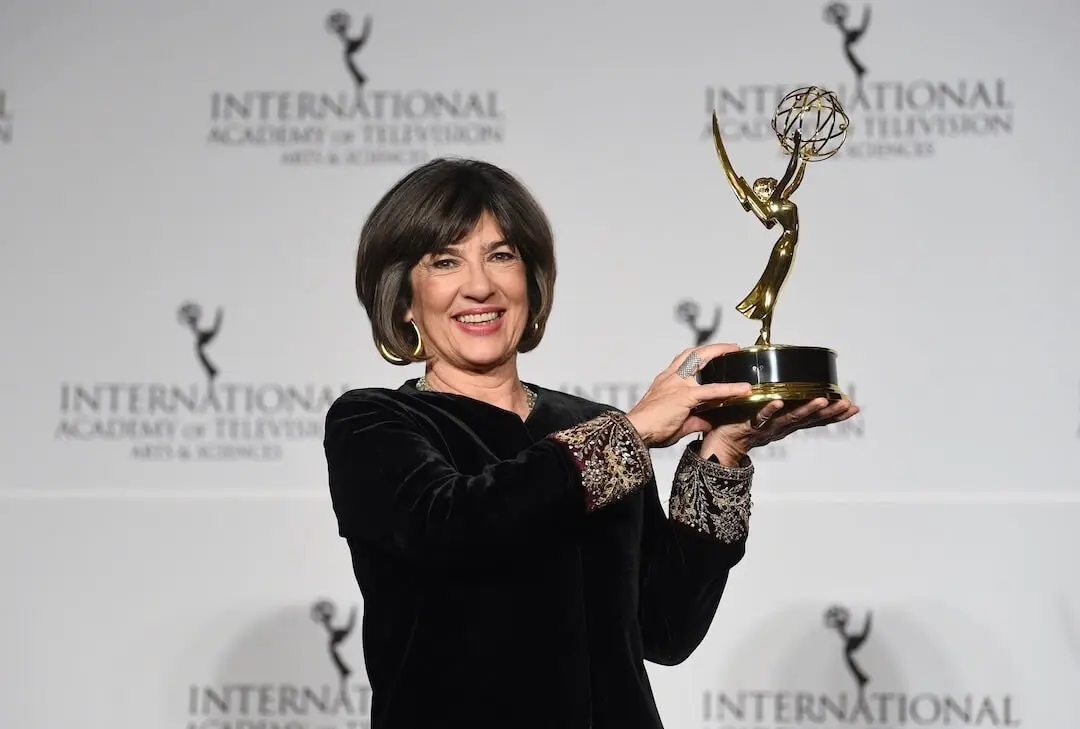
In a watershed moment for international broadcast journalism, legendary chief international anchor and foreign correspondent Christiane Amanpour announced her impending departure from CNN, bringing a definitive close to a historic 43-year tenure. Amanpour, whose incisive reporting from the front lines of history—from the Gulf War and the ruins of Sarajevo to the mountains of Afghanistan—helped forge CNN’s global identity, revealed that she will officially step down in June of next year.
Her departure represents much more than the end of an era for a single network; it serves as a bellwether for a rapidly transforming media landscape. Amanpour’s exit arrives in the immediate wake of the landmark corporate acquisition of CNN’s parent company, Warner Bros. Discovery, by David Ellison’s Paramount Skydance. This mega-merger has violently upended the traditional media ecosystem, bridging CNN and CBS News under a unified corporate banner while triggering profound anxieties regarding editorial independence, shifting ownership ideologies, and the relentless pressures bearing down on modern journalism.
Simultaneously, the broader media sector is experiencing simultaneous tremors of turbulence and resilience. While Jon Stewart locked in his long-term future at Comedy Central’s The Daily Show through the 2028 election—defying a widespread contraction in the late-night television genre—reporters in the field continue to face escalating physical dangers. Notably, recent violent attacks against journalists, including the targeted assault on Washington Post photojournalist Heidi Levine in the West Bank, underscore the unprecedented perils confronting the press both in the corporate boardroom and on the volatile front lines.
Detailed Chronology: From the 1980s Ascent to the Skydance Era
The Roots of a Global Institution
To understand the magnitude of Amanpour’s exit, one must retrace the humble origins of her journey. In 1983, when CNN was a nascent three-year-old experiment in 24-hour cable news, Amanpour joined the network as an entry-level assistant on its international assignment desk. She quickly transcended her administrative roots, deploying to the world’s most dangerous flashpoints and transforming into a fearless foreign correspondent.
Her signature reporting during the 1991 Gulf War, the ethnic cleansing in Bosnia, the Rwandan genocide, and the post-9/11 war in Afghanistan did not merely cover historical events—they actively shaped global political intervention and established CNN as the preeminent global news authority. Over four decades, Amanpour became synonymous with rigorous, unfiltered international journalism, earning numerous Peabody Awards, Emmy Awards, and the unyielding respect of peers and viewers alike.
Months of Deliberation and the Corporate Backdrop
Rumors and quiet discussions regarding Amanpour’s departure had circulated behind the scenes for months. Reflecting on her decision, Amanpour admitted to experiencing sleepless nights before ultimately choosing to part ways with her professional home of over four decades. While CNN CEO Mark Thompson confirmed that he and Amanpour had been discussing her exit trajectory "for some months," the timing of the public announcement on a Monday morning in October 2026 places it squarely at the epicenter of the industry’s most consequential media consolidation in decades.
Amanpour will be the first major CNN marquee personality to announce her departure since the closing of the Paramount Skydance acquisition of Warner Bros. Discovery. Although leadership has maintained an air of operational continuity—retaining Thompson as chairman and editor-in-chief of CNN—the structural reorganization has sent shockwaves through the industry. Under the terms of a legal settlement with states that challenged the merger, Skydance agreed to establish an independent board of journalists charged with safeguarding the editorial integrity of both CNN and CBS News. Yet, these corporate safeguards have done little to quell widespread industry unease.
A Phased Departure Timeline
Viewers and loyal fans will have a prolonged runway to witness Amanpour’s final broadcasts before her tenure officially concludes. Her signature CNN International program is slated to scale back to a weekly format at the beginning of 2027 before coming to a permanent halt in May. Furthermore, her long-running PBS broadcast, Amanpour & Company, will wrap up its run in December. By June, her formal severance from CNN will be complete, though she has confirmed she will continue her digital podcast, The Ex Files, alongside her ex-husband, Jamie Rubin.
Supporting Context & Metrics: Corporate Consolidation and the Late-Night Landscape
The Shadow Over CBS and "60 Minutes"
Amanpour’s departure cannot be isolated from the broader anxieties permeating the newly minted Skydance media empire. Earlier in the year, well before the merger was finalized, Amanpour publicly voiced sharp concerns regarding what she termed the "ideological realignment of CBS and the destruction, potentially, of 60 Minutes."
Those fears materialized as Paramount Skydance swiftly overhauled CBS News, installing Bari Weiss—a prominent commentator and founder of The Free Press with no prior television news background—as editor-in-chief. Weiss’s aggressive restructuring immediately triggered the high-profile departures and firings of numerous veteran CBS News staff members. Most notably, Anderson Cooper—a titan of modern journalism who served as a 60 Minutes correspondent for over two decades—departed the storied program in July, though he notably secured a contract extension to remain at CNN in December.
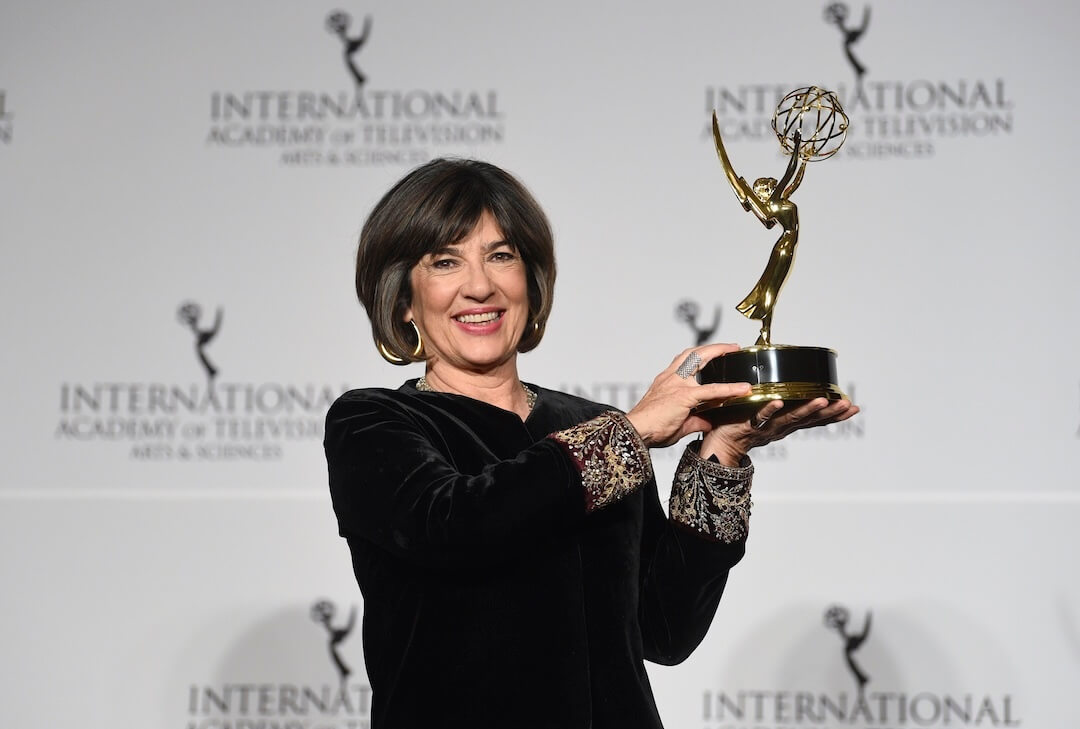
While Amanpour’s formal departure statement carefully sidestepped direct references to David Ellison or the mechanics of the merger, her pointed emphasis on journalistic independence spoke volumes. Addressing her audience, Amanpour noted:
"You know that I’ve always been fiercely independent, and I will continue to be that for you for as long as I am here and beyond. That’s especially important today as we face unprecedented pressures from all sides — political, financial, and also from the rising dangers in the field."
Jon Stewart Defies the Late-Night Drought
In stark contrast to the contraction and turbulence plaguing traditional broadcast news and late-night television, comedian and political commentator Jon Stewart delivered a major counter-announcement on the very same Monday, confirming he will remain at the helm of Comedy Central’s The Daily Show through the 2028 presidential election.
Stewart’s return to the anchor desk in February 2024 after a nine-year hiatus has injected unprecedented vitality into the franchise. Despite hosting exclusively on Mondays, Stewart has driven The Daily Show to its best third-quarter audience metrics in eight years, alongside an astonishing 1.6 billion views across social media platforms over the course of the year.
However, Stewart’s contract renewal within the newly expanded Skydance ecosystem is fraught with fascinating ironies. Stewart has long maintained a reputation as an unsparing critic of conservative media, political hypocrisy, and, increasingly, his own corporate paymasters. Following CBS’s decision to cancel Stephen Colbert’s The Late Show—a 33-year institutional staple—amid corporate maneuvers to satisfy regulatory approval for the Skydance merger and settle high-profile litigation, Stewart openly questioned management’s stated financial justifications. His long-term commitment directly bucks the broader industry trend, countering Disney executive Dana Walden’s recent characterization of late-night television as a "very challenging day part" amid ongoing contract negotiations with Jimmy Kimmel.
Official Statements & Industry Reactions
The cascading announcements from Amanpour and Stewart drew swift commentary from media executives, industry analysts, and advocacy groups, highlighting the tense equilibrium between corporate ambition and journalistic autonomy.
- Christiane Amanpour: Reflecting on her 43-year evolution from an entry-level desk assistant to the defining face of global correspondence, Amanpour remarked: "After thinking carefully for several months and experiencing a few sleepless nights, as you can imagine, I have decided to separate from CNN, my partner of 43 fantastic years… I look forward to interesting new projects down the line, and I will always be rooting for CNN and maintaining its history of independent journalism."
- Mark Thompson, CNN CEO: Acknowledging the departure after months of private dialogue, Thompson emphasized the amicable nature of the transition while praising Amanpour’s unmatched legacy as a global reporting pioneer who cemented CNN’s international reputation.
- Law Enforcement and Press Freedom Advocates: In a separate yet symbolically intertwined media development, Israeli police announced the arrest of ten unidentified suspects in connection with a wave of violent settler attacks in the occupied West Bank. Among the targeted victims was Washington Post photojournalist Heidi Levine, who—despite wearing a clearly marked "PRESS" vest—was knocked to the ground and repeatedly kicked by masked assailants during a coordinated assault. While international bodies, including the United States, have pressed for immediate crackdowns on rising settler violence, prosecutions remain exceptionally rare, serving as a grim reminder of the physical perils confronting reporters in the field while media giants consolidate in corporate boardrooms.
Future Outlook: Navigating the Post-Amanpour and Post-Merger Era
As the media industry looks toward 2027 and beyond, the departure of Christiane Amanpour marks the definitive end of an era defined by the rise of 24-hour cable news networks built upon the backs of intrepid foreign correspondents.
The integration of Warner Bros. Discovery into the Paramount Skydance empire under David Ellison will continue to be closely monitored by media critics, regulators, and newsroom insiders. While leadership has enacted structural barriers—such as independent editorial boards—to protect outlets like CNN and CBS News from political and financial interference, the departures of generational talents like Amanpour and Cooper signal a profound cultural anxiety within these institutions.
For CNN, the challenge ahead lies in preserving its foundational commitment to hard-hitting international journalism and fearless truth-telling in an era where trust in the media is continuously eroded by political polarization, financial contraction, and institutional restructuring. As Amanpour prepares to step off the global stage next June, she leaves behind a towering legacy—and an urgent challenge for the next generation of journalists tasked with carrying the torch of an independent, unfettered press.