

Executive Overview
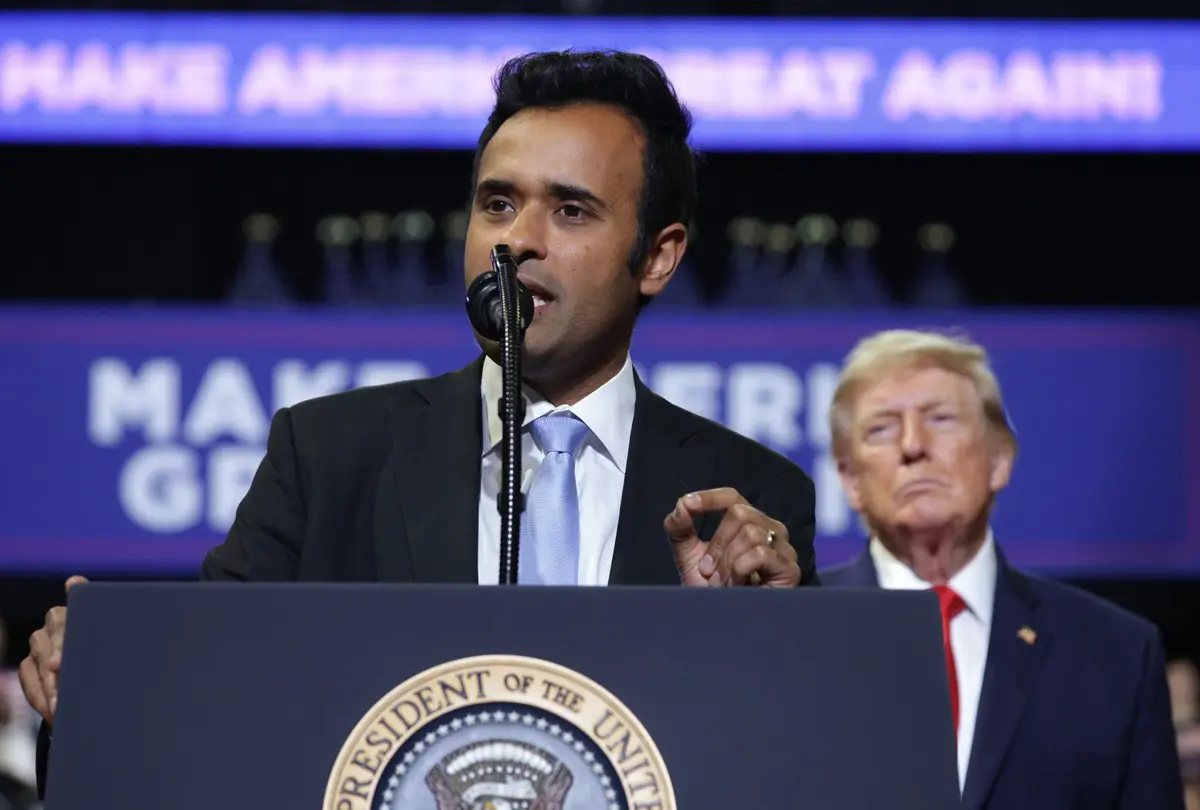
In modern American politics, few campaign strategies are considered beyond the pale if they successfully mobilize a deeply divided and grievance-driven electorate. However, the political gamble taken by Vivek Ramaswamy during his 2026 campaign for governor of Ohio has crossed into unprecedented moral territory. Facing declining poll numbers against his Democratic opponent, Dr. Amy Acton, Ramaswamy’s campaign deployed a $4 million television advertising blitz featuring Donna Arthur—Acton’s estranged and abusive mother.
The ad attempts to brand Acton as a "liar" and frames her as suffering from severe mental illness. In reality, public records and extensive reporting confirm that in 1978, Arthur sided with her husband, Cledith, after he was charged with the statutory rape of his 12-year-old stepdaughter, Amy. Rather than backing away from the ad after the facts came to light, MAGA leadership—including President Donald Trump, Vice President JD Vance, and a constellation of prominent conservative media figures—doubled down, praising the ad as an act of courageous truth-telling.
This article examines why the right-wing apparatus has rallied around a campaign spot championing an accused abuser over her victim. Beyond a desperate play to juice lagging midterm turnout, the strategy reveals a core psychological vulnerability within the contemporary American right: a surging, obsessive anxiety surrounding parental estrangement. Across right-wing media and online forums, older conservative voters increasingly grapple with adult children who have cut ties over political, social, or moral differences. By framing family rejection not as a consequence of toxic behavior or reactionary politics, but as a symptom of a morally decaying, "woke" culture, conservative leaders are weaponizing personal family trauma for political gain.
Detailed Chronology: The Ohio Gubernatorial Race and the Acton Ad Controversy
The Stumble in the Buckeye State
The 2026 Ohio gubernatorial race was already shaping up to be a difficult battle for Republicans. Once a reliable stronghold for the GOP, the state saw its political landscape shift as Republican nominee Vivek Ramaswamy slipped in real-time polling against his Democratic challenger, Dr. Amy Acton. Desperate to reverse his sliding numbers and energize a base experiencing flagging enthusiasm, Ramaswamy’s campaign authorized a multi-million-dollar advertising campaign designed to shock the electorate.
The Launch of the Controversial Spot
Instead of focusing on traditional gubernatorial platforms such as taxation, infrastructure, or education, the campaign released an ad centering on Donna Arthur. In the spot, the elderly Arthur labels her daughter a "liar" and hints at mental instability. The immediate assumption among mainstream political pundits was that the ad would catastrophically backfire on Ramaswamy, given its deeply personal and vindictive nature.
The Unraveling of the Campaign’s Narrative
It took investigative reporters and fact-checkers mere hours to dismantle the premise of the Ramaswamy advertisement. Public legal records from 1978 revealed a grim reality: Donna Arthur had defended her husband, Cledith, after he was criminally charged with the rape of 12-year-old Amy Acton.
Faced with justice, the Arthurs fled Ohio, leading to a permanent estrangement between Amy and her mother that has lasted nearly five decades. Dr. Acton’s brother corroborated these facts, publicly denouncing the Ramaswamy campaign’s platforming of an abusive parent as "despicable."
The MAGA Counter-Offensive
Despite the unambiguous court records and widespread media backlash, national MAGA leaders refused to retreat.
- JD Vance: Speaking at a campaign event in Cincinnati, Vice President JD Vance praised Ramaswamy for having the "audacity to run a TV commercial which calls it out like it is," ignoring the verified history of child abuse and flight from justice.
- Donald Trump: President Donald Trump initially defended the ad by minimizing the family dynamic, stating, "It’s very unusual for a mother to hate her daughter, but I don’t think that has anything to do with Vivek." Escalating his rhetoric on Truth Social the following day, Trump posted, "let everyone listen to the mother of a defective, dishonest, and incapable Candidate." In Iowa, Trump went a step further, declaring Ramaswamy "lucky" to have such a weapon to exploit.
- Right-Wing Media: Prominent conservative commentators—including Ben Shapiro, Laura Loomer, Greg Kelly, and Megyn Kelly—rallied to defend the spot. Megyn Kelly notably platformed Donna Arthur in an interview conducted by a convicted abortion clinic bomber, wherein Arthur complained that 12-year-old Amy had worn "immodest" clothes back in 1978.
Supporting Context & Metrics: The Anatomy of Modern Grievance Politics
To understand why a campaign would willingly spend $4 million to champion an accused abuser, one must analyze the broader political and psychological landscape of the modern American right.
Midterm Desperation and Turnout Metrics
With President Trump’s approval ratings plumbing historic lows in late 2026, Republican strategists recognize that conventional policy arguments may not suffice to secure victories in competitive midterms. Turnout is everything. By unleashing incendiary, culture-war-adjacent media blitzes, campaigns aim to mobilize the most hardened, grievance-driven segments of the base. Demonizing an adolescent rape victim operates similarly to other recent right-wing panic tactics—it draws a sharp tribal line, signaling to base voters that standard norms do not apply when fighting political opponents.
The Epidemic of Parental Estrangement
Beneath the electoral strategy lies a powerful subcurrent: the cultural panic over adult children cutting ties with their parents. Over recent years, right-wing media outlets—including Fox News, the National Review, and the Wall Street Journal—have published dozens of stories framing parental estrangement not as a complex family dynamic, but as an "epidemic" caused by:
- Left-wing and progressive ideology poisoning young minds.
- Therapists promoting "cutoff culture" and "self-delusion."
- Social media contagions encouraging selfish behavior.
- LGBTQ+ adult children refusing to remain closeted to placate conservative families.
According to Joshua Stein, a political researcher who tracks online estrangement communities, conservative media outlets have cultivated an ecosystem of "estrangement experts" whose entire business model relies on assuring older parents that their children’s abandonment is never their fault.
"No one is reckoning with the question of what is happening in a lot of families that makes kids feel like they would be better off going low- or no-contact," Stein noted. Instead, right-wing platforms sell the comforting narrative that reactionary parents are the true victims of an ungrateful, woke generation.
Official Statements and Reactions
The fallout from the Ramaswamy advertisement has generated starkly polarized reactions across the political and social spectrum:
- Dr. Amy Acton’s Campaign & Family: Acton’s team released statements from her brother condemning the ad as a moral low in modern campaigning. The decision to elevate an estranged, abusive parent to attack a sexual assault survivor was labeled an unforgivable exploitation of family trauma.
- The Ramaswamy Campaign: Defending the multi-million-dollar ad spend, campaign surrogates argue that voters deserve to hear from family members, framing the opposition’s outrage as an attempt to suppress free speech and shield candidates from personal accountability.
- The Conservative Base: Online forums and social media comment sections tied to outlets like The Daily Wire revealed a distinct resonance among elderly conservative voters. Typical user reactions included:
- "Because of the estrangement factor, I believe the mom."
- "So telling the truth is a horrible thing. Mothers know their kids better than anybody."
- "NOT all daughters are good daughters EITHER. Our mothers know us best!!"
These reactions highlight a foundational tenet of reactionary moral psychology: authority figures (parents, elders, political leaders) are viewed as inherently entitled to respect, regardless of their actual conduct. In this worldview, demanding accountability from authority is viewed as an act of rebellion, often leading to the systemic minimization or outright dismissal of child abuse and domestic trauma.
Future Outlook: The Normalization of Cruelty in American Elections
The Ramaswamy-Acton controversy represents more than just a localized campaign scandal; it serves as a troubling harbinger for the future of American political discourse.
- The Weaponization of Private Trauma: As boundaries between public accountability and private trauma continue to dissolve, campaigns are learning that personal suffering—even childhood sexual abuse—can be commodified if it serves a partisan narrative.
- The Deepening Generational Divide: By validating the grievances of parents who have been cut off by their children, conservative politicians are actively leaning into the generational culture war. Rather than encouraging healing or reconciliation, political messaging now rewards parents for viewing their estranged children as ideological enemies.
- Diminishing Electoral Returns vs. Base Mobilization: While it remains to be seen whether tactical depravity like the Donna Arthur ad will alienate moderate swing voters enough to hand Dr. Acton the Ohio governorship, the willingness of national Republican leaders to endorse such tactics proves that the pursuit of base turnout overrides traditional moral boundaries.
Ultimately, the ad is a symptom of a political movement built entirely around grievance. Whether manufacturing panics over domestic pets, educational curricula, or family estrangement, the strategy remains consistent: convince voters that they are the true victims, and offer them the ballot box as an instrument of retribution.