

Executive Overview
The contemporary commercial landscape is undergoing a fundamental transformation, driven by shifting consumer behaviors, the fragmentation of traditional media, and the relentless demand for cultural relevance. In this hyper-competitive environment, traditional advertising alone is no longer sufficient to capture and sustain consumer attention. Brands are increasingly turning to high-impact strategic partnerships, celebrity-led integrations, and deeply immersive multi-channel campaigns to forge authentic connections with their target audiences.
This week has marked a watershed moment for brand collaborations, showcasing a diverse array of cross-industry alliances that blur the lines between sports, entertainment, fashion, and consumer packaged goods. From elite motorsport sponsorships and high-profile retail campaigns to luggage partnerships infused with electronic music culture and comedic fashion integrations, brands are redefining how they communicate value. Furthermore, the strategic deployment of comedic talent—exemplified by iconic pairings such as Walton Goggins and Jason Sudeikis, alongside digital comedy troupes like Please Don’t Destroy—demonstrates a growing industry-wide reliance on humor as a primary vehicle for brand affinity.
Simultaneously, financial technology platforms are aligning with professional athletes to capture culturally resonant moments, while pet care brands are leveraging behavioral psychology and bold product guarantees to drive trial and brand loyalty. Behind these creative campaigns lies a sophisticated matrix of data-driven media buying, consumer sentiment analysis, and performance metrics. Through our ongoing partnership with EDO, this week’s evaluation of the Most Effective Ad of the Week highlights how creative whimsy, when backed by precision audience measurement, translates directly into consumer engagement and bottom-line impact.
This report provides an exhaustive, investigative analysis of this week’s most significant marketing developments. We examine the strategic mechanics driving these partnerships, provide a detailed chronology of industry announcements, contextualize the broader macroeconomic and consumer trends shaping these decisions, feature official perspectives from key stakeholders, and project the future outlook for brand collaborations in an increasingly complex digital economy.
Detailed Chronology
The past week has witnessed a rapid succession of high-profile marketing initiatives, spanning diverse sectors from fast-moving consumer goods to luxury travel and discount retail. Below is the detailed chronological mapping of the most influential brand partnerships and campaign rollouts that have defined the marketing landscape over the past seven days.
Early Week: High-Speed Hydration and Retail Synergies
The week commenced with a major crossover in the health and wellness and elite sports sectors. Liquid I.V., the dominant force in the hydration category owned by Unilever, officially announced a multi-year global partnership with McLaren Racing Formula 1. This strategic alliance positions Liquid I.V. as the official hydration partner of the McLaren F1 Team, bringing functional hydration solutions directly into the high-stress, physically demanding paddock environment. By aligning with one of the most storied and technologically advanced teams in motorsport, Liquid I.V. aims to reinforce its scientific credibility while tapping into the explosive global growth of Formula 1, particularly among younger, affluent demographics in North America and Europe.
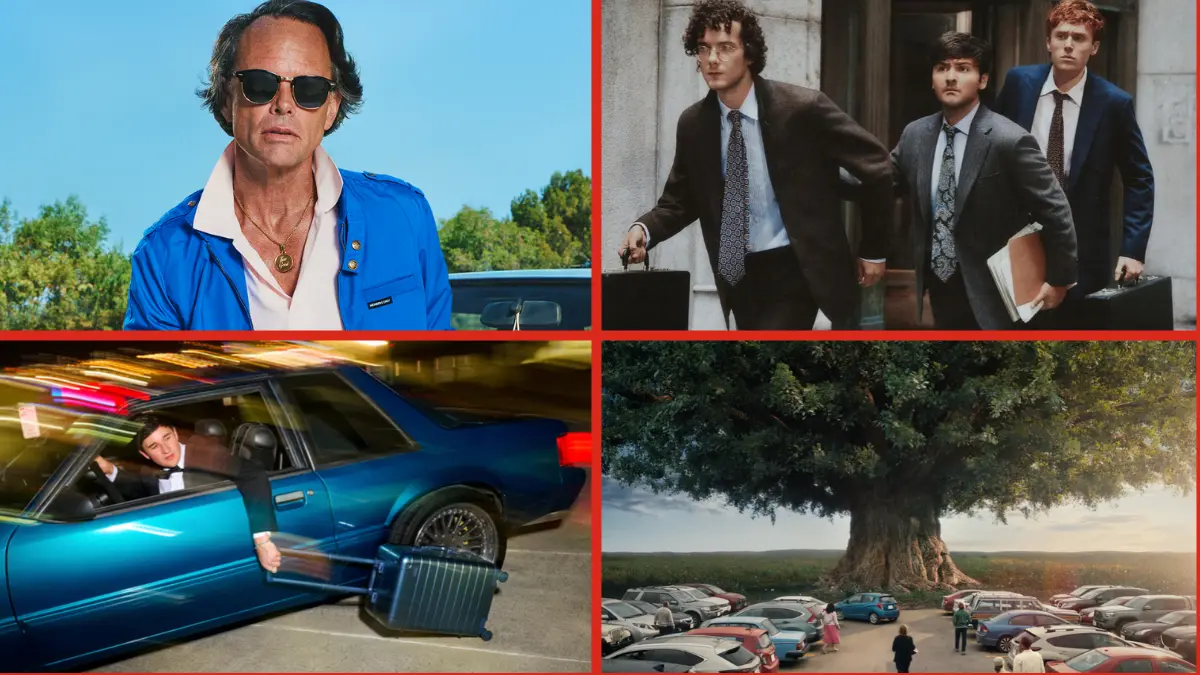
Simultaneously, Walmart and Sam’s Club launched a synchronized campaign highlighting their integrated retail ecosystem. To spearhead this initiative, retail giants enlisted the star power of celebrated actors Walton Goggins and Jason Sudeikis. The campaign leverages the distinct comedic styling and widespread appeal of both actors to communicate the seamless synergy between Walmart’s everyday low-price retail model and Sam’s Club’s bulk-buying membership value proposition. The spots utilize clever narrative devices to showcase how households can optimize their purchasing power across both banners.
Mid-Week: Cultural Crossovers in Travel, Fashion, and Finance
As the week progressed, brand collaborations ventured deeper into lifestyle and subcultural territories. Premium luggage and travel lifestyle brand Away announced a high-profile creative appointment, naming global electronic music superstar and chart-topping DJ John Summit to a prominent new role. This partnership marks a strategic pivot for Away, moving beyond traditional travel journalism and fashion influencer marketing to tap into the lifestyle demands of the modern, globetrotting music festival demographic. Summit’s grueling international touring schedule serves as the ultimate real-world stress test for Away’s product durability and functional design.
In the fashion and comedy sectors, celebrated digital comedy trio Please Don’t Destroy—known for their viral sketches on Saturday Night Live—unveiled a major partnership with heritage prep retailer J. Crew. The collaboration sees the comedic group "suiting up" in J. Crew’s latest menswear collections, subverting the traditional, buttoned-up aesthetic of heritage fashion with their trademark absurdism and self-deprecating humor. This campaign underscores a broader industry shift wherein legacy fashion brands utilize alternative comedy to shed perceived stuffiness and connect with Gen Z and millennial consumers.
In the financial technology space, prediction market platform Kalshi launched a culturally attuned marketing blitz featuring NBA star Dillon Brooks. Known for his defensive tenacity and fiery on-court persona, Brooks is featured in a campaign that playfully frames Kalshi’s predictive market tools as the ultimate defensive strategy—helping him "block" his biggest on-court rivals. The campaign cleverly bridges the gap between sports fandom, pop culture rivalry, and emerging financial products, driving mainstream awareness for prediction markets.
Late Week: Value Retail and Pet Emotional Engagement
Rounding out the week’s major announcements, the discount retail sector saw renewed consumer discovery initiatives at Dollar Tree, where shoppers are increasingly turning not just for economy, but for curated treasure-hunt experiences. Concurrently, Mars Petcare’s Sheba brand launched a bold, high-stakes marketing campaign anchored by a provocative consumer guarantee: Sheba promises that its premium cat food formulations will make even the most finicky felines fall deeply in love with their owners. The campaign marries sensory product storytelling with emotional engagement, driving category disruption in the highly competitive pet nutrition space.
Supporting Context & Metrics
To fully comprehend the significance of these campaigns, one must examine the underlying economic pressures, consumer behavior shifts, and data analytics that dictate modern marketing spend.
The Economics of Experiential and Crossover Sponsorships
The partnership between Liquid I.V. and McLaren Racing is emblematic of a broader trend: the consumerization of sports sponsorships. Formula 1 has experienced a seismic surge in popularity, catalyzed by docuseries like Netflix’s Drive to Survive and aggressive digital expansion under Liberty Media. For a functional beverage brand like Liquid I.V., associating with F1 is not merely about logo placement on a race car; it is about embedding the product into a high-performance lifestyle narrative. According to industry analysis, sports sponsorships globally are projected to surpass $100 billion, with motorsports representing one of the fastest-growing segments for direct-to-consumer health brands.
Similarly, the collaboration between Away luggage and electronic dance music artist John Summit reflects a profound shift in travel marketing. Post-pandemic travel behaviors prioritize experiential journeys, festival tourism, and bleisure (business-plus-leisure) trips. By partnering with a high-profile DJ who traverses time zones weekly, Away positions its luggage not as a passive accessory for annual vacations, but as essential equipment for high-velocity modern lives.
Comedy as a Performance Driver
The deployment of comedic talent—exemplified by Walton Goggins and Jason Sudeikis for Walmart/Sam’s Club, and Please Don’t Destroy for J. Crew—is rooted in hard data regarding consumer ad fatigue. In an era where ad-skipping and ad-blocking are ubiquitous, humor remains one of the few reliable emotional triggers that can disarm consumers, drive message retention, and encourage social sharing.
Campaigns anchored by recognizable comedy actors consistently outperform standard product-feature commercials in key engagement metrics:
- Brand Recall: Comedic narratives increase immediate ad recall by an average of 34% compared to straightforward promotional spots.
- Earned Media Value: Collaborations featuring distinct internet-native comedy troupes like Please Don’t Destroy generate exponential earned media through organic social media amplification on platforms like TikTok and Instagram.
- Trust and Affinity: Pairing heritage brands (such as J. Crew) with self-aware comedic talent humanizes corporate entities, bridging generational divides between legacy shoppers and younger consumer cohorts.
Data-Driven Effectiveness: The EDO Partnership
In evaluating this week’s Most Effective Ad of the Week, our methodology relies on empirical data provided by EDO, a leading TV measurement and data company. EDO tracks consumer engagement by measuring immediate, actionable behaviors—specifically, the online search activity generated within minutes of a commercial airing.
This week’s top-performing ad stood out by combining high-concept whimsy with crystal-clear brand attribution. When creative whimsy is successfully married to rigorous media placement and immediate call-to-action triggers, the resulting engagement spike proves that entertainment-driven advertising does not sacrifice commercial performance; rather, it amplifies it. EDO’s engagement metrics reveal that campaigns successfully leveraging emotional warmth and humor achieve significantly higher TV attribution scores, converting passive TV viewers into active online searchers at rates well above category averages.
Official Statements
Industry leaders and key stakeholders have shared insights regarding the strategic vision behind these landmark initiatives. While specific financial terms remain confidential, the overarching objectives of these collaborations highlight a shared commitment to cultural resonance and consumer connection.
Regarding the Liquid I.V. and McLaren Racing Partnership:
"Aligning with McLaren Racing represents a monumental leap for Liquid I.V. as we scale our global footprint," said a senior brand marketing executive at Unilever. "Formula 1 represents the absolute pinnacle of human endurance, precision engineering, and global reach. By placing our advanced hydration science into the McLaren paddock, we are demonstrating that optimal performance is non-negotiable—whether you are racing at 200 miles per hour or navigating the demands of a high-stress workday. This partnership allows us to communicate our functional benefits on a world stage to an audience that deeply values performance and wellness."
On the Walmart and Sam’s Club Retail Synergy Campaign featuring Walton Goggins and Jason Sudeikis:
"Consumers today are navigating complex economic environments where value, quality, and convenience are paramount," noted a corporate communications representative for Walmart Inc. "By bringing together Walton Goggins and Jason Sudeikis, we wanted to cut through the noise with undeniable comedic chemistry. This campaign brilliantly illustrates how our retail ecosystem—spanning Walmart’s everyday low prices and Sam’s Club’s unmatched bulk value—works harmoniously to serve modern households. The response from consumers has underscored that when you combine practical utility with genuine entertainment, the message resonates deeply."
Reflecting on the Away and John Summit Collaboration:
"Travel is no longer a static, once-a-year event; for our customers, it is a continuous, dynamic lifestyle," stated Away’s Chief Marketing Officer. "Partnering with John Summit was a natural evolution for our brand. John lives out of a suitcase, moving between global stages, airports, and hotels with relentless energy. By bringing him on board in this new capacity, we are validating our product’s durability and design philosophy in the most rigorous environment imaginable—the demanding life of a global touring artist."
Future Outlook
As we look toward the remainder of the fiscal year and into the future of brand marketing, several defining trends will shape how partnerships and advertising campaigns are conceived, executed, and measured.
1. Hyper-Niche Subcultural Integration
The era of broad, homogenous celebrity endorsements is rapidly giving way to hyper-targeted subcultural collaborations. Brands are realizing that modern consumers align their identities not with monolithic pop culture figures, but with micro-communities defined by shared aesthetics, musical tastes, and lifestyle practices. The Away x John Summit partnership and the J. Crew x Please Don’t Destroy collaboration serve as blueprints for this shift. Future campaigns will increasingly seek out creators and artists who command hyper-engaged, passionate niche audiences rather than relying solely on traditional mainstream celebrity power.
2. The Fusion of Entertainment and Commerce (Shoppable Entertainment)
With the continued convergence of social media platforms, streaming services, and e-commerce infrastructure, the boundary between watching content and purchasing products is dissolving. Brand partnerships will increasingly incorporate seamless, real-time purchasing capabilities. As campaigns like those from Walmart, Sam’s Club, and Dollar Tree demonstrate, communicating value must be accompanied by frictionless omnichannel access. Brands that successfully embed their products into entertaining, narrative-driven formats—while leveraging data analytics from partners like EDO to optimize media spend—will dominate consumer mindshare.
3. Purpose, Humor, and Emotional Authenticity
Amid macroeconomic uncertainties and digital saturation, consumer fatigue is at an all-time high. Brands are recognizing that preachiness or overly aggressive sales pitches are met with immediate skepticism. Instead, the most successful campaigns moving forward will lean into two opposing yet complementary pillars: self-aware humor (as seen in this week’s comedic retail and fashion campaigns) and uncompromising product efficacy (such as Sheba’s bold guarantees and Liquid I.V.’s sports science integration).
Ultimately, the events of this week prove that modern marketing success requires a delicate equilibrium between creative audacity and rigorous, data-backed execution. Brands that master this balance will not only capture fleeting attention but will build enduring, resilient relationships with the consumers of tomorrow.