

The intersection of media, politics, and the American legal landscape has entered a volatile new chapter, highlighted by escalating tensions between the White House and major domestic and international news organizations. At the core of this turbulence is President Donald Trump’s staggering $10 billion lawsuit against the British Broadcasting Corporation (BBC), stemming from a deceptively edited documentary concerning the events of January 6, 2021.
Beyond this high-stakes international litigation, the broader media ecosystem is undergoing profound structural shifts. The Trump administration has aggressively reconfigured White House press access, routinely barring independent and mainstream outlets from Air Force One travel pools while favoring ideologically aligned platforms. Simultaneously, systemic institutional challenges continue to plague legacy journalism: Scientific American, the nation’s oldest continuously published magazine, faces drastic downsizing and political censorship under shifting corporate ownership; The Marshall Project has taken federal immigration authorities to court over opaque detention practices; and long-standing models of internal media accountability are shifting, notably with Kelly McBride stepping down as NPR’s public editor as the role transitions to the University of Maryland.
This report provides a comprehensive examination of these converging crises, exploring the legal jeopardy facing the presidency, the erosion of traditional press freedoms, and the existential pressures confronting modern journalism.
Detailed Chronology
The unfolding media and legal battles involve several critical developments spanning the administration’s actions, courtroom interventions, and institutional changes:
- January 6, 2021: President Donald Trump delivers a speech preceding the Capitol riot. Remarks regarding a walk to the Capitol and fighting "like hell" are delivered nearly an hour apart.
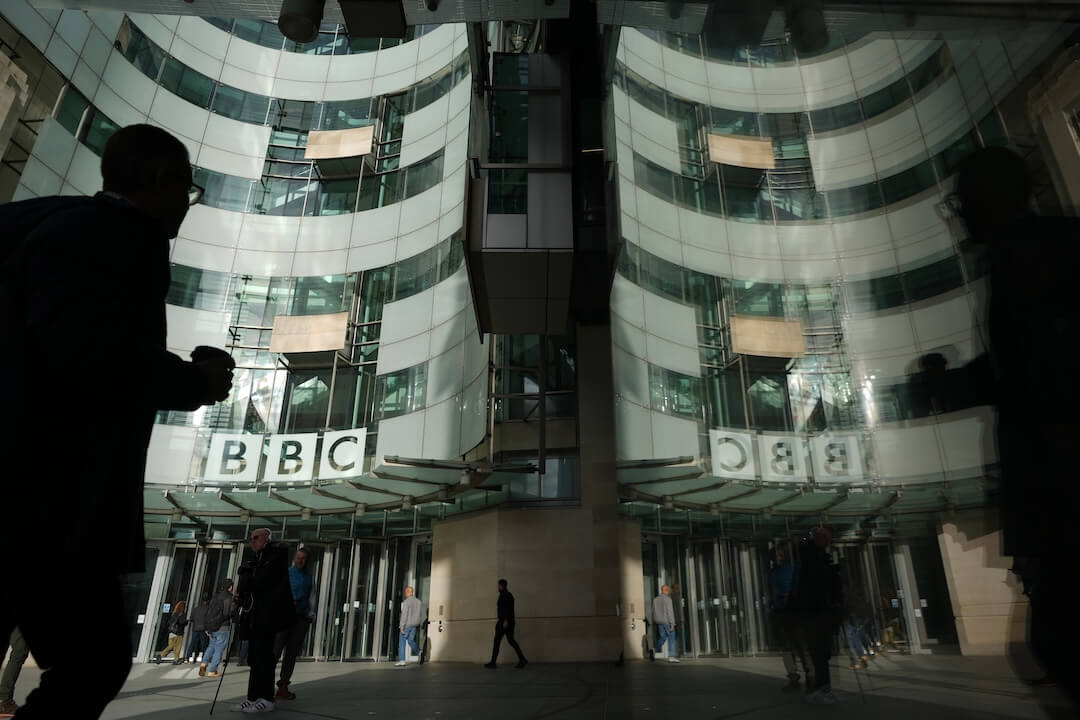
- Late 2024 (Pre-Election): The BBC airs the documentary "Trump: A Second Chance?", which splices Trump’s January 6 remarks together to create the impression of a direct, continuous call for violent action. The network later issues an apology for the misleading edit.
- Early 2025: The White House takes over the administration of the traveling press pool rotation from the independent White House Correspondents’ Association, beginning a systematic exclusion of critical media outlets.
- October 16, 2026: Trump was legally mandated to sit for a deposition in his $10 billion defamation lawsuit against the BBC. He cancels, citing a "matter of national importance," and instead campaigns in Georgia before attending an RNC fundraiser at Mar-a-Lago.
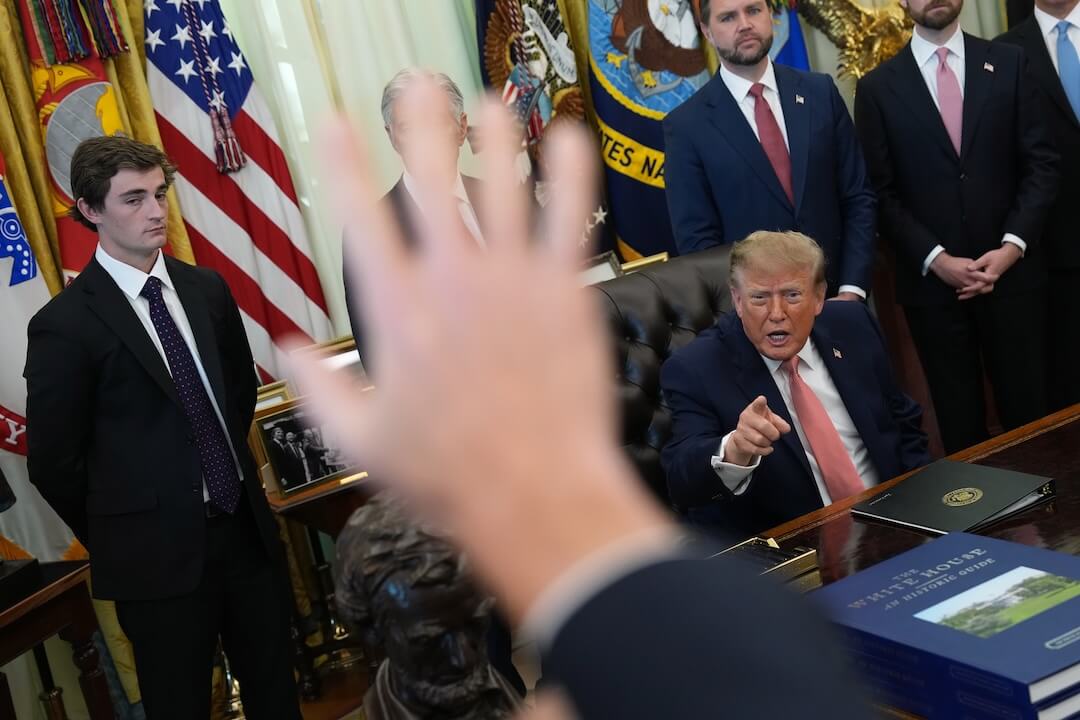
- October 20, 2026: During an Oval Office event, President Trump publicly labels Independent White House correspondent Andrew Feinberg a "sick person" following aggressive exchanges over administration whistleblower policies.
- October 22, 2026: The White House blocks The Independent from the presidential travel pool to South Dakota, marking the third time in less than a week an outlet was barred. Concurrently, Scientific American coverage details corporate interference and massive layoffs, while Kelly McBride announces her departure as NPR’s public editor.
- October 23, 2026: U.S. Magistrate Judge Enjoliqué Lett orders Trump to sit for a video-recorded deposition by December 11, warning that failure to comply could result in severe sanctions, including the dismissal of his lawsuit.
Supporting Context & Metrics
The $10 Billion BBC Defamation Suit
Trump’s $10 billion lawsuit against the BBC targets “Trump: A Second Chance?”, a documentary that spliced distinct segments of his January 6 speech. While the BBC has admitted that the editing generated a "mistaken impression" of a call to violence, the network’s defense rests on multiple legal hurdles. BBC lawyers contend that Trump cannot prove financial or reputational harm in the United States, given that the documentary did not broadcast domestically and that Trump secured victory in the 2024 presidential election.
Crucially, the lawsuit transforms from an offensive maneuver into a defensive liability. As the plaintiff, Trump is legally obligated to submit to questioning under oath. Despite attempts by his legal team to delay proceedings and block public video recordings, U.S. Magistrate Judge Enjoliqué Lett’s recent ruling mandates a deposition by December 11, offering the BBC a rare opportunity to cross-examine the president regarding his claims of direct business and reputational damage.
Press Access and the White House Pool
The administration’s overhaul of the White House press pool—traditionally managed by the White House Correspondents’ Association since its inception—has drastically altered the media landscape. Since seizing control of the rotation in February 2025, the administration has barred outlets such as CNN, The Wall Street Journal, HuffPost, Politico, and The Associated Press.
The recent exclusion of The Independent’s Andrew Feinberg following an Oval Office confrontation underscores a systemic strategy. Feinberg reported that administration officials escalated the hostility, with rapid-response operations and executive-level social media accounts deploying derogatory language against him. Independent analyses of recent travel pools reveal a homogenous lineup heavily dominated by conservative, ideologically driven platforms, raising constitutional questions that have already prompted lawsuits from several major news organizations.
Institutional Strain: Scientific American and ICE Litigation
Scientific American—the United States’ oldest continuously published magazine—has experienced a catastrophic contraction. Amid corporate pressure from former German parent Springer Nature to temper political reporting to protect federal research subscriptions, the magazine slashed its staff significantly. Out of roughly 84 positions, at least 53 employees were laid off, resigned, or retired within an 18-month window. Following unionization efforts by staff writers, Springer Nature sold the publication to LabX, sparking fears among journalists that the outlet will abandon substantive reporting in favor of sensationalized science content.
Concurrently, legal battles are expanding beyond traditional media. This week, The Marshall Project filed a lawsuit against Immigration and Customs Enforcement (ICE) and Customs and Border Protection (CBP). The litigation demands basic transparency—specifically the names, ages, and locations of individuals held in detention databases—challenging an agency policy that routinely leaves families and legal counsel in the dark regarding detainees’ whereabouts.
Official Statements
The escalating friction between government entities, media organizations, and legal institutions has generated sharp commentary from key figures across the board:
- The BBC’s Legal Defense: In addressing the defamation claims, network representatives argued that Trump’s subsequent electoral victory and the absence of domestic broadcasting preclude any legitimate demonstration of direct harm: "We still haven’t been able to depose the plaintiff… [and] Trump cannot show he was harmed."
- Andrew Feinberg on White House Press Restrictions: In his first-person accounts for The Independent, Feinberg sharply criticized the administration’s motivations: “Even though the White House might insist that they are simply acting to preserve decorum around the president, they’re really trying to create a safe space where the boss won’t get uncomfortable follow-ups from reporters.”
- Jennifer Peter, The Marshall Project Managing Editor: Emphasizing the necessity of federal transparency regarding immigration detention, Peter stated: “We are seeking the same transparency and access to information that have existed within the criminal justice system for centuries.”
- Kelly McBride on the Evolution of NPR’s Public Editor Role: Reflecting on nearly seven years of service as an independent audience advocate and media critic through historic national crises, McBride noted: “I’m glad NPR will continue the role, and I’m relieved that it will be in partnership with another reputable journalism institution.”
Future Outlook
The convergence of aggressive executive media strategies, high-stakes international litigation, and institutional contraction signals a permanently altered operational reality for the press.
- The Deposition Countdown: All eyes will remain fixed on the December 11 deadline for President Trump’s deposition in the BBC case. Should Trump comply, the transcript and restricted video logs could set legal precedents regarding political defamation, public figures, and international broadcasting accountability. Non-compliance risks the dismissal of a $10 billion claim, setting up a high-stakes constitutional showdown over presidential accountability in civil litigation.
- Litigation Over Press Credentials: Ongoing and expanding lawsuits filed by major news networks against the White House over press pool exclusions are poised to reach higher federal courts. These rulings will define the boundaries of executive authority regarding government-managed press facilities and the First Amendment rights of independent media.
- The Future of Media Oversight and Ethics: With the NPR public editor position migrating to the University of Maryland’s Philip Merrill College of Journalism in January 2027, the academic-media partnership will be tested as a new model for institutional accountability. Meanwhile, legacy publications like Scientific American will struggle to retain their investigative integrity under new corporate ownership structures, mirroring a broader industry-wide vulnerability to economic and political pressures.