The contemporary American media ecosystem is facing an unprecedented convergence of legal, political, and financial pressures. At the center of this turbulence is President Donald Trump, whose aggressive posture toward news organizations has redefined the boundaries between the executive branch and the press. From a staggering $10 billion defamation lawsuit against the British Broadcasting Corporation (BBC) to escalating restrictions on White House travel pools, the administration’s strategies signal a systemic shift in how political figures engage with public scrutiny.
Simultaneously, the broader journalism industry is grappling with internal crises of epic proportions. Legacy institutions are experiencing severe retrenchment: Scientific American, the nation’s oldest continuously published magazine, is shrinking under corporate pressure and political fallout; nonprofit investigative outfits like The Marshall Project are forced to sue federal agencies for basic transparency regarding immigration detention; and the loss of foundational figures like former New York Times managing editor John Geddes underscores the generational passing of leaders who once safely steered print giants into the digital age.
This comprehensive report examines the multi-front friction between the White House and the press corps, details the mounting legal showdowns that could force a sitting president to testify under oath, and evaluates the institutional transformations reshaping the future of journalism.
Detailed Chronology
The escalation of tensions between the executive branch, international broadcasters, domestic reporters, and independent watchdogs has unfolded through a rapid succession of legal maneuvers and administrative actions.
October 2026: Legal Showdowns and Pool Restrictions
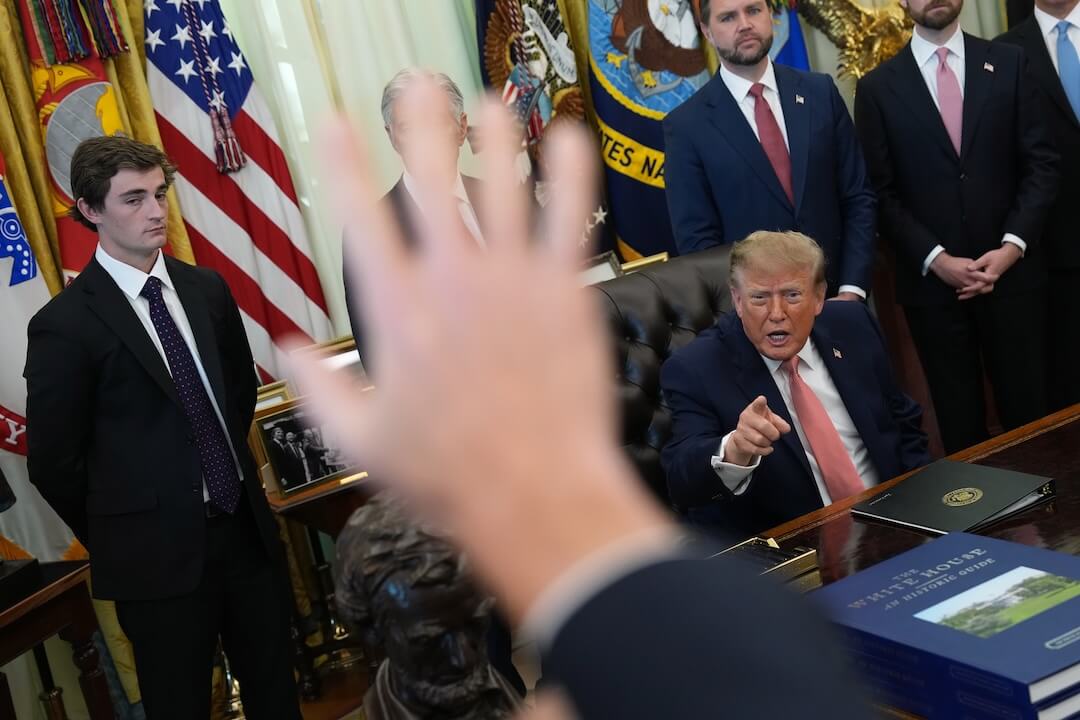
October 20: During an Oval Office press event, President Trump publicly targeted Independent White House correspondent Andrew Feinberg, labeling him a “sick person” after Feinberg attempted to press the administration on a whistleblower reward initiative. This altercation set off a coordinated online attack from administration officials via rapid-response channels and the vice president’s social media account.
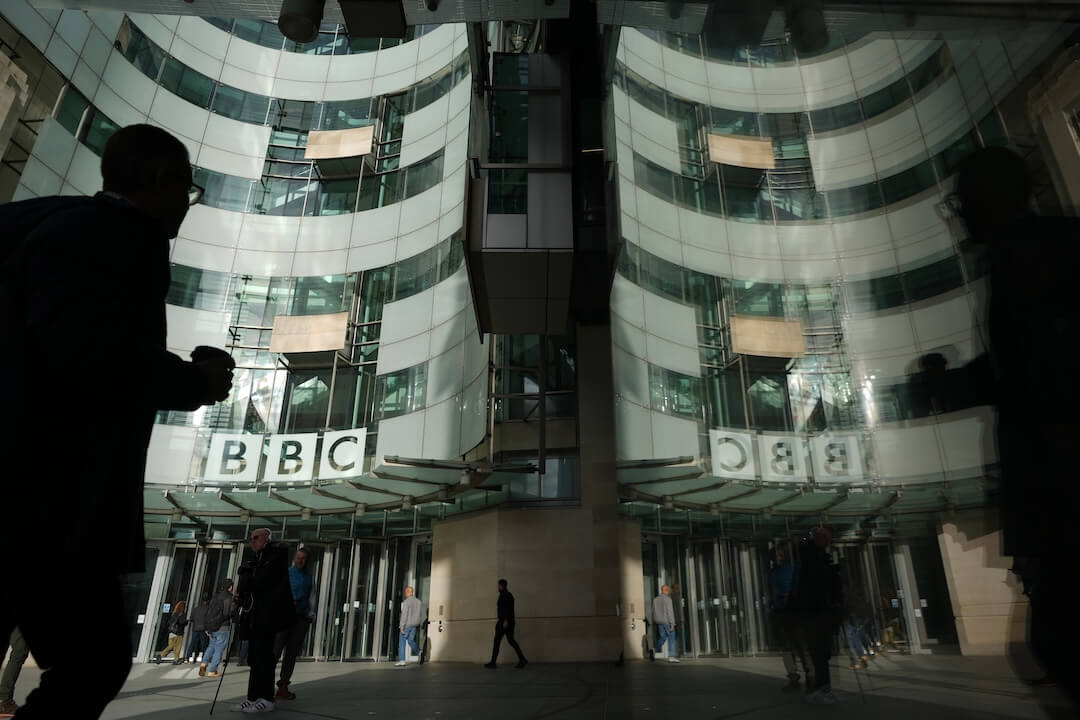
October 22 (Late Morning): U.S. Magistrate Judge Enjoliqué Lett issued a stern judicial order commanding President Donald Trump to sit for a video deposition by December 11 in his $10 billion defamation lawsuit against the BBC. Failure to comply, the judge warned, could result in severe sanctions, up to and including the outright dismissal of his complaint.
October 22 (Afternoon): Kelly McBride, Poynter’s senior vice president and chair of the Newmark Ethics Center, announced she would step down as NPR’s independent public editor at the end of the year, concluding a nearly seven-year tenure that began at the onset of the COVID-19 pandemic. Concurrently, it was revealed that the public editor role would transition in January 2025 to the University of Maryland’s Philip Merrill College of Journalism.
October 22:The Nation published an investigative report detailing the systemic decline and corporate intervention at Scientific American, revealing that former publisher Springer Nature pressured editors to scrub political coverage of Trump to protect vital federal research subscriptions.
October 23: The White House officially blocked Andrew Feinberg and The Independent from traveling with the president on Air Force One to South Dakota. This marked the third time in less than a week that a major news outlet was barred from the presidential travel pool, echoing similar blocks levied against CNN, The Wall Street Journal, HuffPost, Politico, and The Associated Press.
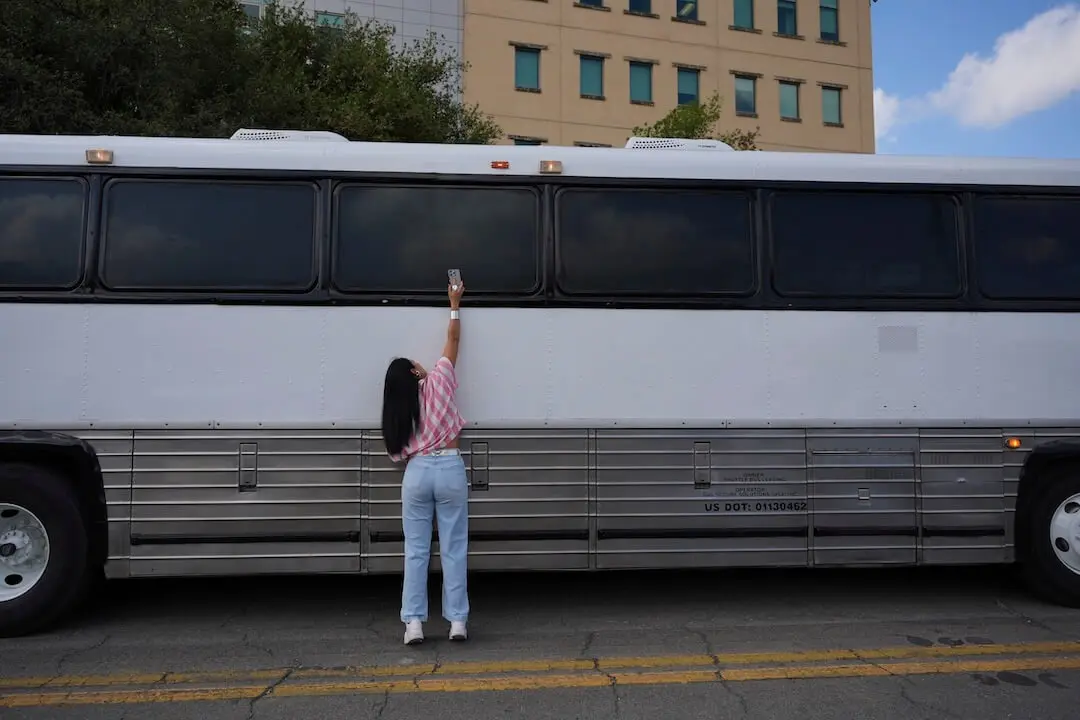
October 23: The Marshall Project formally announced a federal lawsuit against Immigration and Customs Enforcement (ICE) and Customs and Border Protection (CBP) to compel the public release of names, ages, and locations of individuals held within immigration detention databases.
October 28: Former New York Times managing editor John Geddes, a pivotal figure in the paper’s digital transition, passed away at age 74 due to lung disease complications.
Supporting Context & Metrics
To fully understand the gravity of these developments, one must examine the quantitative and historical framework underpinning current media litigation and institutional contraction.
The Trump vs. BBC Defamation Lawsuit
The legal friction between Trump and the BBC stems from the documentary Trump: A Second Chance?, which aired in the lead-up to the 2024 presidential election. In the documentary, producers spliced together disparate remarks from Trump’s January 6, 2021, speech. Remarks delivered nearly an hour apart were edited into a single continuous statement:
"We’re going to walk down to the Capitol and I’ll be there with you. And we fight — we fight like hell and if you don’t fight like hell, you’re not going to have a country anymore."
In reality, the "fight like hell" phrase was uttered nearly 60 minutes prior to the mention of walking to the Capitol. While the BBC subsequently issued an apology acknowledging that the edit created "the mistaken impression that President Trump had made a direct call for violent action," the network has vehemently denied that the broadcast defamed him.
The defense team for the BBC has pointed out critical structural flaws in Trump’s $10 billion claim:
Jurisdictional Reach: The documentary did not air inside the United States, severely limiting any localized commercial or reputational harm.
Lack of Electoral Impact: Trump went on to win the 2024 presidential election, undermining his argument that the segment caused catastrophic, irreparable electoral or reputational damage.
Evasion of Discovery: Legal counsel for the BBC expressed mounting frustration during discovery, noting that with only two months remaining in the discovery phase, they had yet to depose the plaintiff. Trump originally scheduled his deposition for October 16 but canceled it under the guise of a "matter of national importance"—subsequently spending the day campaigning in Georgia and attending a fundraiser at Mar-a-Lago.
White House Press Pool Erosion
The exclusion of independent and critical journalists from the Air Force One press pool represents a fundamental break with decades of precedent. Traditionally managed by the White House Correspondents’ Association (WHCA), pool assignments were transferred directly to executive branch control in February 2025.
Frequency of Bans: In less than a week, outlets like CNN and The Independent have been systematically barred. Over the course of the administration, similar exclusions have targeted The Wall Street Journal, HuffPost, Politico, and The Associated Press.
Ideological Realignment: Independent tracking of recent travel pools indicates that non-photo slots are increasingly dominated by conservative or ideologically aligned outlets, such as The Washington Examiner, effectively creating a curated environment designed to shield the executive from rigorous follow-up questioning.
Industry Retrenchment and Workforce Metrics
Scientific American experienced catastrophic staff reductions: over a roughly 18-month window, at least 53 of 84 staff members were laid off, resigned, or retired amid financial pressures and corporate changes in ownership from Springer Nature to LabX.
Institutional public editorship—once a cornerstone of accountability across major American newsrooms—has plummeted to near extinction, with NPR serving as one of the few remaining entities to retain the function through its upcoming academic transition to the University of Maryland.
Official Statements
On the BBC Deposition and Legal Battles
"We still haven’t been able to depose the plaintiff."
— BBC Legal Counsel, highlighting deliberate delays in the discovery phase of the $10 billion defamation lawsuit.
"The edit created the mistaken impression that President Trump had made a direct call for violent action."
— The BBC, in its formal public apology regarding the splicing of the January 6 speech segments, though the network maintains the edit did not constitute legal defamation.
On White House Press Access and Retaliation
"For doing my job, I became the target of Trump and his team… The administration’s ‘rapid response’ operation called me a slur for someone with developmental disabilities… and the vice president on his official government X account labeled me an ‘imbecile.’"
— Andrew Feinberg, White House Correspondent for The Independent, detailing the personal and professional fallout following his attempt to question the president in the Oval Office.
"(E)ven though the White House might insist that they are simply acting to preserve decorum around the president, they’re really trying to create a safe space where the boss won’t get uncomfortable follow-ups from reporters."
— Andrew Feinberg, reflecting on the systematic exclusion of non-aligned media outlets from presidential travel pools.
On Federal Immigration Transparency
"We are seeking the same transparency and access to information that have existed within the criminal justice system for centuries."
— Jennifer Peter, Managing Editor of The Marshall Project, explaining the necessity of the lawsuit filed against ICE and CBP to secure basic detainee location data.
On Journalistic Resilience and Legacy
"Journalism has always been in crisis. Whether it was the advent of radio, television, movies, computerized typesetting, the decline of multiple-newspaper towns… Anyone wanting to enter the profession right now had better love doing it, because the odds are that sometime in the next few years, it might break your heart."
— John Geddes (1951–2026), former New York Times managing editor, offering timeless advice on navigating industry transformation.
Future Outlook
The convergence of aggressive executive litigation, systematic press exclusion, and the financial bleeding of legacy media outlets points toward a volatile horizon for the Fourth Estate.
1. The Precedent of Presidential Depositions
U.S. Magistrate Judge Enjoliqué Lett’s order requiring Trump to sit for a video deposition by December 11, under threat of sanctions or dismissal, introduces high-stakes judicial drama. While the video recording will be restricted to legal counsel and kept out of the public sphere, the deposition offers the BBC an unprecedented forum to cross-examine a sitting president under oath regarding his claims of business damages and reputational injury. Historically, plaintiffs of Trump’s profile have gone to great lengths to avoid such depositions—such as his 2023 voluntary dismissal of a $500 million lawsuit against Michael Cohen days before testimony. Whether Trump complies by the December deadline or faces court-ordered penalties will set a vital precedent for civil litigation involving high-ranking public officials.
2. Legal Battles Over Access and Freedom of Information
The proliferation of lawsuits filed against federal and executive entities—ranging from The Marshall Project’s challenge against ICE over detainee transparency to media organizations suing over White House pool exclusions—suggests that the courts will increasingly serve as the ultimate arbiter of constitutional press rights. As administrative bodies consolidate control over information dissemination and travel access, judicial rulings over Freedom of Information Act (FOIA) compliance and First Amendment protections will dictate whether independent oversight can survive in the federal sphere.
3. The Survival and Evolution of Accountability Journalism
The systemic contractions facing publications like Scientific American, combined with the structural migration of ethics watchdogs like NPR’s public editor program into academic settings, illustrate an industry in deep transition. Legacy business models built on print advertising and institutional subscriptions have fractured under political pressure and digital disruption. Yet, as media pioneers like the late John Geddes long maintained, the underlying societal demand for rigorous, uncompromised reporting remains vital. The path forward will rely heavily on journalists, nonprofit investigative centers, and academic partnerships willing to absorb institutional shocks in defense of truth, transparency, and public accountability.