

Executive Overview
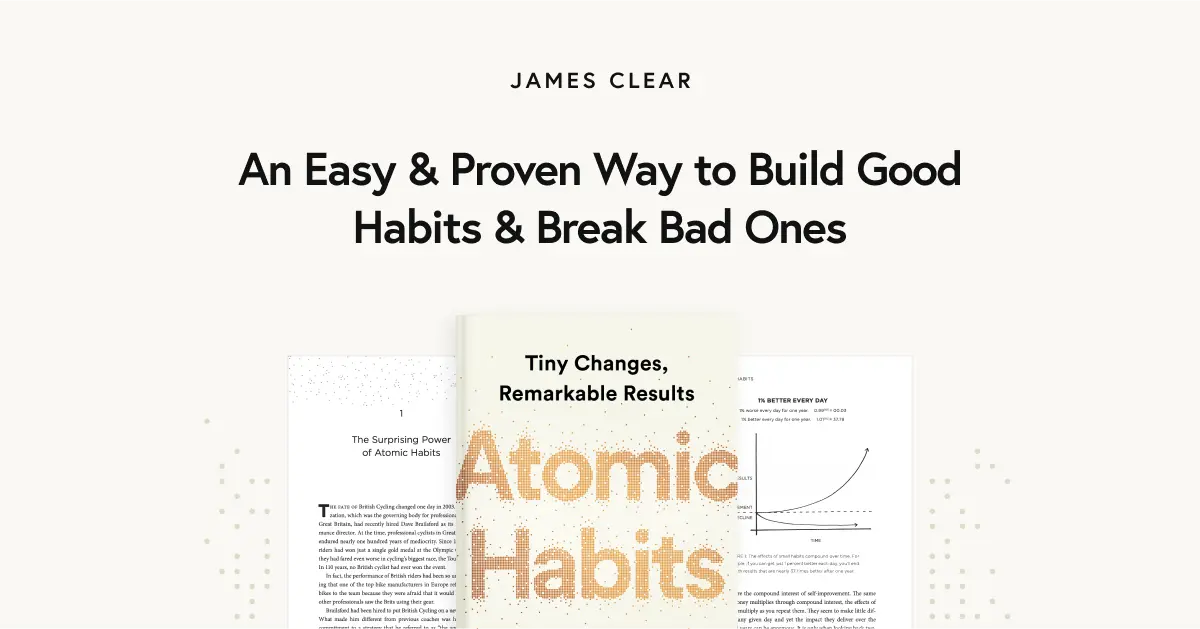
The journey of personal transformation is rarely defined by grand, sweeping gestures; rather, it is forged in the quiet accumulation of microscopic decisions. In his seminal work on behavioral psychology and self-improvement, Atomic Habits, author James Clear posits that lasting change is the byproduct of optimized systems rather than rigid goals. While theoretical frameworks provide the blueprint for personal growth, the true measure of their efficacy lies in real-world application.
This comprehensive report examines 30 micro-narratives submitted by readers who have operationalized the principles outlined in Atomic Habits. These accounts transcend abstract psychological theory, offering a granular look at how everyday individuals systematically dismantle self-defeating behaviors and construct enduring routines. By dissecting these real-world implementations across various categorical pillars—ranging from identity shifting and environmental design to habit stacking and rigorous tracking—this feature illuminates the mechanics of sustainable behavioural change. The findings demonstrate that when individuals manipulate their environments, align their daily routines with their desired self-image, and introduce strategic friction, profound personal evolution becomes not only attainable, but natural.
Detailed Chronology & Behavioral Frameworks
The systematic application of habit formation requires an understanding of how distinct psychological triggers interact with physical actions. The following chronological exploration categorizes the transformation journeys of everyday practitioners, tracing their paths from initial conceptual adoption to permanent behavioral integration.
Phase I: The Power of Identity-Based Shifts
Traditional goal-setting often fixates on external outcomes—losing a specific amount of weight, running a marathon, or earning a particular salary. However, sustainable transformation begins at the level of identity. By focusing on who one wishes to become rather than what one wants to achieve, the psychological resistance to change diminishes significantly.
Consider the experience of Roland, who struggled for years with erratic dietary patterns. Previous attempts to restrict consumption through sheer willpower inevitably failed. The paradigm shifted only when he discarded the outcome-oriented mindset—“I want to stop eating bad food”—in favor of an identity-driven mantra: “I am someone that eats healthy and lives a healthy life.” By anchoring his daily choices to this newly minted self-image, healthy eating ceased to be a daily negotiation and transformed into an expression of who he was.
Similarly, Robert tackled a lifelong smoking habit by reframing his psychological dialogue. Shifting from the restrictive phrase “I can’t smoke” to the empowering affirmation “I don’t smoke” fundamentally altered his brain’s perception of the act. Rather than feeling deprived or mourning the loss of a pleasure, Robert framed his abstinence as an active investment in his future well-being and long-term happiness.
For some, identity shifts are accelerated by pairing cognitive reframing with tangible reinforcement. One reader, seeking to break free from long-term alcohol consumption, adopted the identity axiom: “I am no longer a drinker.” To reward adherence, they established a micro-incentive system: every day completed without alcohol yielded a $10 allowance directed toward high-utility, positive purchases such as clothing and household goods, bypassing toxic coping mechanisms entirely. This scaffolding eventually became obsolete; six years later, the individual remains completely sober without the need for external financial rewards.
Phase II: Altering Cues and Environmental Engineering
Behavior does not occur in a vacuum; it is perpetually prompted by environmental cues. Modifying these signals—either by amplifying positive prompts or introducing friction to eliminate negative ones—serves as a primary engine for habit modification.
- Amplifying Positive Cues: Lisa, an avid reader struggling with consistency, bypassed the friction of book selection by maintaining 20 to 30 active holds at her local public library. By ensuring a steady, rotating stream of new titles arrived with strict three-week deadlines, she eliminated decision fatigue and kept reading materials constantly within her visual field. Heather applied a similar visual strategy to hydration, housing her water in a vibrant aqua bottle—her favorite color—placed strategically on her nightstand to greet her immediately upon waking.
- Eliminating Negative Cues: Conversely, eliminating destructive habits often requires starving them of environmental triggers. Max successfully conquered an e-cigarette addiction by simultaneously eliminating morning coffee consumption, recognizing that the ritualistic pairing of caffeine and nicotine served as an intractable behavioral trigger.
- Introducing Physical Friction: Physical architecture can be intentionally weaponized against bad habits. Cyd neutralized her household snacking addiction by relocating her family’s favorite Pringles to a locked car parked outside in the freezing winter cold—creating a barrier of inconvenience robust enough to deter midnight cravings. Daniel conquered the snooze button by removing his alarm clock’s proximity, forcing himself to physically leap out of bed to scan a QR code stationed securely in the bathroom. Similarly, Chris restructured his morning routine by placing his smartphone out of arm’s reach in the bathroom, establishing an involuntary chain reaction: turning off the alarm inevitably led to brushing his teeth and initiating the morning routine.
Phase III: Habit Stacking and Behavioral Anchoring
Coined initially by Stanford professor B.J. Fogg and popularized as "anchoring," habit stacking capitalizes on existing neural pathways by binding a new, desired behavior directly onto an established keystone habit.
When David sought to introduce daily mindfulness into his schedule, he bypassed abstract scheduling by attaching it to an immutable morning routine: “I meditate for 20 minutes after brushing my teeth in the morning.” By chaining the new behavior to a non-negotiable anchor, the cognitive load required to initiate meditation dropped to zero.
On an institutional scale, this technique can drive massive skill acquisition. A reader who relocated to China leveraged constant taxi rides—occurring five or more times daily—as an unyielding behavioral anchor. Committing to strike up a conversation in Mandarin with every single driver, regardless of fatigue or time of day, transformed daily transit into an immersive linguistic classroom, culminating in complete fluency over a two-year period.
Phase IV: Digital Environment Design
In the modern era, physical environmental design must be mirrored in the digital realm. The frictionless nature of smartphones and applications makes digital distractions uniquely difficult to resist.
Matthew drastically curtailed his daily screen time by executing a single, high-friction maneuver: logging out of Instagram after every session. Viet applied an identical philosophy to combat compulsive Facebook browsing, permanently deleting the application from his mobile device. The minor inconvenience of navigating to a mobile browser and entering credentials manually served as an insurmountable psychological barrier to mindless scrolling. Taking digital detachment to its logical extreme, Rahul dismantled his gaming addiction by physically unhinging his desktop’s graphics card, and eradicated mobile web wandering by completely uninstalling web browsers from his phone.
Phase V: Habit Substitution and Stair-Step Reduction
Completely eradicating a deeply ingrained habit without a replacement often creates a void that destructive behaviors quickly rush to fill. Habit substitution provides a viable alternative, routing the craving through a constructive outlet.
- Physical Substitution: Relocating his smoking ritual from the living room to the backyard, one reader placed a weight bench next to his designated smoking spot. Every physiological craving for nicotine was systematically redirected into physical sets of weightlifting, effectively neutralizing the craving through endorphin release.
- Gradual Stepping: Mark successfully curbed his heavy evening beer consumption by introducing flavored sparkling water as a direct substitute, concurrently removing alcohol from his home refrigeration unit. Once the psychological association between work-related stress and alcohol was severed, he successfully reintroduced beer in moderation. Another reader, Marc, phased out daily beer over a nine-month period through a descending cascade of substitutes—transitioning sequentially through fruit juice, iced tea, and finally seltzer water—achieving complete sobriety within two weeks of final cessation.
- Radical Metamorphosis: Suraj leveraged habit substitution to overcome severe drug and alcohol dependency, completely redirecting his addictive neurology toward powerlifting. By trading a destructive obsession for a competitive, health-centric discipline, he redirected his intensity toward athletic excellence.
Supporting Context & Metrics
The qualitative accounts gathered from readers align closely with established psychological metrics regarding habit formation loops (Cue, Craving, Response, Reward).
| Strategy Category | Core Mechanism | Primary Objective | Average Reported Success Timeline |
|---|---|---|---|
| Identity-Based Habits | Cognitive Reframing | Aligning self-image with actions | 30 to 90 Days |
| Environmental Design | Friction Manipulation | Maximizing/minimizing accessibility | Immediate |
| Habit Stacking | Neural Anchoring | Coupling new routines to existing anchors | 14 to 21 Days |
| Habit Substitution | Craving Rerouting | Replacing destructive loops with healthy ones | 60 to 180 Days |
| Habit Tracking | Visual Feedback | Maintaining momentum via visual chains | Ongoing (Daily) |
The integration of visual tracking mechanisms—exemplified by Cindy’s six-month calendar wall displaying unbroken chains of red "X" marks—demonstrates the profound psychological power of the "Don’t Break the Chain" methodology. By converting intangible progress into visible, undeniable proof of consistency, practitioners generate intrinsic motivation that compounds over time. This approach scales effectively down to minimal viable efforts; as practitioner Günter demonstrated, scaling a daily workout down to an abbreviated session on low-energy days preserves the integrity of the habit loop without requiring total perfection.
Official Statements & Expert Perspectives
Behavioral scientists and productivity authorities continue to emphasize that human willpower is a finite resource, meaning systems must always supersede brute-force motivation.
In public seminars and literature reviews surrounding the mechanics of behavioral design, experts underscore the necessity of making good habits obvious, attractive, easy, and satisfying—while simultaneously rendering bad habits invisible, unattractive, difficult, and unsatisfying.
As noted by J. Money, a prominent personal finance commentator who successfully halted late-night snacking and drinking by brushing his teeth immediately following his children’s 8:00 PM bedtime:
“It’s a great example of creating just enough friction to keep your bad habits at bay… Cuz who wants to re-brush them again!”
This highlights a core tenet of modern behavioral architecture: the most effective interventions require the least amount of daily cognitive bandwidth. By strategically engineering micro-barriers, individuals protect themselves from their own moments of weakness.
Future Outlook
As society navigates an increasingly complex landscape filled with digital distractions, algorithmic attention traps, and hyper-processed conveniences, the imperative for intentional behavioral design has never been higher. The traditional reliance on raw motivation and willpower is increasingly recognized as an obsolete and failing strategy.
The future of personal development lies in the democratization of environmental design and identity-based habit formation. As demonstrated by the diverse array of case studies examined in this report—from language acquisition via taxi cab conversations to sobriety maintained through financial self-reinforcement—the tools for transformation are universally accessible.
Ultimately, the compounding nature of atomic habits suggests that small, seemingly insignificant changes will continue to yield extraordinary dividends for those willing to construct resilient systems. The path forward does not demand perfection; it demands the consistent execution of small, daily actions designed to honor the identity of the person one wishes to become.