

Published: September 11, 2026
Author: Bob Hennelly
Executive Overview
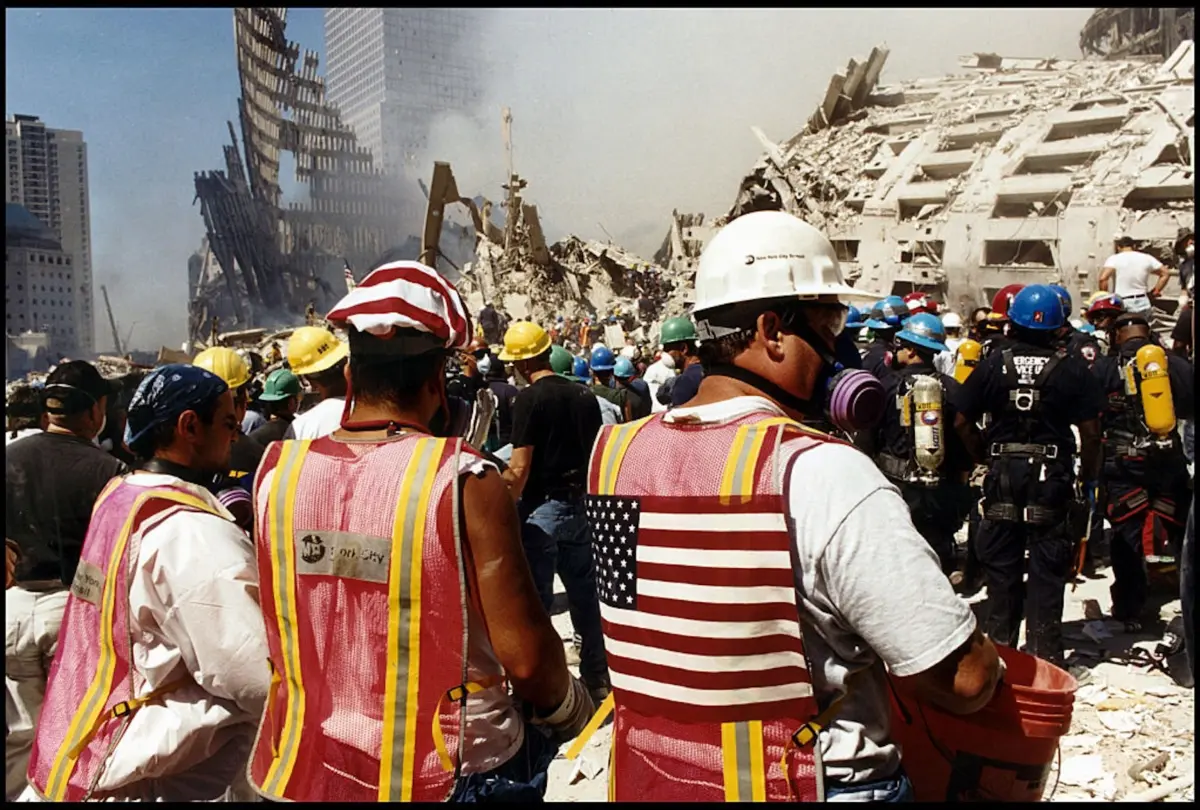
Twenty-five years after the catastrophic events of September 11, 2001, the true cost of that national tragedy continues to mount, written not just in the nearly 3,000 lives lost on the day itself, but in the slow, agonizing decline of thousands more. More than two and a half decades later, the death toll among first responders, cleanup crews, local residents, and school children has far eclipsed the initial casualties of the terrorist attacks.
An estimated 9,000 individuals have died in the intervening years from illnesses directly linked to the toxic, lingering plume that smothered lower Manhattan. Yet, this staggering loss of life was not merely an unavoidable tragedy of structural collapse; it was exacerbated—and in many cases enabled—by systemic institutional betrayal.
From the highest levels of the federal government down to municipal leadership, officials knowingly compromised public safety to project an image of normalcy and economic resilience. By falsely declaring the air "safe to breathe," authorities traded the long-term health of everyday Americans for political expediency and Wall Street’s reopening. In doing so, the nation repeated the shameful playbook of institutional denial last witnessed during the Vietnam War, when veterans were forced to fight tooth and nail for recognition of Agent Orange exposure. Today, as new municipal transparency efforts finally begin to drag decades of hidden documents into the light, the full scale of this calculated negligence is coming into sharper focus.
Detailed Chronology: From the Crisis to the Cover-Up
September 11, 2001: The Immediate Chaos and Preventable Complications
On the morning of September 11, Pacifica Network News reporter Bob Hennelly was working out of WBAI Radio’s flagship station at 120 Wall Street, just blocks from the World Trade Center. While civilians fled in terror from the encroaching toxic cloud, emergency personnel and independent journalists rushed toward Ground Zero. WBAI remained operational because its transmitter was safely located uptown on the Empire State Building, whereas other broadcasters lost their feeds when the Twin Towers fell.
However, the tragedy’s structural vulnerabilities began long before the second tower collapsed. As documented by the International Association of Firefighters, dozens of firefighters perished on 9/11 simply because they never heard the evacuation order. Years of bureaucratic delays under then-Mayor Rudy Giuliani’s administration had botched the upgrade process for departmental radios. Consequently, firefighters were forced to rely on the exact same analog equipment that had proven dangerously unreliable during the 1993 World Trade Center bombing. The fallout from this equipment failure haunted Giuliani’s political career for years, as busloads of FDNY widows and grieving families frequently shadowed his presidential campaign.
The "Safe to Breathe" Fraud and Economic Priorities
In the days following the attacks, as the World Trade Center site smoldered, then-Environmental Protection Agency (EPA) Administrator Christie Todd Whitman publicly proclaimed that the air in lower Manhattan was "safe to breathe."
Veterans of the local press, including former Daily News columnist Juan Gonzalez, viewed these assurances with immediate suspicion. Subsequent investigations—most notably a damning 2003 EPA Inspector General report—confirmed that Whitman’s fraudulent "all-clear" directives were traced directly back to the Bush White House. The administration was desperate to reopen Wall Street and restore economic normalcy at virtually any human cost.
To sell this illusion of safety, local officials encouraged residents to return, reopened businesses, and even sent close to 20,000 children back into public schools situated directly within the toxic fallout zone. The messaging was clear: shop, consume, and project resolve. The hidden price tag, however, would be paid in cellular mutations and chronic respiratory failure decades later.
Institutional Denial: The Bloomberg Era and the Zadroga Legacy
As first responders and recovery workers began exhibiting severe, atypical illnesses, they met a wall of institutional skepticism reminiscent of the U.S. government’s historical denial of Agent Orange afflictions among Vietnam War veterans.
For years, the City of New York rebuffed claims that downtown air exposure was responsible for workers’ deteriorating health. In one of the most egregious episodes of official callousness, then-Mayor Michael Bloomberg publicly dismissed NYPD Detective James Zadroga—who had spent grueling weeks sorting through human remains at the Fresh Kills Landfill before falling critically ill—suggesting his death was the result of drug abuse rather than occupational exposure. It was only after an independent coroner from New Jersey definitively contradicted the city’s narrative that Bloomberg offered an apology.
For a quarter of a century, successive municipal administrations guarded municipal files that detailed what city officials knew about the air toxicity and precisely when they knew it. However, in a long-overdue break with institutional opacity, current New York City leadership has begun releasing these heavily guarded documents onto a universally accessible public portal, allowing historians, victims, and journalists to finally map the architecture of the cover-up.
Supporting Context & Metrics: The Ongoing Health Crisis
The statistics surrounding the post-9/11 health crisis reveal a continuing public health emergency that demands urgent national attention.
- Casualty Discrepancies: While approximately 3,000 people died during the terrorist attacks, nearly 9,000 individuals have succumbed in the 25 years since, largely due to dozens of ailments triggered by the Ground Zero toxin cloud.
- Enrollment Deficits: Despite hundreds of thousands of individuals being exposed to the hazardous environment, only 145,000 first responders and survivors are currently enrolled in the World Trade Center Health Program (WTCHP).
- At-Risk Population: Public health experts estimate that close to 400,000 people—including area residents, non-emergency civil servants, daily commuters, and school children—remain at ongoing risk for life-altering, latent illnesses.
- Civil Service Casualties: Beyond police officers and firefighters, thousands of municipal workers—such as civil servants ordered back into the hot zone to keep essential government functions like food stamp distribution operational—were exposed without adequate protective gear.
- The Diagnostic Caste System: Under the current structure of the health program, first responders are fast-tracked for health screenings, while survivors (including residents, students, and office workers) must manifest explicit symptoms before receiving care. Given the decades-long latency periods of Ground Zero cancers, this administrative barrier has effectively functioned as a death sentence for many. Furthermore, because the primary responder cohort was overwhelmingly male, female-specific reproductive cancers were only belatedly recognized as official 9/11-related conditions.
Official Statements and Institutional Reckoning
The painful reality of the ongoing health crisis has forced a cultural and administrative reckoning among those tasked with supporting the survivors. Bob Hennelly, now serving as general manager of community radio station WBAI, finds himself navigating the grim human toll of the disaster through his administrative duties under New York State’s 9/11 Notice Act.
"It’s sobering and painful work because people have died or are ailing," Hennelly notes, reflecting on his mandate to track down former station workers and volunteers to inform them of their eligibility for the Victims Compensation Fund and the WTC Health Program. WBAI recently recovered original audio air-checks from September 11, planning to rebroadcast the raw coverage to honor the sacrifice of local journalists and emergency crews who charged into the disaster zone while global powers prepared to embark on decades of foreign military interventions under the banner of fighting terror.
The recent opening of municipal archives by the city government marks a profound shift away from decades of stonewalling. By uploading internal records to a public database, current officials are dismantling the administrative secrecy that protected past administrations from accountability. Yet, advocates emphasize that transparency alone is insufficient; active outreach remains vital to reach the hundreds of thousands of individuals who remain unaware that their latent health risks trace back to the toxic air of September 11.
Future Outlook: Lessons Unlearned and the Path Forward
As America marks twenty-five years since the darkest day in modern New York history, the legacy of 9/11 serves as a chilling reminder of how nations treat those on the front lines of crises. The parallels between the abandonment of Vietnam veterans suffering from Agent Orange exposure and the systemic gaslighting of 9/11 first responders are undeniable. Both crises exposed an institutional reflex to prioritize optics, economic continuity, and political reputation over human life.
Moving forward, closing the gap in health program enrollment is an ethical imperative. Medical ethicists and advocates argue that creating a multi-tiered caste system for life-saving care based on job titles—separating a firefighter from a school child or an office worker who breathed the exact same toxic air—was fundamentally unjust from its inception.
The children who returned to downtown classrooms in September 2001 did so because they trusted adult authorities who lied to them about the air they breathed. Decades later, as latent cancers and chronic respiratory illnesses continue to claim lives, honoring the true legacy of 9/11 requires more than annual moments of silence. It demands universal access to medical care, unconditional institutional accountability, and a permanent end to the historical pattern of sacrificing the health of citizens for the sake of political expedience.