

Executive Overview
The November 2026 midterm elections sent a resounding shockwave through American politics, delivering a powerful anti-MAGA wave that rippled far beyond traditional blue strongholds. From the suburban battlegrounds of Texas and the Carolinas to the heartland of Kansas, an energized electorate mobilized against the conservative agenda in what many pundits characterized as a "blue avalanche." Yet, beneath the triumphant national narrative of recovered congressional majorities and historic upsets lay a glaring, preventable failure of strategic vision by the national party apparatus.
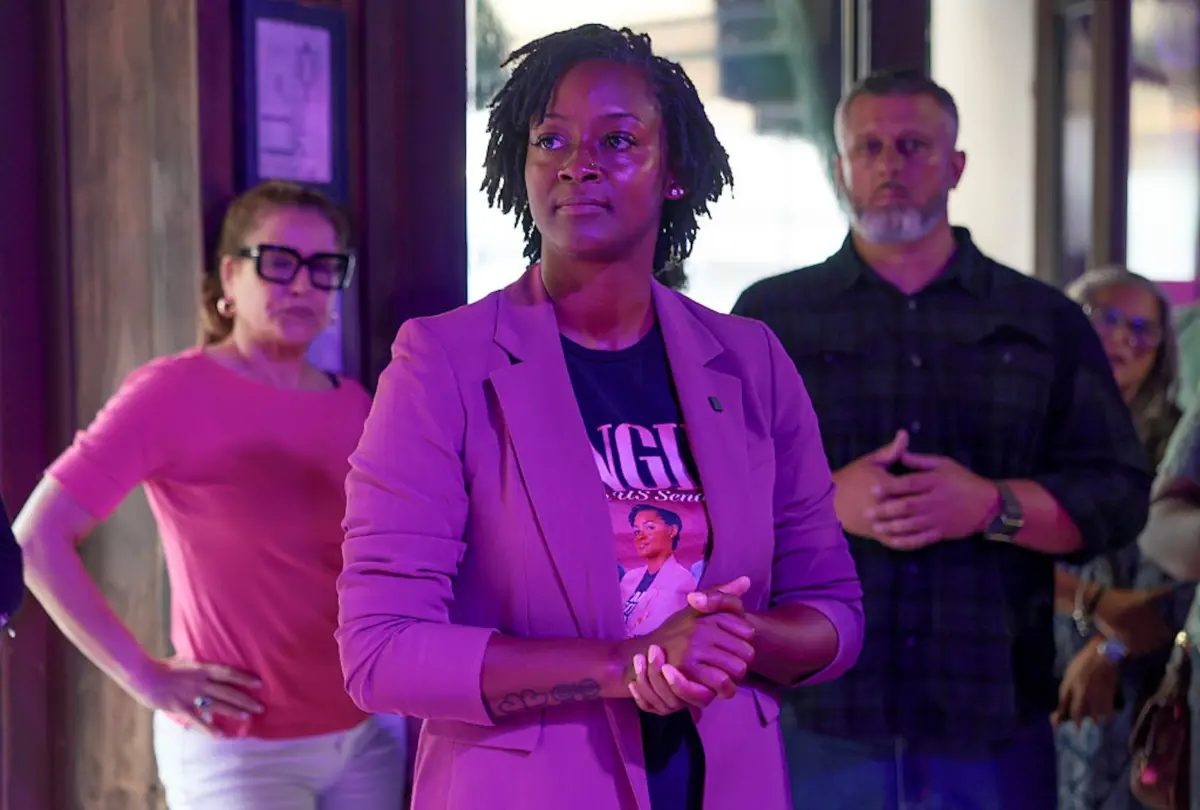
In key Southern battlegrounds—most notably Florida, Louisiana, and Mississippi—dynamic Democratic challengers proved that deep-red states were far more competitive than Washington consultants dared to believe. Running on bold populist platforms addressing the crushing cost of living, healthcare crises, and reproductive rights, candidates like Florida state Representative Angie Nixon came within a hair’s breadth of pulling off historic upsets. Nixon lost to Republican incumbent Ashley Moody by less than two percentage points, despite being heavily outspent and entirely abandoned by the Democratic Senatorial Campaign Committee (DSCC). Similar dramatic overperformances occurred across the region, where underfunded candidates outperformed expectations simply because grassroots energy was fiercely anti-Republican.
The central thesis emerging from the post-mortem of the 2026 midterms is as stark as it is damning: the primary obstacle to Democratic legislative dominance was not insurmountable red-state conservatism, but the self-fulfilling defeatism of the party’s own national leadership. By writing off the South in advance, hoarding resources for safer bets, and succumbing to institutional anxieties—particularly regarding Black female candidates in the post-2024 landscape—the DSCC and allied political action committees left millions of potential votes on the table. Had national Democrats invested even fractionally in the South what they poured into traditionally predictable races elsewhere, the political topography of the United States Senate for the remainder of the decade would look fundamentally different.
Detailed Chronology: From Primary Shocks to Election Night Heartbreak
The trajectory of Angie Nixon’s improbable Senate campaign began in earnest with her stunning primary victory in August 2026. A Jacksonville-based organizer, bookstore owner, and democratic socialist state representative, Nixon galvanized progressive activists by championing universal healthcare and tackling Florida’s ongoing property and health insurance crises head-on. Her unabashedly left-populist message struck a chord with working-class voters exhausted by years of corporate-friendly governance and soaring living costs.
However, almost immediately after securing the nomination, Nixon ran into a brick wall of institutional resistance from the national party. By September, behind-the-scenes friction had broken into public view. During an appearance on the MS NOW video podcast hosted by Symone Sanders Townsend and Eugene Daniels, Nixon detailed a lukewarm—if not outright dismissive—reception from Senate Minority Leader Chuck Schumer. When asked about direct support from the DSCC, Nixon recounted a guarded phone conversation with Schumer, noting that his response amounted to little more than a noncommittal "we will see" and a promise to "look into it."
As the fall campaign progressed, the cold shoulder from Washington hardened into an effective embargo. In subsequent interviews, Nixon articulated what many grassroots organizers in the region had long suspected: national Democratic leadership had written off Florida as a lost cause, operating under the fatalistic assumption that the state was fundamentally "racist" or politically unreachable. Nixon publicly pointed to the lingering trauma within the party establishment following Vice President Kamala Harris’s 2024 defeat, arguing that national strategists had become pathologically gun-shy about financing and aggressively promoting Black women running for high office in the American South.
Despite this systemic defunding, election night on November 5, 2026, revealed a state vastly more volatile than national pundits acknowledged. Nixon’s campaign overperformed expectations, riding an unexpected wave of anti-MAGA sentiment that managed to crack traditionally impenetrable Republican strongholds. In Miami-Dade County—historically a treacherous landscape for candidates perceived as left-of-center due to its wary anti-socialist Cuban-American electorate—Nixon secured vital victories. Simultaneously, Jacksonville swung significantly left.
Ultimately, however, the sheer financial disparity proved insurmountable. Ashley Moody, appointed to the seat by Governor Ron DeSantis following Marco Rubio’s confirmation as secretary of state, outspent Nixon by more than two to one. Moody narrowly eked out a victory by less than two percentage points—a margin that could easily have evaporated had the DSCC allocated even a fraction of the tens of millions spent elsewhere to shore up Florida’s grassroots infrastructure.
Supporting Context & Metrics: The Cost of Strategic Neglect
To understand the magnitude of the missed opportunity in Florida and the broader South, one must examine the empirical data regarding political spending and regional voting shifts. According to comprehensive media analysis by the Wesleyan Media Project (WMP), the disparity in national party investment across state lines laid bare a severe strategic misalignment. In the final, crucial weeks of the campaign cycle, the national party and its affiliated super PACs spent an astonishing ten advertising dollars in Iowa for every one dollar spent in Florida.
The irony of this resource allocation is sharp. While Iowa ultimately delivered a new Democratic senator and governor—validating targeted investment in the Midwest—the absolute starvation of the Florida campaign denied local organizers the media bandwidth required to push a competitive candidate across the finish line. Had the DSCC matched its financial commitment to the political winds blowing across the country, those ten-to-one ratios might have yielded a dual-state payoff instead of a solitary regional win.
The broader Southern map reinforced this narrative of starved potential. In Texas, where the most expensive Senate race in American history played out, massive, virtually unlimited spending and relentless national messaging enabled Democratic phenom James Talarico to turn the Lone Star State into a genuine battleground.
Further east, Louisiana and Mississippi delivered heart-stopping nail-biters in states long codified as immovable Republican bastions. In Louisiana, Democratic challenger Jamie Davis lost to Republican incumbent Julia Letlow by a razor-thin margin of just two percentage points. According to WMP tracking, Davis achieved this remarkable feat despite receiving zero advertising dollars from the national party throughout the entire month of October.
In Mississippi, the race morphed from a longshot bid into an outright political miracle, unfolding entirely independent of national party scaffolding. With 96% of precincts reporting, Democratic district attorney Scott Colom found himself locked in a virtual dead heat with incumbent Republican Senator Cindy Hyde-Smith, separated by a microscopic margin of just 138 votes while roughly 15,000 provisional ballots awaited tabulation.
These numbers demonstrate a fundamental disconnect between Washington strategists and the shifting realities on the ground. Across the South, the energy of the electorate was palpably anti-Republican; where candidates were given the basic tools to prosecute that case, they thrived. Where they were abandoned, they came agonizingly close anyway.
Official Statements & Grassroots Perspectives
The frustration felt by Southern Democrats over the DNC and DSCC’s triage strategy spilled over into public view as the election returns rolled in on Wednesday, November 6. Party leaders and candidates alike voiced deep exasperation over an institutional philosophy that rewards self-fulfilling prophecies of defeat.
Appearing on CNN with Anderson Cooper on Wednesday evening, Mississippi state Representative Cheikh Taylor pulled no punches when asked about the dramatic, down-to-the-wire Senate race in his home state. Taylor pointed directly to the wall of institutional indifference that Scott Colom’s campaign had to scale.
"Early money always helps. Monies have come to the state of Mississippi, just not through the traditional means, through the DNC," Taylor told Cooper. "We all know that the Colom campaign was locked out of that $30 million contribution to U.S. Senate races. Even though the money didn’t come, in Mississippi, we figure it out."
Taylor’s remarks encapsulated the core grievance of Southern organizers: a persistent belief that national headquarters views the region through an antiquated lens, writing off millions of progressive and moderate voters before a single ballot is cast.
Angie Nixon echoed this sentiment in her post-mortem reflections on the campaign trail, criticizing the risk-averse nature of the party’s financial gatekeepers. Reflecting on her conversations with party leadership, Nixon underscored how identity politics and historical anxiety crippled strategic decision-making. By retreating from the South, national leadership functionally conceded that diverse, progressive candidates could not win outside of culturally insulated coastal enclaves—a premise thoroughly dismantled by the narrow margins in Florida, Louisiana, and Mississippi.
Future Outlook: Lessons for the Post-Midterm Era
The 2026 midterms will be remembered as a watershed moment when the American electorate demonstrated a profound appetite for political change, pushing back aggressively against the MAGA agenda across vast swaths of the country. Yet, for the Democratic Party, the victory carries a heavy asterisk. By failing to secure vulnerable seats in the South due to calculated institutional neglect, the party left critical legislative leverage on the table.
Securing even two of these hyper-competitive Southern Senate races through timely, aggressive financial investments would have fundamentally transformed the balance of power in Washington. Instead of merely checking the executive branch from a defensive posture, a broader Senate majority would have empowered Democrats to aggressively challenge presidential appointments, block regressive judicial nominees, and dictate the legislative agenda for the remainder of the presidential term.
As the party looks ahead to the 2028 presidential cycle and subsequent midterms, the overarching takeaway from the Southern theater is clear: demographic and political landscapes are dynamic, not static. The myth of the permanently unreachable red state has been thoroughly debunked by the sweat of grassroots organizers and the courage of candidates who ran hard-fought races against all odds.
If national committees continue to practice preemptive triage based on outdated geographic prejudices, they will continue to snatch defeat from the jaws of victory. To build a durable, nationwide majority, the Democratic Party must abandon its institutional risk aversion, trust the energy of local organizers, and recognize that the South is not a wasteland to be abandoned, but a crucial frontier waiting to be won.
