

Executive Overview
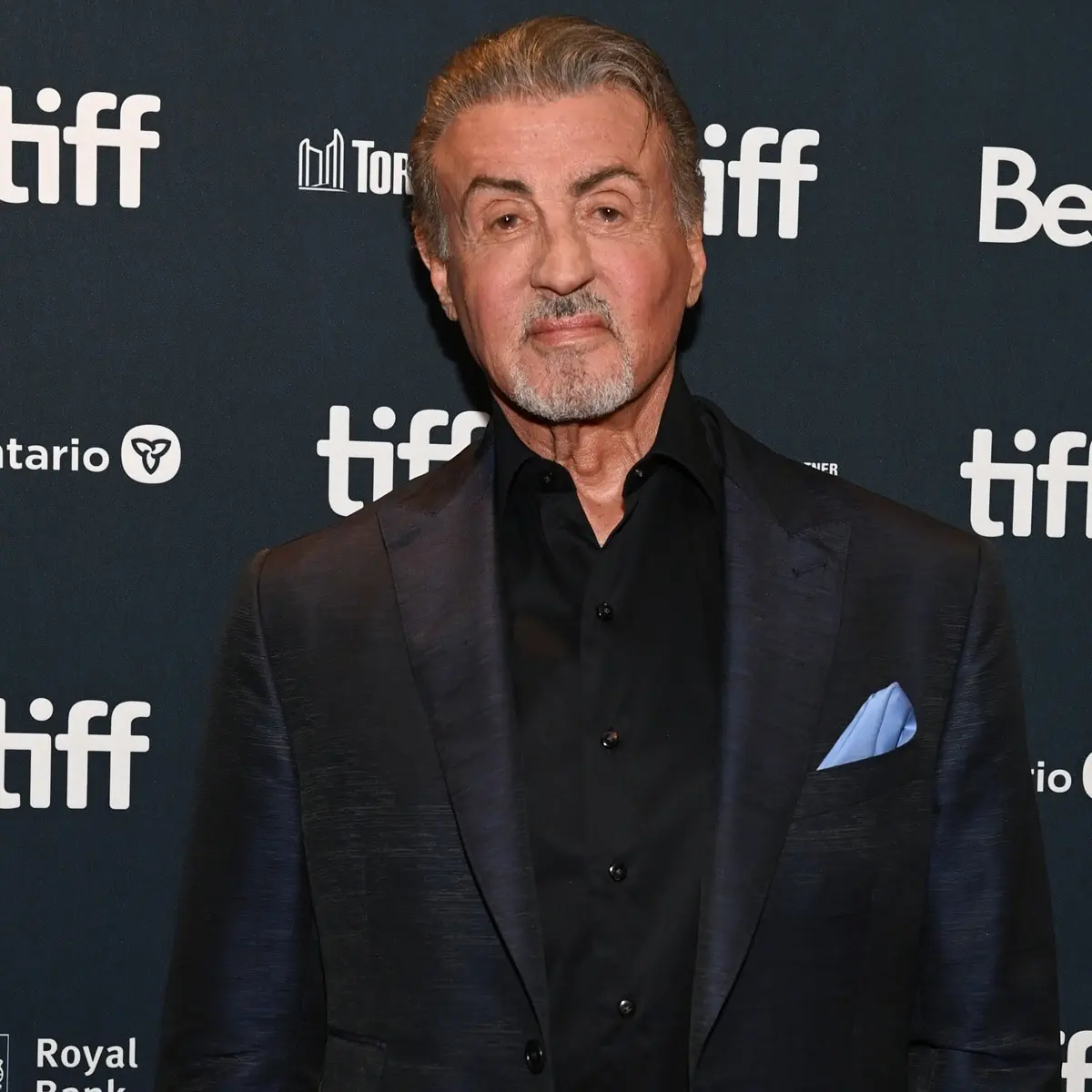
In a revealing interview with The New York Times, legendary action icon Sylvester Stallone offered an unfiltered look into the harrowing realities of Hollywood’s physical and mental demands at the height of his career. Best known for immortalizing cinematic underdogs like Rocky Balboa and John Rambo, Stallone admitted to grappling with severe body dysmorphia, bulimia, and steroid use during the 1980s.
Reflecting on decades of relentless pressure to maintain an "obsessive body-worship" physique, the 80-year-old actor detailed a regime of extreme physical deprivation that ultimately required nine back operations, three neck fusions, and two shoulder surgeries. Stallone’s revelations shine a harsh light on the dark underbelly of blockbuster filmmaking, where the pursuit of physical perfection often demands a lifelong physical and psychological toll. Beyond his personal reflections, this cultural moment echoes a broader, industry-wide reckoning as public figures increasingly break the silence regarding mental health, body image struggles, and the hidden costs of fame.
Detailed Chronology: The Pursuit of the "Jaguar" Physique
To understand Sylvester Stallone’s candid admissions, one must trace the timeline of his physical transformations on screen, which mirrored his descent into an unhealthy, obsessive fitness culture.
The Rise of the Action Titan (Late 1970s–1982)
When Stallone burst into global prominence with Rocky (1976), his physique was remarkably lean and athletic, reflecting the gritty reality of a down-on-his-luck Philadelphia boxer. However, as the franchise expanded, so did the cinematic expectations for male action stars. The arrival of contemporaries like Arnold Schwarzenegger popularized a massive, hyper-muscular aesthetic that shifted the goalposts for Hollywood leading men.
By the early 1980s, Stallone sought to carve out a distinct physical identity. Rather than matching Schwarzenegger’s sheer mass, he envisioned a different archetype.
"I started to think: Design your body like a jaguar, a cat," Stallone explained to The New York Times. "Not big like Arnold, but more feral and aggressive and very limber and athletic. It became an obsession. Really bad. It got to the point where I became bulimic."
The Extreme Nadir of Rocky III (1982)
The psychological and physiological breaking point arrived during the production of Rocky III (1982), in which Stallone portrayed Balboa at the pinnacle of his boxing career. Driven by an unrelenting desire for visual authenticity, Stallone pushed his body to dangerous extremes.
"I got down to 2.6 percent body fat when I was doing Rocky III," Stallone recalled. This extraordinarily low body fat percentage—far below safe physiological thresholds—was achieved through severe caloric restriction and purging behaviors. "I couldn’t hold anything down. Or I didn’t want to keep it down because I became so obsessed with staying at that point of fitness, literally an obsessive body-worship kind of thing."
Breaking the Taboo on Performance Enhancers
Stallone did not shy away from addressing the mechanisms behind maintaining an action-star physique under grueling production timelines. He asserted that achieving and sustaining extreme fitness goals in Hollywood is practically impossible without external aids.
"Nobody achieves their fitness goals without additives and drugs, period," Stallone stated bluntly. "I don’t care what they say. It isn’t as though you’re a junkie, but if you’re going to work out and try to stay in shape for six months straight, and you’re eating yogurt and pudding, it’s not happening."
When directly asked if this served as an admission of his own steroid use, the Expendables star answered affirmatively, noting that he practiced disciplined cycles—"six weeks on, six weeks off"—to mitigate the damage, though acknowledging that it still "took a terrible toll" on his biology.
The Shift Toward Liberation and Fall from Grace (1997)
For years, Stallone felt trapped by the cinematic persona he had created. The psychological relief he craved finally materialized not through another high-octane action vehicle, but via a radical departure from typecasting.
In James Mangold’s 1997 crime drama Cop Land, Stallone portrayed Freddy Heflin, a partially deaf, overweight, and emotionally vulnerable sheriff in a corrupt New Jersey town. Shedding the armor of the invincible action hero allowed the actor a temporary sense of psychological freedom.
"It wasn’t until I did Cop Land, when I had to play the weakest guy in the room—partially deaf, overweight—that I felt somewhat liberated," Stallone reflected. Unfortunately, this artistic detour came with professional consequences, as the actor noted, "Then things went sideways and I just fell out of grace with Hollywood."
Supporting Context & Metrics: The Cost of Stunt Work and Bodily Abuse
Decades of performing high-risk stunts and subjecting his frame to aggressive weight fluctuations have left Stallone with a body held together, in his own words, "with baling wire."
The Medical Toll
The physical ledger of Stallone’s career underscores the long-term hazards of the action genre prior to modern computer-generated imagery (CGI) safety protocols and stunt doubles taking the brunt of high-impact scenes. His medical chart includes:
- 9 Back operations to repair spinal trauma accumulated from heavy lifting and stunt work.
- 3 Neck fusions resulting from impact injuries sustained on set.
- 2 Shoulder operations necessitated by repetitive stress and combat choreography.
Reflection on Masochistic Tendencies
Looking back at his career choices, Stallone characterizes his past drive not merely as dedication, but as "very masochistic."
"It’s come at a terrible price," he admitted. "If I could do it over again, I would say, ‘Let someone else carry the banner and don’t do your own stunts.’ I don’t know what it was about hurting myself all the time."
Official Statements & Cultural Resonance
Stallone’s vulnerability arrives during a broader cultural conversation regarding the mental health struggles, body dysmorphia, and invisible traumas carried by public figures across the entertainment and music industries. His willingness to pull back the curtain on steroid use, eating disorders, and the psychological traps of stardom aligns with a growing movement toward radical transparency among celebrities.
Prominent figures across pop culture have similarly used their platforms to dismantle the illusion of effortless perfection:
- Penn Badgley: The Gossip Girl and You star opened up to The Guardian about battling body dysmorphia as a child actor, noting, "I know that I hated my body and simply wanted a different one… coming out of depression and isolation, I was jumping wilfully into, but also being thrust into, this world where the more conventionally beautiful I seemed, the more successful I might be."
- Eliza Coupe: The Scrubs alumna has spoken candidly about her lifelong battle with food and body image issues, recounting cycles of over-exercise and bulimia before finding grounding in yoga, breathwork, and nutritional mindfulness.
- Dwayne "The Rock" Johnson: As a modern titan of action cinema, Johnson has frequently used social media to destigmatize depression among men, noting that "depression never discriminates" and urging individuals—particularly men conditioned to stay silent—to open up and seek support.
- Selena Gomez: Documenting her journey with bipolar disorder and medication, Gomez highlighted the debilitating nature of untreated psychological distress, noting how finding the right medical support fundamentally changed her quality of life.
Future Outlook
Sylvester Stallone’s reflections serve as both a cautionary tale and a catalyst for industry evolution. As Hollywood increasingly prioritizes actor welfare, mental health resources on set, and safer stunt coordination, the romanticization of bodily destruction for the sake of entertainment is rightfully facing scrutiny.
At 80 years old, Stallone remains committed to physical fitness, albeit with a wiser, more tempered perspective. By speaking out against the myths of natural hyper-muscularity and addressing the silent epidemics of bulimia and body dysmorphia among male actors, Stallone has reframed his legacy. He is no longer just the indestructible titan of the silver screen, but a human being who survived the crushing expectations of fame—offering a vital warning to the next generation of performers about the true cost of chasing cinematic perfection.