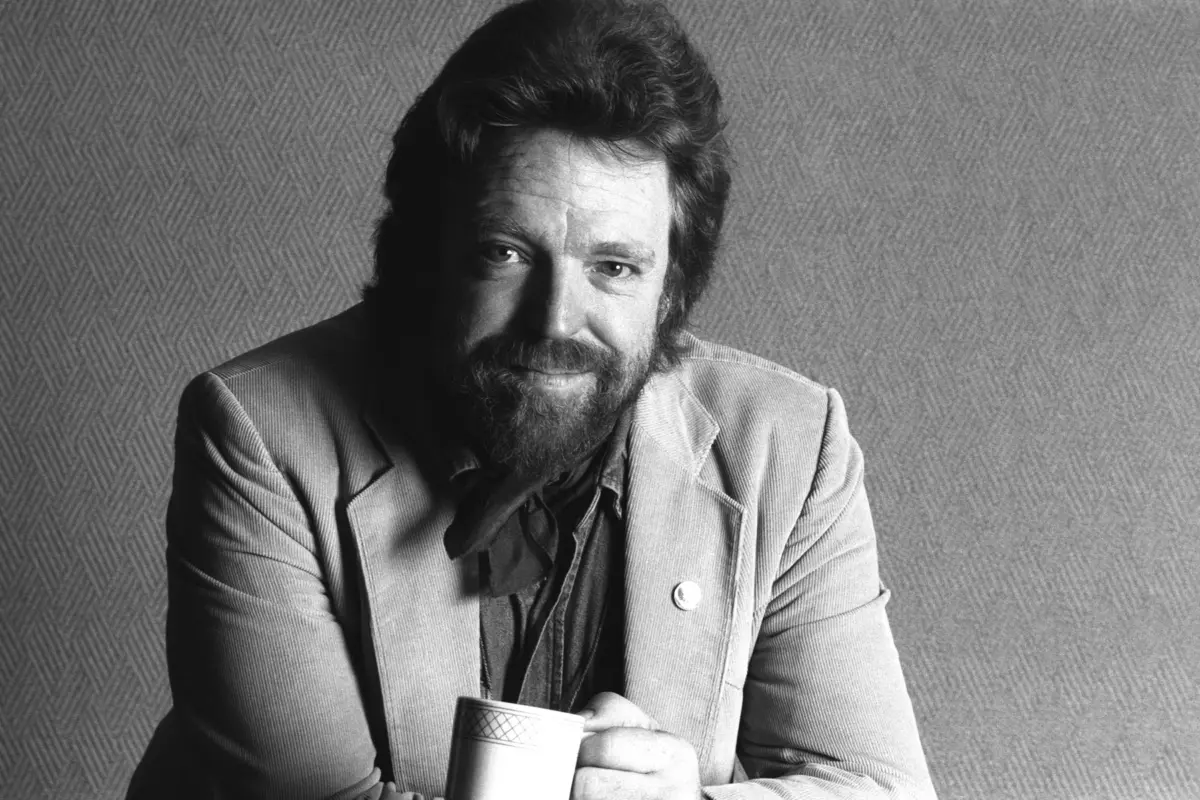
Thirty years after Grateful Dead lyricist and digital rights pioneer John Perry Barlow penned “A Declaration of the Independence of Cyberspace,” the digital landscape stands at an unprecedented, perilous threshold. Written in 1996 in fierce defiance of the federal Communications Decency Act, Barlow’s manifesto gave a generation of technologists, idealists, and early adopters permission to imagine a borderless digital commons—a utopian realm free from the traditional constraints of physical geography, sovereign interference, and centralized control.
Today, as artificial intelligence (AI) accelerates at a velocity entirely foreign to human history, that founding myth of digital independence faces a harsh reckoning. The internet promised radical democratization and global connectivity; instead, it has delivered corporate consolidation, algorithmic polarization, and deep social fragmentation. Furthermore, the foundational fiction of the digital age—that "bits have no bodies"—has been brutally exposed. The modern infrastructure of the internet and artificial intelligence is fiercely physical, demanding vast tracts of land, gigawatts of energy, millions of gallons of water, scarce heavy minerals, and the extracted labor of human communities worldwide.
In this deeply reflective essay and call to action, Amelia Rose Barlow—daughter of John Perry Barlow and co-steward of We the Interdependent and Declaring Our Tech Futures—argues that while the dawn of the internet required an ethos of radical independence to break free from old paradigms, the age of artificial intelligence demands something far more mature: a philosophy of radical interdependence. Drawing from her upbringing in the rugged winters of Wyoming and her later studies of Indigenous governance at the Pine Ridge Reservation, Barlow posits that humanity’s survival in the age of generative algorithms depends on reconciling our digital creations with the physical reality of living ecosystems, human communities, and the needs of the next seven generations.
Detailed Chronology: From Silicon Valley to the Pine Ridge Reservation
To understand the trajectory of our current digital crisis, one must trace the parallel evolution of the technology sector and the philosophical awakenings of those who lived through its formative milestones.
1994: The Arrival of the Future
As an eight-year-old child, Amelia Rose Barlow sat alongside her father in a massive Silicon Valley conference hall during the ultra-secret, off-the-record unveiling of Netscape to roughly 150 select advisers and early adopters. Long before the global public understood what a browser was, she spent her first moments online exploring the concept of white rabbits, quickly falling down a rabbit hole of hyperlinks. Returning to physical reality forty minutes later, she was left not with awe, but with a profound, chilling sense of dissociation—a sudden, unsettling awareness of how untethered human consciousness could become from the physical body and the rugged wilds of Wyoming that had shaped her family for generations.
1996: The Manifesto of Cyberspace
By the mid-1990s, John Perry Barlow—having lived dual lives as a Wyoming cattle rancher and a lyricist for the Grateful Dead—recognized that a third great frontier was emerging: cyberspace. In February 1996, galvanized by the passage of the Communications Decency Act, which sought to impose federal censorship on the nascent web, Barlow published A Declaration of the Independence of Cyberspace.
“We are creating a world that all may enter without privilege or prejudice accorded by race, economic power, military force, or station of birth,” he wrote.
The document served its historical purpose: it provided builders, hackers, and visionaries with the ideological cover needed to experiment, innovate, and construct the modern web beyond the immediate, suffocating reach of legacy nation-states.
The Turn to Indigenous Wisdom
Sixteen years after her initial voyage into hyperlinks, Amelia’s academic and political curiosities led her to the Pine Ridge Reservation to author a book contrasting two distinct frameworks of natural law: Western constitutionalism and Indigenous ecology. There, she confronted a profound historical omission in standard American education: the foundational realization that the democratic governance envisioned by the U.S. Founding Fathers was heavily influenced by the centuries-old Haudenosaunee Confederacy.
Unlike the Western political models built on separation and dominion, the Haudenosaunee system arose from thousands of years of close observation of the natural world’s deep interdependencies. It placed women, peace, and long-term ecological care at the very center of civic life—principles starkly absent from the top-down, corporate-dominated structures of the modern technological order.
Supporting Context & Metrics: The Weight of the Cloud
The central failure of the 1990s digital ethos was its willful ignorance of physical materiality. Barlow’s assertion that “identities have no bodies” became a comforting mantra for a tech industry eager to externalize its costs onto the physical world. Three decades later, the bill has come due.
The Material Reality of Bits
Energy Consumption: Modern artificial intelligence model training and large-scale data center operations consume staggering amounts of electricity, rivaling the energy demands of entire nation-states and straining regional power grids.
Resource Extraction: The hardware powering the AI revolution relies directly on global supply chains defined by mineral extraction, microchip manufacturing plants, undersea fiber-optic cables, and intensive land use.
The Illusion of Weightlessness: The "cloud" is not an ethereal mist; it is anchored in concrete, water-cooling towers, rare earth mines, and human labor. Every algorithmic interaction leaves a physical footprint.
The Fracturing of the Public Sphere
Simultaneously, the commercialization of the internet has warped the social fabric. Digital technologies originally designed to connect humanity have instead engineered outrage economies, accelerating polarization, eroding democratic institutions, and substituting synthesized digital environments for real-world communities. Attention has migrated entirely behind screens, leaving citizens increasingly alienated from the natural cycles of blood, bone, weather, and soil upon which biological survival ultimately depends.
Official Statements & Frameworks: A Call for a New Civic Compact
As the world marks both the 30th anniversary of Barlow’s Declaration and the 250th anniversary of the American Declaration of Independence, scholars, indigenous leaders, and technologists are calling for a fundamental paradigm shift.
In the recently published volume American Indigenous Democracy: A Call for Interdependence, Haudenosaunee leaders outline core governance principles that offer a vital antidote to unchecked techno-solutionism:
Peace as the Highest Calling: Prioritizing societal stability and human well-being over raw technological acceleration.
The Principle of the Next Seven Generations: Evaluating every institutional and technological choice based on its projected impact on descendants a century into the future.
Reciprocity with Living Systems: Re-establishing legal and ethical boundaries that treat the natural world not as a resource to be plundered, but as a living partner deserving of care.
Through initiatives like We the Interdependent and Declaring Our Tech Futures, civil society leaders are mobilizing public campaigns to bridge the gap between technological capabilities and democratic accountability. The core argument of these frameworks is deceptively simple: Independence is a necessary tool of adolescence, but survival in adulthood requires interdependence.
Future Outlook: Reclaiming the Technological Horizon
We stand at a critical historical juncture. Artificial intelligence represents the most powerful, far-reaching technological threshold in human history, developing at a velocity that leaves legacy regulatory frameworks scrambling in its wake. The default trajectory of AI is currently dictated by a handful of corporate monopolies and state actors racing to capture markets without broad public consent.
However, Amelia Rose Barlow insists that nothing about this future is inevitable:
“Technology that touches everyone should be accountable to everyone, including parents, workers, and the people building it.”
To steer this transition away from digital feudalism, civil society must embark on a structured, inclusive process of public deliberation. This vision calls for:
National Citizens’ Assemblies: Bringing everyday citizens together across ideological, economic, and geographic divides to deliberate on the ethical boundaries, safety limits, and democratic priorities governing artificial intelligence before the next major political cycles.
Reframing Corporate Accountability: Shifting the tech industry’s legal and moral framework from an ethos of "move fast and break things" to one of deep ecological and social stewardship.
Reuniting Mind and Matter: Transitioning away from the alienation of screen-bound isolation and re-anchoring human identity within our local communities, biological bodies, and the living Earth.
Thirty years ago, John Perry Barlow declared cyberspace to be the “new home of Mind.” As humanity navigates the turbulent waters of the artificial intelligence age, the urgent task of the twenty-first century is to remember that our true home of the mind can never be divorced from the physical reality that sustains us. Independence gave us the courage to cross the digital threshold; the timeless wisdom of interdependence must now guide everything that comes next.