

Executive Overview
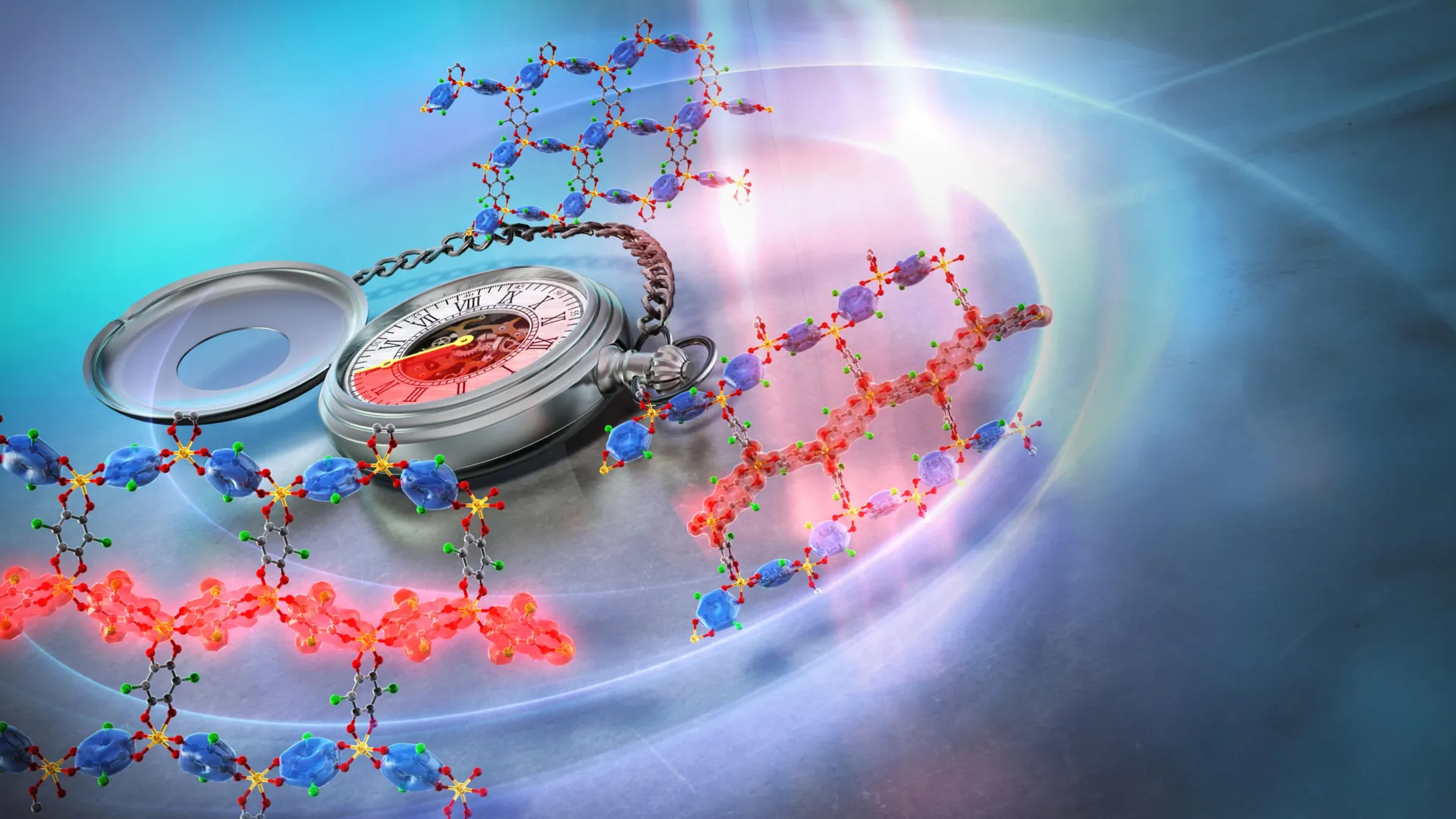
In a monumental achievement for materials science and ultrafast physics, an interdisciplinary research team in Japan has successfully captured an extraordinarily rapid electronic transformation inside a complex solid-state material, tracking a fleeting transitional state and its subsequent hidden phase within a staggering 30-femtosecond window.
The breakthrough—achieved through a powerful synergy of cutting-edge ultrafast laser spectroscopy and advanced theoretical quantum calculations—was spearheaded by researchers from the Institute of Science Tokyo (Science Tokyo), in collaboration with Tohoku University and the Nagoya Institute of Technology. By training their sights on a specialized metal-organic framework (MOF), the team managed to uncover a previously hypothesized yet entirely unobserved intermediate electronic state that acts as the critical catalyst for light-driven structural evolution.
Published in the prestigious journal Physical Review Letters, these findings transcend fundamental academic curiosity. They provide a transformative roadmap for how scientists might one day harness light to dynamically, reversibly, and ultra-efficiently control the fundamental physical and electrical properties of advanced materials. As the global technological landscape races toward petahertz electronics, ultra-dense data storage, and zero-latency optoelectronic computing, the ability to observe and manipulate matter at the absolute limits of time opens unprecedented horizons for next-generation engineering.
Detailed Chronology of an Ultrafast Event
To comprehend the magnitude of the Japanese team’s discovery, one must first grasp the temporal scale of the experiment. A femtosecond is one quadrillionth of a second ($10^-15$ seconds)—a temporal unit so profoundly brief that light itself can travel only about 0.3 micrometers (roughly the width of a bacterium) in that span. Capturing events unfolding on this scale requires instrumentation operating at the absolute cutting edge of human engineering.
Phase I: Optical Excitation and the 6-Femtosecond Pulse
The investigation, led by Assistant Professor Tadahiko Ishikawa of the Department of Chemistry at Science Tokyo’s School of Science, alongside then-doctoral student Samiran Banu (currently a Special Postdoctoral Researcher at RIKEN), focused on a meticulously synthesized metal-organic framework. MOFs are a class of crystalline materials constructed by anchoring inorganic metal ions or clusters with organic bridging ligands, creating highly porous, structurally tailorable networks with unique electronic landscapes.
To interrogate the MOF, Ishikawa and his collaborators deployed time-resolved reflectance spectroscopy powered by ultrashort laser pulses lasting a mere six femtoseconds. When these hyper-concentrated packets of light struck the MOF crystal, the material absorbed the photonic energy, driving it abruptly out of equilibrium and into a photoinduced state with properties drastically divergent from its ambient baseline.
Phase II: The 30-Femtosecond Transition and the Transient Intermediate
Using their six-femtosecond optical probes to measure infinitesimal changes in the material’s surface reflectance in real-time, the team watched as the MOF’s electronic behavior mutated.
Within just 30 femtoseconds of initial photo-excitation, the material’s reflectance spectrum shifted dramatically, marked by the sudden emergence of a distinct new optical absorption band. This abrupt spectroscopic signature confirmed that a photoinduced "hidden state"—a phase inaccessible under conventional thermodynamic conditions like heating or cooling—had successfully formed.
However, optical signatures alone could not explain the precise mechanical and electronic pathways that bridged the gap between the initial photon absorption and the final hidden state. To decode the sequence of events, the experimental data was synthesized with heavy-duty quantum-mechanical theoretical calculations.
Phase III: Unmasking the Bond-Order Wave
The theoretical reconstruction revealed a fascinating, highly transient choreography taking place inside the molecular lattice. Immediately upon absorbing the laser pulse, the material briefly entered a fleeting intermediate electronic state.
During this microscopic window, the electronic bonds connecting neighboring sites within the framework began to fluctuate, alternating between stronger and weaker states in a rhythmic, repeating spatial pattern. Solid-state physicists identify this transient configuration as a bond-order wave state.
Crucially, this bond-order wave did not last. It served as a fleeting stepping stone, triggering minute, highly localized movements in the physical positions of the constituent atoms within the MOF lattice. These subtle atomic realignments acted as the final mechanical click, locking the material firmly into its photoinduced hidden state. Furthermore, the theoretical models strongly indicated that this newly formed hidden state exhibits distinct polarity—meaning positive and negative electrical charges are distributed asymmetrically across the molecular architecture.
Supporting Context & Metrics: Decoding the Physics of Light-Matter Interactions
To contextualize the breakthrough, it is necessary to examine why photoinduced hidden states represent a holy grail in modern condensed matter physics, as well as the quantitative parameters that made this measurement possible.
The Power of Photoinduced States
Traditionally, altering the physical properties of a material—such as driving a phase transition from insulating to conducting, or shifting magnetic alignments—relies on conventional thermodynamic levers: applying heat, cooling with cryogenic fluids, or subjecting the sample to immense mechanical pressure. These methods are inherently sluggish, bound by thermal diffusion rates and the mechanical inertia of macroscopic systems.
Light offers an entirely different paradigm. By using photons to directly perturb the electronic configurations of a material, researchers can bypass thermal bottlenecks entirely. Photoinduced states can exhibit exotic properties—such as transient superconductivity, colossal magnetoresistance, or ferroelectricity—that have no equilibrium counterpart in nature.
[ Ambient Material ]
       │
       ▼ (6-fs Laser Pulse Absorption)
[ Fleeting Intermediate State (Bond-Order Wave) ] (~0 to 30 fs)
       │
       ▼ (Sub-lattice Atomic Realignment)
[ Photoinduced Polar Hidden State ] (Stable transient phase)
Quantitative Breakdown of the Experiment
- Laser Pulse Duration: 6 femtoseconds ($6 times 10^-15$ s) — providing the ultra-high temporal shutter speed required to freeze molecular motion.
- Time-to-Hidden-State: 30 femtoseconds — the total elapsed time from initial photon impact to the robust spectroscopic confirmation of the hidden state.
- Core Material Architecture: Metal-Organic Framework (MOF) — chosen for its highly tunable modular design, allowing researchers to study cooperative electronic and structural interactions in a controlled lattice.
- Analytical Techniques: Time-resolved reflectance spectroscopy combined with ab-initio density functional theory (DFT) and quantum chemical calculations.
Official Statements and Expert Perspectives
The implications of this research extend far beyond the immediate confines of the laboratory, pointing toward a fundamental rewiring of how material scientists approach the design of intelligent matter.
Reflecting on the discovery, lead researcher Assistant Professor Tadahiko Ishikawa emphasized the mechanistic insights gained by looking past the final state and focusing squarely on the transitional phases:
"We found that the photoinduced hidden state forms within 30 fs through a previously unknown intermediate electronic state," Ishikawa noted, highlighting the unprecedented speed and clarity of the observations.
Addressing the broader utility of the methodological framework developed by the team, Ishikawa stressed that uncovering these hidden pathways provides a predictive blueprint for materials engineering:
"By revealing intermediate states, our method could help design materials that can be efficiently controlled using light. This is not merely about observing nature at its fastest; it is about writing a new rulebook for material synthesis where photons replace switches."
Independent physicists not involved in the study have echoed these sentiments, pointing out that isolating a bond-order wave acting as an intermediate precursor validates decades of theoretical models concerning non-equilibrium quantum phase transitions. The seamless integration of ultrafast optical analytics with first-principles quantum simulations sets a new methodological gold standard for the field.
Future Outlook: Toward Light-Driven Technologies
As the scientific community digests the implications of Ishikawa and his colleagues’ findings, attention is rapidly shifting toward the horizon of practical application. The ability to deliberately access, stabilize, and manipulate photoinduced hidden states opens up transformative technological vistas across multiple industrial sectors.
1. Petahertz Optoelectronics
Current silicon-based computing architectures operate in the gigahertz ($10^9$ cycles per second) to low terahertz ($10^12$) regime, constrained by the thermal limits of electron transit across semiconductor gates. Light-controlled materials operating on femtosecond timescales exist in the petahertz ($10^15$) regime—potentially yielding computing and signal-processing speeds millions of times faster than modern silicon chips.
2. Advanced Photoresponsive Sensors and Switches
By understanding how transient polar states are generated via localized bond-order waves, engineers can begin designing synthetic MOFs and hybrid perovskites optimized for ultra-fast optical switching. These materials could form the backbone of optical routers, high-speed photonic memory cells, and zero-latency optical sensors for aerospace and defense applications.
3. Broadening the Materials Palette
The experimental and theoretical pipeline validated in this study—pairing sub-10-femtosecond laser spectroscopy with rigorous quantum-chemical modeling—is not restricted to metal-organic frameworks. The research team aims to apply this exact methodology to other complex material classes, including transition metal oxides, quantum magnets, and topological insulators.
By continuing to shine a light into the sub-femtosecond shadows of matter, researchers are systematically dismantling the barriers between structural chemistry, quantum physics, and device engineering. The era of materials whose very identity can be commanded in real-time by pulses of light is no longer a theoretical abstraction—it is rapidly becoming an empirical reality.