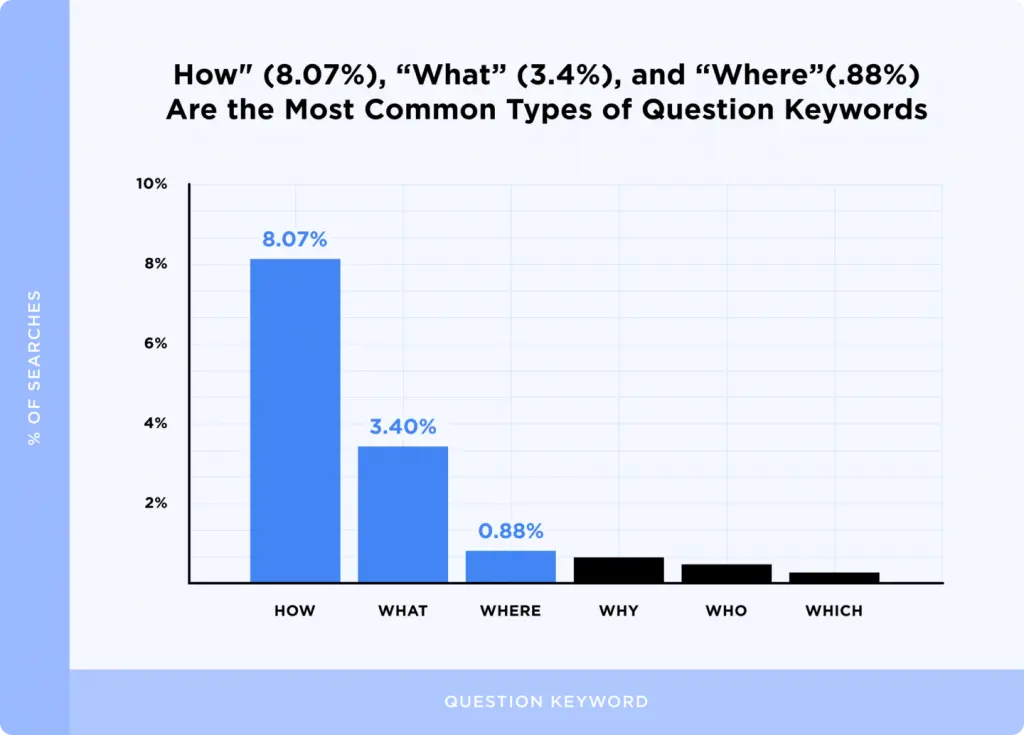
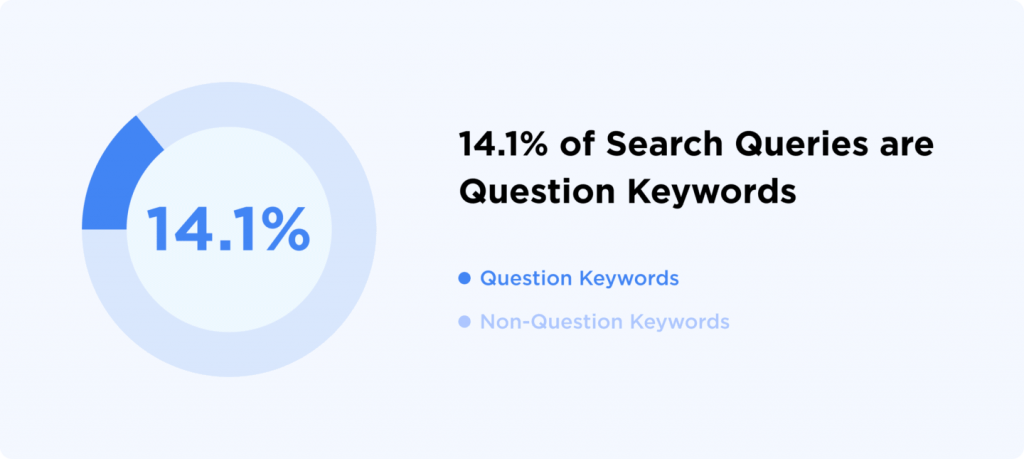
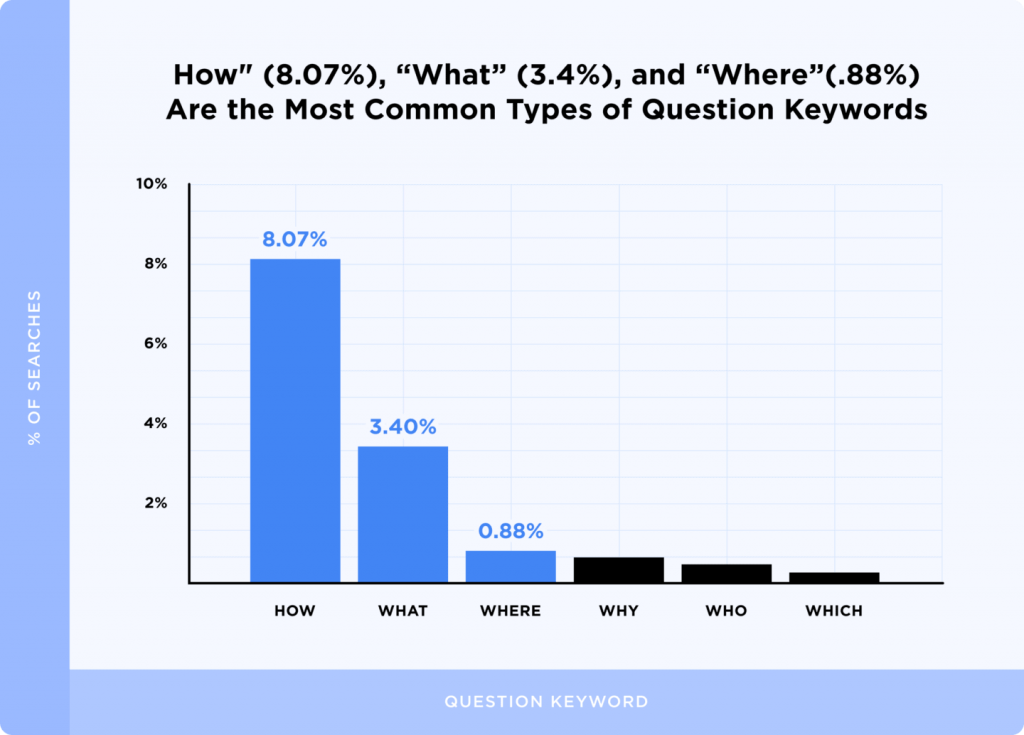
In the modern digital landscape, the consumer journey rarely begins with a broad brand search; instead, it starts with a query. Every single day, billions of individuals turn to search engines, voice assistants, and online forums to seek out targeted solutions to immediate problems. Data analytics from major search studies reveal a staggering reality: approximately 14.1% of all Google queries are question-based. When applied to a baseline of 3.5 billion daily searches, this translates to nearly 490 million inquiries every 24 hours. Among these, interrogatives such as "how" (8.07%) and "what" (3.4%) dominate the digital discourse.
For digital marketers, content strategists, and SEO professionals, this massive volume represents an unprecedented goldmine. Question-based queries are predominantly long-tail terms, heavily accelerated by the widespread adoption of voice-activated technology. More importantly, they offer two distinct advantages that traditional head terms lack: exceptionally high user intent and significantly lower keyword competition.
By leveraging the right frameworks, brands can bypass the need for extensive link-building campaigns or sprawling, exhaustive content pieces, capturing top-tier search visibility by directly answering niche consumer questions. This report explores four actionable, scalable methodologies for uncovering high-converting question keywords, transforming raw search behavior into a predictable traffic engine.
Supporting Context & Metrics: The Anatomy of a Search Query
To understand the strategic value of question keywords, one must analyze the psychology of the searcher. Traditional keyword research often focuses on broad, transactional terms like "CRM software" or "beard oil." While these terms carry high search volume, they also suffer from brutal competition dominated by enterprise-level domain authorities.
Conversely, a query like "Can a CRM be integrated with an ERP?" or "What is the best HIPAA-compliant CRM for a small practice?" signals a user who is much further along in the problem-solving lifecycle. They have moved past general awareness and are actively seeking operational solutions. Integrating a product, service, or affiliate offer directly into the answer creates a frictionless bridge between consumer pain and corporate supply.
Furthermore, the rise of voice search—driven by smart speakers and mobile assistants—has fundamentally altered sentence structures in search bars. Users no longer type fragmented keywords; they speak in full, conversational sentences. Platforms like Semrush and Ahrefs have adapted to this shift by introducing advanced reporting filters, allowing marketers to isolate questions by intent, search volume, and keyword difficulty (KD) scores. By focusing on low-competition, high-intent variations, brands can efficiently capture specialized segments of their target audience.
Detailed Chronology: 4 Scalable Methods for Finding Question Keywords
Scaling question-based keyword research requires moving away from manual brainstorming and adopting systematic, tool-driven workflows. Below are four proven tactics used by top-tier SEO professionals to unearth thousands of profitable question opportunities.
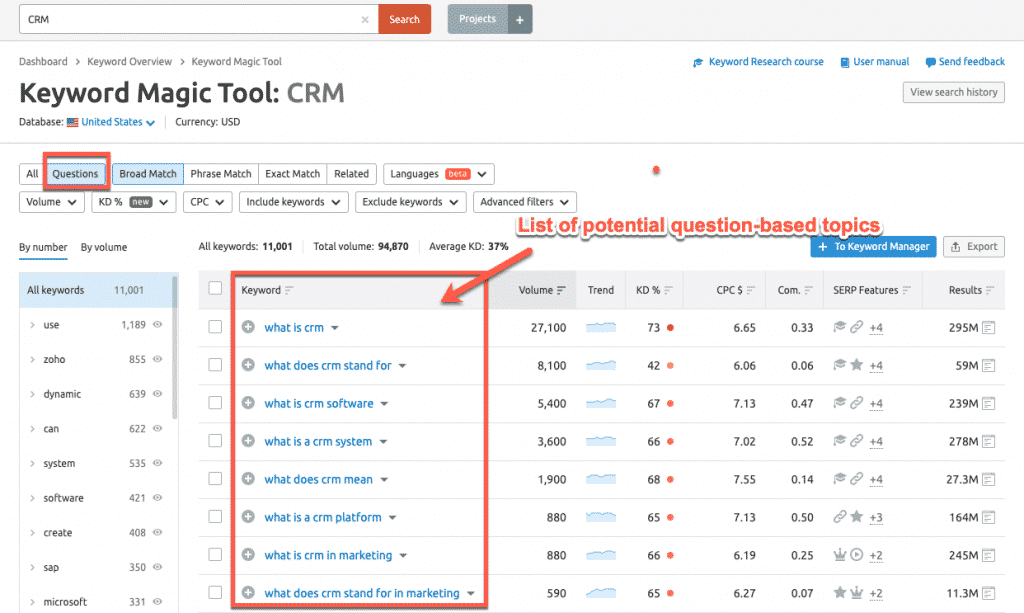
The most direct entry point into question research is through dedicated SEO suites like Semrush or Ahrefs. By inputting a broad "seed topic" into a keyword research tool, analysts can instantly generate comprehensive question reports.
Filtering for Relevance: At the top of these reports, broad queries usually appear with high search volumes and stiff competition. However, scrolling deeper reveals hyper-specific, long-tail variations. For example, seeding a search with "CRM" might initially yield "What is a CRM?" As you scroll further, specific operational hurdles emerge, such as business cases for CRM implementation, database maintenance workflows, and cross-platform integrations (e.g., CRM-to-ERP connectivity).
Applying Intent and Grouping Filters: Modern platforms allow users to filter by specific keyword metrics, custom thresholds, and search intent categories. By isolating informational or commercial question intents, marketers can cherry-pick low-competition keywords (indicated by green or light-yellow difficulty scores) and map them directly into content calendars to support core pillar pages.
2. Mining the "People Also Ask" (PAA) Box via Automation
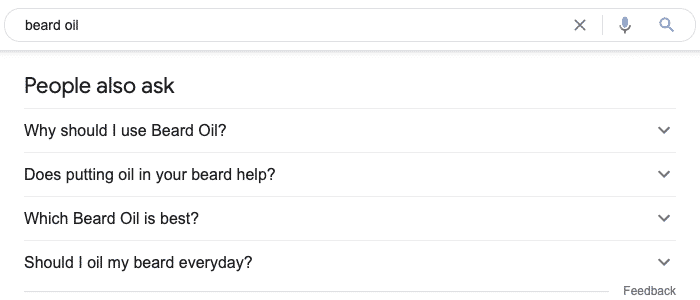
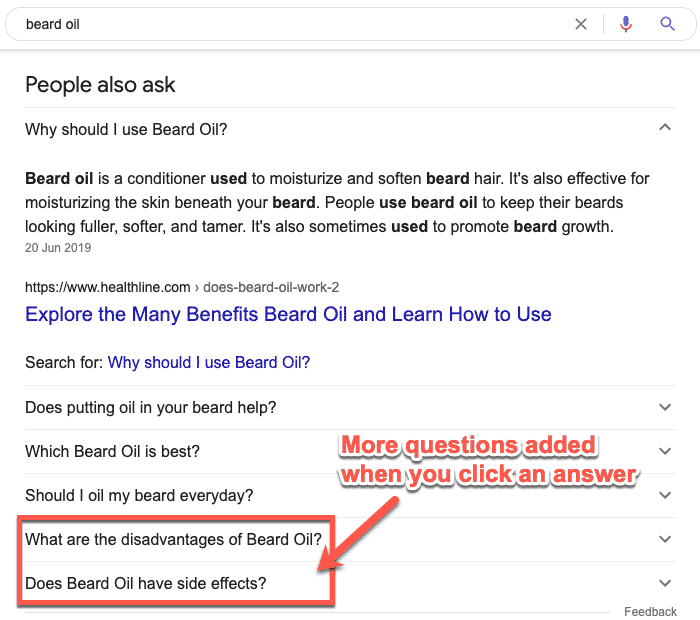
Google’s "People Also Ask" (PAA) boxes are direct reflections of real-time user inquiries. Clicking on a PAA result dynamically expands the box, revealing a cascading tree of related follow-up questions. While manually copying and pasting these entries is tedious, free browser extensions like SEO Minion automate the extraction process.
The Extraction Workflow:
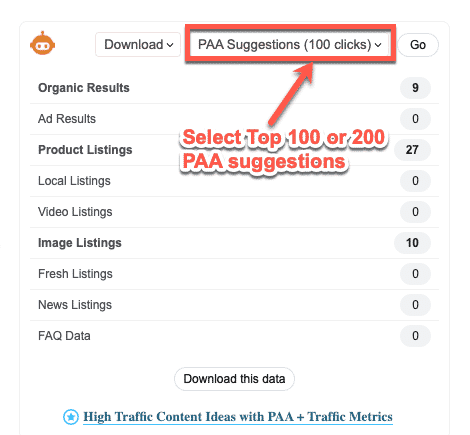
Install the SEO Minion extension.
Enter a target seed keyword into the Google SERP.
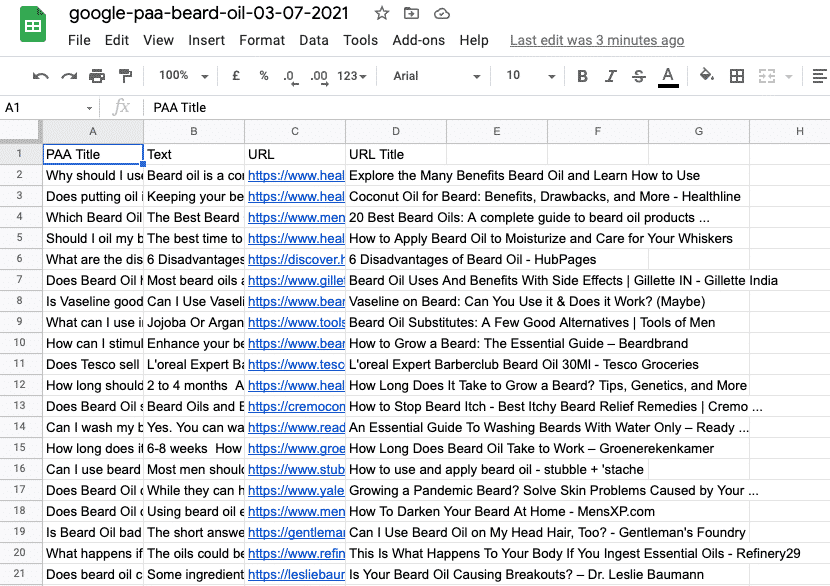
Use the extension to export up to 100 or 200 organic PAA results directly into a CSV format.
Isolate the primary question column containing the PAA titles.
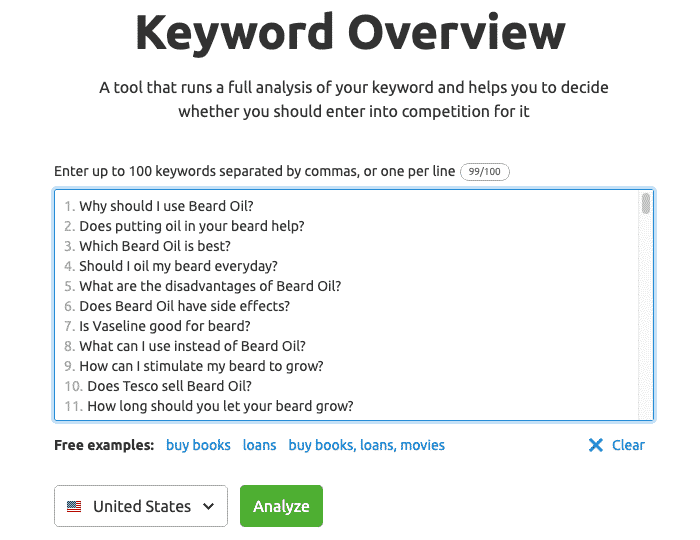
Volume and Difficulty Enrichment: Take the exported CSV file, paste the bulk list into the Semrush Keyword Overview tool, and analyze the data in bulk. While only a small percentage of harvested PAA questions may yield high commercial value, scaling this across multiple seed terms produces a robust repository of low-competition, highly relevant content topics.
3. Tapping into Niche Subreddits for Community Pain Points
Reddit hosts thousands of active communities centered around specific software, hobbies, B2B industries, and consumer pain points. These forums serve as unfiltered focus groups where real people articulate their daily operational challenges.
The Subreddit Research Process:
Identify a subreddit relevant to your niche (e.g., /r/CRM for customer relationship management software).
Input the specific subreddit URL into Semrush’s Organic Research report, ensuring the subfolder parameter is selected.
Apply advanced filters: set a minimum search volume threshold (e.g., 20+ monthly searches) and enforce a word-count filter greater than two to isolate complete phrasing.
Uncovering Differentiators: Browsing the filtered results often reveals comparative queries ("HubSpot vs. Salesforce") or niche specifications ("HIPAA-compliant CRM", "best CRM for gyms"). If a dominant market leader lacks compliance in a specific vertical, competitors can capitalize on these exact question keywords to position their own products as the definitive solution.
4. Mining High-Traffic Quora Threads
Quora remains an authority-driven forum that consistently ranks well for complex informational queries. Beyond participating directly for referral traffic, marketers can use Quora as a keyword mining engine.
Execution Steps:
Navigate to the Semrush Organic Research tool.
Enter quora.com alongside a targeted niche modifier (e.g., "beard oil" AND "how" or "beard oil" AND "best").
Review the ranking queries for the Quora domain within that specific topic cluster.
Identify low-competition questions that may have been overlooked during traditional keyword research.
Consolidating the Master List: Click the "+" icon next to viable terms to add them to a centralized Keyword Manager list, export the data into a spreadsheet, and assign structured content briefs to writing teams.
Official Industry Statements & Methodology Insights
Industry analysts emphasize that search engines are evolving from mere keyword-matching algorithms into semantic answer engines.
"Search is no longer about matching strings to things; it is about understanding user intent and delivering precise, contextual answers instantly," notes lead search strategist Robbie Richards. "When you align your content architecture with the explicit questions your audience is asking, you bypass the friction of top-of-funnel friction and capture high-intent traffic ready to convert."
SEO platform developers echo this sentiment, pointing out that natural language processing (NLP) models prioritize content that directly addresses conversational queries. Websites that structure their content to answer specific sub-questions within an overarching topic are increasingly rewarded with Featured Snippets and PAA real estate, driving exponential organic growth without increasing backlink expenditures.
Future Outlook: The Evolution of Question-Based Optimization
As artificial intelligence integration transforms search engine results pages (SERPs) through features like generative AI overviews and conversational search interfaces, the importance of question-based keyword optimization will only accelerate. Traditional search bars are rapidly giving way to multimodal, voice-first, and AI-driven conversational agents.
In this new paradigm, content that fails to answer specific, granular user questions will struggle for visibility. Conversely, brands that build robust content ecosystems rooted in rigorous question-keyword research will secure a distinct competitive advantage. By systematically mining PAA boxes, forums, and deep SEO databases, forward-thinking organizations can future-proof their digital visibility, positioning themselves as authoritative trusted advisors in an increasingly crowded digital marketplace.