

Executive Overview
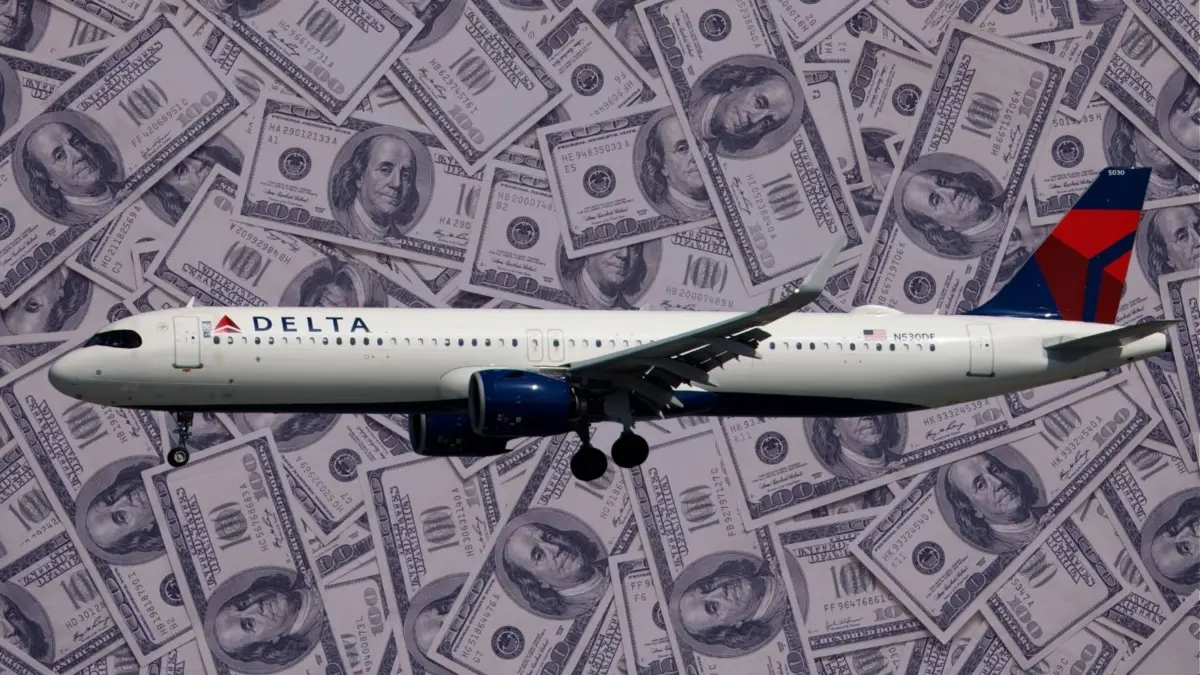
In a strategic pivot that signals a profound evolution in how modern airlines generate revenue, Delta Air Lines is officially preparing to launch its own dedicated advertising business. Following a path blazed by industry peers—most notably United Airlines, which introduced its proprietary media network several years ago—the Atlanta-based carrier is betting heavily on the immense, captive audience it commands daily.
To spearhead this ambitious initiative, Delta has tapped Keri Paison, a seasoned retail media strategist and former executive at Deloitte Digital, to lead its newly formed media network. Paison’s appointment, announced via a professional network update, underscores the airline’s seriousness in turning its vast digital and physical touchpoints into high-margin advertising real estate.
This move is far from an isolated experiment. It represents a broader, industry-wide gold rush toward "retail media networks" (RMNs)—advertising ecosystems built on first-party customer data. For decades, airlines have relied primarily on ticket sales, ancillary fees for baggage and seat selection, and lucrative co-branded credit card partnerships. However, as profit margins face continuous pressure from volatile fuel costs, labor negotiations, and macroeconomic uncertainties, carriers are increasingly looking at their digital infrastructure as an untapped financial engine.
By leveraging its proprietary data—spanning booking behaviors, loyalty program memberships, in-flight connectivity usage, and airport lounge interactions—Delta is positioning itself not merely as a transportation provider, but as a sophisticated media platform. For brands and advertisers, the pitch is irresistible: direct, targeted access to millions of high-intent consumers during moments of high dwell time, whether they are browsing the Fly Delta app at home, checking flight updates at the gate, or streaming content at 35,000 feet.
Detailed Chronology: The Road to Delta’s Media Network
The blueprint for Delta’s upcoming media venture has been years in the making, reflecting a calculated evolution in how airlines view their relationship with the consumer. Understanding how Delta arrived at this juncture requires a look at the timeline of digital transformation within the aviation and retail media sectors.
The Foundation: Digitization of the Passenger Journey (2015–2020)
Long before the concept of an airline media network gained traction, Delta invested heavily in upgrading its digital infrastructure. The modernization of the Fly Delta app, the deployment of biometric boarding gates, and the rollout of fast, reliable in-flight Wi-Fi transformed the airline from a traditional service provider into a digitally engaged brand. These investments laid the crucial groundwork: millions of passengers began logging into Delta’s ecosystem, creating a treasure trove of first-party data. Delta SkyMiles members willingly provided their travel preferences, spending habits, and personal details in exchange for a smoother, more personalized travel experience.
The Pandemic Pivot and Ancillary Revenue Pressures (2020–2022)
The COVID-19 pandemic devastated global aviation, forcing airlines to re-evaluate their business models and search for resilient revenue streams less vulnerable to passenger volume shocks. While cargo operations provided a temporary cushion, airline executives realized that ancillary revenue—particularly loyalty programs and credit card partnerships—were the true stabilizers of their balance sheets. During this period, digital engagement skyrocketed as passengers relied on mobile apps for contactless check-in, real-time gate changes, and health document verifications.
The Precedent: United Airlines Shows the Way (2022)
A critical catalyst occurred when United Airlines launched Kinective Media, its pioneering retail media network. United recognized that its passenger base represented an affluent, captive demographic that brands would pay a premium to reach. By allowing advertisers to target customers based on destination, travel frequency, and purchase behavior across digital channels, United proved that airlines could successfully mimic the retail media strategies pioneered by giants like Amazon, Walmart, and Target. The success of United’s model sent ripples through the boardrooms of competing carriers, prompting quiet conversations across Atlanta, Dallas, and Fort Worth about the feasibility of similar ventures.
The Strategic Hire of Keri Paison (Late 2024–Early 2025)
The most definitive signal of Delta’s intent came with the recruitment of Keri Paison. Prior to joining Delta, Paison served as the senior manager of strategy, growth, and transformation at Deloitte Digital. During her tenure, she architected and scaled retail media networks that generated upwards of $600 million in projected revenue for major enterprise clients. Before her time at Deloitte, Paison honed her expertise as an associate director of strategy and analysis at Digitas North America.
By securing a talent with a proven track record of unlocking hundreds of millions of dollars through retail media frameworks, Delta transitioned from exploratory planning to active execution. Paison’s public announcement—"Looking forward to building what’s next for advertisers, partners, and customers"—marked the official kickoff of Delta’s journey into the media ownership space.
Supporting Context & Metrics: Why Airlines Are Becoming Media Companies
To understand why Delta is diving into the advertising space, one must examine the broader economic forces reshaping the retail media landscape and the unique advantages airlines hold over traditional publishers.
The Rise of Retail Media Networks
Retail media has become the fastest-growing sector in the advertising industry. As privacy regulations tighten, third-party cookies crumble, and consumers increasingly utilize ad-blockers on traditional web browsers, brands are shifting their ad budgets toward walled gardens equipped with robust first-party data. Retail media networks allow brands to serve hyper-targeted ads to consumers at the exact point of purchase, backed by verifiable transaction data.
While RMNs started in grocery and e-commerce (such as Amazon Ads and Walmart Connect), the model has rapidly expanded into non-traditional sectors characterized by high consumer engagement and valuable demographic profiles—hospitality, financial services, and now, aviation.
The Power of the Captive Audience
Airlines possess a distinct advantage that digital platforms and brick-and-mortar retailers cannot replicate: a truly captive, highly attentive audience. Consider the lifecycle of a typical Delta passenger:
- The Planning Phase: Days or weeks before a trip, the user opens the Fly Delta app to search for flights, review itineraries, and select seats. This provides intent-based data (e.g., traveling to New York for business vs. vacationing in Orlando with family).
- The Airport Experience: Passengers spend an average of 90 minutes to two hours in airports before boarding. They frequent Delta Sky Clubs, browse airport retail, and interact with digital information kiosks.
- In-Flight Engagement: Once on board, passengers are seated without the usual distractions of daily life. With the expansion of free, high-speed Wi-Fi, travelers spend hours browsing the web, streaming content, or using the seatback entertainment screens.
This multi-touchpoint journey creates unmatched opportunities for contextual advertising. A luxury hotel brand can target business class passengers heading to London; a car rental company can serve offers to travelers landing in Miami; or a credit card issuer can pitch travel rewards to frequent flyers just as they are pondering the costs of their next vacation.
Financial Dynamics: Margin Expansion
Traditional airline operations are notoriously low-margin businesses, squeezed by high fixed costs, jet fuel price volatility, and labor expenses. Operating margins frequently hover in the single digits.
Conversely, digital advertising is a high-margin, asset-light business. Once the underlying technology infrastructure and data clean rooms are established, the cost of serving an additional digital ad is negligible. By capturing high-margin advertising revenue, Delta can diversify its income streams, smoothing out the cyclical dips inherent in passenger ticket sales and creating a more resilient financial posture for its shareholders.
Official Statements and Industry Reactions
While Delta has kept specific details regarding the exact launch date, platform name, and inventory packaging under wraps, the industry has reacted with a mixture of anticipation, validation, and strategic recalculation.
Market analysts view Delta’s entry into the space as validation that airline-operated media networks are not a passing fad, but a permanent structural evolution in how airlines monetize their customer relationships.
"When United launched its media network, skeptics wondered if it was a gimmick unique to their specific network strategy," notes an aviation industry consultant who spoke on condition of anonymity. "Now that Delta—an airline famously disciplined in its financial strategy and operational execution—is following suit, it confirms that retail media is the next major frontier for airline ancillary revenue. Other major carriers will now be forced to develop their own offerings or risk ceding lucrative digital ad dollars to their competitors."
From the perspective of advertising agencies, the inclusion of Delta into the retail media ecosystem is a welcome development. Brand marketers are constantly searching for innovative ways to cut through digital noise and reach consumers in moments of high receptivity.
"Travelers are, by definition, in an exploratory, aspirational mindset," explains a senior media buyer at a global advertising holding company. "They are spending money, planning experiences, and open to discovering new products and services. An airline media network that can cleanly segment these users without compromising their privacy offers immense value compared to standard programmatic banner ads."
At the same time, privacy advocates and consumer watchdogs are monitoring these developments closely. As airlines collect deeper pools of behavioral, transactional, and location data to feed their advertising engines, questions surrounding data governance, consumer consent, and transparency will inevitably take center stage. Delta will need to navigate these concerns delicately to maintain the trust of its SkyMiles members—a loyalty base that remains one of the airline’s most valuable corporate assets.
Future Outlook: What’s Next for Delta’s Media Network?
As Keri Paison and her team lay the groundwork for Delta’s media network, industry observers are looking ahead to how the platform will evolve in the coming years. Several key trends and strategic vectors are likely to shape the trajectory of Delta’s advertising business:
1. Integration of Programmatic and Direct-Sold Inventory
Initially, Delta’s ad offerings will likely focus on high-value direct partnerships with major brands—such as credit card issuers, hotel chains, automotive manufacturers, and luxury retailers. Over time, however, the airline is expected to integrate programmatic capabilities, allowing media agencies to bid for ad impressions across the Fly Delta app, website, and in-flight entertainment portals in real-time, matching the sophistication of established retail media giants.
2. The Role of In-Flight Connectivity and Seatback Screens
With Delta rolling out fast, free Wi-Fi across its mainline fleet in partnership with T-Mobile, the digital real estate available inside the cabin has multiplied exponentially. Unlike past decades, when passengers relied on static print magazines or limited pre-loaded video programming, today’s travelers are actively connected to the internet throughout their journey. This enables dynamic, personalized advertising served directly to personal devices or interactive seatback displays based on real-time flight data, destination, and user profiles.
3. Deepening Loyalty Synergy Through SkyMiles
The crown jewel of Delta’s data ecosystem is the SkyMiles loyalty program. Future iterations of the media network will likely leverage closed-loop attribution—allowing advertisers to track whether a passenger who saw an ad in the Delta app or onboard a flight ultimately made a purchase, either through partnered merchants or via co-branded credit card spend. This ability to prove direct return on ad spend (ROAS) will make Delta’s inventory exceptionally attractive to performance-driven marketers.
4. Competitive Pressure Across the Global Sky
Delta’s move ensures that the battle for ancillary revenue will increasingly be fought on digital and data-driven fronts. As American Airlines, international carriers, and low-cost operators observe the financial success of United and Delta’s emerging networks, the aviation industry as a whole is pivoting away from being mere transit providers.
In the near future, buying a plane ticket may unlock more than just a seat from point A to point B—it will plug the consumer into a vast, targeted digital marketplace. For Delta Air Lines, the skies are no longer just a highway for physical transit; they are becoming one of the most exclusive, high-value advertising channels in the modern economy.