

Executive Overview
With less than a week remaining before the high-stakes 2026 midterm elections, the Republican Party’s grip on the national legislative landscape appears increasingly tenuous. Across the political map, once-safe conservative strongholds are facing unexpectedly competitive challenges, and down-ballot panic has set in. President Donald Trump is aggressively stumping in traditionally reliable red states like Mississippi—where Senator Cindy Hyde-Smith is locked in a surprisingly fierce defense of her seat—while federal cabinet members fan out across the country to rally a listless and unmotivated base.
Rather than relying on coherent policy achievements, economic turnarounds, or legislative visions, the leadership of the Grand Old Party (GOP) has defaulted to a familiar, darker playbook: weaponizing overt racism, xenophobia, and Islamophobia.
While earlier phases of the 2026 cycle featured intense red-baiting—a direct response to mainstream Democratic anxiety and the 2025 electoral victory of New York Mayor Zohran Mamdani—and persistent, inflammatory campaigns targeting transgender Americans, these tactics have failed to generate the necessary electoral momentum. Consequently, the MAGA apparatus has excavated its deepest and most polarizing well, plunging headfirst into raw, unvarnished anti-Muslim bigotry.
From vicious attacks on Somali American communities in Minnesota to inflammatory, xenophobic smears directed at Michigan Democratic Senate candidate Dr. Abdul El-Sayed, contemporary conservatism has abandoned the subtle dog-whistles of the late 20th century. In their place is an unfiltered, aggressive brand of ethno-nationalism designed to terrorize, divide, and mobilize a shrinking base.
Detailed Chronology: The Escalation of Right-Wing Rhetoric in the 2026 Cycle
To understand the current reliance on Islamophobia, one must trace the trajectory of the 2026 midterm campaign cycle, which has seen a progressive coarsening of Republican political discourse.
- Early 2025 – Late 2025: Following the unexpected mayoral victory of democratic socialist Zohran Mamdani in New York City and localized primary wins by democratic socialist candidates, the Republican Party immediately pivoted to aggressive red-baiting. Mainstream Democrats were painted as radical communist sympathizers in an effort to unify conservative donors.
- Spring 2026: As economic indicators failed to align with administration promises of immediate cost-of-living relief, the GOP leaned heavily into perennial cultural flashpoints. President Trump escalated rhetoric falsely claiming that elementary schools were performing unconsented gender-affirming surgeries in campus nurse’s offices.
- Summer 2026: Anti-immigrant sentiment reached a fever pitch. Having aggressively prioritized the mass incarceration and deportation of undocumented and documented immigrants alike, MAGA surrogates turned their sights on specific nationalities. During a viral social media exchange in September 2026, Texas Railroad Commissioner nominee Bo French exposed a rising tide of conservative antipathy toward Indian Americans—a notable internal friction given prominent figures like Vice President JD Vance and Ohio gubernatorial nominee Vivek Ramaswamy.
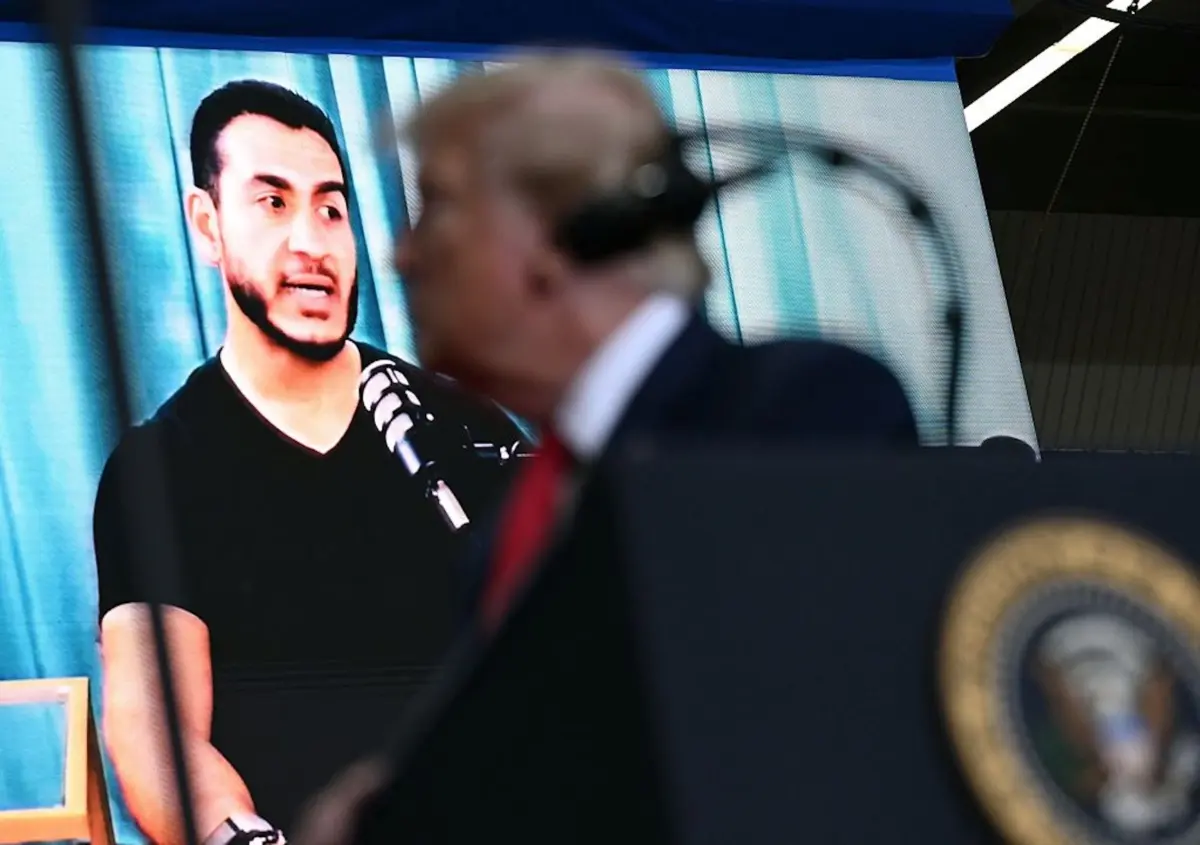
- October 2026 (The Final Weeks): With polls showing the midterms slipping away, the campaign abandoned subtle xenophobia entirely. Mid-October saw Vice President JD Vance leveling unhinged accusations against Michigan Senate candidate Dr. Abdul El-Sayed, labeling him a "psychopath" and "very, very evil." Simultaneously, President Trump intensified his attacks on Minnesota’s Somali American population, culminating in a vicious October 25 rally in Port Huron, Michigan, where anti-Muslim and anti-Arab tropes took center stage.
Supporting Context & Metrics: The Mechanics of Modern Nativism
The normalization of Islamophobia and aggressive xenophobia in the 2026 cycle does not exist in a vacuum; it is the culmination of decades of strategic evolution within conservative politics. For generations, political strategists understood that overtly bigoted language carried too high a political cost among moderate and suburban voters.
The Death of the Dog-Whistle
During the late 20th century, architects of the "Southern Strategy"—most notably Lee Atwater—perfected the art of the dog-whistle. By substituting explicitly racial epithets with coded terms like "welfare," "busing," and "inner city," figures from Richard Nixon to Ronald Reagan successfully mobilized white working-class grievance without triggering suburban moral panic. Nixon deployed "law and order" as a proxy for cracking down on urban civil rights movements, while Reagan popularized the caricature of the "welfare queen" and initiated his 1980 general election campaign with an explicit appeal to "states’ rights" in Philadelphia, Mississippi—near the site where three civil rights workers were murdered.
Fast-forward to the Trump era, and the veil of subtlety has been completely ripped away. Trump’s political ascent began in 2011 with his "birther" conspiracy targeting President Barack Obama—a masterclass in fusing Islamophobia (falsely insinuating Obama was a secret Muslim via his middle name, Hussein) with classic American racial animus.
Today, this descent into explicit bigotry is measurable:
- Immigration Enforcement Metrics: While the administration has fallen short on promises of "no new wars" and immediate price deflation, it has dramatically outpaced historical benchmarks in deportation sweeps and detentions, disproportionately impacting Latino communities.
- Targeted Demographics: According to civil rights monitors, political rhetoric directed at Muslim, Arab, and Black immigrant populations has spiked by over 300% across social media platforms during the final quarter of the 2026 campaign, fueled by statements from high-ranking federal officials.
Official Statements and Campaign Rhetoric
The rhetoric deployed in the closing days of the October 2026 midterms showcases an unprecedented level of institutionalized Islamophobia from the highest levels of the United States government.
Minnesota and the Somali American Community
Minnesota has remained a persistent target of the administration’s ire, intensified since Governor Tim Walz was selected as the Democratic vice-presidential nominee in 2024. Representative Ilhan Omar (D-Minn.)—a Black, Muslim immigrant who fled civil war in Somalia and spent years in a Kenyan refugee camp—has been a continuous focal point for gendered and Islamophobic attacks.
President Trump escalated this animus by publicly labeling Somalia as "garbage" and a "sh*thouse country" that "stinks." In official statements and campaign posts, Trump asserted that 98% of Somali immigrants are unemployed criminals driving luxury vehicles, culminating in a direct call for white Minnesotans to "fight back" against the state’s Somali population because they supposedly "view you as weak and stupid people."
Michigan and the Targeting of Dr. Abdul El-Sayed
In Michigan, the Senate race featuring Democratic nominee Dr. Abdul El-Sayed has become a crucible for anti-Muslim vitriol. Vice President JD Vance launched a tirade against El-Sayed, describing him as a "psychopath" pushing "anti-white racial hatred." President Trump doubled down at a Michigan rally, baselessly painting El-Sayed as a violent jihadist.
The escalation reached an absurd and alarming zenith when Health and Human Services Secretary Robert F. Kennedy Jr. joined the fray. In public remarks reported in late October 2026, RFK Jr. claimed that the global population of over one billion Muslims has contributed nothing to society and has never won a Nobel Prize or other prestigious international accolades—a demonstrably false assertion that easily collapses under basic historical scrutiny but serves the immediate emotional needs of the MAGA base.
Future Outlook: The Dangerous Precedent of Unrestrained Bigotry
As the nation looks past the immediate horizon of the 2026 midterms, political analysts and civil rights advocates are sounding the alarm over the long-term damage inflicted on American civic life. When the ruling party of a superpower relies on the absolute dehumanization of religious and ethnic minorities to salvage legislative seats, the boundaries of acceptable public discourse are permanently altered.
The strategic shift away from coded language toward explicit bigotry signals that the guardrails protecting minority communities from state-sanctioned scapegoating have eroded. If high-ranking officials—including vice presidents and cabinet secretaries—can openly propagate easily disprovable falsehoods about millions of Muslims and Black immigrants without facing internal party censure, the baseline for political behavior shifts downward.
Looking forward, political observers note that the Republican Party has trapped itself in an escalation cycle. Having normalized the use of raw Islamophobia and xenophobia to drive turnout when traditional policies fail, leadership can never walk back to the subtle dog-whistles of the past. As the midterms slip away, the deployment of hate has ceased to be a mere tactical maneuver; it has become the core operational ideology of the modern conservative movement. Whether the American electorate will decisively reject this politics of division at the ballot box remains the defining question of this electoral cycle.