

Executive Overview
The Metropolitan Museum of Art has officially unveiled its recalibrated vision for the 2027 Met Gala and its accompanying Costume Institute exhibition, selecting a theme that pivots sharply away from high-glamour retrospective displays toward the subtle complexities of daily dress. Titled “ExtraOrdinary: Fashion and the Poetics of the Everyday,” the newly announced showcase will explore how high-concept design, meticulous craftsmanship, and material experimentation intersect with utilitarian, everyday garments.
Announced on Thursday, the theme replaces the previously planned blockbuster retrospective dedicated to British fashion designer John Galliano, which was quietly scrapped earlier this year following intense public backlash and subsequent institutional soul-searching. Instead of red-carpet extravagance defined by archival couture gowns and avant-garde theatricality, the first Monday of May in 2027 will challenge celebrities, designers, and the fashion industry at large to examine the profound cultural and emotional significance woven into basic garments: the worn-in T-shirt, the trusty pair of sweatpants, and the classic trench coat.
Curated by Andrew Bolton, the Costume Institute’s Wendy Yu Curator in Charge, the upcoming exhibition will assemble over 200 objects, blending historical museum archives with contemporary loans and donations. While the rapid pivot introduces severe logistical hurdles for designers, stylists, and attendees racing against a truncated timeline, it also opens up an unprecedented thematic playground. By elevating the mundane to the realm of high art, the 2027 gala promises to spark vital conversations about identity, memory, and the democratic nature of clothing—even if it trades some of its traditional Hollywood opulence for intellectual introspection.
Detailed Chronology: From Galliano’s Rise to the ‘ExtraOrdinary’ Pivot
The journey toward the 2027 theme has been turbulent, marked by a rare miscalculation in the Costume Institute’s usually airtight exhibition planning schedule. Understanding how the Metropolitan Museum of Art arrived at “ExtraOrdinary” requires examining the swift, high-stakes timeline of the past year.
The Ambition and Hubris of the Galliano Retrospective
Earlier this year, the fashion world was sent into a wave of shock and anticipation when rumors—and subsequent confirmations—leaked that the Met Gala would dedicate its 2027 focus to the life and career of John Galliano. The choice was historic. Historically, the Met Costume Institute reserves its single-designer retrospectives for living legends whose contributions have irrevocably altered the trajectory of fashion history. Up to that point, only two living designers had ever received the singular honor: Rei Kawakubo of Comme des Garçons in 2017 and Yves Saint Laurent in 1983.
Galliano, celebrated for his peerless theatricality, historical pastiche, and revolutionary craftsmanship at Givenchy and Dior, was viewed by many in the industry as a visionary deserving of the institutional nod. However, the decision immediately ignited a firestorm of controversy. Critics pointed to Galliano’s catastrophic fall from grace in 2011, when he was filmed unleashing a tirade of antisemitic and racist insults in a Paris café. The incident resulted in his immediate termination from Dior and a subsequent conviction for hate speech in a French court.
The Backlash and Galliano’s Exit
As public pressure mounted and institutional stakeholders raised ethical concerns regarding the celebration of a convicted perpetrator of hate speech, the exhibition’s viability crumbled. On August 31, John Galliano preemptively stepped away from the project. In a public statement released via Instagram, the designer acknowledged the gravity of his past actions and explained his decision to withdraw.
“I understand that meaningful atonement is not achieved through an exhibition, institutional recognition, or a single public gesture,” Galliano wrote. “It is a continuing responsibility, demonstrated through listening, learning, and one’s conduct over time.”
At the time, Anna Wintour—the ultimate arbiter of the Met Gala and a longtime champion and friend of Galliano—publicly praised his withdrawal as a “courageous” act that served as a true “measure of the man.”
The Scrambled Search for a New Theme
With the Galliano retrospective shelved, the Costume Institute faced a monumental void. Planning for a Met Gala exhibition typically takes years, involving complex global loans, curatorial narratives, and corporate sponsorships. Scrapping a major anchor exhibit months into development left Bolton and his team with a narrow window to conceptualize, secure, and execute a replacement that could match the cultural weight traditionally demanded by the museum’s premier annual fundraiser.
The solution was found not in looking outward toward another controversial individual or hyper-exclusive couture house, but inward toward the universal human experience. By focusing on the poetics of everyday dress, the museum shifted its aperture from the exclusive ateliers of Paris to the laundry baskets and closets of the global public.
Supporting Context & Metrics: The Anatomy of the ‘ExtraOrdinary’ Exhibition
Set to open in spring 2027, “ExtraOrdinary: Fashion and the Poetics of the Everyday” promises to be a comprehensive, cross-disciplinary exploration of utilitarian design. According to curatorial previews and early disclosures to the New York Times, the exhibition will feature more than 200 distinct objects designed to interrogate the boundary line between the ordinary and the extraordinary.
Archival Depth and Contemporary Contributions
A notable structural element of the upcoming exhibition is its reliance on the museum’s own deep holdings. Approximately 40 percent of the items displayed will be pulled directly from the Costume Institute’s permanent archives. The remaining 60 percent will be secured through international loans and donations from contemporary fashion houses, independent designers, and archives worldwide.

This hybrid approach allows the museum to trace the historical lineage of everyday wear—from historical working-class garments to contemporary haute couture interpretations of streetwear—while highlighting how modern designers manipulate mundane materials through conceptual wit and structural innovation.
Defining Artifacts: From Controversy to Trompe L’œil
To understand the scope of the exhibition, one must look at the specific pieces curators have selected to anchor the narrative:
- Brooke Shields’ Calvin Klein Jeans: The exhibition will feature the iconic denim worn by Brooke Shields in her groundbreaking and controversial 1980 advertising campaign for Calvin Klein. Shot when Shields was just 15 years old, the advertisements revolutionized American marketing by sexualizing and elevating a utilitarian workwear staple into an object of high fashion desire.
- Matthieu Blazy’s Bottega Veneta Trompe L’œil Denim: Representing the pinnacle of modern conceptual wit, Blazy’s viral leather jeans for Bottega Veneta will take center stage. Crafted entirely from ultra-fine leather meticulously printed to mimic the exact texture, indigo fade, and stitching of classic denim, these garments embody the exhibition’s core thesis: the transformation of the familiar through high craft and material deception.
Official Statements and Industry Reactions
The announcement of the 2027 theme has generated waves of reactions across the fashion ecosystem, ranging from intellectual praise for its sociological depth to pragmatic anxiety over its production constraints.
The Curator’s Vision
Andrew Bolton, speaking to press outlets following the announcement, emphasized that the exhibition aims to honor the deep emotional resonance embedded in everyday attire.
“Everyday clothes carry extraordinary amounts of meaning,” Bolton noted. “We have a favorite T-shirt, we have a favorite pair of jeans, and we wear them until they literally fall apart. And those meanings develop through wearing. I like the idea that designers turn these familiar things into these incredible sources of wonder.”
This curatorial philosophy reframes fashion not merely as an ephemeral vehicle for status, but as an intimate repository of human memory. The exhibition will examine how sweatpants, hoodies, t-shirts, and everyday workwear have been repeatedly subverted, elevated, and deconstructed by avant-garde and mainstream designers alike—from Martin Margiela’s archival deconstruction of everyday objects to Demna Gvasalia’s provocative iterations of IKEA bags and DHL uniforms at Vetements and Balenciaga.
The Logistics and Pressures of a Compressed Timeline
While fashion critics and academics have lauded the conceptual intelligence of the theme, the operational reality facing the industry is fraught with anxiety. Major fashion houses, independent designers, and celebrity stylists typically begin conceptualizing their red-carpet looks up to a year in advance. With the previous Galliano concept canceled late in the summer and the new theme only recently finalized, the timeline for the 2027 event is severely truncated.
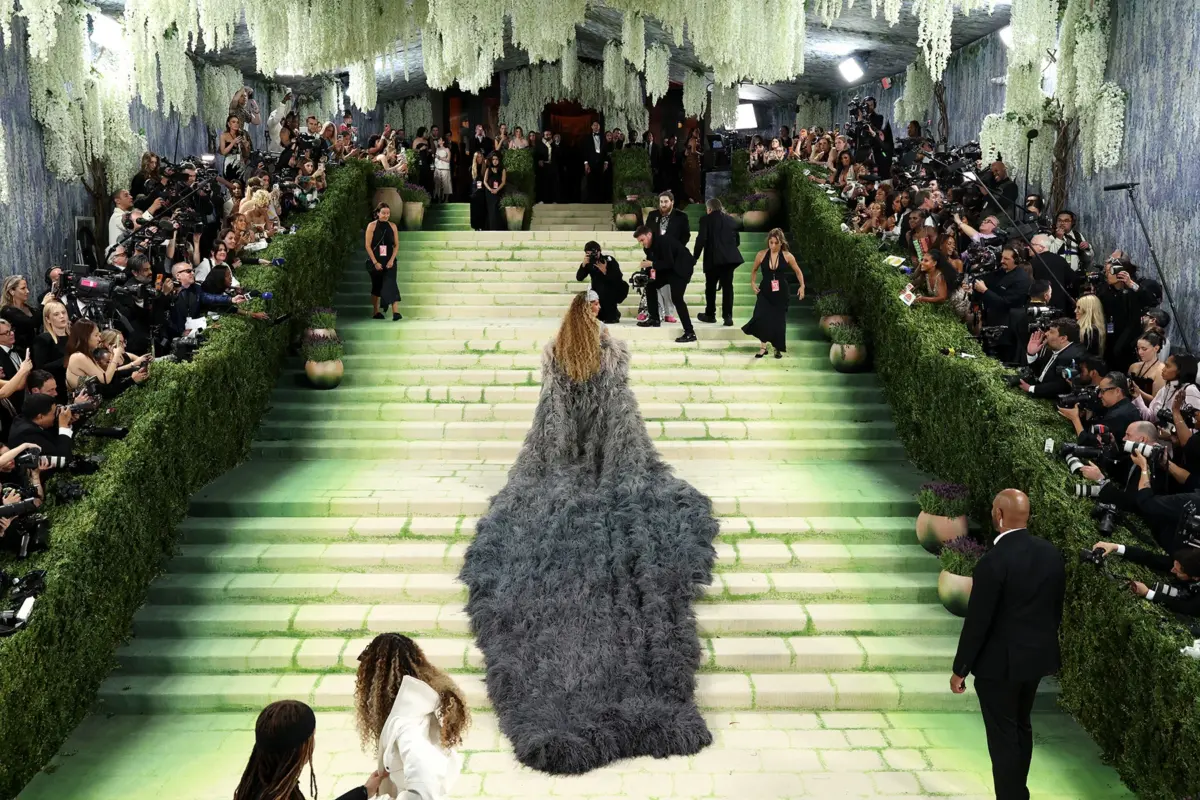
This compression puts immense pressure on creative directors to pivot their storytelling, fabric sourcing, and construction methods. Furthermore, interpreting a theme centered on "the ordinary" for a red carpet historically defined by maximalist spectacle, towering trains, and encrusted jewels presents a distinct sartorial challenge.
As industry insiders have pointed out, interpreting "everyday wear" on the Met Gala red carpet leaves ample room for error. A celebrity arriving in a high-fashion interpretation of a hoodie or distressed denim risks missing the mark entirely, translating high-concept curatorial irony into an expensive fashion faux pas. Yet, as cultural commentators have observed, watching the elite struggle to glamorize sweatpants and T-shirts may offer a uniquely entertaining spectacle for the public.
Future Outlook: What to Expect on the First Monday of May
As preparations for the 2027 Met Gala ramp up, several key operational details remain outstanding, serving as points of intense speculation within the global fashion community.
Outstanding Questions: Co-Chairs and Red Carpet Codes
As of press time, the Metropolitan Museum of Art has not yet announced the official co-chairs for the 2027 gala, nor has it released definitive guidelines regarding the red-carpet dress code. Given the theme’s focus on accessibility, utility, and everyday materials, industry watchers are eager to see which cultural figures, musicians, and actors will be tapped to guide the evening. Speculation abounds that the museum may seek co-chairs known for subverting traditional red-carpet codes or those whose personal style bridges the gap between streetwear and haute couture.
The Broader Cultural Impact
Beyond the glitz and flashing cameras of the red carpet, “ExtraOrdinary: Fashion and the Poetics of the Everyday” arrives at a fascinating cultural juncture. In an era increasingly defined by economic uncertainty, shifting remote-work dress codes, and a growing fatigue with hyper-consumerist luxury micro-trends, a museum exhibition dedicated to the dignity of the well-worn garment feels remarkably timely.
By turning its lens inward toward the clothes that sustain us through our daily lives rather than the rare gowns reserved for society galas, the Metropolitan Museum of Art is making a bold institutional statement. It suggests that true fashion innovation does not always require the rarest silks or the most exorbitant price tags; sometimes, it requires nothing more than looking closely at the favorite T-shirt hanging in the back of the closet, and seeing it for the work of art it truly is.