

Executive Overview
Amid the sweeping political currents of Tuesday’s midterm elections—characterized by analysts as a resounding "blue tsunami" that dramatically reshaped the balance of power in Washington and delivered striking upsets in deep-red strongholds like Texas, Mississippi, and Tennessee—another, quieter revolution took place. While pundits and campaign strategists spent election night dissecting familiar fault lines such as the exorbitant cost of living, foreign entanglements like the war in Iran, and the shifting fortunes of establishment candidates, millions of Americans cast their ballots on an issue far more localized, yet acutely felt: the rapid, unchecked proliferation of artificial intelligence data centers in their backyards.
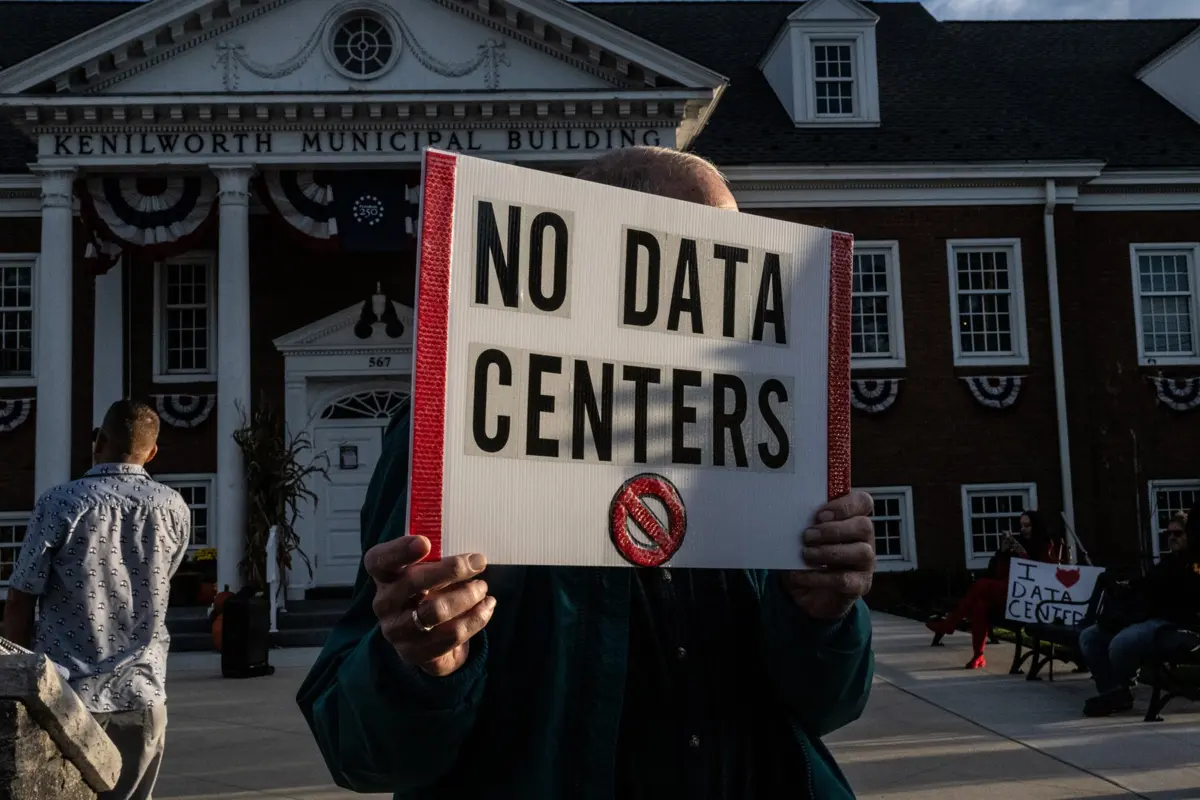
Across the United States, Tuesday’s ballot box functioned as a stark, unsparing referendum on Big Tech’s physical infrastructure. According to comprehensive data tracked by Redbud Consulting and published in their newly released report, Data Centers on the 2026 Ballot, local communities are drawing a hard line against the massive server farms powering the generative AI boom. Of the 39 nationwide municipal and county-level referendums addressing data center construction that have been fully counted, an astonishing 38 enacted stringent new restrictions.
This overwhelming rejection transcends traditional partisan divides. Voters in suburban enclaves, rural farming towns, and swing districts alike expressed deep-seated anxieties over the immense resource consumption of these facilities—specifically their insatiable demands for electrical power and municipal water. Far from being a niche zoning dispute, the data center backlash emerged as a potent political mobilizing force. Candidates who staked their campaigns on stopping these developments achieved decisive victories, proving that local environmental and infrastructural concerns can override even the most heavily funded corporate and political lobbying efforts. As communities grapple with the realities of the digital age, the results signal a formidable new hurdle for the tech industry’s physical expansion plans.
Detailed Chronology: How the Anti-Data Center Movement Gripped the Midterms
The convergence of the 2026 midterm elections and the nationwide anti-data center movement was not an overnight phenomenon, but rather the culmination of years of mounting grassroots frustration. Understanding how data centers became a defining flashpoint requires tracing the rapid escalation of local conflicts into a synchronized national ballot-box rebellion.
The Rise of Local Resistance (2024–2025)
In the wake of the generative AI boom kicked off by platforms like OpenAI’s ChatGPT, tech giants and specialized real estate investment trusts embarked on a massive land grab. Quietly, and often with the backing of local economic development boards lured by promises of tax revenue and high-tech prestige, developers secured parcels of land across Virginia, Ohio, Georgia, Texas, and beyond.
However, as construction broke ground, residents quickly realized the hidden costs of living next door to the digital economy. The facilities—massive, windowless warehouses humming with thousands of servers—brought heavy construction traffic, noise pollution, and, most alarmingly, unprecedented strain on local electrical grids and water systems. Throughout 2024 and 2025, grassroots community groups mobilized. Neighborhood associations transformed into political action committees, attending zoning board meetings in droves, pressuring local councils, and demanding the right to vote on industrial developments that threatened their rural and suburban way of life.
The Priming of the Electorate (Early 2026)
By the spring of 2026, the issue had graduated from municipal council chambers to state legislatures and county election boards. Activists successfully petitioned to place restrictive zoning ordinances, mandatory referendum requirements, and outright moratoria directly onto upcoming ballots.
National polling began to capture the breadth of this sentiment. Just a day before the midterms, a landmark survey published by Gallup revealed that an overwhelming 70 percent of Americans opposed the construction of data centers in their local areas. The public’s deep distrust of artificial intelligence—fueled by concerns over job displacement, unchecked corporate power, and environmental degradation—had found a tangible, local target: the physical server farm.
Election Night: The Referendum Watershed
When polls closed on Tuesday, November 2026, the accumulation of these grassroots efforts yielded historic results. In Ohio, a coordinated wave of 21 separate local initiatives—all utilizing precise legal language to target mega-developments—swept the ballot. Every single one of these measures passed.
Simultaneously, political candidates who integrated opposition to data centers into their campaign platforms rode the wave to unexpected victories. The convergence of national anti-incumbent sentiment with hyper-local environmental anxiety created a unique political cocktail, transforming subterranean zoning battles into high-profile electoral triumphs.
Supporting Context & Metrics: By the Numbers
The quantitative evidence supporting the scope of the data center backlash is both vast and unequivocal. Data compiled by research firms, pollsters, and climate journalism outlets paint a clear picture of an electorate unified in its skepticism of unchecked tech expansion.
The Redbud Consulting Findings
According to Data Centers on the 2026 Ballot, the sheer volume of restrictive votes tells a compelling story about public sentiment.
- 39 Total Counted Referendums: Across multiple states, communities put the question of data center expansion directly to voters.
- 38 Restrictive Victories: Out of those 39 fully counted measures, 38 successfully enacted new regulatory hurdles or outright restrictions on potential new data center builds.
- 77% Average Vote Share: Alex Lundry, founder and CEO of Redbud Consulting, noted that across these disparate races, the side advocating for restrictions ("restrict") consistently captured roughly 77 percent of the vote. "For as much as Republicans did poorly last night," Lundry observed, "the one thing that did even worse were data centers."
The Gallup Polling Data
Reinforcing the referendum results, Gallup’s pre-election polling underscored a profound national consensus:
- 70% Opposition: A decisive 70 percent of Americans surveyed stated they would oppose the construction of a data center in their immediate vicinity. This figure cuts across traditional demographic lines, uniting suburban homeowners, rural agricultural communities, and urban periphery residents.
The Ohio Blueprint: Defining the Mega-Development
The mechanics of how communities chose to regulate these facilities offer a blueprint for future resistance. In Ohio, 21 local jurisdictions introduced identical, carefully tailored ballot language. Rather than relying solely on the contested term "data center"—which developers have occasionally sought to skirt through creative legal definitions—these initiatives established strict quantitative thresholds.
The successful Ohio measures mandated a mandatory public referendum process for the construction of any structure that:
- Occupies 50 or more contiguous acres.
- Draws more than 20 megawatts of electrical power at peak capacity (equivalent to the energy consumption of thousands of homes).
- Consumes more than 500,000 gallons of water per day for cooling purposes.
All 21 of these measures passed by comfortable margins, demonstrating that voters understand the specific infrastructural pressures these facilities exert.
Official Statements and Political Fallout
The political ramifications of Tuesday’s anti-data center wave extended far beyond local zoning measures, reshaping gubernatorial and congressional races in key states. Analysts and political figures have begun weighing in on what this means for the future of tech infrastructure and electoral politics.
Industry and Research Perspectives
Alex Lundry of Redbud Consulting highlighted the clarity of the voters’ mandate, noting that ballot measures explicitly utilizing the term "data center" tended to enjoy even stronger support. He pointed to the single outlier—an initiative in Harwood, North Dakota, that failed to pass—as proof of the importance of precise language. In Harwood, the ballot initiative imposed "additional significant requirements" on industrial development projects but omitted the specific phrase "data center." Furthermore, Lundry noted the hyper-local context: "To be clear, there are literally only, what, 430 people voting on this issue in the city of Harwood. So it’s hard to read too much into this, but it is interesting."
When developers use ambiguous terminology, voters may hesitate; when the stakes and the targets are clearly defined as AI infrastructure, the public response is overwhelmingly protective.
Electoral Upsets and Gubernatorial Wins
The anti-data center sentiment proved to be a powerful vehicle for candidates seeking to unseat entrenched politicians or capture open executive seats. Reporting from climate news site Heatmap by journalist Jael Holzman detailed how environmental and infrastructure platforms propelled dark-horse and underdog candidates to victory:
- Georgia and Ohio Gubernatorial Races: Keisha Lance Bottoms in Georgia and Amy Acton in Ohio secured decisive victories in their respective gubernatorial races, bolstered significantly by their uncompromising stances against the unchecked expansion of energy-hungry server farms.
- New Jersey Congressional Upsets: In Cape May, Zack Mullock pulled off a stunning upset against long-standing Republican incumbent Representative Jeff Van Drew, fueled largely by a platform centered on rejecting local data center proposals in favor of preserving coastal and community integrity.
- Virginia Congressional Turnovers: A similar dynamic played out in Virginia, where Shannon Taylor defeated Representative Rob Wittman by tapping into voter outrage over local infrastructural strain caused by the data center alley stretching across Northern Virginia and beyond.
These victories demonstrate that opposition to data centers is not merely a localized nuisance for developers, but a viable, winning platform for politicians operating at state and federal levels.
The Big Tech Spending Paradox
The election also highlighted the limits of corporate financial influence in modern politics. Tech billionaires, including Elon Musk and various other prominent figures within the Silicon Valley ecosystem, poured hundreds of millions of dollars into the 2026 midterms to influence legislative outcomes and support favored candidates. Yet, the overwhelming success of grassroots anti-development measures suggests that immense campaign treasuries could not insulate pro-tech candidates from the immediate, tangible grievances of local voters. As political observers noted, the fundamental mechanics of the democratic process remain responsive to community pushback, even against the most well-funded corporate lobbies.
Future Outlook: The Collision Course Between AI Growth and Community Consent
As the dust settles on the 2026 midterms, tech executives, utility companies, and municipal planners face an uncertain and contentious future. The artificial intelligence revolution requires an unprecedented expansion of physical infrastructure; however, the American electorate has made it abundantly clear that this expansion will not happen without fierce, organized resistance.
The Grid and Water Crises
At the heart of the community backlash are immutable physical constraints. Modern AI model training and inference require server farms that consume staggering amounts of electricity—often necessitating dedicated natural gas power plants or pushing aging electrical grids to the brink of blackouts. Concurrently, the millions of gallons of water required daily for evaporative cooling systems threaten local water tables and municipal supplies, particularly in drought-prone regions.
Unless tech companies and utility providers can transparently address these resource bottlenecks—perhaps through massive investments in localized renewable energy microgrids, closed-loop cooling technologies, and nuclear power integration—local opposition is virtually guaranteed to intensify.
The Legal and Legislative Battlefield
Following Tuesday’s landslide of restrictive referendums, legal challenges are expected to mount. Real estate developers and tech conglomerates will likely test the constitutionality of municipal bans and mandatory referendum requirements in state and federal courts, arguing that local ordinances infringe upon interstate commerce or pre-empted state zoning authorities.
Conversely, community activists and local lawmakers are already drafting tighter, more sophisticated ordinances modeled after the successful Ohio and Virginia blueprints. State legislatures, recognizing the political potency of the issue, may increasingly step in to enact statewide oversight, placing stricter environmental reviews on data center applications before they ever reach a local ballot.
A Defining Issue for Future Cycles
The 2026 midterms have permanently altered the political landscape surrounding technology infrastructure. No longer viewed simply as benign commercial warehouses bringing economic diversification, data centers are now firmly categorized by the American public as heavy industrial neighbors demanding rigorous oversight and public consent.
For the artificial intelligence industry, the message from the ballot box is unmistakable: technological progress cannot outrun the democratic will of the communities expected to host it. As the nation looks toward future election cycles, the friction between the digital ambitions of Silicon Valley and the physical realities of Main Street America will remain one of the defining political battles of the era.