


The contemporary media and political ecosystems are facing an unprecedented convergence of systemic stress tests. As the boundaries between verified journalism, state-level coercion, algorithmic manipulation, and partisan warfare continue to blur, newsrooms across the United States find themselves operating in a uniquely hostile environment. From the deliberate insertion of fabricated polling data into major election cycles to weaponized copyright strikes designed to suppress investigative reporting, the mechanisms keeping the public informed are under sustained pressure.
This report provides a comprehensive examination of the recent developments rocking the journalism and media industries. Key events include the admission by an anonymous group that they deployed entirely fake polls to expose credulity gaps in political reporting; a sweeping First Amendment lawsuit filed by ABC against the Federal Communications Commission (FCC) over retaliatory licensing threats; the rise of bad-faith digital censorship via bogus copyright notices in South Florida; and aggressive White House rapid-response attacks targeting the family of a prominent CNN journalist. Finally, this review honors the monumental life and legacy of ESPN founder Bill Rasmussen, who passed away at 93, even as contemporary sports media figures like Stephen A. Smith clash publicly with journalism organizations over commentary and accountability.
Detailed Chronology: A Week of Crises for the Press
The structural vulnerabilities of the American information pipeline were laid bare across multiple fronts, creating a cascading series of crises for newsrooms, regulators, and media executives alike.
The Phantom Polls: A Dangerous Social Experiment
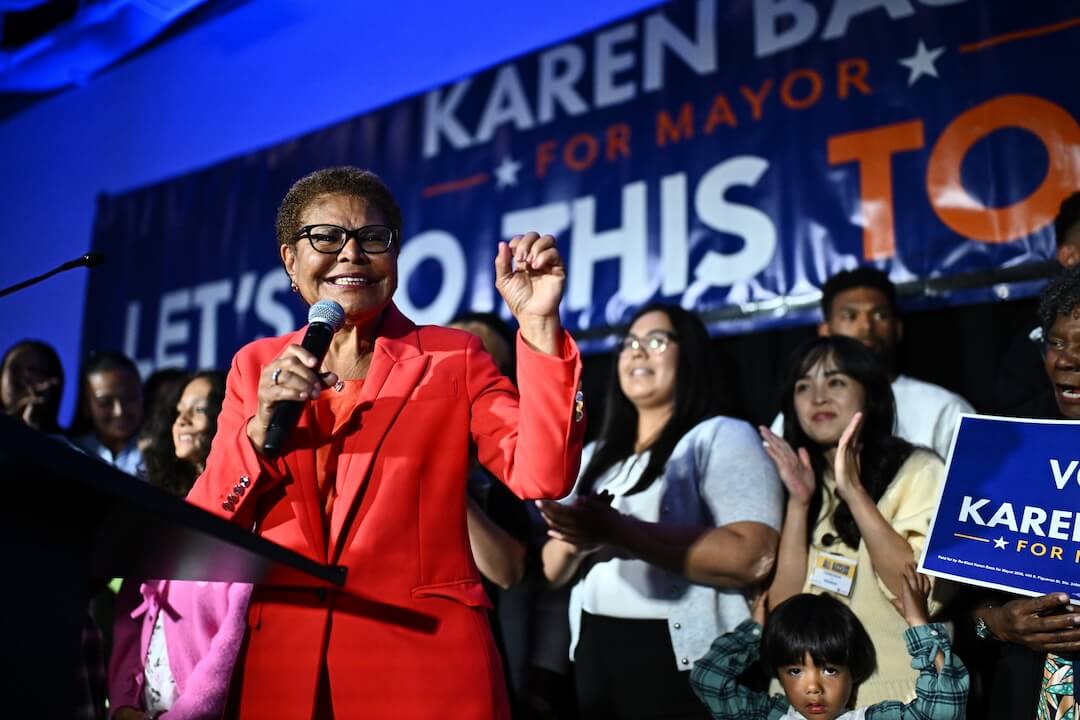
In mid-August, political analysts and newsrooms were thrown off balance by startling polling figures. A widely circulated poll claimed Los Angeles Mayor Karen Bass was leading Councilmember Nithya Raman by a massive, expanding margin. Days prior, a separate survey depicted democratic socialist Francesca Hong crushing Milwaukee County Executive David Crowley by over 20 points in Wisconsin’s Democratic gubernatorial primary.
Both polls were entirely fictitious. Crowley comfortably defeated Hong, and subsequent legitimate polling of the Los Angeles mayoral race revealed a vastly tighter contest.
When pressed by the Los Angeles Times, the entity behind the numbers—operating under the moniker "Median Strategies"—admitted the surveys were part of a short-term "social experiment." Their objective was to examine how manufactured polling data infiltrates the political ecosystem without independent verification. Despite the anonymous group’s academic framing, the experiment had immediate real-world consequences: outlets like The California Post published articles based on the fake metrics, and political campaigns momentarily amplified the distorted data before scrambling to delete their posts.
South Florida’s Digital Erasure Campaign
Simultaneously, investigative journalists in South Florida uncovered a disturbing new trend in the suppression of undesirable news: the weaponization of automated copyright takedown notices.
In the weeks leading up to the Republican primary for Florida’s 22nd Congressional District, local outlets such as WLRN and the Florida Politics website discovered that their hard-hitting investigative pieces regarding local entrepreneur and candidate Michael Carbonara had vanished from Google search results. Automated systems processed fraudulent copyright claims—utilizing identical language and originating from shell entities based in the United Kingdom—and stripped over 100 articles concerning Carbonara from public view. Although some content was eventually restored after protracted appeals, the delay successfully neutered critical reporting during the peak of an election cycle.
ABC’s First Amendment Escalation Against the FCC
The regulatory war between the federal government and traditional broadcasting reached a legal boiling point when ABC filed a landmark lawsuit in the U.S. District Court for the District of Columbia against the FCC.
The network alleged that the agency engaged in a retaliatory campaign by launching premature license renewal reviews for eight ABC-owned stations—years ahead of their statutory expiration dates—solely to punish the network for its editorial output. The lawsuit detailed a pattern of intimidation, including pressure stemming from late-night comedy monologues, daytime political commentary on The View, and extraordinary discovery demands comprising over 600 separate requests and 13,000 pages of documents.
White House Rapid Response Targets Media Families
Tensions between the executive branch and the Fourth Estate escalated further during a White House news conference. Following a tense exchange between President Donald Trump and CNN senior White House correspondent Kristen Holmes over comments made by Senator Jon Ossoff, the administration’s official "Rapid Response 47" account on X launched a personal attack against Holmes. Beyond labeling her a "disgraceful, humiliating embarrassment," the official government account escalated the rhetoric by targeting Holmes’s children, stating they would be "sickened and embarrassed to have a parent be so callous and vindictive." CNN forcefully condemned the rhetoric, drawing a definitive line between challenging press coverage and personal harassment.
Supporting Context & Metrics: The Anatomy of Information Decay
To understand the severity of these incidents, media ethicists and analysts point to the fragile mechanics underlying modern journalism.
[Fake Polls Introduced]
       │
       ▼
[Media Gatekeepers Fail Verification] ──► [Campaigns Amplify Distortion]
       │
       ▼
[Public Trust Erodes] ─────────────────► [Electoral Outcomes Impaired]
The Domino Effect of Unverified Polling
Polling has always occupied a delicate space in journalism. Hard numbers offer an irresistible shortcut to quantifying public sentiment. However, polls are fundamentally statistical estimates, not clairvoyant predictions. When news organizations bypass basic due diligence—failing to vet a polling firm’s track record, methodology, sample size, or funding sources—they act as force multipliers for disinformation.
As Poynter’s senior vice president for ethics Kelly McBride notes, publishing unverified data carries direct civic consequences. Voters can be suppressed into apathy—either believing their candidate’s victory is guaranteed or concluding that a trailing campaign is a lost cause. When fake pollsters deliberately inject falsehoods under the guise of a "social experiment," they accelerate the systemic rot of public trust, mirroring the mechanics of financial scammers who make it impossible for citizens to believe legitimate administrative notices.
The Vulnerability of Digital Gatekeeping
The South Florida copyright debacle highlights a critical structural flaw in modern tech infrastructure. Under current federal guidelines, digital platforms are incentivized to act swiftly upon receiving formal intellectual property complaints, often processing takedown notices automatically without human verification. Bad actors have quickly learned to exploit this administrative friction, turning copyright law into a censorship tool that bypasses traditional legal defamation hurdles.
Official Statements and Industry Responses
The stakeholders at the center of these controversies have offered starkly contrasting perspectives on the state of media accountability and regulatory oversight.
-
Median Strategies (on their polling experiment):
“Median Strategies was created as a short term social experiment to examine how purported polling information could enter and spread through the political information ecosystem without independent verification. We are not seeking publicity or attribution for the individuals involved and are declining interviews.”
-
Kelly McBride, Poynter Institute and NPR Public Editor:
“Journalists have an absolute duty to ensure that, when they are reporting the results of a poll, they have verified that the polling firm is legitimate, that it is independent and that its polling methods are sound… Using poll results from a firm that no one has ever heard of, that doesn’t have a track record and doesn’t make their methods available, is inexcusable.”
-
David Schutz, Managing Editor, South Florida Sun Sentinel:
“Because current federal rules encourage tech platforms to act immediately upon receiving a (copyright) notice, claims are often processed automatically without basic verification. That creates a system that is far too easy for bad actors to manipulate. That doesn’t just burden newsrooms that invest in original reporting — it directly undermines the public’s access to the news.”
-
The Federal Communications Commission (via spokesperson):
“All broadcasters have a legal obligation to operate in the public interest—even Disney. The FCC has been examining claims that Disney engaged in illegal DEI discrimination for over a year.”
-
CNN Communications Team (responding to White House attacks):
“Kristen Holmes is one of the most respected and accomplished journalists covering the White House. This afternoon, she did her job and asked the President of the United States a tough, relevant, and newsworthy question on behalf of the American people. Public officials are free to challenge reporting they disagree with, but personal attacks on journalists for asking questions are beneath the office and inconsistent with the principles of a free press.”
Future Outlook: Navigating the Post-Truth Media Landscape
As the media landscape absorbs these compounding shocks, the path forward requires a rigorous reinvention of journalistic standards and institutional defense mechanisms.
1. Strengthening Verification Protocols
Newsrooms can no longer afford passive trust in incoming data streams. Whether evaluating a surprise political poll, an unexpected scientific study, or a breaking economic indicator, editorial boards must enforce mandatory verification checklists. Anonymous firms, opaque methodologies, and unvetted sources must be treated as presumptive red flags rather than convenient content.
2. Legal and Legislative Reform for Digital Platforms
The weaponization of automated copyright strikes against South Florida newsrooms demonstrates that tech platforms must overhaul their dispute mechanisms. Lawmakers and platform architects will need to collaborate on frameworks that prevent malicious actors from weaponizing Digital Millennium Copyright Act (DMCA) provisions during sensitive political windows.
3. Defending the Boundaries of Regulatory Independence
The outcome of ABC’s lawsuit against the FCC will set a monumental constitutional precedent. If federal regulatory agencies can successfully leverage early license renewals and discovery burdens to coerce editorial compliance, the structural foundation of broadcast journalism in America will be fundamentally altered. Conversely, a judicial rebuke could reaffirm the absolute boundaries of the First Amendment against state-sponsored intimidation.
Ultimately, the events of this month serve as a sobering reminder of the fragility of truth. Whether combating phantom polls, state-level retaliation, or digital censorship, the survival of a free press depends on the unwavering commitment of journalists to verify, investigate, and refuse to be silenced.