

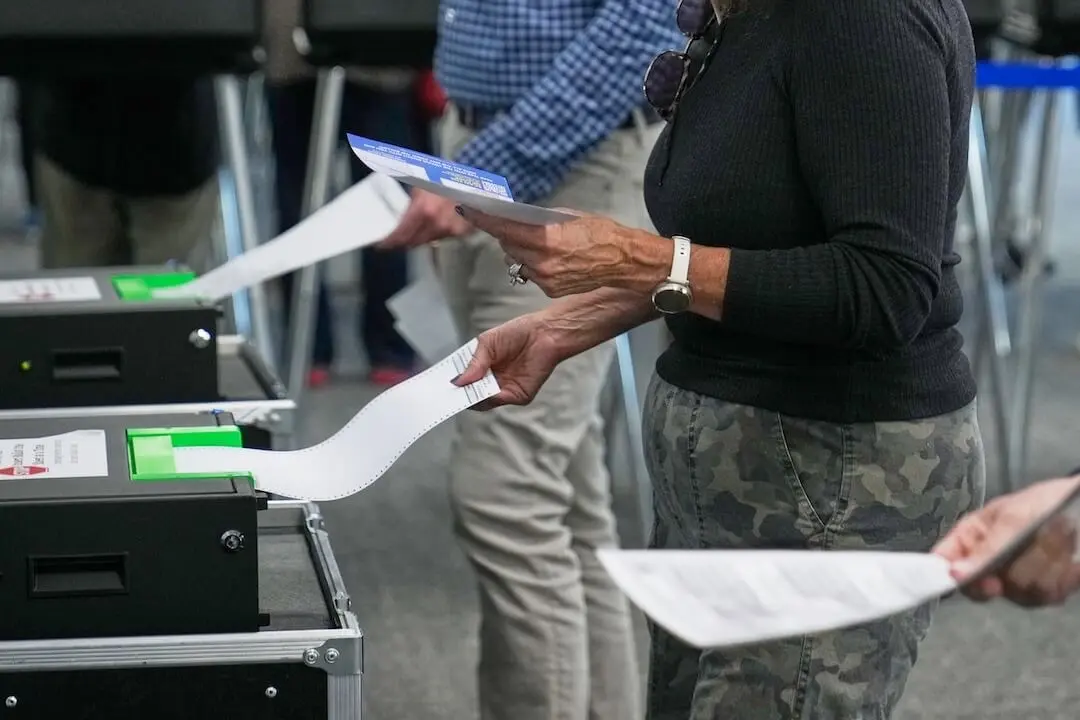
Understanding the American electorate has never been more imperative—or more overwhelmingly complex. For political journalists, campaign analysts, and institutional watchdogs, navigating the shifting tides of the public consciousness feels increasingly like charting an unfamiliar planet without a compass. While the baseline metrics of national politics are glaringly obvious—the country is deeply polarized, hyper-partisan, and voters across the political spectrum are consumed by a profound, pervasive anger—pinpointing the exact catalysts of this fury remains an elusive science.
Even harder to track is what might actually shift elections. Modern political campaigns have mastered the art of micro-targeting, tailoring hyper-specific messaging to narrow demographic slices in ways that actively evade public scrutiny. Compounding this opacity is the modern media ecosystem: the issues that motivate voters no longer stem from a shared front-page newspaper or an evening network broadcast. Instead, they are curated, filtered, and amplified by algorithmic silos and hyper-partisan echo chambers.
These technological and political dynamics have fractured what was once a reasonably shared baseline understanding of national issues. Today, voters walking into the exact same neighborhood polling place often appear to be participating in entirely different democratic exercises.
For the press, trying to explain voter motivations and election outcomes has turned into a game of informational compromise. Journalists are perpetually forced to rely on fragmented data sources that fail to capture the full story.
- Pre-election horse race polls tell us who people intend to vote for, but offer virtually zero depth on the core values, psychological triggers, and underlying anxieties driving those choices.
- Election returns tell us precisely who won and where the ballots were cast, but they remain completely silent on why.
- Academic post-mortem surveys expertly explore the "why," but they routinely take months—sometimes over a year—to be compiled, processed, and published, by which time the political landscape has already shifted.
This data vacuum carries staggering institutional costs. When post-election analysis is reduced to guesswork, victorious politicians are free to claim an unchecked mandate for virtually any policy agenda, governing accordingly without accountability. Meanwhile, in the absence of a grounded, objective explanation for why a neighbor voted the way they did, half the country is left free to conclude that the other half has fundamentally lost its mind.
A vote is not merely a political opinion; it is a choice—often a complicated, reluctant, and heavily contextualized one. The complex human narratives behind those choices deserve far more analytical rigor than a single cross-tabulation can ever provide. Meeting this journalistic challenge requires a fundamental upgrade in the data tools available to the fourth estate.
Detailed Chronology: From the 2016 Blind Spot to a New Era of Election Analytics
To understand the urgent necessity for better civic data, one must look back at the watershed moment that permanently altered how we view American elections: November 2016.
The 2016 Blind Spot and Its Aftermath
For a staggering number of citizens, political analysts, and media professionals, the outcome of the 2016 presidential election was simply unbelievable. It felt unbelievable because the press and the polling industry—the primary mechanisms by which we make sense of our democratic process—got it fundamentally wrong.
That failure occurred because the media relied on thin, surface-level tools and failed to spend enough time genuinely listening to the electorate. The establishment press missed the subtle, under-the-radar signals shifting the public mood, most notably the deep economic malaise, cultural alienation, and institutional distrust among working-class white voters. These populations were deeply engaged and powerfully motivated by Donald Trump’s populist messaging, yet they remained invisible to traditional models that prioritized national averages and generic swing-state metrics over granular community listening.
The consequences of that analytical failure did not evaporate when the race was finally called. When the press cannot explain an outcome with authority, it creates a dangerous informational void. Winners claim mandates they haven’t earned, losers retreat further into disbelief, and democratic trust erodes another notch.
Bridging the Gap: The Birth of the Civic Health & Elections Project
Recognizing that the tools of political journalism were fundamentally broken, researchers at NORC at the University of Chicago—a renowned, nonpartisan, and not-for-profit research organization—set out to engineer a solution. Their answer is the Civic Health & Elections Project (CHEP), an ambitious, large-scale data initiative designed to bridge the chasm between raw election returns and deep sociological comprehension.
The mechanics of the project represent a monumental shift in pre-election polling methodology:
- Massive Sample Size: In the crucial week leading up to Election Day, CHEP surveys more than 85,000 registered voters nationwide.
- Geographic Equity: The project guarantees a minimum of 750 surveyed respondents in every single U.S. state, ensuring that small and deeply partisan states receive the same analytical depth traditionally reserved only for perennial battlegrounds.
- Rapid Deployment: Rather than waiting months for academic processing, the core dataset, accompanied by interactive dashboards and advanced mapping tools, is scheduled for public release within hours of the polls closing.
This structural shift transforms the journalistic workflow. Instead of scrambling to interpret exit polls marred by shifting methodologies, reporters can access a robust, standardized dataset almost immediately, allowing them to contextualize local results while the political stakes are still red-hot.
Supporting Context & Metrics: Decoding the Electorate Beyond Swing States
The traditional media spotlight has long suffered from battleground-state myopia. National newsrooms routinely treat safe, non-competitive states as unnuanced monoliths or ignore them entirely simply because the ultimate outcome was never in doubt.
Red States, Blue States, and the Myth of Monolithic Voting
Consider a reporter working in a deeply red state like Oklahoma or a deeply blue state like Vermont. Under the status quo, when a district swings by 15 points toward one party, that result arrives with a pre-packaged, generalized explanation attached. Most local and national outlets simply accept it: The district is conservative, therefore voters wanted conservative policies; the district is liberal, therefore the opposite.
The Civic Health & Elections Project shatters this lazy generalization. With robust sample sizes across all fifty states, a reporter in Oklahoma or Vermont can slice and dice local data to examine distinct demographic segments of their state’s electorate. They can analyze state-specific questions regarding local economic anxiety, state tax policy, or regional infrastructure, and directly compare their state’s findings against states with similar demographic profiles—or radically different ones.
TRADITIONAL ELECTION REPORTING VS. CHEP ANALYTICAL FRAMEWORK
┌─────────────────────────────────┬──────────────────────────────────┐
│ Traditional Model               │ CHEP Data Framework              │
├─────────────────────────────────┼──────────────────────────────────┤
│ Focuses primarily on swing states│ Covers all 50 states (750+/state)│
│ Relies on post-hoc assumptions  │ Real-time motivational insights  │
│ Treats state blocs as monoliths │ Granular demographic slicing     │
│ Explains "who won"              │ Explains "why they won"          │
└─────────────────────────────────┴──────────────────────────────────┘
Unlocking the "Why" Behind the Ballot
By combining massive sample sizes with cross-cutting public policy questions, CHEP allows journalists to ask—and answer—complex evaluative questions that were previously impossible to quantify in real time:
- Do voters in a specific state who backed the winning gubernatorial or presidential candidate actually believe the local economy is improving?
- Do they maintain trust in the specific public institutions tasked with carrying out the winning candidate’s legislative agenda?
- What are their concrete expectations from the government regarding contentious issues like health care access or immigration enforcement?
- How do these local attitudes diverge from—or align with—neighboring states experiencing different economic conditions?
Because the underlying sample is so massive, these granular questions retain their statistical validity even when narrowed down to specific geographic regions, age brackets, or socioeconomic subgroups.
Official Statements and Methodological Vision
The philosophy driving the Civic Health & Elections Project is rooted in the belief that democracy requires an informed, self-reflective citizenry, which in turn requires an investigative press equipped with professional-grade analytical instruments.
In public briefings detailing the architecture of the project, NORC researchers have repeatedly emphasized that CHEP is explicitly not designed to help cable news anchors "call a race" faster on election night. Horse-race prediction is a crowded field filled with punditry and superficial polling. Instead, CHEP’s core mission is to decode the subterranean currents of public sentiment while the election results still matter to governance, legislation, and public accountability.
"A vote is a complex transaction between a citizen and their government," note project coordinators in methodological briefs. "Reducing that transaction to a single percentage point on an election map strips away the human context. If we want our political discourse to heal, we must give journalists the capacity to report on the why with the same aggressive precision that they report on the who."
Furthermore, project organizers have worked meticulously to ensure that advanced data science is not locked behind an expensive paywall or restricted to elite newsrooms with dedicated data desks. The initiative provides comprehensive video tutorials and user-friendly digital tools designed specifically to help local newsrooms—regardless of size or technical budget—extract compelling, data-backed human interest stories from the dataset.
Future Outlook: A New Standard for Journalistic Accountability
As the American political landscape continues to evolve under the pressures of technological disruption, hyper-polarization, and shifting demographic coalitions, the way journalists cover democracy must evolve in lockstep.
Understanding the electorate is not a transactional, five-day assignment that begins in October and abruptly ends when the final race is called on election night. True political reporting is an ongoing, year-round precondition for holding elected officials accountable to the actual desires, fears, and needs of the people they represent.
A Call to Action for Newsrooms
To maximize the utility of initiatives like the Civic Health & Elections Project, media organizations must change how they approach reporting assignments. Ahead of data releases, newsrooms are urged to adopt a proactive investigative stance:
- Formulate Hypotheses Early: Before raw data hits the public dashboard, reporters should write down two fundamental questions about the voters in their specific state that they have never previously been able to answer with empirical proof.
- Targeted Investigation: The journalists who extract the greatest value from the CHEP dataset will not be those who passively scroll through numbers, but those who arrive at the dashboard knowing precisely what local mysteries they are trying to solve.
- Sustained Narrative Tracking: A single data-driven story should act as a springboard, raising the vital questions that form the foundation of the next investigative piece.
By embracing tools that prioritize depth over speed and motivation over mere tallying, the journalistic profession can begin to bridge the empathy gap that divides the country. When reporters can accurately articulate the fears of a factory worker in the Midwest, the aspirations of a tech entrepreneur on the West Coast, and the struggles of a retiree in the South, the nation takes its first vital steps toward becoming comprehensible to itself once again.