

Executive Overview
In the fast-paced and often unpredictable arena of modern international geopolitics and public relations, few strategies pay off quite as handsomely as tactical self-deprecation paired with undeniable product excellence. Following a fiery campaign rally in Port Huron, Michigan, former U.S. President Donald Trump hurled a crude rhetorical barb at Norway, branding it a “shithouse country” after failing to secure the coveted Nobel Peace Prize.
Rather than engaging in a drawn-out, predictable diplomatic feud or issuing sternly worded rebukes through ambassadorial channels, the Scandinavian nation’s official tourism organization, Visit Norway, chose a far more unorthodox—and hilariously effective—counteroffensive. Embracing the insult with tongue firmly in cheek, the agency launched a viral marketing campaign celebrating its world-class, architecturally stunning public restrooms. Declaring proudly that Norway intends to “make shithouses great again,” the tourism board turned a petty political slight into an international tourism triumph.
This deep dive explores the anatomy of this viral phenomenon, tracing the trajectory from a disgruntled rally speech in Michigan to an unexpected digital landslide. We will examine how a modest budget of under $10,000 yielded astronomical returns, generating over 80,000 views from more than 170 countries in less than a week. Furthermore, this report analyzes the broader context of Norway’s renowned scenic route architecture, the mechanics of modern digital shock-value marketing, and how a nation transformed the lowest denominator of municipal infrastructure into a badge of national pride.
Detailed Chronology
The Catalyst: Michigan, the Nobel Peace Prize, and a Rancorous Outburst
The roots of this bizarre international media cycle trace back to late October 2026. Speaking before a raucous crowd of supporters at a campaign rally in Port Huron, Michigan, Donald Trump vented his persistent frustrations regarding the Nobel Peace Prize. The prestigious international accolade had been awarded earlier in the month to international jurist Navi Pillay—a snub that clearly still rankled the former commander-in-chief, who has long maintained that his diplomatic endeavors warranted multiple such honors.
Visibly irritated and casting blame across the Atlantic, Trump lashed out at the Scandinavian nation responsible for hosting the award ceremonies.
“Norway has become a shithouse country, actually,” Trump declared to his cheering base.
Stepping further into xenophobic rhetoric, he added that he no longer desired Norwegian immigrants coming to the United States, linking his personal grievance over the committee’s decision to broader immigration grievances.
What the speaker failed to note—or perhaps willfully ignored—was that the Nobel Peace Prize is adjudicated and awarded by an independent Norwegian committee comprised of five individuals appointed by the Storting (the Norwegian Parliament). While the committee operates on Norwegian soil, the nation’s government exercises zero operational control over its selections. Yet, nuances of constitutional governance rarely survive the friction of a campaign rally.
The Pivot: From Diplomatic Standoff to Architectural Flex
Historically, when world leaders are insulted by foreign political figures, the expected protocol involves formal diplomatic protests, statements from ministries of foreign affairs, or icy silence. Visit Norway, however, chose a path far more aligned with twenty-first-century digital insurgency.
Sensing an opportunity to weaponize humor, the tourism board dusted off and repurposed promotional assets originally compiled for an upcoming global observance: World Toilet Day, slated for November 19. Taking Trump’s volatile vernacular literally, officials decided to showcase the country’s shockingly luxurious, highly lauded public conveniences.
Instead of protesting the insult, they leaned directly into it.
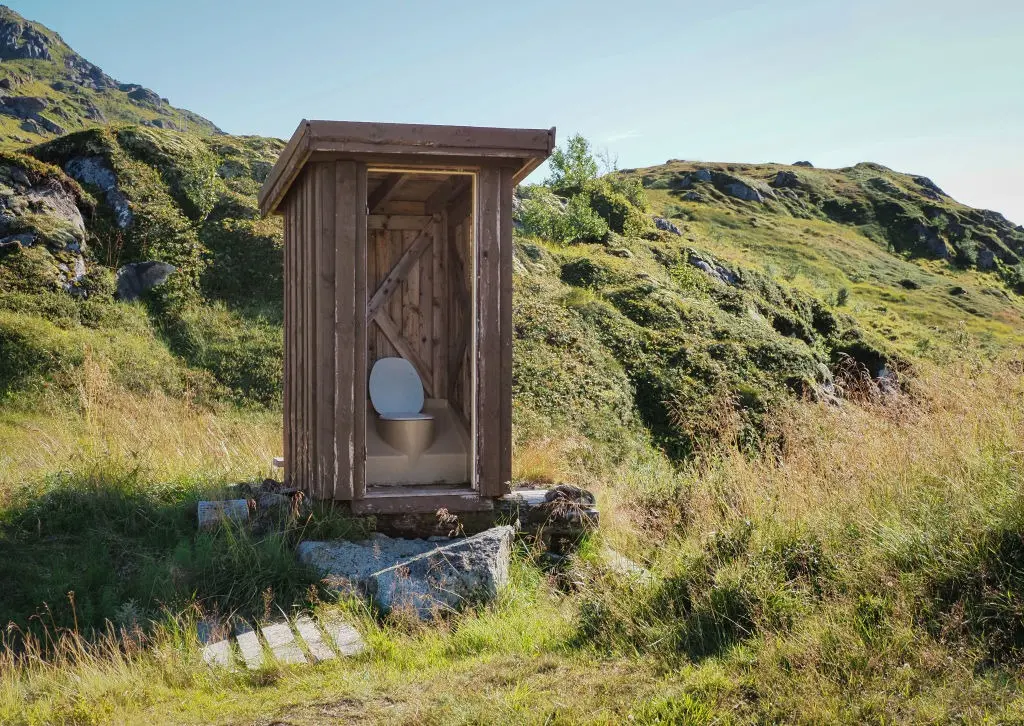
The campaign highlighted masterworks of modern architecture embedded within Norway’s breathtaking natural landscapes. Among the stars of the campaign were the Stegastein viewpoint toilet, which juts out dramatically over the deep-blue waters of the Aurlandsfjord, and the striking, angular Golden Toilet situated on the windswept shores of Senja Island. These aren’t merely functional boxes with a porcelain bowl; they are award-winning structural landmarks designed by leading Scandinavian architects to harmonize with—and elevate—the surrounding fjords, mountains, and waterfalls.
Supporting Context & Metrics: A Masterclass in Organic Reach
While the premise of the campaign was inherently humorous, the quantitative metrics behind its execution read like a textbook study in modern digital marketing efficiency.
The Numbers Speak Volumes
According to comprehensive tracking data published by the travel industry intelligence publication Skift, the impact of Visit Norway’s response was instantaneous and seismic:
- Traffic Surge: Traffic to the agency’s dedicated public restroom webpage skyrocketed to more than 540 times the volume recorded the previous week.
- Global Reach: Within just five days of the campaign going live, the page attracted over 80,000 unique views originating from more than 170 countries.
- American Curiosity: Intriguingly, approximately 25% of all web traffic stemmed from users based in the United States—demonstrating that Americans were intensely curious to see these architectural marvels for themselves.
- Fiscal Efficiency: The entirety of the digital pivot was executed on a shoestring budget. Visit Norway spent less than $10,000 on direct promotion, relying almost entirely on algorithmic virality, social media shares, and organic news pickup, with roughly 90% of traffic arriving unprompted.
- The Physical Escalation: Building on the digital wave, the agency coordinated a physical escalation: a prominent, eye-catching billboard advertisement scheduled to illuminate Times Square over the weekend.
Redefining Public Infrastructure
To fully understand why this campaign resonated so deeply, one must understand how Norway approaches public infrastructure along its designated National Tourist Routes. For decades, the Norwegian Public Roads Administration has invested heavily in transforming mundane roadside stops into cultural and architectural destinations.
In the United States and many other parts of the Western world, public restrooms are frequently associated with neglect, security concerns, or bleak, utilitarian cinder-block construction. Conversely, Norway treated the placement of a toilet along a scenic mountain pass as an opportunity for artistic expression. Utilizing cantilevered glass, treated timber, polished concrete, and site-specific lighting, these facilities frame panoramic vistas of rushing waterfalls and snow-capped peaks. By transforming a basic biological necessity into an aesthetic experience, Norway created a viral hook that practically marketed itself.
Official Statements and Institutional Reactions
Reactions from Norwegian officials and tourism representatives reflected a cool, collected amusement that contrasted sharply with the aggressive hyperbole of the original insult.
In interviews following the rollout of the campaign, spokespeople for Visit Norway emphasized that humor remains one of the most effective diplomatic tools for diffusing toxic political rhetoric. Rather than descending into reciprocal mudslinging, the agency chose to highlight tangible national achievements—design, infrastructure, and environmental integration—while inviting global travelers to experience the country firsthand.
Social media users across Instagram, X (formerly Twitter), and TikTok responded with enthusiastic approval. Comments on the viral posts praised the agency’s agility, with many international users noting that if a "shithouse" comes with heated floors, floor-to-ceiling glass windows overlooking a pristine fjord, and an award-winning design pedigree, they were more than willing to book a flight immediately.
Political analysts noted an ironic historical full circle in the discourse. During his first term in office, Donald Trump infamously referred to nations in Haiti and Africa as “shithole countries” while pining aloud for immigrants hailing from nations like Norway. Years later, having inverted his rhetorical framing to disparage the same Scandinavian nation out of personal pique, Trump inadvertently handed his targets a goldmine of free advertising. Norway capitalized on the irony with surgical precision, showing that when a politician hands a country lemons, an innovative tourism board can turn them into a viral sensation.
Future Outlook: The Enduring Legacy of the "Great" Shithouse
As the dust settles on this viral episode, the long-term implications for Norwegian tourism are overwhelmingly positive. What began as a transient media cycle driven by a frustrated politician’s late-October rant has permanently etched Norway’s scenic restrooms into the global cultural consciousness.
Sustainable Tourism and Infrastructure Interest
Industry insiders predict that the unexpected surge in web traffic will translate into concrete booking trends for the upcoming travel seasons. Travelers who once viewed Norway strictly as an expensive, bucket-list fjord destination are now discovering the meticulous care the country invests in every facet of the visitor experience—down to the very place travelers answer nature’s call.
Furthermore, the episode underscores a broader shift in how national tourism boards must operate in an era dominated by social media algorithms. Traditional, overly sanitized promotional campaigns often struggle to cut through the digital noise. Conversely, campaigns that exhibit cultural agility, self-awareness, and a willingness to embrace absurdity can achieve exponential reach with minimal financial outlay.
A New Benchmark for Crisis-Turned-Marketing
Ultimately, Visit Norway has set a new benchmark for how smaller nations can respond to unprovoked diplomatic insults from superpowers. By refusing to take the bait of standard political outrage, the country leaned into its strengths—exceptional design, breathtaking nature, and a dry, sophisticated sense of humor.
As travelers continue to click through the digital gallery of cantilevered viewpoints and golden-hued facilities, one thing is abundantly clear: Norway didn’t just make its public restrooms great again; it proved that wit, creativity, and good design will always have the final flush.