

Executive Overview
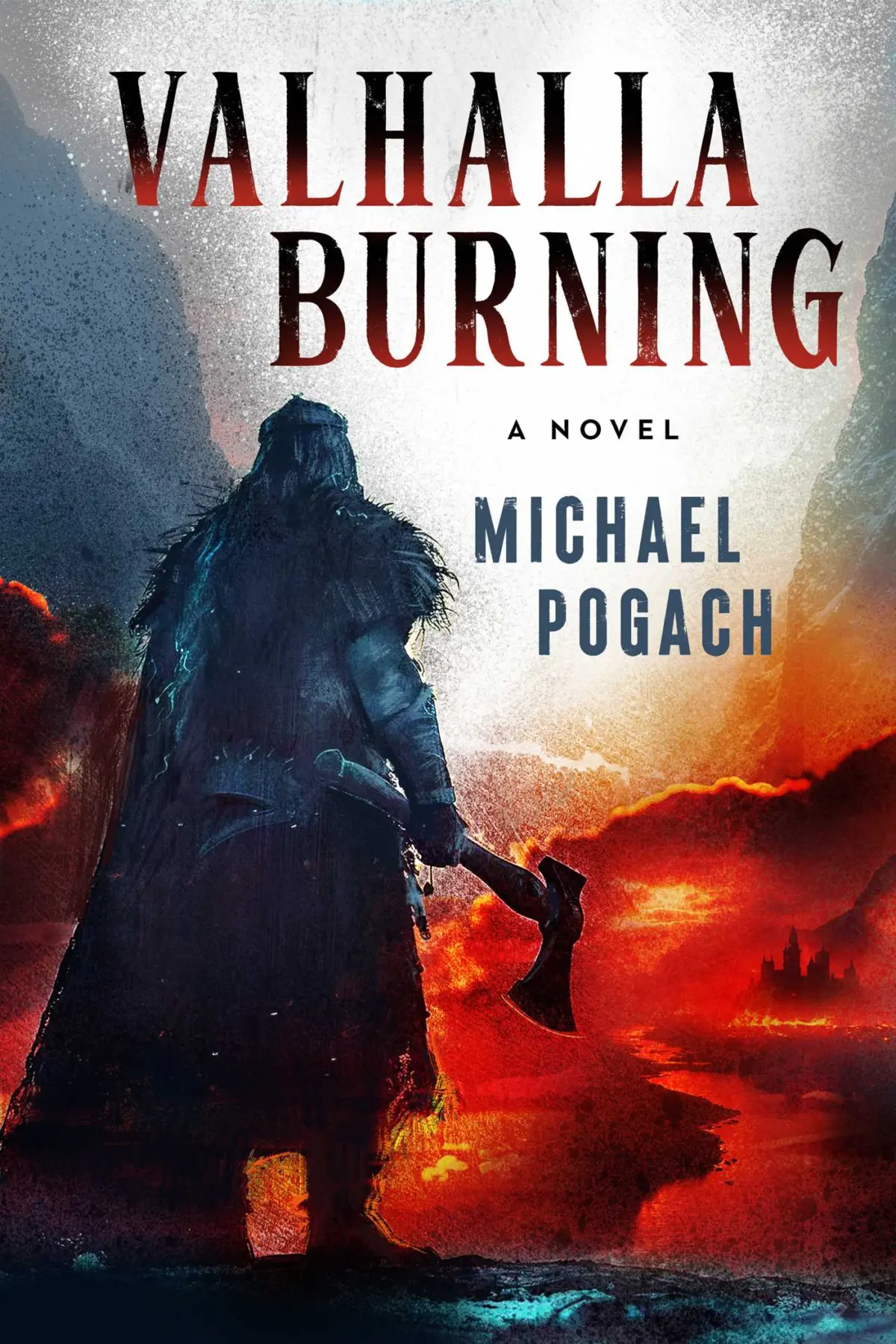
The journey of creating a novel is rarely a straight line; it is a chaotic ecosystem of false starts, midnight epiphanies, emotional attrition, and accidental sparks of inspiration. For author, literature professor, and creative writer Michael Pogach, the path to publishing his latest dark Viking epic, Valhalla Burning, was a nearly six-year odyssey. Spanning the isolation of the COVID-19 pandemic, debilitating self-doubt, rigid submission queries, and a milestone 50th birthday ultimatum, the release of Valhalla Burning on July 21 marks a triumph of persistence over the traditional publishing gauntlet.
Set in 9th-century Norway, Valhalla Burning follows Rúnr Njalson, a man granted the supernatural warrior abilities of Odin’s chosen Berserkr. When tragedy strikes during a rival clan’s raid, leaving his young daughter Yrsa dead, Rúnr embarks on a brutal, continent-spanning quest to save her soul from the clutches of Hel. Along the way, he navigates the dark forests of the Slavs and the Rus, marches toward the fabled city of Constantinople, and falls in with a motley crew of rogues, shieldmaidens, and merchants.
Beyond its bloody pages and rich historical tapestry, the novel stands as a testament to the diverse wellsprings of modern creativity. In reflections on his writing process, Pogach breaks down the five foundational lessons learned while bringing Valhalla Burning to life—challenging literary gatekeepers, exploring medieval linguistics, listening to creative intuition, surviving the agonizing timeline of the publishing industry, and peeling back the romanticized layers of Viking culture to reveal deeply human histories.
Detailed Chronology: The Five-Year Birth of a Dark Fantasy
1. The Spark: Video Games as Legitimate Narrative Art
The genesis of Valhalla Burning did not begin in a dusty archive of Norse sagas, but in the glowing light of a video game console. Caught between novel projects and suffering from a debilitating creative block, Pogach found his imagination reignited by the release of Assassin’s Creed Valhalla.
For Pogach, who grew up sprinting home from elementary school to play the original Nintendo Entertainment System, the dismissal of video games as "lesser" storytelling mediums is a tired artifact of cultural gatekeeping. Drawing a straight line from 80s staples like Super Mario Brothers, The Legend of Zelda, and Metroid to modern emotional narrative powerhouses like The Last of Us, Pogach champions interactive media as a vital artistic ecosystem.
"We play video games because they’re fun, sure, but also because they’re frustrating and infuriating and enlightening and inspiring. Just like books," Pogach notes. This cross-pollination of media proved essential; his creative drought vanished the moment he picked up the controller, culminating in a manuscript that eventually won the praise of the lead writer of Assassin’s Creed Valhalla itself.
2. Linguistic Archeology: Translating Beowulf for "Shits and Giggles"
To capture the rhythmic, brutal poetry of the early medieval world, Pogach leaned into his academic background as an English professor. Influenced by iconic translations of Beowulf by Edwin Morgan, Seamus Heaney, and Maria Dahvana Headley, the author undertook a seemingly irrational challenge: translating roughly 25 lines of Old English covering Beowulf’s three legendary battles against Grendel, Grendel’s mother, and the dragon.
While the process was recursive, demanding, and at times profoundly tedious, it served a vital psychological purpose. It was an act of creation driven entirely by desire rather than market necessity—a philosophy Pogach extends to all aspiring creators. "I did this thing that had no need to be done. Because I wanted to," he reflects, adding a blunt dismissal of automated creative shortcuts: "Also, fuck generative AI."
3. Trusting the Creative Compass: Listening to the Voices Within
Every novelist is familiar with the internal friction between what they want a story to be and what the story demands to become. During the drafting of Valhalla Burning, Pogach faced systemic structural failures that forced him to abandon his initial blueprints.
- The book’s working title transformed from the serviceable Of Vengeance and Valhalla into its final, punchier moniker after intuition flagged the original choice as inadequate.
- The first draft, originally written in a first-person perspective, completely unraveled at the 65,000-word mark, requiring a total ground-up rewrite in the third person.
- Planned character arcs, relationships, and set-piece endings were ruthlessly discarded when narrative instinct signaled they no longer served the whole.
This acute self-awareness—whether framed as muse, intuition, or Jiminy Cricket—is, according to Pogach, the ultimate tool for forging authentic art.

4. The Agony of the Timeline: Surviving Publishing’s Waiting Game
Perhaps the most harrowing phase of Valhalla Burning was its transition from completed manuscript to published work. Pogach is notoriously candid about his lack of patience, a trait tested to its absolute limits by the modern publishing ecosystem.
The timeline of the novel’s realization reads like a masterclass in emotional endurance:
- Late 2020: The first words of the manuscript are written in the depths of the COVID-19 pandemic.
- Early Summer 2023: After false starts and heavy revisions, the final manuscript is completed, and agent queries begin.
- Spring 2024: Pogach successfully signs with a literary agent, followed by intensive revisions and pitching to publishers in June.
- June 2025: Approaching his 50th birthday, Pogach sets a personal ultimatum: if no publisher picks up the novel by this milestone, he will walk away from writing entirely. His birthday arrives in total silence.
- July 2025: The day after his birthday, an email arrives indicating publisher interest. Following a grueling month of silence, a formal contract offer is extended.
- August – September 2025: Contracts are signed, immediately followed by breakneck editorial deadlines. Revisions, line edits, copyedits, and cover designs blur together in a high-intensity sprint.
- July 21, 2026: Valhalla Burning officially hits shelves, exactly five years and eight months after its inception.
5. Deconstructing the Myth: Beyond the Viking Cliché
In pop culture, the word "Viking" conjures immediate, hyper-masculine imagery: braided beards, horned helmets, blood-soaked axes, and pillaged monasteries. However, as historical consensus notes—and as Pogach explores in his novel—"Viking" was originally a job description rather than an ethnic identity. Derived from the Old Norse phrase fara í víking (to go raiding), the term applied to a small, specialized segment of Dark Age Scandinavian society.
Valhalla Burning seeks to look past the Victorian-era romanticization and the flat, bloodthirsty caricatures. The novel explores a world inhabited by real, complex people—farmers, slaves, children, merchants, and shieldmaidens—who experienced grief, forged artistic traditions, and maintained nuanced belief systems. It reframes the era not merely as a theater of endless violence, but as a deeply human landscape defined by family, trauma, oaths, and survival.
Supporting Context & Metrics
| Project Milestone | Date / Duration |
|---|---|
| First Words Written | Late 2020 (COVID-19 pandemic) |
| Manuscript Completion | Early Summer 2023 |
| Literary Agent Acquisition | Spring 2024 |
| Publisher Contract Signed | July 2025 |
| Official Book Launch | July 21, 2026 |
| Total Time Elapsed | 5 Years, 8 Months |
Official Statements & Industry Reception
The convergence of historical research, personal resilience, and gaming-inspired world-building has already earned Valhalla Burning high praise within the speculative fiction community. Most notably, the lead writer of Assassin’s Creed Valhalla—the very video game that pulled Pogach out of his creative slump—endorsed the novel, providing a full-circle moment for the author.
Reflecting on the psychological toll of the multi-year publication cycle, Pogach emphasizes the resilience required to survive as a modern creator:
"Every day querying made me sad and angry and frustrated and hopeful and even a bit depressed. Every day with the book on sub felt like a decade… But in the end, we did it. Valhalla Burning is real… The only thing I know for certain is: I suck at being patient."
Future Outlook
With Valhalla Burning now available globally through major outlets such as the Doylestown Bookshop, Bookshop.org, Amazon, and Barnes & Noble, Michael Pogach continues to balance his academic career as a literature and creative writing professor in Pennsylvania’s Lehigh Valley with his ongoing fiction projects.
Whether his next literary endeavor takes five months or seven years to materialize, the author’s trajectory underscores a vital directive for emerging artists: feed creativity from every available source—whether classic poetry, interactive media, or lived experience—and refuse to let institutional gatekeepers dictate the validity of one’s artistic passion.