

Executive Overview
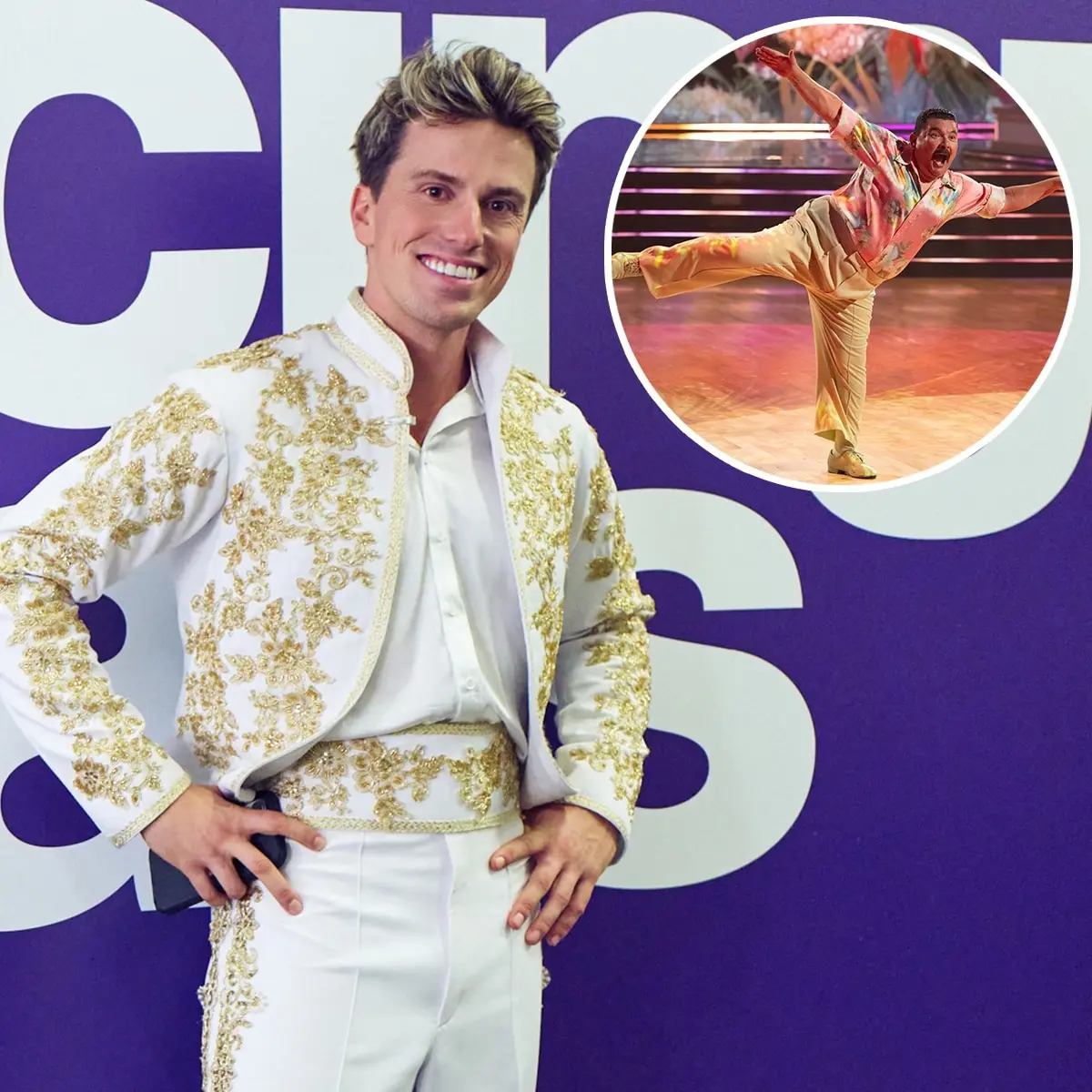
The intersection of reality television and digital-age public relations often yields friction, but few recent controversies on Dancing with the Stars have sparked as swift a cycle of online backlash, public contrition, and behind-the-scenes resolution as the recent exchange between Savannah Bananas baseball star Jackson Olson and Jimmy Kimmel Live! fixture Guillermo Rodriguez.
What began as a hastily typed, since-deleted social media comment quickly snowballed into a miniature internet storm, forcing Olson to address accusations of unsportsmanlike conduct and "shade" directed toward a fellow contestant. However, rather than allowing the controversy to fester, the athletes opted for direct, in-person communication. In a revealing exclusive interview, Olson detailed how a 30-minute face-to-face conversation in Rodriguez’s dressing trailer completely cleared the air, demonstrating a mature approach to conflict resolution in an era dominated by performative digital outrage.
This report examines the anatomy of the brief controversy, the ecosystem of Dancing with the Stars Season 35, the mechanics of modern reality TV public apologies, and what this incident reveals about the pressures faced by athletes and entertainers navigating the high-stakes world of competitive ballroom dance.
Detailed Chronology: From Digital Jab to Ballroom Truce
The sequence of events that brought Jackson Olson and Guillermo Rodriguez into the center of a social media tempest unfolded over the course of an intense rehearsal and competition week for Season 35 of ABC’s Dancing with the Stars.
The Spark: The Deleted Comment
The controversy ignited when Olson, known for his high-energy antics with the barnstorming exhibition baseball team the Savannah Bananas, left a seemingly innocuous yet critically perceived remark on a TikTok video. According to reports from Cosmopolitan and other entertainment outlets, another athlete had posted a video recreating a routine previously performed by Rodriguez and his professional partner, Witney Carson.
Olson, attempting to engage in casual banter, commented: "Seriously how did you do this better than him with 2 hours of rehearsal."
Though intended by Olson as lighthearted locker-room ribbing, the comment was immediately flagged by viewers and fans of the show as an unnecessary dig at Rodriguez’s dancing abilities. In the hyper-vigilant environment of reality television fandom, the remark was interpreted as condescending, particularly given Rodriguez’s status as a beloved, comedic presence on late-night television who was visibly working hard to overcome steep technical learning curves in the competition.
The Immediate Backlash
Within hours, the comment gained traction across TikTok and X (formerly Twitter). Commentators debated whether Olson’s remark crossed the line from playful athlete banter into genuine disrespect. For a show that heavily relies on themes of camaraderie, mutual support, and personal growth, any perceived hostility among cast members is quickly magnified by passionate fan bases.
Olson, suddenly thrust into the center of an unintended online controversy, realized the impact of his digital footprint. Rather than defending the comment or ignoring the growing chorus of criticism, he opted for immediate accountability.
The Public Apology
On October 6, Olson took to TikTok to issue an unreserved public apology directed at Rodriguez and the broader viewing audience.
"To G and to all of you, I am truly sorry that my comment I made the other day caused this much unnecessary negativity," Olson wrote. "I never meant for it to do that and I take full ownership and I love this guy. Now let’s do what this show is meant to be about: DANCE."
The statement was praised by followers for its directness. Olson did not offer excuses or attempt to minimize the comment; instead, he owned the mistake and pivoted the focus back to the artistic core of the competition.
Clearing the Air: The 30-Minute Trailer Meeting
Words on a screen, however, are rarely enough to fully repair interpersonal friction in a shared workplace. Recognizing this, Olson took the extra step of addressing Rodriguez in person behind the scenes of the production lot.
In an exclusive interview with E! News on October 6, Olson recounted the reconciliation:
"I went to his trailer, we talked for 30 minutes," Olson shared. "We’re fine. We’ve been friends through this entire journey. We’ve ranted to each other, we’ve talked to each other, and I just walked in and was like, ‘Hey I just want you to know, I meant nothing by that.’"
When asked about Rodriguez’s reaction, Olson noted a complete absence of lingering tension: "He was like, ‘Dude, I know. It’s totally fine.’"
Compounding Woes: The Banana Bowl and Rehearsal Realities
Even as the controversy with Rodriguez was put to bed, Olson found himself leaning into the theme of personal resilience amidst a string of simultaneous setbacks. In an Oct. 11 TikTok video, Olson captured his professional dance partner, Emma Slater, leaving the rehearsal studio with her boyfriend and fellow pro dancer, Alan Bersten. The couple playfully mouthed the lyrics to High School Musical 2‘s anthem "Gotta Go My Own Way."
Olson overlaid the video with the caption: "When your dance partner has to leave you for her boyfriend."
To compound the comedic misery of the moment, Olson was simultaneously processing his baseball team’s tough loss to the Texas Tailgaters in the inaugural Banana Bowl championship. Leaning into his recent public relations hurdle, Olson captioned the post with peak self-deprecating humor: "First I get canceled, then we lose the Banana Bowl and now this?!"
Supporting Context & Metrics: Season 35 Star Power
The Jackson Olson-Guillermo Rodriguez incident unfolded against the backdrop of one of the most star-studded and diverse rosters in the history of Dancing with the Stars. Season 35 has drawn immense media attention, blending social media influencers, athletes, reality television veterans, and Hollywood actors.
The Ecosystem of Season 35
The current season’s casting strategy has created a high-energy crucible where digital personalities and traditional celebrities must navigate intense physical training under the microscope of public scrutiny. Key pairs driving the season’s narratives include:
- Jackson Olson & Emma Slater: Bringing the theatrical, crowd-pleasing showmanship of the Savannah Bananas straight to the ballroom floor.
- Guillermo Rodriguez & Witney Carson: Combining the undeniable charm and everyman appeal of the Jimmy Kimmel Live! sidekick with championship-level choreography.
- Julia Stiles & Ezra Sosa: Bringing cinematic pedigree and technical poise to the competition.
- Giada De Laurentiis & Alan Bersten: Infusing culinary passion and high-stakes performance energy into the ballroom.
- Harry Shum Jr. & Jenna Johnson: Leveraging elite dance backgrounds and massive fan bases from pop-culture staples like Glee.
- Taylor Hanson & Britt Stewart: Tapping into ’90s nostalgia with high hopes of capturing the mirrorball trophy.
- Jenna Dewan & Val Chmerkovskiy: Uniting seasoned dance expertise with the raw competitive drive of a Step Up alumna.
- Amber Glenn & Pasha Pashkov: Translating Olympic-level ice skating precision onto the hardwood floor.
- Connor Wood & Rylee Arnold: Harnessing massive social media engagement to drive live-studio audience engagement.
The Psychology of Social Media Scrutiny for Modern Athletes
Olson’s experience highlights a growing operational hazard for modern athletes who cross over into mainstream entertainment. Unlike traditional professional athletes whose public personas are mediated through press conferences and post-game interviews, social media athletes and influencers operate in a permanent state of direct-to-consumer communication.
In this environment, conversational boundaries blur. Comments written with the casual familiarity of a dugout conversation are subjected to the forensic analysis of a global television audience. The speed at which an innocent comment can be reframed as a scandal requires a new playbook for crisis management—one characterized by immediate transparency, zero defensiveness, and direct interpersonal communication.
Official Statements and Industry Reaction
The swift resolution of the Olson-Rodriguez dispute drew positive reactions from industry observers and fans alike, serving as a masterclass in how minor interpersonal friction should be handled in the public eye.
Analysis of Olson’s Apology Strategy
Crisis communications experts have noted that Olson’s handling of the situation adhered to the gold standard of modern public apologies:
- Immediacy: He addressed the issue within days, preventing the narrative from hardening into a prolonged feud.
- Accountability: He explicitly took "full ownership" without attempting to blame algorithms, misinterpretation, or external factors.
- Humility: By walking directly to Rodriguez’s trailer for a private 30-minute conversation, he prioritized their actual human relationship over public optics.
- Humor: His subsequent self-deprecating posts about being "canceled" proved that he could laugh at himself, disarming critics who accused him of taking himself too seriously.
The Rodriguez Approach: Grace Under Pressure
For his part, Guillermo Rodriguez’s measured and forgiving response underscored the professional maturity that has kept him a fixture of late-night television for over two decades. By assuring Olson that "it’s totally fine," Rodriguez neutralized a brewing public relations headache for the show’s producers, allowing the cast to refocus their collective energies on the physical demands of the competition.
Future Outlook: Moving Past the Controversy
As Season 35 of Dancing with the Stars barrels toward its mid-season eliminations, the temporary blip caused by Jackson Olson’s stray comment has officially been relegated to the rearview mirror.
For Olson and Slater, the focus remains squarely on improving their technical scores, building audience rapport, and surviving the weekly elimination cuts. The incident, while uncomfortable in the moment, ultimately served to humanize both Olson and Rodriguez, proving that mutual respect and open communication can quickly defuse the manufactured outrage of the digital age.
As Olson continues his journey from the baseball diamond to the ballroom floor, he does so with a valuable lesson learned regarding the weight of his words in the entertainment ecosystem—and with a newfound ally in the beloved late-night star he once inadvertently offended. Fans tuning into upcoming episodes can rest assured that any future fireworks between the pair will happen strictly on the dance floor, where high-energy routines and glittering costumes take center stage.