In an era defined by sensationalized news cycles and fleeting coverage of systemic crises, “Where Then Shall We Go?” stands as a masterclass in immersive, long-form journalism. Produced, filmed, and edited by visual journalist Ryan Caron King and executive produced by Julianne Varacchi for Connecticut Public, the documentary captures a two-year human experiment taking place in the backyard of a New Haven, Connecticut, home.
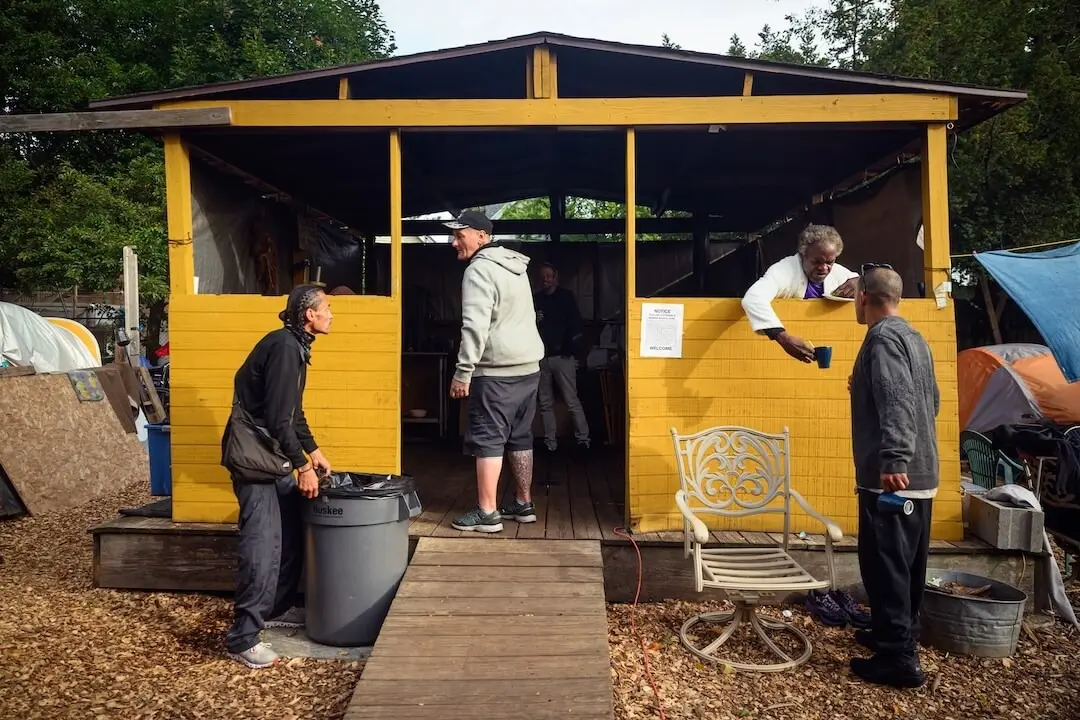
The project chronicles the birth, evolution, and daily struggles of the Rosette Neighborhood Village—a self-governed micro-neighborhood of tents, pallets, and tiny homes established behind the Amistad Catholic Worker House by activists Mark and Luz Colville. Offering a radical alternative to traditional, highly restrictive municipal shelters, the village became a sanctuary for unhoused individuals seeking agency over their lives.
For their meticulous reporting, deep community immersion, and unflinching look at urban poverty, King and Varacchi were honored with the prestigious Poynter Journalism Prize for Distinguished Reporting on Poverty. This award recognizes exceptional coverage of poverty in the United States, lauding the journalists for moving beyond statistics to capture the profound nuances, complexities, and humanity of unhoused populations.
Detailed Chronology: From "Tent City" Evictions to the Rosette Experiment
The Genesis: The Fall of New Haven’s "Tent City"
The roots of the Rosette Neighborhood Village trace back to a familiar American urban crisis. Before the micro-neighborhood took shape, Ryan Caron King was actively covering a makeshift encampment in New Haven colloquially known as "Tent City."
When municipal authorities moved to clear the encampment, evicting its residents and displacing vulnerable people, Julianne Varacchi—then senior director of visuals and television production at Connecticut Public—recognized that King’s sharp news instincts had uncovered something deeper.
"The situation kind of made those instincts go off, and he thought, you know, there could be something more here," Varacchi recalled. "He told me that a lot of these people may be moving into Mark’s backyard, and that we should continue to follow this story."
That tip catalyzed a two-year commitment. Rather than treating the displacement as a single breaking-news event, Connecticut Public committed to tracking the aftermath: the migration of displaced residents into the private backyard of activists Mark and Luz Colville.
Building Sanctuary: Life Inside the Micro-Village
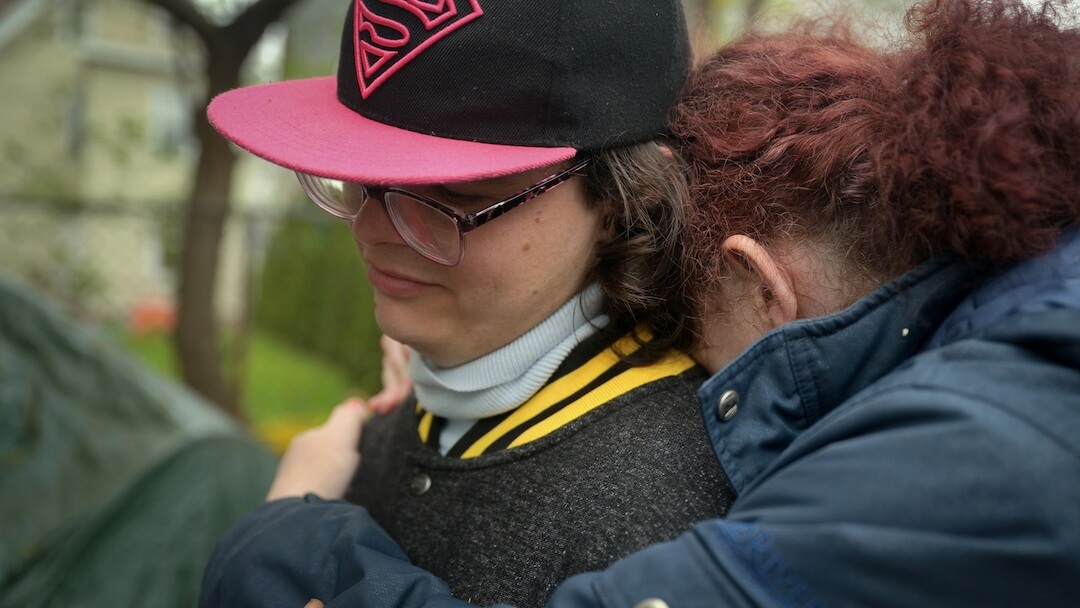
As residents trickled into the backyard space, they began constructing a community from the ground up—utilizing wood, cardboard, tarps, and salvaged materials to build micro-shelters. Among them was Blyss, an autistic resident whose living space measured just five-and-a-half by six-and-a-half feet.
In one of the documentary’s most poignant scenes, Blyss proudly shows off her thrift-store computer speaker, a clearance monitor connected to her phone for watching YouTube, and a wall-mounted Dustbuster used to clean up debris tracked inside. Because her autism requires absolute environmental control to manage anxiety, the tiny space—though too low to stand upright in—represented autonomy.
"It’s a small little place," Blyss reflected, looking around her handmade home. "It’s 5-and-a-half by 6-and-a-half feet, but it’s mine and I control it. And these are my things. And I chose the way it’s laid out in there."
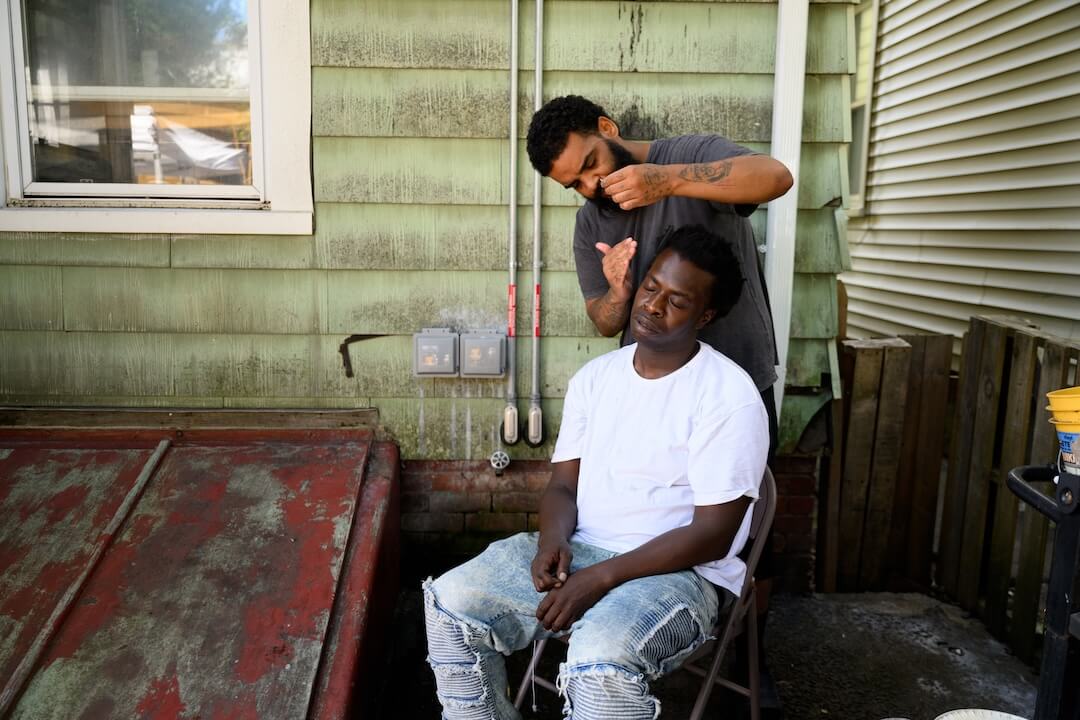
Over the span of 24 months, King documented the rhythms of daily existence in the village: morning chores, shared dishwashing schedules, razor-blade haircuts between shifts, and the constant friction of disputes with city officials. Viewers met residents like Mykala, recently released from jail; Rico, a handyman finding sanctuary; Suki, who fled Tent City with her husband; and Dorian St. James, who grieved the tragic loss of his newborn daughter while living in a tent next door.
Supporting Context & Metrics: The Broken Shelter Paradigm
The documentary’s critical narrative anchor is its stark expose of why traditional municipal shelter systems fail a significant portion of the unhoused population. While shelters are often framed by policymakers as a universal safety net, residents of the Rosette Village articulated a vastly different reality.
During a sit-down interview in the documentary, Suki laid bare the oppressive nature of conventional institutional shelters:
"There’s a reason why a lot of the people aren’t in shelters, ’cause a shelter is very much like being in a jail," Suki explained. "’Cause you’re giving up all your rights, privacy. You’re giving up your rights to your possessions, to your ability to come and go as you please. And a lot of us that actually work, it’s completely unreasonable to expect someone to be in by 8 p.m. every evening, or something like that. A lot of us work odd hours."
The Journalistic Method: Access, Ethics, and Boundaries
Securing this level of unfiltered access required an unconventional approach to journalism. King lived just five to ten minutes away from the site, allowing him to embed himself deeply within the community. However, physical proximity alone does not guarantee trust—especially when documenting people in deeply vulnerable positions on private property.
Prioritizing Presence Over Production: During his initial visits, King frequently walked away with zero footage. He sat, listened, and introduced himself as a human being first, carefully gauging who felt comfortable on camera.
Lightweight, Intimate Technology: Utilizing a nimble Nikon Z9 camera, King could blend into the background. He balanced environmental tripod shots with subtle body mics and built-in camera audio for intensely personal conversations.
Maintaining Journalistic Independence: Despite forming close personal bonds, King was steadfast about defining his role. He explicitly told project organizers and residents that he was an independent journalist, not an activist or advocate.
"From the beginning… I really tried to make clear (that) I’m an independent journalist, and can’t get involved from the advocacy side of this," King noted. "I explained to them that it also makes their story more credible, too, for me to maintain that independence."
This line was frequently tested. As new residents cycled through the encampment, King had to continuously re-establish boundaries, explaining his presence while navigating the ethical minefield of filming people experiencing acute crises, evictions, and trauma.
Official Statements and Recognition
The industry impact of “Where Then Shall We Go?” was officially cemented when King and Varacchi received the Poynter Journalism Prize for Distinguished Reporting on Poverty.
In their formal citation, the judging panel praised the project’s exceptional depth and execution:
"Fresh idea, well executed, the filmmakers followed the story for two years, immersing themselves in the lives of their subjects," the judges wrote. "Their dedication to telling the story through the eyes of those affected allowed for nuance and complexity."
For King, receiving validation from fellow media professionals who understand the grinding challenges of boots-on-the-ground reporting was deeply validating:
"It means a lot to be recognized by other journalists — people who understand the complexity and the challenges behind this kind of reporting," King said. "That means a lot, and it is assuring in a lot of ways."
Julianne Varacchi, reflecting on the enduring images of the project, emphasized the profound philosophical question at the core of the Rosette Neighborhood Village experiment:
"Can people govern themselves and support each other and be a part of community?" Varacchi asked. "From waking up in the morning to coming out of their tents, to going through the chores list and doing the dishes and cleaning up and all that kind of stuff, I absolutely loved."
Future Outlook: Implications for Urban Housing and Documentary Media
As cities across the United States grapple with skyrocketing housing costs, zoning restrictions, and the criminalization of homelessness, models like the Rosette Neighborhood Village challenge traditional municipal frameworks. Rather than relying solely on top-down, punitive institutional responses, the New Haven experiment highlights the viability of peer-led, self-governed micro-communities that prioritize human dignity, autonomy, and mutual aid.
Furthermore, “Where Then Shall We Go?” sets a high-water mark for poverty reporting in modern media. By rejecting superficial, drive-by journalism in favor of a two-year anthropological immersion, Connecticut Public demonstrated that regional newsrooms can produce landmark, award-winning investigative documentaries that change how communities perceive their most vulnerable neighbors.
As King and Varacchi’s work continues to resonate nationally, it leaves policymakers, urban planners, and journalists with a haunting, essential question: If traditional shelter models alienate those they are meant to protect, and micro-communities offer dignity at the margins, where then shall we go?