

Executive Overview
On the eve of the pivotal midterm elections, a political bombshell tore through the final stretch of one of the nation’s most fiercely contested and high-stakes U.S. Senate races. In an extraordinary about-face that sent immediate shockwaves across the American political landscape, Michigan Democratic Congresswoman Haley Stevens abruptly withdrew her endorsement of the Democratic Senate nominee, Dr. Abdul El-Sayed, and publicly threw her support behind his Republican challenger, former Congressman Mike Rogers.
The stunning defection—crystallized in a video message released on Sunday—not only ruptured party unity in a state that could single-handedly determine the balance of power in the United States Senate, but it also laid bare the deep, irreconcilable ideological rifts fracturing the Democratic Party. Stevens’ sudden alliance with Rogers follows months of bitter animosity rooted in a brutal primary battle, irreconcilable disagreements over foreign policy in the Middle East, and a localized campaign meltdown that has led to mass resignations within Stevens’ congressional staff.
While national Democratic leaders rushed to condemn the move as a betrayal, Republican figures—including President Donald Trump—welcomed the crossover endorsement as a display of rare political courage. With the electoral clock ticking down to the final hours and millions of ballots already cast, political analysts are left grappling with a singular question: Does Stevens’ scorched-earth departure from her party shift the momentum of a race where El-Sayed has historically maintained a commanding lead, or is it merely an isolated act of political self-destruction?
Detailed Chronology: How a Truce Collapsed into Chaos
The roots of this unprecedented political earthquake extend back to the contentious Democratic primary in August, where Dr. Abdul El-Sayed—an outspoken progressive and sharp critic of Israel—narrowly defeated Haley Stevens, a moderate Democrat and staunch supporter of Israel. Though the primary exposed raw nerves and deep policy divisions within the Michigan electorate, a fragile truce appeared to hold when Stevens immediately offered her endorsement to El-Sayed following his primary victory.
That fragile peace shattered over the final week before the midterms, culminating in a chaotic weekend of political theater.
The Escalation
The tipping point arrived when Stevens publicly demanded that El-Sayed denounce a campaign video—produced by an outside, unaffiliated group—that had drawn widespread criticism for antisemitic tropes. El-Sayed refused to take responsibility for or pull down an advertisement over which his campaign had no control. The disagreement quickly devolved from a policy debate into a deeply personal feud. According to reports from The Washington Post, El-Sayed subsequently informed Stevens that she was no longer welcome on his campaign trail and should stay away.
The Weekend Ambush
Tensions reached a fever pitch over the weekend following conflicting reports regarding loyalty within Stevens’ inner circle. Earlier in the week, Stevens’ fiancé publicly announced his intention to vote for Mike Rogers. When alarmed staffers questioned Stevens via text message about whether she might follow suit, she reportedly deflected with incredulity, texting back: "Omg why would you think I would do that?!!"
Yet, behind closed doors, plans were already shifting. On Saturday evening, Stevens assured a longtime confidant that she intended to attend a Detroit church service alongside El-Sayed. Instead, Sunday morning brought a dramatic pivot. Stevens bypassed the scheduled appearance with her party’s nominee, arriving instead at a separate Detroit church where Mike Rogers was in attendance.
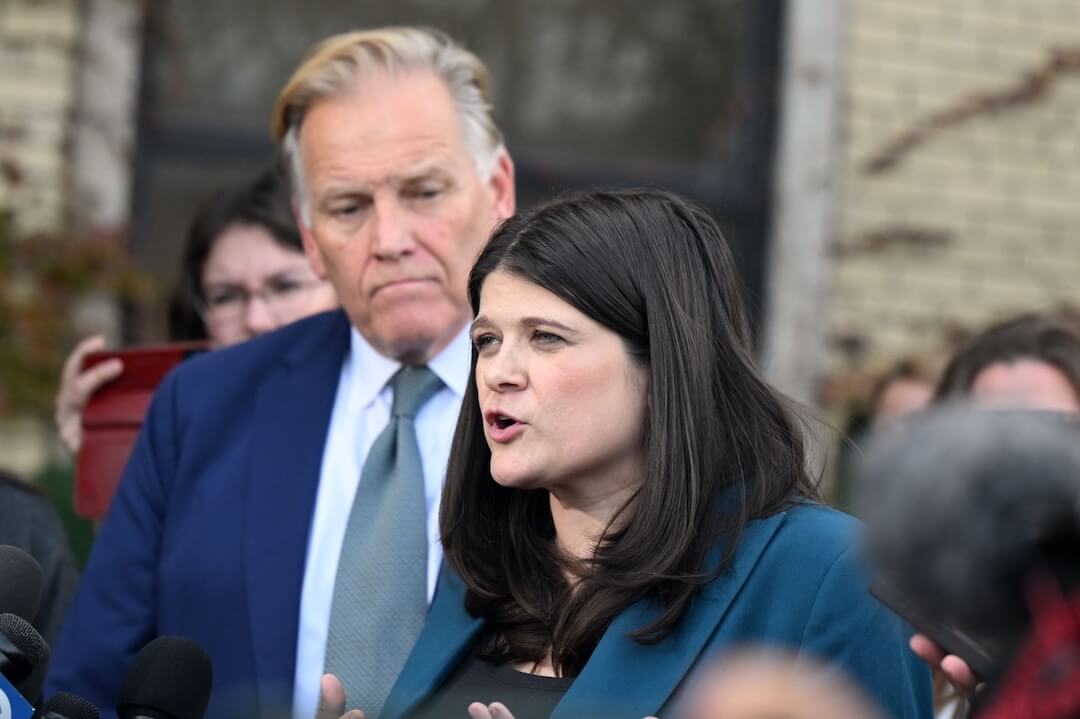
Eyewitnesses reported that Stevens embraced Rogers at the entrance and sat side-by-side with him in the pews. Shortly after the service concluded, Stevens published a targeted video message to Michigan voters declaring her defection:
"Hey Michigan, as you may have seen, our Democratic nominee for U.S. Senate, Abdul, said that I was no longer welcome in his campaign and that I should stay away. And he’s right. And that’s why I am endorsing Mike Rogers for the United States Senate today."
Despite explicitly backing a Republican in a race with major national implications, Stevens added the confounding caveat: "I’m still a very proud Democrat."
Supporting Context & Metrics: Policy Fault Lines and Internal Fallout
The high-profile defection is much more than a personal grudge match; it serves as a glaring symptom of deeper structural fault lines within the modern Democratic Party.
The Ideological Divide
Journalists and political analysts point out that Stevens and El-Sayed represent two fundamentally opposed wings of the Democratic Party. Stevens, backed heavily by centrist donors and political action committees such as AIPAC, embodies the pro-business, moderate wing. El-Sayed represents the ascendant progressive wing, whose vocal skepticism regarding U.S. foreign policy toward Israel has increasingly alienated moderate and Jewish voters.
Reporting from The New York Times highlighted that these ideological differences created an environment of permanent friction. While centrist strategists viewed Stevens as an indispensable bridge to moderate suburban voters, progressives argued that her campaign lacked genuine grassroots enthusiasm, relying instead on heavy funding from external Super PACs.
Staff Mutiny and Institutional Fallout
The immediate fallout within Stevens’ professional network was swift and absolute. Justin German, Stevens’ chief of staff, announced his resignation, stating he was "shocked and heartbroken" by her endorsement of a Republican. Investigative reports from The Detroit Free Press revealed that more than half of Stevens’ congressional staff resigned within hours of the announcement, rendering her legislative office effectively non-functional on the eve of the election.
The institutional response from the party was equally merciless. Curtis Hertel Jr., chair of the Michigan Democratic Party, issued a definitive statement via social media: "Congresswoman Stevens is not a current member of the Michigan Democratic Party, nor will she be in the future."
Official Statements and Reactions
The political class reacted to Stevens’ announcement with a mixture of outrage, jubilation, and disbelief.
Democratic Condemnations
Senate Minority Leader Chuck Schumer did not mince words, labeling the endorsement a "despicable betrayal" in a multipart statement on social media, while simultaneously condemning what he termed "racist, Islamophobic, and over-the-top false attacks on Abdul by Republicans."
Elissa Slotkin, Michigan’s other U.S. senator, who had largely remained neutral during the localized infighting, weighed in sharply as the race reached its climax. Writing on X, Slotkin argued that politicians must remain focused on the broader mission of checking executive power and supporting the middle class:
"So anyone who makes an election this important about themselves, and not Michiganders and our democracy, should think hard about whether they are serving the greater good."
Prominent progressive commentators echoed the outrage. Mehdi Hasan, speaking on MS NOW, blasted Stevens for enabling a candidate with a history of racially charged rhetoric, noting the bitter irony of a politician citing bigotry while aligning herself with Rogers. Meanwhile, Pod Save America co-host Jon Favreau dismissed the move as "the single most unproductive, selfish thing a Democratic candidate has done all cycle."
Republican Elation
Conversely, the Republican establishment seized on the development as a watershed moment of bipartisan validation.
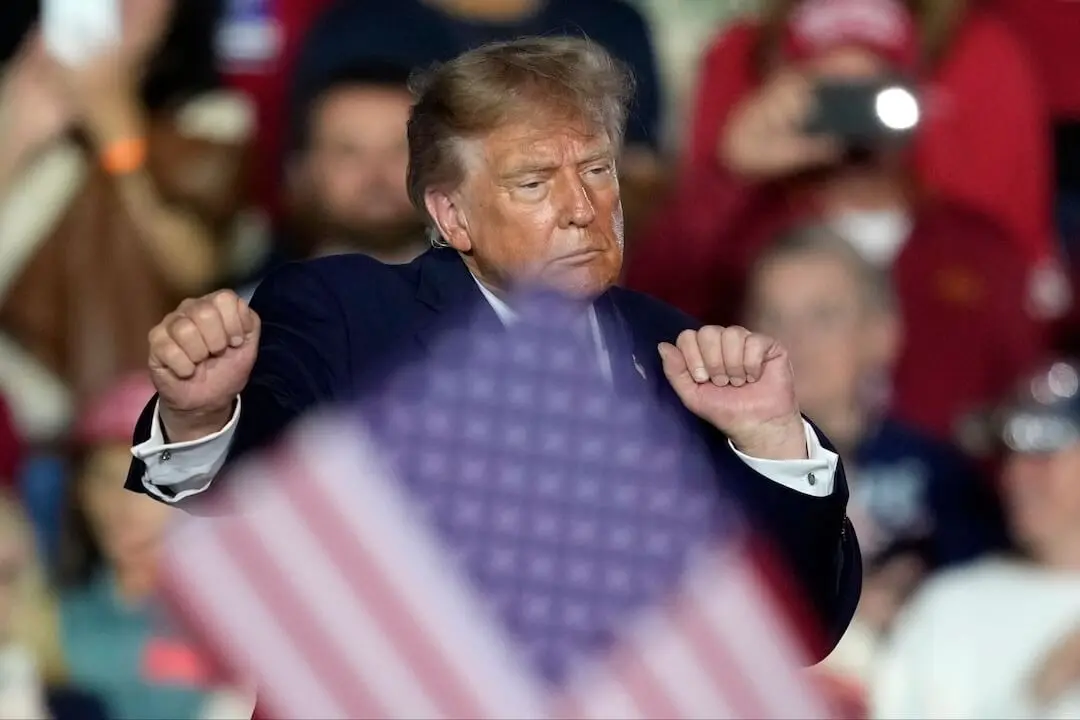
Speaking at a campaign rally in Iowa, President Donald Trump praised Stevens’ maneuver on Truth Social, writing: "She showed great and almost unprecedented loyalty to the Great People of Michigan with what she did. It’s a thing called bravery, and few people have it like just displayed by Congresswoman Haley Stevens!" Trump went so far as to state he would "love" for Stevens to formally cross the aisle and join the Republican Party.
House Speaker Mike Johnson praised her actions as "standing for truth," while Mike Rogers himself framed the endorsement as an act of political courage necessary to break through partisan deadlocks.
Future Outlook: Does the Defection Move the Needle?
As the dust settles on the final weekend of campaigning, strategists and pollsters are left evaluating the practical impact of Stevens’ gamble on the ultimate outcome of the Senate race.
Electoral Impact vs. Media Noise
Many political insiders argue that while the drama has dominated news cycles and inflamed party loyalists, its actual impact on the voting booth may be minimal. Dan Pfeiffer, co-founder of Pod Save America, argued that Stevens possesses no loyal grassroots base waiting to follow her directive. Furthermore, with early voting data indicating that roughly two million Michiganders—representing approximately 45 percent of the expected total electorate—had already cast their ballots before the weekend, the pool of persuadable, swing-state voters consuming this late-stage media narrative is severely limited.
Polling data released concurrently by The New York Times/Siena College late Sunday evening reinforced this perspective, showing Dr. Abdul El-Sayed maintaining a formidable 11-point lead over Mike Rogers.
Long-Term Consequences for the Democratic Coalition
Regardless of whether Stevens’ endorsement alters the final tally in Michigan, political scientists agree that the incident leaves permanent scars. The public implosion highlights the persistent difficulty party leadership faces in managing internal divisions between its moderate and progressive wings. As the party looks ahead to future congressional battles and the 2028 presidential cycle, the wounds opened in Michigan over foreign policy, candidate loyalty, and party discipline will require extensive institutional repair.
For Haley Stevens, the immediate future appears to mark the definitive end of her viability within the Democratic coalition—leaving her political legacy defined not by her years of legislative service, but by a single, explosive Sunday morning in Detroit that upended the final hours of a historic election.