

Executive Overview
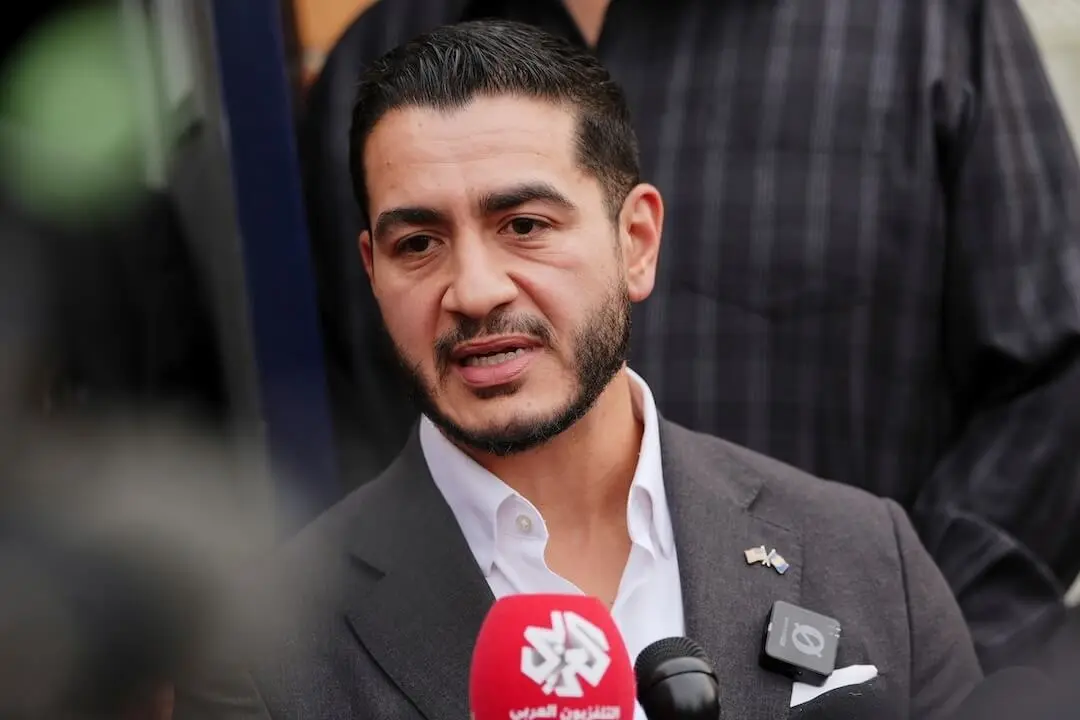
As the political thermometer rises in the closing days of a fiercely contested electoral cycle, Michigan has once again become a national crucible for colliding ideologies within the Democratic Party. A fresh controversy has erupted involving Abdul El-Sayed, the Democratic nominee for the U.S. Senate in Michigan, his former primary rival U.S. Rep. Haley Stevens, and a controversial digital advertisement produced by the left-leaning Rebellion PAC.
The dispute centers on how foreign policy intersects with domestic economic struggles—specifically, whether U.S. military assistance to Israel directly deprives American communities of vital resources like healthcare, education, and childcare. The controversy reached a boiling point just days before El-Sayed and Stevens were scheduled to appear side-by-side at a prominent Detroit church alongside seasoned civil rights leader and U.S. Rep. James Clyburn.
While Stevens has fiercely criticized El-Sayed for framing U.S. foreign aid as the primary culprit behind Michigan’s domestic funding shortfalls, foreign policy experts, economic analysts, and El-Sayed himself maintain that the discourse is more nuanced. This report provides an in-depth examination of the political friction, the disputed digital ad, El-Sayed’s actual record and statements on foreign aid and taxation, and the broader economic realities of federal budgeting.
Detailed Chronology of the Controversy
The unfolding drama highlights lingering tensions from a hard-fought primary election and demonstrates how digital media campaigns can abruptly alter the trajectory of a general election.
The Spark: Rebellion PAC’s Digital Ad
The political storm began when Rebellion PAC, a left-wing political action committee founded by media personality and political activist Cenk Uygur, released a digital ad targeted at Michigan voters. The spot features a couple in a grocery store agonizing over inflation and rising household expenses. In a pivotal moment of the ad, the woman tells her partner not to buy eggs because “we have to set that $7 aside for killing Palestinians.”
The final frames of the digital spot contrast the economic records of the candidates. It claims that Republican nominee and former U.S. Rep. Mike Rogers “is for they/them”—accompanied by a photograph of Israeli Prime Minister Benjamin Netanyahu and his allies—while asserting that “Abdul El-Sayed is for you.” According to creators, the ad was produced on a modest digital budget of $1,000 and did not air on traditional television outlets.
Rep. Stevens’ Rebuke and Call for Condemnation
The ad quickly drew sharp rebukes from across the political spectrum, but the most politically sensitive blow came from U.S. Rep. Haley Stevens, El-Sayed’s defeated rival in the Democratic primary. On October 30, Stevens took to social media to demand that El-Sayed explicitly condemn the advertisement.
In her public statement, Stevens drew a direct line between the ad’s rhetoric and El-Sayed’s own campaign messaging. She argued that the digital spot did not invent its core argument out of thin air, but rather dramatized a narrative that El-Sayed had repeated throughout his campaign: that foreign military aid to Israel is the direct reason Michigan families cannot afford quality schools, healthcare, and childcare. Stevens called on El-Sayed not only to disavow the ad but to apologize for his broader platform and to stop utilizing Israel as a convenient scapegoat for complex domestic economic challenges.
The Attempted Unity Event and Party Dynamics
The public feud threatened to overshadow a meticulously planned high-profile political event: a November 1 church service in Detroit. The gathering was designed to project unity on the left and feature El-Sayed, Stevens, and prominent South Carolina Democrat Rep. James Clyburn. Organizers intended the event to energize Black voters—a vital demographic that constitutes roughly 11% of Michigan’s overall electorate and has historically served as a stabilizing pillar for the Democratic coalition.
Instead of a seamless display of intra-party solidarity, the weekend approached under a cloud of public bickering, with Stevens publicly airing her grievances about El-Sayed’s foreign policy stances just hours before they were set to share a pulpit.
Supporting Context & Metrics: El-Sayed’s Rhetoric vs. Economic Reality
With media attention laser-focused on the feud, political observers and fact-checkers have closely scrutinized El-Sayed’s public statements regarding military spending, taxation, and their domestic opportunity costs.
Evaluating El-Sayed’s Stance on Foreign Aid
While critics like Rep. Stevens characterize El-Sayed’s platform as singling out Israel exclusively to explain away economic hardships, a review of his broader public record reveals a more expansive—though still sharply critical—foreign policy perspective.
Stephen Zunes, a professor of politics and director of Middle Eastern studies at the University of San Francisco, noted that El-Sayed’s critiques are multifaceted. According to Zunes, El-Sayed’s primary economic arguments focus heavily on systemic domestic issues, such as an unfair tax structure and bloated Pentagon budgets. When he addresses foreign policy, his core arguments center on allegations that U.S.-supplied weaponry has been used to commit human rights violations and that unconditional military alliances damage America’s standing on the global stage.
El-Sayed has repeatedly tied foreign spending to local needs in high-profile media appearances. In a podcast interview with The Daily Show host Jon Stewart, El-Sayed argued:
"The money that we are spending to subsidize apartheid in the West Bank is money that should be used on the West Side [of Detroit]. That’s our money. It should be spent here."
Similarly, at an October 29 campaign rally in Kalamazoo, El-Sayed categorized foreign military funding alongside gasoline and healthcare costs as part of a broader "affordability crisis." He told supporters:
"It shouldn’t be this hard to pay your taxes and know that that money is going to be spent on you and your kids rather than dropping bombs on somebody else and their kids."
Furthermore, El-Sayed has linked Israeli Prime Minister Benjamin Netanyahu’s foreign policies to skyrocketing domestic inflation. Following Israel-backed strikes on Iran in February—which prompted the Iranian government to shut down the Strait of Hormuz, a critical global oil transit artery—gasoline prices in the United States surged by more than $1.20 over pre-war averages. Because higher fuel costs ripple through supply chains to increase the price of consumer goods and groceries, El-Sayed argued in an October NBC interview that everyday Americans are paying the price for "war we should not be fighting, at the behest of whom? The government of Israel."
At the same time, El-Sayed has maintained that his opposition to foreign military subsidization extends beyond Israel. In statements addressing the Rebellion PAC ad, he clarified that his critique applies universally to other major recipients of U.S. military aid, including Egypt, Saudi Arabia, Qatar, and the United Arab Emirates.
The Shifting Landscape of Democratic Voter Opinion
El-Sayed’s aggressive skepticism toward foreign military aid does not exist in a political vacuum; it reflects a rapidly shifting consensus within the broader Democratic base. For decades, uncritical bipartisan support for Israel was a foundational tenet of mainstream American politics. However, polling data from organizations like Gallup, the Chicago Council on Global Affairs, and various public opinion monitors demonstrates a historic drop in American favorability toward the Israeli government, particularly among younger and more progressive voters.
In July, nearly half of all House Democrats voted in favor of an amendment to cut off offensive military aid to Israel. While the measure ultimately failed due to Republican opposition and remaining moderate Democratic resistance, it underscored a profound generational and ideological divide within the party. Public opinion polling consistently shows that a growing plurality of Americans favor reducing or reallocating military aid to foreign partners, transforming what was once a fringe progressive talking point into a mainstream debate within primary and general election cycles.
The Mechanics of Federal Budgets: Would Cutting Aid to Israel Fund Domestic Programs?
From an economic and budgetary standpoint, political rhetoric linking foreign aid directly to domestic social programs requires careful qualification.
The United States currently provides approximately $3.8 billion in baseline military aid to Israel annually, a figure that has escalated significantly since the outbreak of the Israel-Hamas war on October 7, 2023. Recent analytical estimates from organizations like the Council on Foreign Relations and Brown University’s Costs of War project place total supplementary and baseline conflict-related spending between $16.3 billion and $21.7 billion.
However, fiscal experts point out that cutting foreign military aid does not automatically or mechanically transfer dollars into domestic programs like Michigan public schools or healthcare clinics. Mark Cancian, a senior adviser at the Center for Strategic and International Studies, noted bluntly: "None of the money came out of any program that supports Michigan." Foreign military financing is allocated through specific international affairs and defense budget accounts managed by the State Department and the Pentagon.
Joshua Sewell, director of research and policy at Taxpayers for Common Sense, explained the mechanics of federal reallocations:
"Should Congress choose to reduce or eliminate aid to Israel, the savings could be redirected to any number of places, from reducing the $2 trillion deficit to spending on healthcare and childcare, to transportation and infrastructure, to countless other priorities. But precisely how Congress would redirect any savings from cuts is anyone’s guess."
Ben Freeman, an expert on defense spending and money in politics at the Quincy Institute for Responsible Statecraft, added nuance to the debate:
"Budgets have tradeoffs and opportunity costs, so it is fair to say that if spending on one government function goes up, it can put downward pressure on other spending priorities."
El-Sayed himself acknowledges that foreign aid is only one component of a much larger fiscal puzzle. Rather than relying solely on foreign aid cuts, his comprehensive policy proposals—such as those outlined in a September interview with Bloomberg News—emphasize a two-pronged approach: slashing bloated defense budgets and enacting aggressive wealth taxes on billionaires. By combining reductions in foreign military entanglements with higher taxes on the ultra-wealthy, El-Sayed argues the federal government can easily generate the revenue needed to fund universal healthcare, childcare, infrastructure, and high-performing public schools.
Official Statements & Responses
As the political fallout from the Rebellion PAC ad and Rep. Stevens’ broadside intensified, the principal actors moved quickly to manage the narrative before the joint Detroit appearance.
- Rep. Haley Stevens: Standing firm in her criticism, Stevens utilized her social media platform to frame the controversy as a referendum on El-Sayed’s core messaging. Beyond demanding an apology for the ad itself, she insisted that El-Sayed must permanently remove international geopolitics from his explanations of domestic economic strain, arguing that scapegoating Israel obfuscates genuine solutions for Michigan working families.
- Dr. Abdul El-Sayed: In an official statement posted to X (formerly Twitter) late on October 30, El-Sayed pushed back against Stevens’ attacks, accusing his former primary rival of intentionally relitigating a primary election that had concluded three months prior. El-Sayed emphasized that his entire campaign’s focus remained fixed on defeating Republican nominee Mike Rogers and lowering costs for everyday families. "This should be the priority for all of us right now," El-Sayed wrote, while pointedly referencing the heavy financial support that the American Israel Public Affairs Committee (AIPAC) had provided to Stevens during the primary race. "While Congresswoman Stevens seems intent on relitigating a primary that ended three months ago, let’s all focus on the task at hand."
- Rebellion PAC / Cenk Uygur: Defending the digital ad, PAC founder Cenk Uygur emphasized the grassroots nature of the digital spot, confirming to independent fact-checkers that the organization spent a nominal $1,000 to distribute it online, with broader visibility driven primarily by organic news coverage and social media amplification.
Future Outlook
The clash between Abdul El-Sayed and Haley Stevens serves as a textbook microcasm of the broader identity crisis facing the Democratic Party heading into the final stretch of the midterms. As the party attempts to bridge the ideological gap between its traditional moderate wing—which historically champions strong, unwavering ties to traditional foreign allies—and its ascendant progressive wing—which increasingly views foreign military commitments through the lens of domestic social investment and human rights—local races have become flashpoints for national debates.
Looking forward, the immediate fallout of this weekend’s joint appearance in Detroit will test whether Democratic leadership can successfully compartmentalize deep-seated ideological disputes for the sake of electoral coalition-building. While high-profile figures like James Clyburn step in to project unity and secure the turnout of crucial voting blocs, the underlying tension over foreign aid, inflation, and federal spending priorities is unlikely to dissipate anytime soon.
For El-Sayed, navigating the remainder of the Senate race requires walking a delicate political tightrope: maintaining enthusiasm among progressive voters energized by anti-war and economic justice messaging, while reassuring moderate Democrats and independent voters that his economic platform is pragmatic, comprehensive, and focused on tangible domestic solutions. Whether he can successfully pivot back to kitchen-table issues in the final days of the campaign will heavily influence not only his own senatorial prospects, but also the broader trajectory of progressive foreign policy debate within the American electoral landscape.