

Executive Overview
In a twist of legal irony that has stunned media and constitutional scholars alike, a high-stakes $10 billion defamation lawsuit filed by Donald Trump against the British Broadcasting Corporation (BBC) has transformed from an offensive legal maneuver into a profound vulnerability for the former president’s inner circle.
Trump initiated the multi-billion-dollar litigation expecting a familiar outcome: financial exhaustion, a forced retraction, or a lucrative out-of-court settlement. Historically, this playbook has proved devastatingly effective against domestic U.S. media organizations. In late 2024, ABC News capitulated with a $15 million payout following defamatory statements made by anchor George Stephanopoulos. Months later, Paramount forked over more than $24 million concerning CBS News’ editing of a 2024 campaign interview with then-Vice President Kamala Harris.
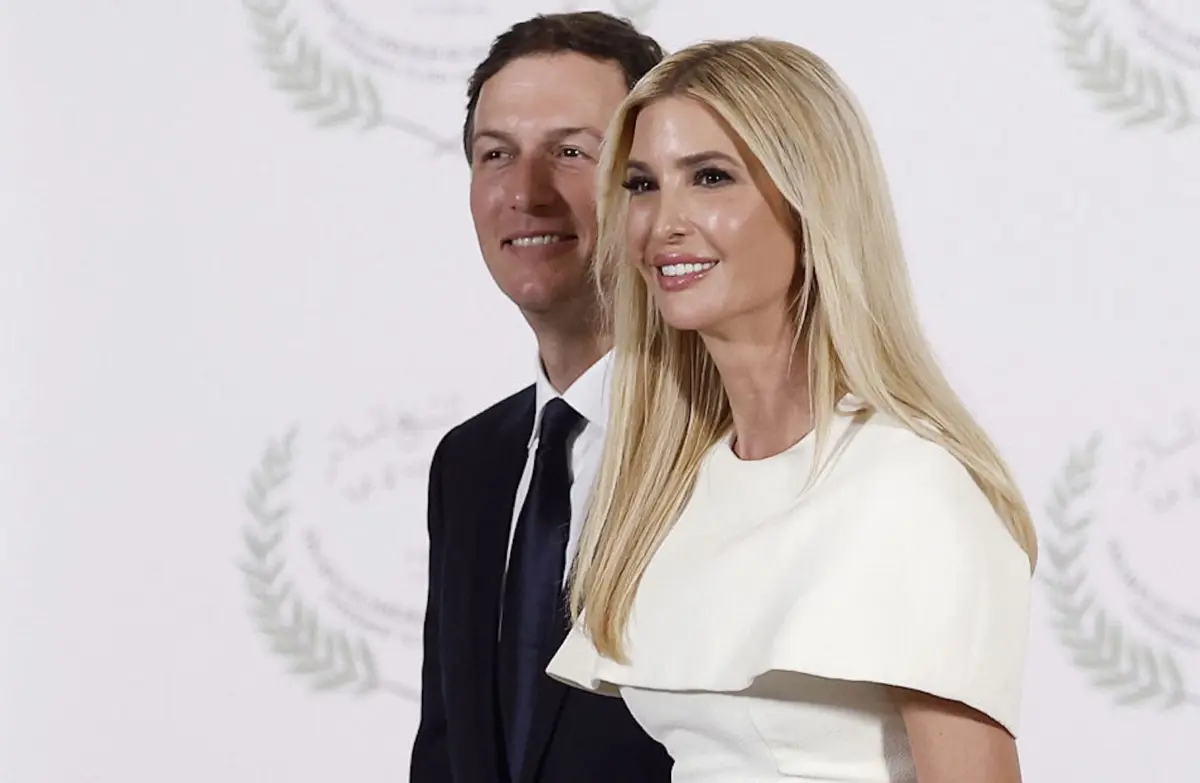
However, the BBC—a public service corporation bound by a strict royal charter—is legally barred from cutting checks to make litigation disappear. Compelled to fight until a definitive verdict is reached, the corporation’s defense team, anchored by the powerhouse First Amendment firm Ballard Spahr, has turned the legal tables. By centering the defamation claim on Trump’s exact intent and state of mind regarding his January 6 speech, the BBC has moved to subpoena three pivotal witnesses: Ivanka Trump, Donald Trump Jr., and son-in-law Jared Kushner.
What began as a routine media grievance has now collided head-on with executive privilege, the mechanics of federal process service, and troubling questions regarding the deployment of taxpayer-funded Secret Service details as physical shields against civil accountability.
Detailed Chronology: From Documentary Edits to Miami Courtrooms
The Genesis: "Panorama" and the Speech Edit
The conflict traces back to a 2024 investigative documentary produced for the BBC’s flagship current affairs program, Panorama—the same investigative unit that famously broadcast Prince Andrew’s disastrous interview regarding his ties to Jeffrey Epstein. Titled Trump, A Second Chance?, the documentary examined the rhetoric surrounding the former president’s 2024 campaign.
In constructing the segment on the events of January 6, 2021, producers edited together two separate portions of Trump’s Ellipse speech. The resulting cut seamlessly juxtaposed the phrases: "We’re going to walk down to the Capitol and I’ll be there with you," immediately followed by, "We fight, we fight like hell."
In reality, those lines were spoken nearly an hour apart. While the BBC subsequently issued a formal apology for the misleading montage, it steadfastly refused to retract the documentary’s core thesis or apologize for the underlying journalistic reporting. Furthermore, legal analysts quickly pointed out a fatal jurisdictional flaw in Trump’s filing: the documentary never actually aired inside the United States, including Florida, severely complicating Trump’s ability to prove economic injury and local reputational harm resulting from the broadcast.
Retreat on Financial Damages
Sensing a weak spot, the BBC’s defense team aggressively probed the legitimacy of the staggering $10 billion in damages claimed by Trump. Under standard civil procedure, a plaintiff alleging massive economic harm must open their financial records to scrutiny to substantiate the claim.
Rather than exposing his personal ledgers and asset valuations to public discovery, Trump quietly abandoned his monetary claims. Yet, the foundational questions regarding his intent on January 6 remained central to the litigation, giving the defense a clear pathway to pursue those closest to the Oval Office when the Capitol riot unfolded.
The Subpoena Battle and Secret Service Roadblocks
On August 14, attorneys for the BBC filed motions in a Miami federal court seeking to compel testimony and documents from Jared Kushner, Ivanka Trump, and Donald Trump Jr. Contemporaneous records reveal that Donald Jr. and Ivanka were actively involved in drafting and reviewing the speech in question, and were present when it was delivered. Furthermore, internal communications show Kushner telling then-White House Chief of Staff Mark Meadows that the unfolding violence was "getting really ugly," while Donald Jr. frantically texted Meadows begging him to urge his father to condemn the riot immediately.
When the BBC’s process servers attempted to deliver subpoenas to Ivanka Trump and Jared Kushner at their heavily fortified Miami residence in May, they were physically blocked by local law enforcement officers. These officers directed the servers to coordinate through the United States Secret Service.
When the legal team reached out to Secret Service counsel Troy Epstein, the agency flatly refused to accept service on behalf of the family members or facilitate delivery. Unable to access Donald Trump Jr. at Trump Tower either, the BBC’s legal team petitioned the federal court for permission to utilize alternative service methods, such as certified mail and email, to bypass the logistical dead-end created by federal protective details.
Supporting Context & Metrics: The Capitulation Trend vs. The Royal Charter
To understand why Trump miscalculated the BBC, one must examine the modern financial pressures facing American media corporations compared to public service broadcasters operating under European governance frameworks.
| Media Outlet / Entity | Legal Dispute Context | Settlement / Resolution Amount | Structural & Legal Constraints |
|---|---|---|---|
| ABC News | Defamation claim over anchor George Stephanopoulos’s on-air remarks. | $15,000,000 (Paid in 2024) | Corporate profit-driven model; favors risk mitigation and financial settlements. |
| Paramount / CBS News | Scrutiny over editing of a Kamala Harris campaign interview. | $24,000,000+ (Paid in 2025) | Shareholder-driven accountability prioritizing balance sheet preservation. |
| The BBC | $10 billion defamation lawsuit over a Panorama documentary. | None permitted (Active Litigation) | Governed by a Royal Charter prohibiting out-of-court financial settlements to drop claims. |
The comparative data underscores a stark cultural and legal divide. Domestic corporate networks, navigating shareholder pressures and risk-averse legal departments, routinely choose multi-million-dollar settlements over protracted, brand-damaging trials.
The BBC, funded by a UK licence fee and structurally anchored by a Royal Charter, lacks the legal mechanism to make a lawsuit vanish via a financial transaction. By filing suit in an attempt to secure another quick corporate surrender, Trump inadvertently locked horns with an entity legally required to exhaust every available defense, turning the discovery phase into an existential threat for his inner circle.
Official Statements & Institutional Reactions
The fallout from the blocked subpoenas has ignited fierce debate across Capitol Hill, constitutional law circles, and international press freedom organizations.
- The BBC Legal Team: In court filings submitted to the Miami federal district court, defense counsel emphasized that the testimony sought is not a fishing expedition, but a direct requirement to test the plaintiff’s state of mind. "These are not neutral bystanders being swept into a media spat," the legal team noted in summaries of the filings. "They are three people who watched the fire get lit and, by their own contemporaneous words, knew exactly what was burning."
- Donald Trump’s Defense Counsel: Responding to the escalating proceedings, Trump’s legal representatives dismissed the depositions as an unprecedented campaign of harassment. Trump himself publicly complained that the broadcaster was "abusing the deposition process" to score political points against his family.
- Government Accountability Watchdogs: The utilization of Secret Service infrastructure to block civil process service has drawn sharp rebukes from legal watchdogs. Critics point to structural parallels with the unexplained disappearance of Secret Service text messages from January 6, 2021, and allegations of witness intimidation concerning former aide Cassidy Hutchinson. Constitutional scholars argue that using a taxpayer-funded protective detail as an impenetrable shield against civil accountability stretches executive protection far beyond its intended constitutional boundaries.
Future Outlook and Legal Implications
As the litigation moves deeper into the federal court system in Miami, several critical legal milestones will determine whether the former president’s children are ultimately forced to take the stand:
- Judicial Ruling on Alternative Service: The federal judge must rule on the BBC’s motion to serve the subpoenas via electronic means (email and certified mail). A favorable ruling would legally nullify the physical blockades maintained by private security and the Secret Service at the Miami estate.
- Motions to Quash: Legal counsel for Ivanka Trump, Jared Kushner, and Donald Trump Jr. are expected to file aggressive motions to quash the subpoenas, citing executive privilege, lack of personal jurisdiction, and overbreadth.
- The Scope of Discovery: Even if the court limits the deposition topics, the mere existence of active discovery regarding January 6 intent represents a severe strategic setback for a plaintiff who launched the lawsuit expecting an uncontested victory.
Conclusion
Donald Trump’s $10 billion lawsuit against the BBC was designed to reinforce a well-worn narrative of media intimidation and financial dominance. Instead, it exposed the limits of applying domestic corporate pressure tactics to a public service institution bound by statutory charters.
In attempting to punish a foreign broadcaster for its coverage of January 6, the former president may have inadvertently opened the courtroom doors he spent years trying to keep bolted shut—leaving his family facing the very accountability they have long sought to evade.