

Executive Overview
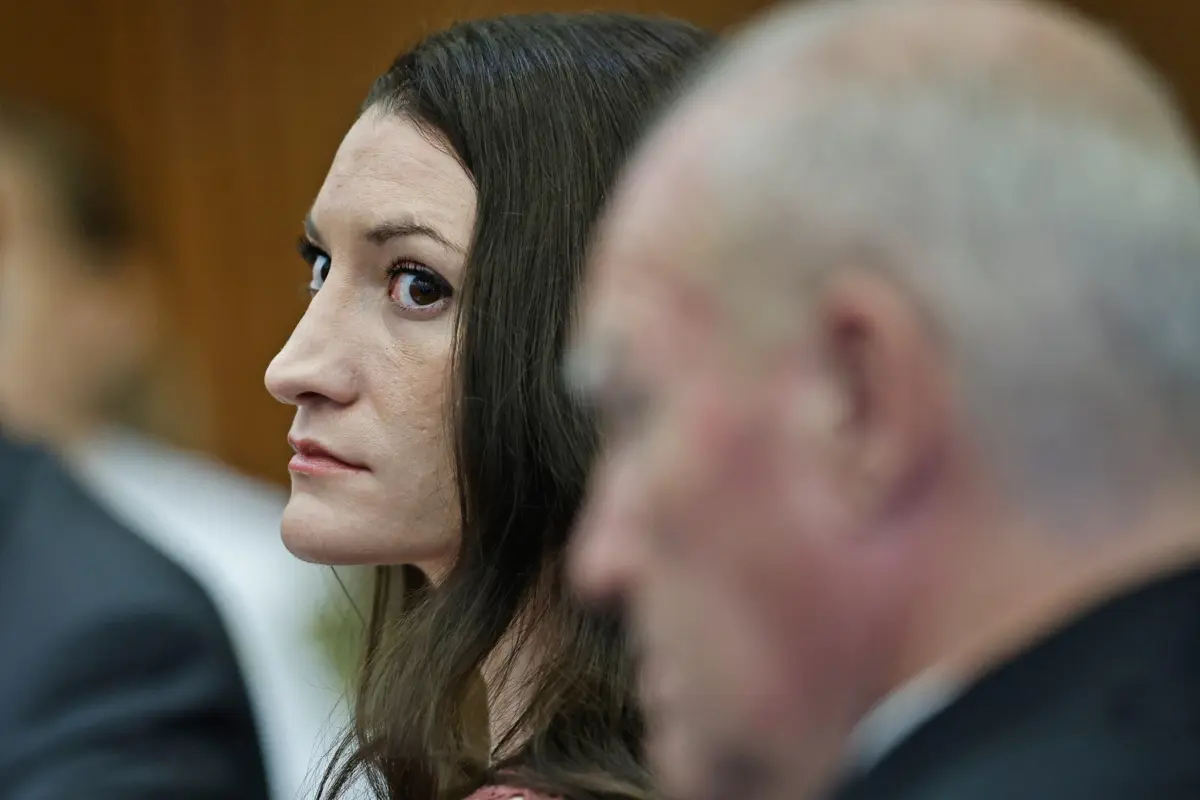
The high-profile legal proceedings surrounding Lindsay Clancy—the Massachusetts mother accused of the tragic January 2023 murders of her three young children—returned to a Plymouth courtroom on Tuesday, September 29. Marking the first formal court appearance since a mistrial was declared on September 4 due to a deadlocked jury, the hearing laid bare the starkly contrasting narratives that continue to define this harrowing case.
Defense attorney Kevin Reddington launched a fierce and comprehensive attack on the prosecution’s evidentiary foundation, aggressively arguing that his client should be acquitted outright. Reddington characterized the state’s case as being "based on speculation," pointing to what he described as a total absence of credible physical evidence, critical investigative lapses, and profound questions regarding the defendant’s state of mind and memory following the tragedy.
Conversely, the prosecution firmly pushed back against the defense’s assertions, labeling Reddington’s arguments "laughable" and pointing to a voluminous record of evidence. Plymouth County Assistant District Attorney Shanan Buckingham maintained that the state has more than enough corroborating material to establish that Clancy was the sole individual present with the children during the timeline of the alleged crimes.
As Judge William Sullivan weighs the defense’s motion for a judgment of acquittal, the legal path forward remains fraught with complex procedural hurdles. With upcoming arguments addressing double jeopardy protections, the conduct of a holdout juror, and the prospective scheduling of a retrial, the case continues to command national attention while examining the intersections of severe maternal mental health crises, forensic scrutiny, and the American judicial system.
Detailed Chronology: From January 2023 Tragedy to the September Mistrial and Beyond
To fully comprehend the stakes of the recent courtroom exchanges, it is essential to trace the trajectory of the legal battle surrounding Lindsay Clancy. The case gripped the public consciousness in January 2023, when emergency responders arrived at the Clancy family home in Duxbury, Massachusetts, following a harrowing 911 call. Inside, authorities discovered the lifeless bodies of five-year-old Cora, three-year-old Dawson, and eight-month-old Callan.
Lindsay Clancy was found injured outside the home, having sustained severe trauma from an apparent suicide attempt that ultimately left her paralyzed. In the immediate aftermath, as details of the horrific event emerged, the defense rapidly coalesced around a central, deeply humanizing narrative: that Clancy was suffering from acute, debilitating postpartum psychosis—a severe medical condition characterized by hallucinations, severe depression, and a complete disconnection from reality.
Throughout the subsequent criminal trial, the defense sought to demonstrate that Clancy’s actions were driven entirely by a psychiatric medical emergency that rendered her incapable of understanding the nature and consequences of her actions. Medical experts, defense witnesses, and family members testified to the profound psychological distress Clancy experienced in the weeks and months leading up to the tragedy, underscoring systemic gaps in maternal mental healthcare.
However, the trial concluded inconclusively. On September 4, after days of intensive deliberations, the jury informed the court that they were hopelessly deadlocked. Judge William Sullivan declared a mistrial, setting the stage for the contentious post-trial skirmishes that culminated in the September 29 hearing.
During Tuesday’s proceedings, Reddington pivoted from the trial’s primary focus on postpartum psychosis to launch a direct assault on the fundamental integrity of the state’s case. Rather than merely arguing insanity or diminished capacity, Reddington asserted that the prosecution had failed to establish the foundational elements of the crime itself, demanding a complete and unconditional acquittal.
Defense Arguments: Reddington Dismantles the Prosecution’s Evidence
In a courtroom presentation characterized by sharp rhetoric and pointed inquiries, Kevin Reddington systematically deconstructed the core pillars of the government’s evidentiary portfolio. His arguments targeted every major component of the state’s theory of the crime, ranging from forensic science to the integrity of the police investigation.
Challenging Physical and Forensic Evidence
Reddington trained his sights heavily on the physical evidence linking Clancy to the strangulation of her children, which prosecutors allege was committed using exercise bands. Specifically, the defense attorney dismissed the DNA and fingerprint evidence recovered from the bands as "woefully deficient." By characterizing the forensic findings as inconclusive or weak, Reddington sought to undermine the physical certainty that the state has attempted to project.
Furthermore, Reddington directed profound skepticism toward the blood spatter evidence presented by the prosecution. Prosecutors have maintained that after the alleged murders, Clancy inflicted wounds upon herself and threw herself out a window in a calculated suicide attempt. Reddington challenged the physical plausibility of this sequence based on the observed crime scene data:
"Where are the smears from a person who has just cut their wrist, cut their throat, is in a state of psychosis, that throws themselves out a window — where are the smears from that person walking across the blood up to the window and then propelling themselves out the window?" Reddington challenged in open court.
Questioning the Integrity of the Investigation
Going beyond individual pieces of evidence, Reddington launched an all-out condemnation of the investigative process itself. Describing the initial police work as "horrific" and "ridiculous," he escalated his critique by asserting that the shortcomings were so profound that "it was not even a horrendous investigation — there was no investigation."
The Question of Confession and Memory
Perhaps most crucially, Reddington directly challenged the notion that Lindsay Clancy ever made a conscious, knowing admission of guilt. Pointing to medical testimony regarding Clancy’s extended hospitalization and subsequent recovery from a coma, Reddington highlighted the profound cognitive disconnect during her early recovery period.
According to psychiatric testimony cited by the defense, when Clancy first regained consciousness in the hospital, medical professionals informed her of what had occurred. Reddington emphasized that she lacked any independent, firsthand memory of the events, asking the court pointedly: "Where does she say she did this?"
Prosecution’s Rebuttal: Buckingham Defends the Integrity of the State’s Case
The Commonwealth of Massachusetts offered a swift and unequivocal counter-narrative, delivered by Plymouth County Assistant District Attorney Shanan Buckingham. Dismissing Reddington’s extensive criticisms as "laughable," Buckingham stood firmly behind the strength, volume, and credibility of the state’s evidence.
Defending Forensic Integrity and Timeline
Addressing the defense’s dismissal of the DNA and fingerprint findings, Buckingham maintained that the physical evidence, when viewed in totality, provides a compelling picture of culpability. The prosecution emphasized that the timeline established during the investigation clearly places Clancy alone in the residence with the three children during the critical window when the murders occurred, leaving no plausible alternative scenario for who could have committed the acts.
The Hospital Chaplain Testimony and Hallucinations
To counter Reddington’s assertions regarding Clancy’s lack of confession or memory, Buckingham pointed to specific, documented interactions between the defendant and medical personnel and spiritual advisors while she was hospitalized.
Buckingham directed the court’s attention to statements Clancy allegedly made to a hospital chaplain. According to the prosecution, during these conversations, Clancy explicitly discussed experiencing profound hallucinations:
She "talks about the fact that she had these hallucinations telling her what she had to do, telling her she had to kill the kids."
The state argued that these admissions, coupled with the exhaustive records compiled throughout the investigation, constitute a "voluminous" body of information that overwhelmingly supports the conclusion that Clancy committed the acts, regardless of the ongoing debate surrounding her mental state at the time.
Supporting Context & Metrics: The Broader Implications of the Clancy Case
The ongoing legal battles in Plymouth County are unfolding against a backdrop of intense national scrutiny regarding several critical socio-legal issues:
- Maternal Mental Health Awareness: The case has catalyzed a nationwide discussion regarding the severity, prevalence, and misunderstanding of postpartum psychiatric conditions. Advocates and medical professionals have continually highlighted how acute conditions like postpartum psychosis can impair reality testing, distinguishing these medical emergencies from premeditated criminal behavior.
- Forensic and Investigative Standards: Reddington’s aggressive challenge to DNA, fingerprint, and blood spatter evidence mirrors broader defense strategies in high-profile criminal trials, where the reliability of forensic methodologies and the thoroughness of law enforcement protocols are increasingly subjected to rigorous judicial cross-examination.
- Jury Dynamics and Retrials: The occurrence of a hung jury in such a high-profile, emotionally charged trial underscores the profound difficulties juries face when evaluating cases that intersect complex psychiatric defenses with tragic outcomes. Mistrials due to deadlocked juries require prosecutors to weigh the immense public resources, emotional toll, and legal viability of pursuing a second trial.
Official Statements and Judicial Posture
Following the robust exchange of arguments from both legal teams, Judge William Sullivan announced his judicial approach moving forward. Judge Sullivan confirmed that he would take the defense’s motion for a judgment of acquittal under advisement, meaning a definitive ruling will be issued at a later date.
While the immediate question of whether to dismiss the charges outright remains pending, Judge Sullivan signaled that the court must simultaneously prepare for all eventualities, including the distinct possibility of a retrial. Toward the close of Tuesday’s hearing, the judge directed both prosecutors and defense counsel to begin selecting a potential new trial date. Although neither side was prepared to commit to a specific timeline on the spot, Judge Sullivan indicated that the scheduling matter would be formally addressed alongside other pending motions.
Future Outlook: What Lies Ahead on November 2
The legal proceedings in the Lindsay Clancy case are scheduled to resume on November 2, a date that promises several critical legal determinations:
- Ruling on the Acquittal Motion: Judge Sullivan is expected to deliver his decision regarding Kevin Reddington’s motion to declare Clancy not guilty based on the alleged insufficiency of the evidence.
- Double Jeopardy Arguments: The defense is slated to present additional arguments concerning their motion to dismiss the case entirely, invoking protections against double jeopardy to prevent the state from subjecting Clancy to a retrial.
- Juror Scrutiny Proceedings: The court will address ongoing legal maneuvers related to the defense’s efforts to further question the holdout juror from the mistrial, a process that has introduced unique procedural questions into the post-trial phase.
- Trial Scheduling: Both parties will be expected to address Judge Sullivan’s directive regarding the selection of a new trial date, should the motion for acquittal be denied and the case proceed toward a second jury trial.
As the legal teams prepare for the November 2 showdown, the case of Lindsay Clancy remains a deeply tragic, legally complex, and closely watched chapter in Massachusetts jurisprudence, continuing to test the boundaries of criminal liability, medical insanity defenses, and the rigorous standards of evidentiary proof.