

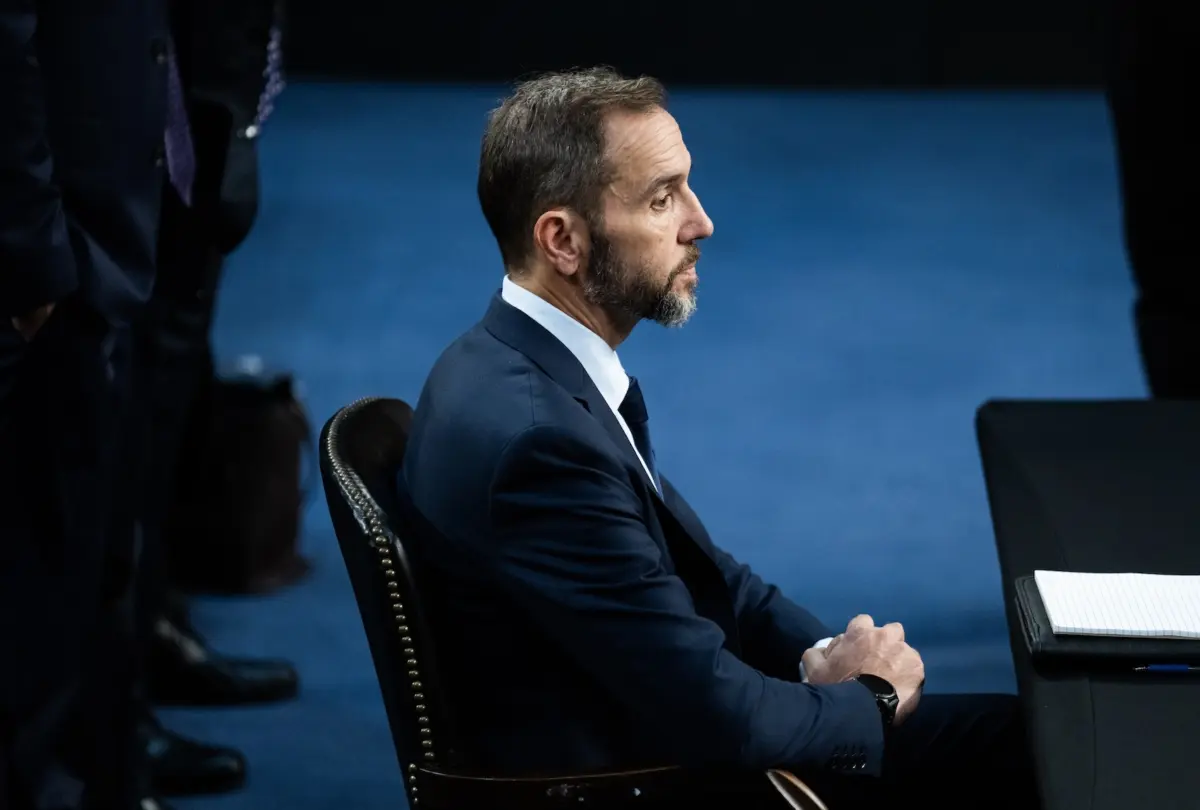
The Senate Judiciary Committee hearing on September 29, 2026, featuring former special counsel Jack Smith, was billed by Republican lawmakers as an exercise in oversight. In practice, however, it unfolded as a high-stakes political spectacle that underscored the deep, unresolved fissures of contemporary American politics. Facing a hostile panel of GOP senators determined to cast him as a partisan operative, Smith stood his ground, defending the integrity of his now-defunct investigations into Donald Trump’s efforts to overturn the 2020 election and his alleged mishandling of classified documents at Mar-a-Lago.
More than a mere rehashing of past legal battles, the hearing functioned as a microcosm of a broader, concerted effort by the MAGA movement to rewrite historical memory. By attempting to criminalize the investigators rather than reckoning with the underlying conduct that triggered the probes, Republican lawmakers sought to invert the narrative of accountability. For the administration and its allies, neutralizing the credibility of independent prosecutors is not just about settling old scores; it is an essential step in consolidating narrative control as the country looks toward the midterms.
Smith’s defiant refusal to back down—asserting that he would launch the exact same prosecutions today under identical facts—provided a rare moment of institutional resistance. Yet, the hearing also exposed the profound vulnerabilities of the nation’s democratic norms, where basic factual accuracy can be sidelined in favor of performative outrage designed to generate viral clips for partisan media.
Detailed Chronology: From Special Counsel to Senate Scrutiny
The timeline leading up to Jack Smith’s grueling appearance before the Senate Judiciary Committee is marked by the rapid erosion of post-Watergate norms surrounding the independence of the Department of Justice.
- Late 2022: Attorney General Merrick Garland appoints Jack Smith as special counsel to oversee the criminal investigations into Donald Trump’s retention of classified documents and his interference in the peaceful transfer of power following the 2020 election.
- 2023–2024: Smith’s teams secure historic federal indictments against Trump. The election interference case centers on the events leading up to the January 6, 2026, attack on the U.S. Capitol, while the classified documents case focuses on willful retention of national defense information and obstruction of justice.
- Late 2024: Following Trump’s victory in the 2024 presidential election, Department of Justice policy protecting a sitting president from prosecution, combined with the shifting political landscape, results in the systematic unwinding and ultimate dismissal of the federal cases against Trump.
- Throughout 2025: Donald Trump and his congressional allies escalate calls for retaliatory investigations and potential criminal prosecutions directed at the investigators who pursued him, transforming Smith and other institutional figures into primary political targets.
- September 29, 2026: Jack Smith appears before the Senate Judiciary Committee for a hearing titled “Oversight of Jack Smith’s Abuse of Authority and the Targeting of Republicans and Related Matters.” Over several hours, he faces intense hostility from Republican senators, even as he defends the constitutional necessity of his investigations.
Supporting Context & Metrics: The Mechanics of Partisan Theatrics
The Senate Judiciary Committee hearing offered a textbook study in modern legislative theater, where factual rigor is frequently subordinated to the demands of social media and cable news optics.
A prime example of this dynamic emerged during an aggressive line of questioning by Senator Eric Schmitt of Missouri. In an attempt to paint Smith as politically compromised, Schmitt grilled the former special counsel regarding his travel habits in 2024. Schmitt accused Smith of attending an Atlanta Hawks basketball game as a pretext for a clandestine meeting with Fani Willis, the local district attorney prosecuting Trump in Georgia.
However, the premise of the attack collapsed under basic scrutiny. Schmitt—or his congressional staff—had confused the Atlanta Hawks with the Iowa Hawkeyes. Smith had actually been spotted watching the Hawkeyes play a college basketball game in Maryland. The factual blunder prompted Senator Amy Klobuchar of Minnesota to interject with a dry correction, suggesting that the Missouri senator “should have looked at it more carefully.” Rather than acknowledging the error, the mix-up appeared to further incense Schmitt, who is widely reported to be positioning himself as a potential running mate for Vice President JD Vance in the 2028 election.
The reliance on shaky opposition research and flawed exhibits—including blown-up text message printouts displayed on poster boards—highlighted a broader trend: the transformation of congressional oversight into content creation. For lawmakers angling for advancement within the MAGA ecosystem, verbal attacks on figures like Smith serve as a reliable mechanism for securing donor enthusiasm and media validation, regardless of whether the underlying claims withstand factual verification.
Official Statements: Clashing Realities in the Hearing Room
The ideological polarization of the committee room was sharply reflected in the rhetoric deployed by members of both parties. Republican senators utilized their time to attack not only Smith’s decisions but his personal and professional character.
Texas Senator Ted Cruz accused Smith of bringing “the Department of Justice into disrepute,” arguing that the very initiation of the Trump investigations represented an unprecedented weaponization of federal law enforcement. Other members of the GOP panel went further into personal invective. Louisiana Senator John Kennedy delivered a visceral critique, telling Smith, “You make me want to throw up in my mouth.” Meanwhile, Senator Schmitt labeled Smith a “total dirtbag” during their contentious exchanges.
Despite the hostile environment, Smith maintained a composed, matter-of-fact defense of his record. Rejecting the premise that his work was politically motivated, he offered an unequivocal justification for the investigations:
"Our investigation developed proof beyond a reasonable doubt that President Trump engaged in serious crimes against our nation. If asked whether to prosecute a former president today, based on the same facts, I would do so regardless of whether that president was a Republican or a Democrat."
Democratic lawmakers rallied to defend the former special counsel, framing the hearing as an assault on the rule of law itself. Illinois Senator Dick Durbin dismissed the attacks as “petty, personal and political.” New Jersey Senator Cory Booker offered a searing critique of the Republican line of questioning, characterizing the proceedings as institutional gaslighting:
"This is gaslighting of the American people. I am so sorry that they’re attempting to put investigators on trial while ignoring the extraordinary conduct that they are duty bound to really investigate."
Future Outlook: Rewriting History and the Stakes for American Democracy
While the Senate hearing played out like cable news fodder, the long-term implications extend far beyond the immediate theatrics. The effort to discredit Jack Smith is a critical component of a broader, multi-year strategy to reframe the events of January 6 and the subsequent legal reckonings.
By casting federal prosecutors, intelligence officials, and independent investigators as the true villains of the democratic crisis, the administration and its allies seek to establish an alternative historical record. As the nation approaches upcoming midterm elections, controlling this narrative is vital for a political movement built on the foundational falsehood that the 2020 election was stolen. If investigators can be successfully prosecuted, discredited, or intimidated, the deterrent against future abuses of executive power is effectively neutralized.
For this reason, Smith’s public defense of his tenure carries systemic weight. Turning public servants and legal specialists into pop-culture icons or partisan targets can sometimes feel like a distraction from the structural realities of governance. Yet, moments of institutional defiance—where individuals with firsthand knowledge of severe executive overreach refuse to acquiesce to revisionist pressures—remain a critical bulwark.
Ultimately, the confrontation in the Senate Judiciary Committee was not simply about Jack Smith’s past actions; it was a preview of the ongoing struggle over institutional truth in American public life. Whether the rule of law can withstand the systematic rewriting of recent history will depend largely on whether public officials are willing to face institutional intimidation and insist on accountability, regardless of the political cost.