

Executive Overview
In an era dominated by automated systems, continuous connectivity, and the relentless acceleration of daily life, human error remains the most persistent vulnerability in both high-stakes industrial operations and personal development. Whether a high-speed train navigating a dense metropolitan network or an individual attempting to break a decades-long cycle of procrastination, the fundamental root of failure is rarely a lack of intelligence or capability. Instead, it is a profound deficiency in self-awareness.
When actions become automatic, conscious oversight recedes into the background of the human mind. People stop questioning whether their routines serve their long-term objectives, operating instead on autopilot. To combat this cognitive vulnerability, safety engineers, psychologists, and productivity experts have increasingly turned to structured behavioral interventions. Among the most empirically validated of these mechanisms is Shisa Kanko—globally known as "Pointing-and-Calling"—a Japanese railway safety ritual that has been shown to reduce operational errors by up to 85 percent.
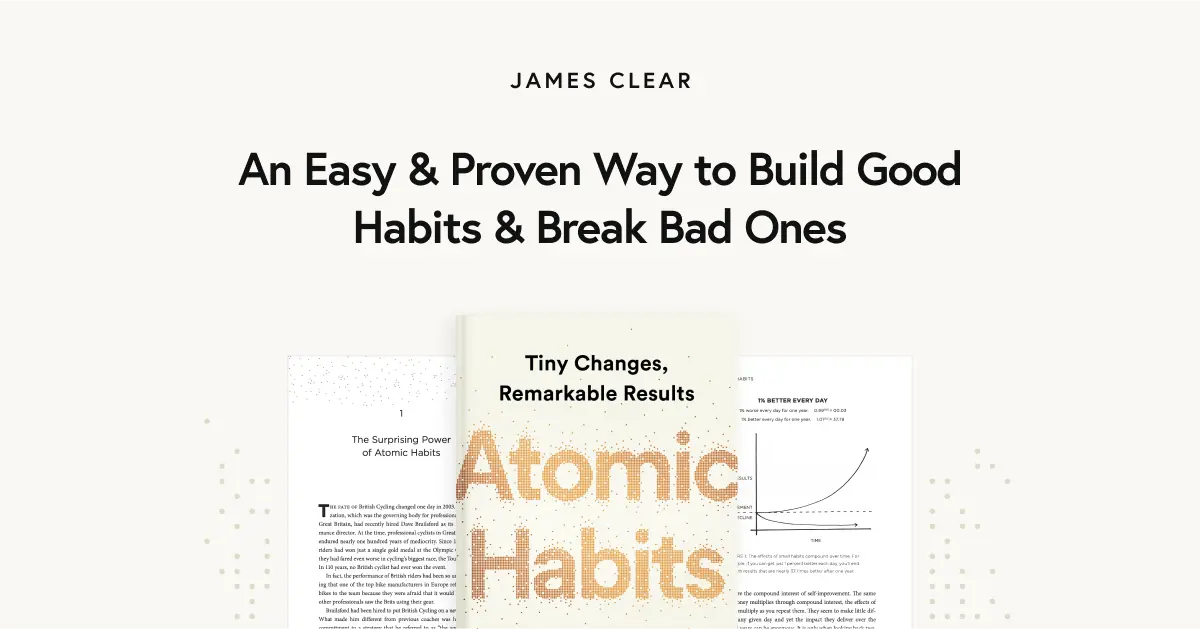
Adapted from industrial psychology and popularized in contemporary behavioral frameworks such as James Clear’s bestselling work Atomic Habits, the principles underlying Pointing-and-Calling offer a blueprint for personal transformation. By bridging the gap between nonconscious routine and active cognition, individuals can implement personal audit systems, such as the "Habits Scorecard," to fundamentally reshape their daily routines. This report provides an authoritative examination of the mechanisms behind heightened behavioral awareness, exploring its industrial origins, psychological foundations, and actionable frameworks for everyday application.
Detailed Chronology and Origins of Pointing-and-Calling
The genesis of one of the world’s most effective safety protocols traces back more than a century to the rapidly expanding railway networks of early 20th-century Japan. As the nation modernized its transport infrastructure, railway operators faced an escalating crisis: train collisions and signal misinterpretations were occurring with alarming frequency.
The Birth of Shisa Kanko in the Early 20th Century
In the early 1900s, Japanese railway pioneers recognized that technological solutions alone—such as mechanical signals and early braking systems—were insufficient to eliminate human error. Operators fatigued by long hours, complex schedules, and monotonous tasks were susceptible to cognitive lapses.
To counteract this, the railway sector developed Shisa Kanko (roughly translated as "pointer-packer" or "pointing and calling"). Initially adopted by steam locomotive operators, the practice required train drivers to physically point their fingers at track signals and verbally confirm their status. Over subsequent decades, this rudimentary operational habit was standardized, refined, and institutionalized across every major railway enterprise in Japan, transforming the country’s rail network into the safest and most punctual in the world.
Global Expansion and Modern Industrial Adoption
For many years, Shisa Kanko remained a unique cultural artifact of Japanese infrastructure. However, as global transportation authorities sought innovative ways to minimize human error in increasingly complex transit environments, international transit agencies began taking notice.
- The New York City MTA Integration: In the early 2000s, the Metropolitan Transportation Authority (MTA) in New York City faced persistent issues with subway operators misjudging platform stops, leading to scheduling delays and safety hazards. Seeking a low-cost, high-impact intervention, the MTA adopted a modified version of the Japanese protocol, stripping it down to a "point-only" system.
- Standardization Across Sectors: Beyond railways, elements of Pointing-and-Calling have been integrated into aviation, heavy manufacturing, construction, and nuclear power plant operations. In environments where a single miscalculation can result in catastrophic failure, forcing operators to externalize their internal thoughts has become an industry standard.
Supporting Context, Psychological Mechanisms, and Metrics
To understand why Pointing-and-Calling and its personal development counterparts are so remarkably effective, one must examine the neurocognitive architecture of human habit formation.
The Cognitive Neuroscience of Autopilot
The human brain is an evolutionary masterpiece of energy conservation. When learning a new skill—such as driving a car or typing on a keyboard—the brain expends significant metabolic energy, requiring intense conscious focus. However, through repetition, these neural pathways solidify into automated routines, known in psychology as chunks.
While automation allows humans to navigate complex environments without experiencing cognitive overload, it carries a severe downside: blindness to routine. When a behavior becomes entirely automatic, the brain ceases to process sensory feedback actively. An operator sees a signal because they are looking in its general direction, but they no longer register its specific color or meaning with conscious intent.
Multi-Sensory Engagement as a Cognitive Disruptor
Pointing-and-Calling short-circuits this dangerous autopilot loop by forcing the brain to re-engage multiple sensory modalities simultaneously.
- Visual: The operator must physically locate and focus their eyes on the target (e.g., the signal light, the speedometer, or the timetable).
- Kinesthetic (Motor): The operator must extend their arm and point their finger, utilizing physical movement to anchor attention.
- Auditory and Verbal: The operator must speak aloud, using their voice to articulate the status of the object.
- Auditory (Reception): The operator hears their own voice confirming the action, creating a closed-loop feedback mechanism in the brain.
By channeling information through the eyes, hands, mouth, and ears, the brain is flooded with synchronized sensory data. This elevates the task from a nonconscious habit to an active, conscious level of awareness.
Empirical Data and Performance Metrics
The efficacy of this multi-sensory approach is supported by rigorous empirical research across multiple transportation networks:
- Error Reduction: Comprehensive studies conducted by the Railway Technical Research Institute (RTRI) in Japan demonstrate that Pointing-and-Calling reduces workplace errors by an astounding 85 percent.
- Accident Mitigation: Across transit lines utilizing the protocol, overall operational accidents dropped by 30 percent.
- The New York Subway Case Study: Within two years of implementing the modified "point-only" system across the New York City subway network, incidents of incorrectly berthed trains fell by 57 percent, validating the cross-cultural effectiveness of the practice.
Official Statements and Expert Perspectives
Behavioral scientists, ergonomics experts, and bestselling authors have increasingly emphasized the necessity of externalizing internal awareness to overcome cognitive biases and performance plateaus.
Dr. James Clear, author of Atomic Habits, highlights the universal applicability of these principles in personal development:
"The more automatic a behavior becomes, the less likely we are to consciously think about it. And when we’ve done something a thousand times before, we begin to overlook things. We assume that the next time will be just like the last… We need a ‘point-and-call’ system for our personal lives."
Industrial safety engineers echo this sentiment, noting that the primary barrier to workplace safety is not a lack of rules, but a breakdown in adherence driven by complacency. Ergonomics specialists point out that human beings are inherently vulnerable to confirmation bias and perceptual set—seeing what they expect to see rather than what is actually in front of them. Verbalizing observations forces a confrontation between expectation and reality.
The Personal Application: Developing a Habits Scorecard
Translating the industrial success of Pointing-and-Calling into an individual strategy for self-improvement requires bridging the gap between real-time awareness and long-term behavioral tracking. Because the consequences of poor personal habits—such as poor nutrition, chronic sleep deprivation, or financial mismanagement—tend to accumulate gradually, they easily evade daily detection.
To establish a personal equivalent of Pointing-and-Calling, behavioral experts recommend the creation of a Habits Scorecard.
Step 1: Cataloging Daily Behaviors
The initial phase of the Habits Scorecard requires absolute honesty and non-judgmental observation. Individuals must inventory their daily routines from the moment they wake up until they go to sleep. A sample baseline list includes:
- Waking up and immediately checking a smartphone.
- Drinking a morning cup of coffee with sugar.
- Skipping a planned morning workout.
- Checking work emails during dinner.
- Scrolling through social media before attempting to sleep.
Step 2: Categorizing via Intentional Labelling
Once the baseline inventory is established, the individual evaluates each behavior against their personal goals and core values using a simple tripartite grading system:
- Positive (+): Behaviors that align with long-term aspirations and reinforce a desired identity.
- Negative (-): Behaviors that conflict with long-term aspirations and detract from personal growth.
- Neutral (=): Routine maintenance behaviors that have a negligible long-term impact.
Crucially, behavioral psychologists stress that labels such as "good" or "bad" are ultimately shorthand for effectiveness. No habit is inherently evil; rather, every habit serves an underlying purpose, such as stress relief, comfort, or efficiency. Smoking a cigarette or consuming processed sugar provides an immediate chemical reward (stress reduction or a dopamine spike), which is why the behavior persists despite its long-term negative outcomes.
Step 3: The Identity Test
When individuals struggle to classify a specific habit, Clear recommends evaluating the behavior through the lens of identity formation:
"Does this behavior help me become the type of person I wish to be? Does this habit cast a vote for or against my desired identity?"
If a habit reinforces the mental image of the person one wishes to become, it is categorized as positive. If it undermines that vision, it is categorized as negative.
Future Outlook: The Evolution of Awareness in an Automated Age
As society moves deeper into the twenty-first century, the challenge of maintaining human awareness will only intensify. Artificial intelligence, automation, and algorithmic convenience threaten to reduce human agency even further, outsourcing critical thinking and routine decision-making to machines.
However, the enduring success of low-tech interventions like Shisa Kanko proves that advanced technology cannot entirely replace the need for active human consciousness. Whether applied to the control panel of a high-speed bullet train, the daily routines of a bustling urban subway, or the personal habits of an individual seeking self-betterment, the fundamental rule of progress remains unchanged: Change begins with awareness.
By adopting systematic auditing practices, verbalizing critical intentions, and removing judgment from self-observation, individuals and organizations can inoculate themselves against the dangers of complacency. In doing so, they reclaim control over their actions, transforming mindless routine into deliberate, purposeful execution.