

Executive Overview
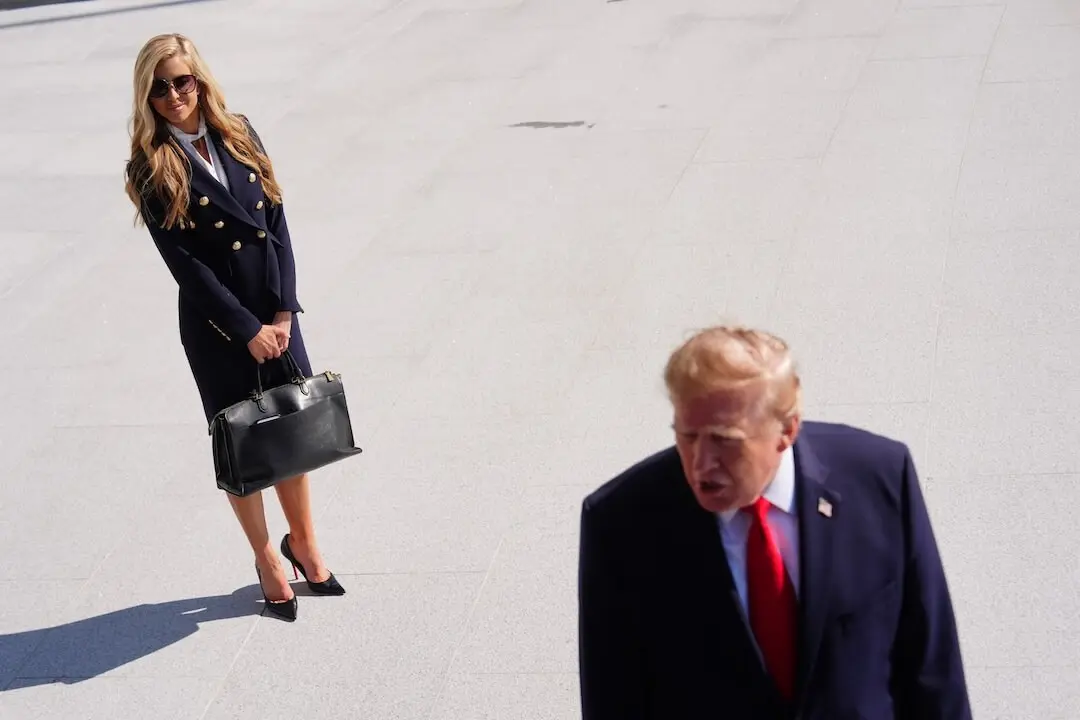
The landscape of American journalism is undergoing a profound and volatile transformation, defined by escalating friction between government entities and the press corps. At the center of this turmoil is a concerted campaign by the Trump administration to reshape the mechanics of presidential press access. By repeatedly barring major news outlets—most notably CNN, Politico, and MS NOW—from standard pool rotations aboard Air Force One and replacing them with right-wing alternatives like Real America’s Voice, the executive branch is actively rewriting the unwritten rules of official correspondence.
This macro-level confrontation mirrors systemic fractures across the media ecosystem. From the historic five-day ouster of White House Press Secretary Katie Zacharia to the physical violence endured by foreign and domestic journalists in the West Bank, reporters face unprecedented hostility. Meanwhile, inside major newsrooms, ethical boundaries are blurring, culminating in high-profile public apologies from network correspondents over social media editorializing. Concurrently, a shrinking local news ecosystem faces a parallel crisis, as state and municipal governments increasingly stonewall public records requests, mimicking the antagonistic posture seen at the highest levels of federal power.
This comprehensive report examines the multifaceted threats facing modern journalism, synthesizing federal access battles, internal administrative chaos, global reporting hazards, and the erosion of local government transparency.
Detailed Chronology: Escalation of White House Access Restrictions
The systematic reconfiguration of the White House press pool began in earnest when the administration took direct administrative control of the pool operations from the independent White House Correspondents’ Association (WHCA) last year. Since then, the traditional protocol—wherein five major networks (ABC, CBS, Fox, and NBC, alongside CNN) rotated primary television responsibilities and shared footage equitably—has been upended.
The Exclusionary Pattern
The fault lines widened significantly on September 18, when President Donald Trump formally banned CNN, Politico, and MS NOW from standard White House press spaces. Whenever presidential travel requires Air Force One, CNN has been systematically omitted from its assigned primary television pool duties. Similarly, Politico has faced repeated bans when its rotation for the print pool arrives.
While federal judges have intervened to restore baseline access, the administration has doubled down on restructuring the pool framework. When the administration previously barred The Associated Press (AP) over its refusal to adopt the terminology "Gulf of America," a federal judge ordered access restored. In response, the White House eliminated dedicated wire-service slots entirely and instituted a secondary print slot, forcing the AP to rotate with dozens of other outlets.
Rise of the Secondary Slot and Real America’s Voice
To bypass the solidarity of legacy mainstream networks—all four of which—ABC, CBS, Fox, and NBC—have continuously refused to take CNN’s spot on exclusion days, the White House has utilized a "secondary TV" slot. Conceived when the administration seized pool management, this slot has increasingly served as a pipeline for partisan or alternative media.
Over three consecutive weekends following the late-September resumption of pool coverage, the White House awarded the secondary TV position to Real America’s Voice. The network, which has hosted programs featuring right-wing political figures such as Steve Bannon and Charlie Kirk, capitalized on the opening by launching RAVPool.org on September 24, offering its footage and notes to all media outlets and the public free of charge.
Despite this open-access offering, mainstream adoption has been virtually nonexistent. Major legacy networks and corporate news organizations have largely shunned the feed, wary of endorsing a workaround designed to punish a peer institution. Regional broadcast groups like Hearst and Scripps have actively joined friend-of-the-court briefs supporting CNN, Politico, and MS NOW in their ongoing federal lawsuit. Scripps News explicitly instructed its personnel that any utilization of the secondary TV slot would occur strictly under the condition that it "does not supplant the primary TV pool."
Supporting Context & Metrics: Administrative Chaos and Global Hazards
The Five-Day Tenure of Katie Zacharia
The turbulent relationship between the executive branch and the media environment was further underscored by administrative chaos within the West Wing. Katie Zacharia’s tenure as White House Press Secretary collapsed on Friday after a historic and dizzying five days on the job—marking the shortest run for the post in modern U.S. history, eclipsing even Anthony Scaramucci’s notorious 10-day stint as communications director in 2017.
Zacharia’s ouster followed a disastrous inaugural briefing earlier in the week and subsequent media fallout over verified discrepancies regarding her claims to be an attorney despite failing the California bar exam. Her attempts to stabilize her standing via late-week appearances on Fox News backfired significantly. During an interview with Sean Hannity, Zacharia conceded she entered her first official briefing with "very little prep time."
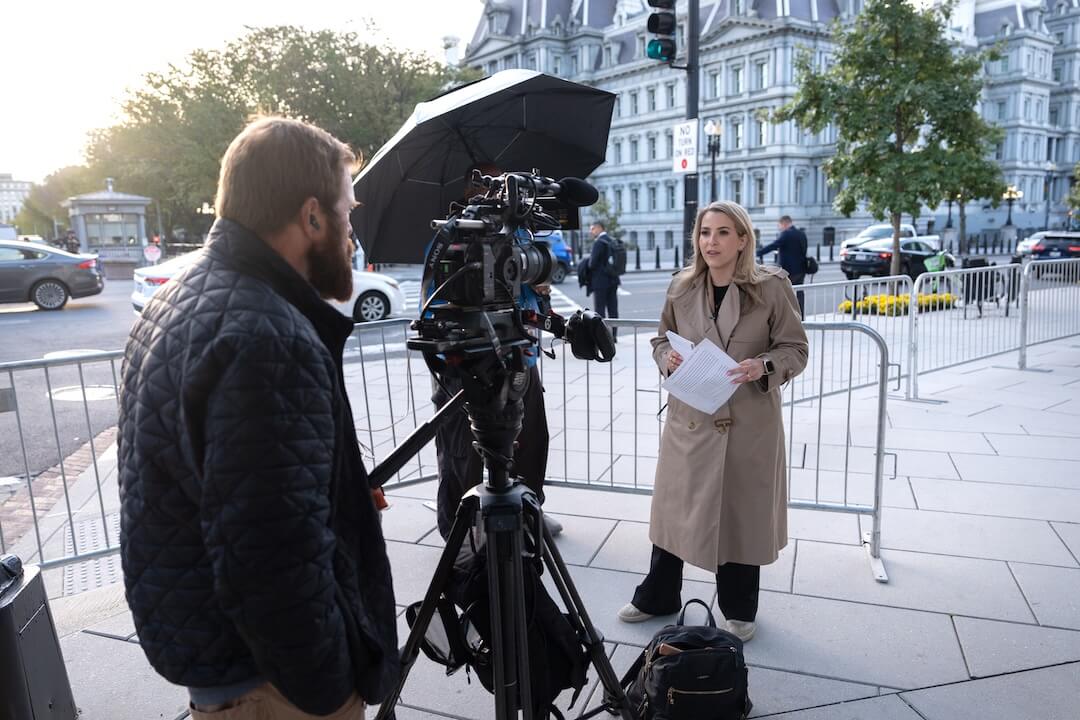
Conflicting reports emerged regarding the genesis of those media appearances. Politico sources characterized the Fox News spots as a "sanctioned hit" engineered by White House Chief of Staff Susie Wiles to expedite her exit. Conversely, reporting from The New York Post revealed text messages indicating Zacharia had aggressively lobbied for the television appearances herself. Though President Trump initially suggested Zacharia might transition to another administration role, subsequent clarifications from West Wing officials confirmed her complete departure from the White House.
Physical Peril in the West Bank: The Targeting of Heidi Levine
While administrative and legal battles dictate the domestic press landscape, foreign and conflict-zone correspondents continue to face grave physical dangers. On Friday, veteran photojournalist Heidi Levine, working on assignment for The Washington Post, was severely injured during a coordinated assault by masked Israeli settlers in the occupied West Bank.
Levine, who was wearing a clearly marked ballistic vest bearing the word "PRESS" on both the front and back, was documenting Palestinian villagers harvesting olives. According to The Post and corroborating witness video, a group of settlers armed with wooden and metal implements converged on the harvesting site, setting olive groves ablaze and viciously beating civilians and journalists alike.
Despite curling into a protective posture with her helmet and flak jacket engaged, Levine suffered lacerations, a broken rib, four fractured vertebrae, and extensive hand trauma that exposed bone, necessitating emergency surgery. Her professional equipment, including cameras and cellular devices, was stolen by the assailants.
The Committee to Protect Journalists (CPJ) swiftly condemned the attack, with Regional Director Sara Qudah noting that the assault was part of a "disturbing pattern" of escalating violence and systemic harassment directed at journalists covering the seasonal olive harvest in the West Bank, independent of their nationalities.
Editorial Lapses and Network Scrutiny
Back in domestic newsrooms, questions of journalistic integrity and internal standards have sparked intense debate. On Sunday, CBS News Chief Legal Correspondent Jan Crawford issued a public apology and deleted a social media post that openly praised a man who heckled Michigan Democratic U.S. Senate nominee Abdul El-Sayed at a town hall.
The heckler had aggressively questioned El-Sayed, who is Muslim, demanding whether he would disavow the Muslim Brotherhood. After El-Sayed answered affirmatively while questioning the premise of the inquiry, Crawford lauded the questioner on social media, writing that the candidate’s subsequent explanation was a "spectacular self own."
The post drew immediate condemnation from media critics and internal CBS News staffers who argued the commentary violated foundational rules of neutrality. The incident compounds ongoing editorial scrutiny at CBS News following the high-profile appointment of Bari Weiss as editor-in-chief, fueling debates over political bias in mainstream broadcast journalism.
Official Statements and Institutional Responses
The hardening lines between the administration and the press corps were made explicit through direct statements from federal officials and media executives alike.
-
White House Position on Press Access: Defending the exclusion of mainstream outlets, a White House official stated via email:
"The Fake News has no place demanding a spot in the President’s Oval Office. The lies they smear are a disservice to the American public and tear at the very fabric of our Democracy. They’re completely capable of reporting from directly outside."
-
The Washington Post on Violence Against Journalists: Condemning the attack on Heidi Levine, Executive Editor Matt Murray released an official statement:
"This morning, a Washington Post photographer, Heidi Levine, was attacked by Israeli settlers while reporting in the West Bank. She was wearing visible markings clearly identifying her as a journalist. While we are relieved that Heidi has received medical care and is safe, we are outraged by this unwarranted attack on a journalist doing her job and urge a thorough investigation and follow-through from authorities."
-
Israeli Government Response: Addressing the West Bank incident, Prime Minister Benjamin Netanyahu’s office issued a brief statement indicating that the facts of the encounter "remain unclear and are under investigation."
-
CBS News Accountability: Acknowledging her social media violation of network policies, Jan Crawford posted:
"I deleted that tweet because it was a violation of CBS News standards. I apologize."
Future Outlook: The Cascading Crisis of Public Transparency
Beyond the high-profile drama of Air Force One press pools and national television networks, the foundational architecture of open government is under siege at the grassroots level.
As local newsrooms continue to wither under severe financial pressures and staffing reductions, public officials at state and municipal levels have become increasingly emboldened in stonewalling information requests. A clear parallel exists between federal attempts to manage or restrict press access and local transparency failures. For instance, when journalists at the Kansas Reflector filed public records requests in early 2025 seeking submissions sent to the state’s newly formed Committee on Government Efficiency (COGE), they were met with severe administrative delays. The state delayed releasing the data past statutory deadlines, ultimately withholding files until two days after the newsroom published an investigative exposé based on leaked internal communications.
Across the United States, similar roadblocks—ranging from ignored Freedom of Information Act (FOIA) filings to outright bans from public briefings—demonstrate that the hostility toward the press is no longer confined to partisan cable news or presidential podiums.
What Lies Ahead
As federal litigation moves forward—including the consolidated lawsuits filed by CNN, Politico, MS NOW, and the Associated Press challenging executive access restrictions—the legal boundaries of executive control over the press pool will face historic judicial testing. At the same time, the institutional norms governing media neutrality, administrative stability within the executive branch, and the physical safety of reporters in domestic and international zones remain intensely vulnerable.
The ongoing erosion of press access points toward an uncertain future. If alternative, partisan-aligned pool feeds replace independent journalistic cooperatives, and if local and federal authorities continue to treat public information as a discretionary privilege rather than a public right, the fundamental accountability loop between the governed and the governing faces an existential threat.