

Executive Overview
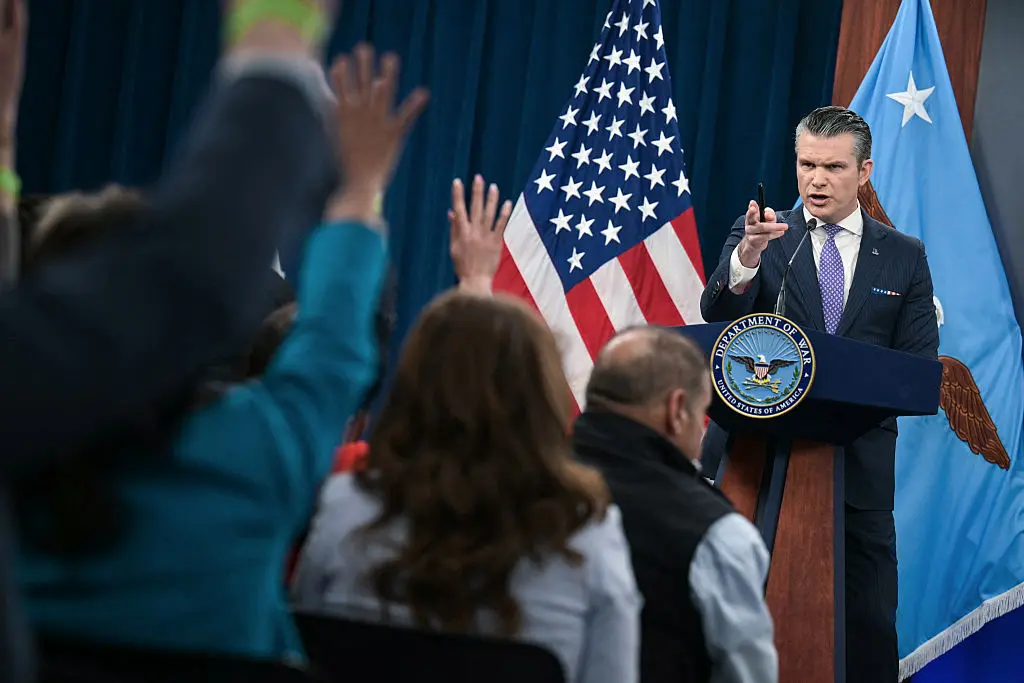
Under the leadership of Defense Secretary Pete Hegseth, the Pentagon has escalated its ongoing campaign against media transparency, extending its reach to Stars and Stripes—the historic, independent military newspaper that has served United States service members and their families since the Civil War era.
In a sweeping administrative action, the Department of Defense terminated the employment of Stars and Stripes Editor-in-Chief Erik Slavin and Middle East reporter Lara Korte. According to official notices, both journalists were dismissed on grounds of insubordination after they publicly defended the publication’s statutory editorial independence from military censorship. Simultaneously, Publisher Max Lederer—who announced his retirement earlier in the week following a distinguished 30-year tenure at the institution—received an abrupt separation notice.
This high-profile purge represents a dramatic escalation in an already contentious relationship between Defense Secretary Hegseth and the journalistic community. Over the past year, the Pentagon has systematically restricted press access, dismantled traditional media spaces within the headquarters, and sought to reshape military communications into a streamlined vehicle for institutional messaging.
Yet, the targeting of Stars and Stripes carries profound implications. Unlike commercial news outlets, Stars and Stripes occupies a unique statutory space: although partially funded by the Defense Department, its operations and editorial independence have historically been shielded by Congress to ensure that military personnel receive unvarnished, objective journalism rather than institutional public relations.
Detailed Chronology of the Conflict
The friction between the current Pentagon leadership and the press corps did not emerge overnight; rather, it represents the culmination of a systematic policy shift that began shortly after Secretary Hegseth assumed office.
Phase 1: The Initial Restrictions on Pentagon Access
The first major flashpoint occurred last year when the Pentagon implemented a series of stringent new restrictions governing reporting access within the building. Dozens of accredited journalists chose to surrender their press credentials rather than submit to what they characterized as an unprecedented infringement on constitutional reporting standards.
Although a federal judge subsequently blocked key portions of the policy, the Department of Defense bypassed the judicial setback through infrastructural changes. The Pentagon permanently closed the "Correspondents’ Corridor"—a historic workspace utilized by military reporters for decades—and announced plans to relocate the independent press corps to an annex outside the secure perimeter of the building.
Phase 2: Restructuring the Independent Voice
With general press access curtailed, attention shifted toward internal military media, most notably Stars and Stripes. In January, Pentagon spokesperson Sean Parnell outlined a sweeping new mandate for the historic publication. Parnell stated that the newspaper would be "custom tailored to our warfighters" and redirected to focus exclusively on tactical metrics, weapons systems, physical fitness, combat survivability, and "ALL THINGS MILITARY." Simultaneously, the administration moved to strip out syndicated Associated Press coverage and analytical columns originating from the nation’s capital.
To enforce this vision, the Pentagon targeted oversight mechanisms designed to protect journalistic integrity. In April, the Department of Defense fired Jacqueline Smith, the newspaper’s independent ombudsman. Smith’s position had been explicitly established to act as a buffer between the newsroom and political leadership, ensuring that editorial decisions remained free from political interference. Her termination signaled to newsroom leadership that institutional guardrails were being actively dismantled.
Phase 3: The August Purge
The conflict reached a definitive head on Friday with the termination of Editor-in-Chief Erik Slavin and Middle East reporter Lara Korte. According to statements provided to the Associated Press, Slavin’s termination notice explicitly cited "insubordination" stemming from his refusal to accept direct military censorship of newsroom output.
Korte, who has spent months covering the complex geopolitical fallout and military operations associated with the ongoing conflict with Iran, was similarly dismissed after speaking out in defense of the publication’s mission. Publisher Max Lederer, navigating his planned departure, received an unexpected separation notice alongside them, effectively clearing out the top tier of the newspaper’s leadership structure in a single administrative sweep.
Supporting Context & Metrics: The Legacy and Legal Protections of Stars and Stripes
To understand the gravity of the recent firings, one must examine the unique institutional architecture of Stars and Stripes.
- Historical Roots: The publication’s lineage traces back to the American Civil War, where it was sporadically produced by union soldiers. It was re-established on a permanent footing during World War II to provide troops stationed abroad with news from home, sports, and independent coverage of the conflicts in which they were engaged. Since then, it has maintained continuous publication across multiple theaters of operation, including Korea, Vietnam, the Gulf War, and the post-9/11 engagements in Iraq and Afghanistan.
- Congressional Protections: Recognizing the vital necessity of an informed military force, Congress deliberately structured Stars and Stripes to operate at arm’s length from the military chain of command. While the Department of Defense provides a portion of its operating budget, statutory protections and long-standing congressional oversight have historically barred military commanders and civilian political appointees from exercising direct editorial control over its content.
- Operational Reach: Unlike commercial media outlets that cater primarily to a domestic civilian audience, Stars and Stripes is tailored specifically to the realities of service members stationed at remote forward operating bases, naval vessels at sea, and military families navigating the complexities of military life.
Despite these statutory safeguards, the current administration’s interpretation of "warfighter-centric" media leaves little room for investigative reporting that scrutinizes command decisions, military readiness, or strategic missteps.
Official Statements and Reactions
The sweeping dismissals have drawn immediate, sharp condemnation from press freedom advocacy groups, former military officials, and journalistic associations worldwide.
In the wake of her dismissal, reporter Lara Korte emphasized the sacred trust that exists between the publication and its readership.
"Military families and service members have trusted us to share their experience with the world," Korte noted in a public statement. "That trust is built on accuracy, independence, and the courage to tell the story as it is, not as leadership wishes it to appear."
Erik Slavin echoed these sentiments, pointing out that true military readiness relies on transparency and accountability rather than managed information flows. Media watchdogs, including the Freedom of the Press Foundation and the Committee to Protect Journalists, have characterized the firings as a direct assault on the First Amendment rights of military-affiliated journalists.
Adding to the controversy are growing questions regarding transparency and protocol within the current Pentagon leadership structure. Recent investigative reports have highlighted complex questions surrounding access to sensitive information within Secretary Hegseth’s inner circle. Reports indicate that Jennifer Rauchet Hegseth, the defense secretary’s wife, holds no official governmental or security-cleared position within the Pentagon, yet has been documented participating in meetings with foreign defense officials and included in secure communication channels—such as encrypted Signal chats—discussing sensitive U.S. military operations. These disclosures have further intensified congressional scrutiny regarding how access and operational information are managed within the current administration.
Future Outlook: The Resilience of Independent Military Journalism
Despite the unprecedented leadership vacuum created by the Pentagon’s actions, the rank-and-file newsroom personnel of Stars and Stripes have signaled their intent to continue their core mission.
In a testament to the publication’s enduring institutional momentum, the newsroom published a critical report detailing the return of the aircraft carrier USS Lincoln. After enduring an arduous deployment spanning hundreds of days supporting operations in the Middle East amidst the conflict with Iran—frequently without scheduled port leave—the vessel’s departure represents the kind of vital, ground-level information that directly impacts the daily lives of thousands of sailors and the families waiting for them on the home front.
As legal scholars, congressional committees, and press freedom advocates review the legality of the recent terminations, the future of Stars and Stripes hangs in the balance. The central question moving forward is whether Congress will intervene to enforce statutory protections and restore independent leadership, or if the Pentagon’s campaign to reshape military journalism into a controlled narrative will permanently alter the landscape of America’s oldest independent military publication.