

Executive Overview
In the consumer goods marketplace, few categories are as thoroughly commoditized as residential water filtration. For decades, the standard entry point for household water filtration has been the ubiquitous plastic pitcher, priced accessibly between $20 and $40. These ubiquitous kitchen staples occupy refrigerator shelves across the globe, functioning as low-cost, high-turnover utilities.
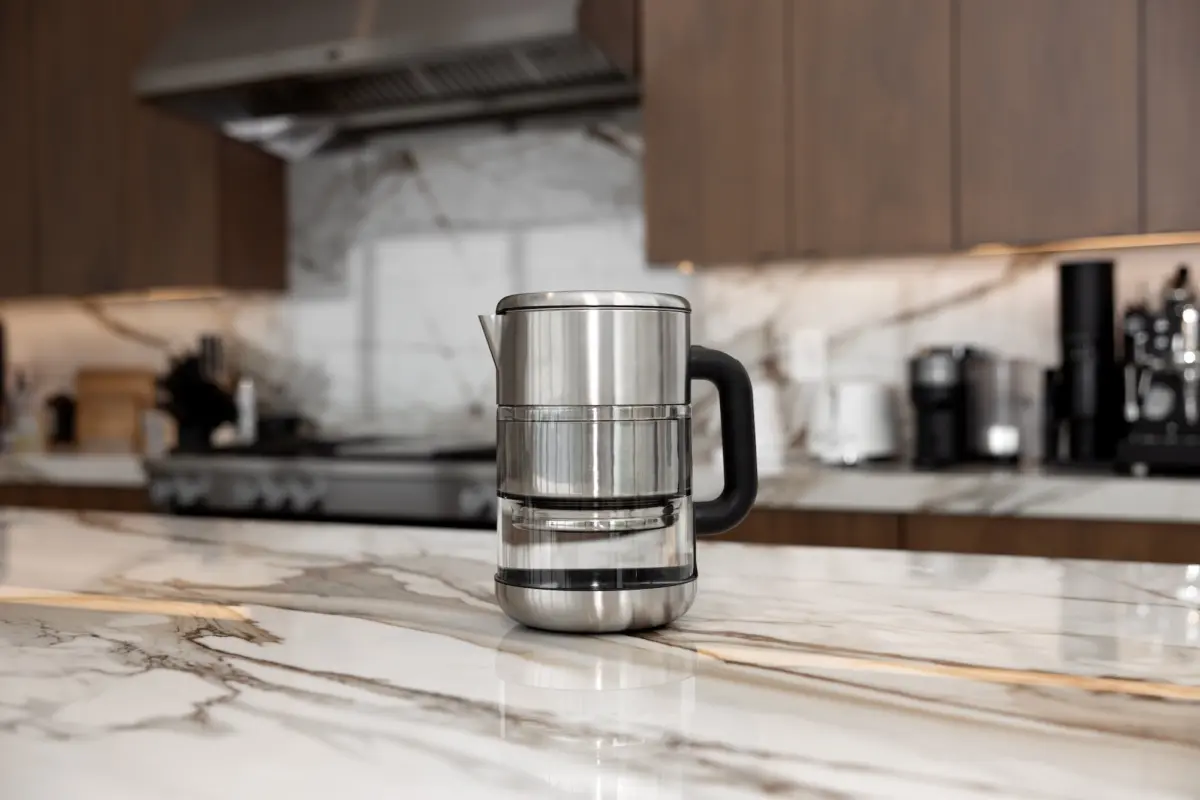
Enter Rorra, a high-end water filtration startup co-founded by industry veterans Brian Keller and Charlie Carlisle. Fresh off an explosive inaugural year that generated eight-figure revenues with its flagship stainless-steel countertop system, the company is boldly challenging market conventions. Their latest product—a premium water pitcher retailing for $249—upends conventional pricing strategy.
This ambitious release is not merely an incremental product update; it represents a philosophical re-imagining of home appliances. By eschewing cheap plastics in favor of borosilicate glass, premium stainless steel, and advanced contaminant-reduction technology, Rorra is betting that a growing segment of consumers is willing to invest heavily in health, aesthetic permanence, and durability.
Appearing recently on the One Day with Jon Bier podcast, Keller and Carlisle opened up about the grueling journey of building Rorra. From surviving two pre-revenue years of full-time development and navigating unexpected engineering setbacks, to deploying unconventional artificial intelligence strategies to stress-test their go-to-market plans, the founders are charting a meticulous path through the perilous scaling phase between $20 million and $50 million in revenue.
Detailed Chronology: From Concept to Commerce
The Genesis of Rorra
Long before conceptualizing a luxury water filtration brand, Brian Keller and Charlie Carlisle forged a productive professional partnership at Love Your Melon, the well-known apparel brand recognized for its philanthropic model of donating hats to children battling cancer. Through this venture, both founders gained invaluable foundational experience in scaling a consumer brand from the ground up and successfully executing an exit.
Armed with prior startup experience, Keller and Carlisle identified a glaring gap in the market: traditional water filters were functional but aesthetically unappealing, environmentally problematic due to plastic waste, and built with planned obsolescence in mind. However, translating this vision into reality demanded extreme personal and professional sacrifice.
Unlike serial entrepreneurs who secure immediate venture capital or launch with existing product lines, the founders embarked on a grueling nearly two-year pre-revenue phase. During this period, they worked full-time on research, development, and market validation without making a single commercial sale.
Overcoming Prototypes and Production Hurdles
The path to product-market fit was fraught with operational obstacles. Early design iterations frequently missed the mark on ergonomic practicality. Carlisle recalled an early prototype of their countertop filtration system that was roughly one-and-a-half times the size of the final production unit—a bulky, cumbersome device he humorously described as a giant "Stanley Cup-looking thing."
The true crisis, however, struck just as the founders believed they were crossing the finish line toward their official product launch. Following a routine review, their engineering firm delivered sobering news: the product required an additional three to four months of intensive development to meet performance and quality standards.
For an early-stage startup operating without incoming revenue, a quarter-long delay threatens survival. Keller noted that they were forced to fundamentally "remodel the whole business," executing tight financial triage to ensure they had sufficient capital runway to sustain the extended timeline.
The gamble ultimately paid off. When Rorra finally launched its initial countertop filtration system, accompanied by an innovative filtered showerhead, the market response was immediate. The company achieved eight-figure sales in its very first year of operation, establishing a robust financial foundation for subsequent product lines.
Supporting Context & Metrics: Engineering the $249 Pitcher
The Philosophy of Permanent Appliances
To understand why consumers would willingly pay $249 for a device that historically costs the price of a dinner out, one must examine the broader cultural critique leveled by Rorra’s founders.
During their podcast appearance, Carlisle drew a deliberate comparison to mid-century manufacturing standards:
"Go back to the 1950s refrigerators. They used to last for 40, 50 years. How do we get back to that really wonderful, durable, and oftentimes self-serviceable culture?"
Modern consumer electronics and kitchen appliances are frequently engineered for replacement rather than repair. Rorra is intentionally swimming against this current. The newly released 13-cup pitcher is constructed entirely from laboratory-grade borosilicate glass and high-grade stainless steel. Crucially, zero plastic components come into contact with the filtered water during the purification process.

Filtration Performance and Specifications
Beyond aesthetic and material upgrades, the device packs advanced filtration mechanics adapted directly from Rorra’s larger countertop systems. According to company specifications, the proprietary filtration core is engineered to significantly reduce:
- Per- and polyfluoroalkyl substances (PFAS) — often referred to as "forever chemicals."
- Heavy metals, including lead.
- Microplastics infiltrating municipal water supplies.
- Dozens of secondary chemical contaminants and aesthetic impurities.
Furthermore, economic value is integrated into the high upfront cost: each individual filter element is rated to purify up to 200 gallons of water before requiring a replacement, balancing longevity against ongoing maintenance costs.
Official Statements and Strategic Innovation
Leveraging Artificial Intelligence for Risk Mitigation
Bringing a premium product to market requires an airtight go-to-market strategy. Eschewing traditional advisory boards for this specific phase, Keller experimented with an unconventional validation technique using advanced artificial intelligence.
Rather than feeding the AI a prompt designed for validation—such as asking whether a marketing plan was sound—Keller inverted the premise. He built the complete launch blueprint himself, fed it into the AI engine, and delivered a stark prompt: "This was the plan. It completely failed. Tell me where we went wrong."
The adversarial exercise yielded immediate, actionable insights:
- Brand Maturity Assessment: The AI warned that Rorra was still too young and lean of a brand to sustain the prolonged, multi-stage pre-launch awareness campaign Keller had initially envisioned.
- Message Dilution: The diagnostic indicated that the startup was attempting to communicate too many disparate selling points simultaneously, risking consumer confusion.
Acting on these machine-generated critiques, the founders compressed their pre-launch timeline and streamlined their core messaging around durability, purity, and materials. The pivot proved successful; Rorra confirmed that its initial production batch of luxury pitchers sold out instantly, prompting an accelerated rollout for subsequent inventory shipments.
Future Outlook: Scaling Beyond the Kitchen Counter
A Unified, Platform-Based Hydration Ecosystem
With the successful launch of the $249 pitcher, Keller and Carlisle are already looking past the confines of the domestic kitchen. Their long-term vision positions Rorra not merely as a hardware manufacturer, but as an integrated, lifestyle-oriented water platform.
Carlisle articulated this ecosystem vision during the interview:
"Right now, when you go to fill your water bottle up at an airport or the gym, that brand is not the same brand that you can buy for your house and vice versa."
The company intends to bridge this experiential gap, developing portable and institutional solutions that allow consumers to maintain consistent water quality standards across residential, professional, travel, and fitness environments.
Navigating the Dangerous Middle: Austin Relocation and Growth
As part of its next phase of maturity, Rorra has officially relocated its headquarters to Austin, Texas. After operating as a fully remote team for the first three years of the company’s existence, the founders are bringing their core team together under one roof to foster collaborative, in-person innovation.
However, Keller remains acutely aware of the macroeconomic and operational traps that ensnare fast-growing consumer brands. Highlighting a critical juncture in entrepreneurial scaling, he noted:
"Businesses go to die between 20 to 50 million."
According to Keller, successfully traversing this notorious revenue band requires striking a delicate operational balance: maintaining the relentless agility and speed that fueled early-stage disruption, while simultaneously institutionalizing disciplined hiring practices and continuous product innovation.
For Rorra, the immediate proving ground lies in consumer reception. As the market evaluates whether a $249 price point can be normalized for a water pitcher, the startup is betting that quality, health, and timeless design will ultimately outweigh traditional consumer habits.