

Executive Overview
The contemporary rollout of enterprise Artificial Intelligence (AI) frequently resembles a corporate farce rather than a calculated strategic deployment. If senior leadership’s handling of generative AI tools were adapted for the screen, film critics would likely dismiss the plot as entirely unbelievable, arguing that no corporate leadership group could be so systematically blind to human behavior. Yet, enterprise organizations continue to stumble through AI adoption with a familiar, frustrating ineptitude—all while ignoring the foundational lessons of the digital transformation era a decade prior.
According to digital strategist Paul Boag, author of the seminal 2014 Smashing Magazine text Digital Adaptation, today’s organizations are committing the exact same conceptual errors they made when migrating legacy systems to the cloud, rolling out enterprise Content Management Systems (CMS), and introducing customer relationship platforms. The primary fallacy remains unchanged: treating an organizational revolution as a mere technological procurement exercise.
While enterprise IT departments rush to blanket organizations with generic licenses for enterprise tools like Microsoft Copilot Studio—checking off AI adoption as a completed administrative task—the human element is almost entirely neglected. Employees are left underwater, facing intense productivity demands, procedural knowledge obsolescence, and profound job insecurity, all without adequate safety nets, role-specific training, or cultural permission to fail.
The consequences of this top-down, technology-first approach are already manifesting in dangerous ways. Organizations are witnessing the rapid proliferation of "Shadow AI," where frustrated knowledge workers bypass official IT channels to feed sensitive corporate data into unvetted consumer-grade models on personal devices. To survive the current technological shift, enterprise leadership must pivot rapidly. They must recognize that AI adoption is fundamentally a cultural, human-centric challenge requiring deliberate motivational strategies, psychological safety, adaptive governance, and a willingness to embrace managed experimentation over bureaucratic paralysis.
Detailed Chronology: From CMS to LLMs
To understand why contemporary AI integration is currently failing across so many sectors, it is necessary to examine the historical parallels of the digital transformation movement. The playbook being used today is an exact, unedited reprint of the mistakes made between 2010 and 2018.
The Digital Transformation Era (2010–2018)
During the height of the digital transformation boom, enterprise IT departments were tasked with modernizing legacy infrastructures. This period was characterized by the heavy-handed rollout of enterprise CMS platforms, sprawling Customer Relationship Management (CRM) suites, and complex internal intranets. Simultaneously, customer-facing divisions rushed to build native mobile applications and personalized web portals.
However, these rollouts suffered from a fatal blind spot: a near-total disregard for end-user workflows and human adoption curves. Internal systems were frequently designed with abysmal user experiences, forcing employees to navigate counter-intuitive software interfaces daily. On the external front, organizations built digital properties based on executive guesswork rather than empirical customer research.
IT departments operated in rigid silos, selecting enterprise stacks based on vendor promises and steering committee approvals rather than departmental needs. When employees struggled to complete basic tasks within the official infrastructure, they invented workaround solutions—paving the corporate cowpaths with early cloud-sharing tools like Dropbox and consumer file-sync services. This gave birth to the original era of "Shadow IT," exposing organizations to massive data governance risks that rigid policy enforcement only managed to drive further underground.
The Modern AI Era (2022–Present)
Fast-forward to the generative AI revolution catalyzed by the public release of advanced large language models (LLMs). The structural similarities to the digital transformation era are striking. Senior management teams, driven by FOMO (Fear Of Missing Out) and board-level pressure, have rushed to mandate AI integration without formulating a coherent operational strategy.
Instead of analyzing how workflows can be genuinely augmented, IT departments have defaulted to the same mass-licensing strategy used during the SaaS boom. Enterprise-wide deployments of tools like Copilot are treated as mission accomplished, supplemented by generic, compliance-oriented training modules that explain how to log in but offer zero guidance on how to restructure daily tasks.
Consequently, knowledge workers find themselves under unprecedented pressure. They are expected to deliver compounding productivity gains while simultaneously rebuilding decades of procedural knowledge from scratch. Because the foundational architecture of these deployments ignores human-centric change management, organizations are repeating history: innovation is stalling, bureaucracy is mounting, and employees are retreating to personal consumer accounts to get their jobs done.
Supporting Context & Metrics: The Human Cost of Mismanaged Automation
The friction points in AI adoption are not technical limitations; they are deeply rooted in human psychology, labor economics, and organizational design.
The Productivity Trap and Employee Motivation
From an executive perspective, the business case for AI is remarkably straightforward: increased productivity. Generative AI tools allow individuals to synthesize research, draft code, and generate copy in a fraction of the traditional time. However, from the perspective of the frontline employee, this equation is deeply flawed and often hostile.
In a standard 9-to-5 knowledge-work environment, productivity gains do not automatically translate to reduced working hours, increased compensation, or career advancement. Instead, they frequently translate into an intensified workload. When an employee can complete a task in 30 minutes rather than four hours, the organizational expectation is often simply that they complete eight more tasks before the end of the shift.
[Traditional AI Rollout]
Executive Goal: 30% Productivity Boost ──> Employee Reality: 30% More Work, Same Pay ──> Resistance / Burnout

[Human-Centric AI Rollout]
Executive Goal: Task Augmentation ──> Employee Reality: Elimination of Hated Tasks + Experimentation Time ──> Organic Adoption
Without intrinsic or extrinsic motivation to change, employees view AI not as an empowering assistant, but as an existential threat designed to accelerate their replacement. To overcome this, organizations must reframe the narrative. AI adoption cannot be pitched as a mechanism for corporate cost-cutting; it must be presented as an opportunity to eliminate the most tedious, hated aspects of daily work, returning cognitive bandwidth to creative and strategic problem-solving.
The Myth of the Quick Training Course
Rebuilding procedural knowledge—the tacit, deeply ingrained methods by which professionals execute their daily responsibilities—requires time, experimentation, and failure. Most enterprise knowledge workers, however, are operating at or above maximum capacity. They are drowning in unread emails, endless meetings, and back-to-back project deadlines.
Sending an exhausted employee to a generic, one-hour webinar on prompt engineering does not prepare them to overhaul their workflow. True capability building requires:
- Role-Specific Integration: Tailored training programs that address the unique requirements of distinct departments (e.g., UX research repositories versus financial modeling workflows).
- Protected Experimentation Time: Dedicated hours carved out of operational KPIs specifically allocated for playing with tools, testing failure boundaries, and discovering use cases.
- Peer-Driven Communities of Practice: Leveraging internal enthusiasts rather than top-down mandates to drive adoption through social proof and peer success stories.
Official Insights & Strategic Frameworks
Addressing the systemic failures of AI adoption requires a fundamental redesign of corporate culture, governance models, and technical rollout strategies. Industry experts and adaptive governance frameworks offer a clear roadmap for avoiding catastrophic failure.
Cultivating Psychological Safety
In many enterprise environments, the pursuit of innovation exists in direct contradiction with the operational culture. Organizations demand rapid digital transformation and AI adoption, yet retain legacy Key Performance Indicators (KPIs) that penalize inefficiency, missteps, and failed experiments.
When employees are publicly reprimanded for administrative errors—such as exceeding token budgets during exploratory testing or misinterpreting AI outputs—they quickly calculate that the safest career move is non-adoption. They revert to legacy habits because compliance is safer than innovation.

To break this cycle, leadership must explicitly decouple initial AI experimentation from punitive performance reviews. Organizations must establish a culture where it is demonstrably safe to fail. This requires relaxing strict performance metrics during the initial learning curve, encouraging error-sharing, and reframing mistakes as necessary overhead for operational evolution.
The Principles of Adaptive Governance
Governance is necessary, but traditional corporate governance models are inherently anti-innovative. Historically, enterprise oversight has relied on thick policy documents filled with prohibitions, complex approval chains, and bureaucratic steering committees. This approach creates an environment where doing nothing is easier than attempting to innovate within the rules.
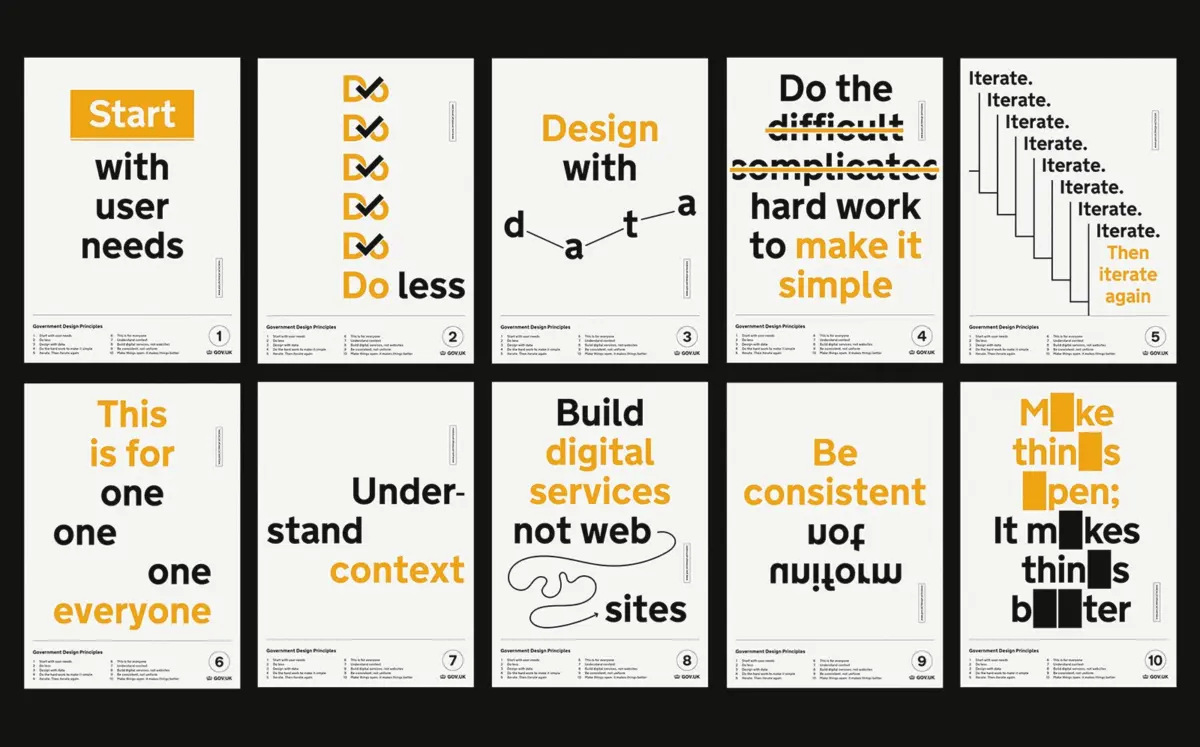
Instead of multi-page compliance manuals that instill fear, organizations should look to modern public-sector frameworks, such as the design principles pioneered by GOV.UK.
┌─────────────────────────────────────────────────────────┐
│              ENTERPRISE AI GOVERNANCE PRINCIPLES        │
├─────────────────────────────────────────────────────────┤
│ 1. Protect customer and proprietary data at all times.  │
│ 2. Verify all AI-generated outputs before application.  │
│ 3. Use common sense; empower innovation over fear.     │
└─────────────────────────────────────────────────────────┘
A successful governance model for AI can be distilled into a handful of core principles that fit comfortably on a breakroom poster. Beyond establishing absolute boundaries around data privacy and security, leadership must demonstrate institutional trust in the common sense and professional judgment of their workforce.
Combating "Shadow AI" Through Observation
When enterprise-mandated AI tooling fails to meet the practical demands of knowledge workers, employees inevitably seek out alternative solutions. Just as "Shadow IT" saw the rise of unapproved cloud storage platforms a decade ago, "Shadow AI" is now defined by employees opening personal ChatGPT, Claude, or Midjourney accounts on their personal devices and corporate laptops.
Attempting to curb this behavior through heavy-handed policing—such as blocking domains, issuing disciplinary warnings, and deploying aggressive monitoring software—is a failing strategy. It merely drives the practice further underground, increasing the risk of intellectual property leakage and data contamination.
Forward-thinking organizations view Shadow AI not as a disciplinary infraction, but as valuable diagnostic data. If employees are routinely turning to personal accounts to accomplish their work, those unauthorized tools are highlighting the exact functional gaps in the official enterprise software stack. Rather than punishing the behavior, management should audit these workarounds, consult with employees to understand their workflow bottlenecks, and integrate those capabilities into the official technological roadmap.
Future Outlook: The Imperative of Adaptive Change Management
As artificial intelligence continues to mature from an experimental novelty into the core operational fabric of the global economy, the window for organizations to course-correct is rapidly closing. The risks of moving too slowly—falling behind agile competitors, losing market share, and suffering from structural irrelevance—far outweigh the risks of temporary operational chaos.
However, moving fast without accounting for the human element is a recipe for organizational collapse. The hard lessons of the digital transformation era demonstrate conclusively that technology alone is inert. It is activated, shaped, and weaponized only by people.
Enterprise leadership must abandon the illusion that AI adoption is an IT procurement project. Success in the AI era requires an uncompromising commitment to culture, psychological safety, motivational alignment, and human-centric change management. Organizations that realize the true scope of this paradigm shift—treating their workforce as partners in adaptation rather than units of production to be optimized or replaced—will successfully navigate the turbulence. Those that do not will find themselves presiding over expensive, sophisticated technology stacks that nobody knows how to use, and nobody cares to save.