The landscape of freelance writing has undergone a tectonic shift. Artificial intelligence tools are no longer experimental novelties or futuristic concepts—they are deeply embedded components of the modern digital economy. For independent writers, copywriters, and content strategists, the question is no longer whether to adopt AI, but how to integrate it into a sustainable workflow.
Industry data reveals a stark division within the freelance community. On one side are thriving professionals who use AI to streamline administrative burdens, conquer writer’s block, and scale their output without sacrificing quality. They leverage automated tools for heavy lifting—such as summarizing transcripts, generating outlines, and tracking marketing pipelines—thereby preserving their cognitive energy for human-centric tasks: critical thinking, investigative interviews, emotional resonance, and client relationship management.
On the other side are writers who struggle. This group falls into two extremes: those who reject technological evolution entirely, finding themselves outpaced by the sheer speed of modern markets, and those who use AI as a lazy crutch, generating generic, uninspired prose that clients and search engines easily identify and penalize.
This comprehensive report examines the ten strategic ways professional freelancers can harness AI to enhance their craft, alongside a crucial framework on what not to do. By treating AI as a high-speed assistant rather than a ghostwriter, modern writers can secure a competitive edge in a crowded marketplace.
Detailed Chronology: The Evolution of the AI Writing Era
To understand where freelance writing stands today, it is necessary to trace how these technologies moved from the periphery to the center of the creative process over the past several years:
The Novelty Phase (Pre-2022): Early language models were viewed with skepticism and amusement. Capable of generating simple sentences or predicting basic autocomplete patterns, they posed little threat to professional writers and offered minimal utility beyond novelty.
The Disruption Phase (2022–2023): The public release of advanced conversational models like ChatGPT and Claude stunned the industry. For the first time, AI could draft coherent articles, summarize complex studies, and mimic various writing styles. Panic swept the freelance community, with many fearing imminent automation and mass layoffs.
The Adaptation Phase (2024–2025): As the initial shock subsided, a more nuanced perspective emerged. Writers realized that raw, unedited AI output lacked originality, nuance, and factual reliability. Simultaneously, advanced search-backed models (such as Perplexity) and transcription utilities (such as Otter.ai) proved indispensable for research and data-gathering.
The Augmentation Phase (Present Day): Today, the most successful freelancers operate not as isolated word-processors, but as managing editors of their own micro-agencies. They utilize AI ecosystems for structural outlining, multi-platform content repurposing, and automated pipeline tracking—reclaiming dozens of hours every month to focus on high-level strategy and client acquisition.
Supporting Context & Metrics: The 10 Pillars of AI-Enhanced Freelancing
Maximizing the utility of artificial intelligence requires moving past generic prompts and establishing structured, repeatable workflows. Below are ten practical applications that elevate a writer’s productivity without replacing the human elements that command premium rates.
1. Beating the Blank Page
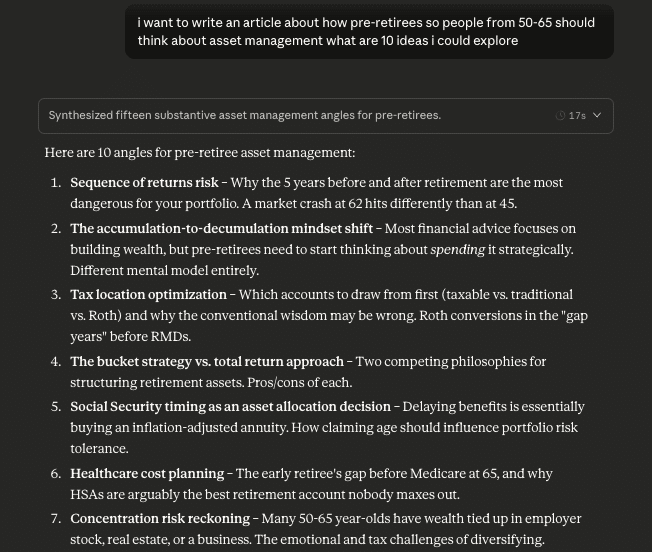
The psychological barrier of the blank document is one of a writer’s greatest adversaries. Knowing a topic inside and out is often insufficient when staring at a white screen with no clear entry point.
The Strategy: Use models like ChatGPT or Claude not to write the final piece, but to break creative paralysis. Request ten distinct narrative angles, five unconventional introductions, or a list of probing questions a skeptical reader might ask.
The Value: While much of the initial output will require refinement, the act of reacting to generated text short-circuits perfectionism, shifting the brain from a state of passive anxiety to active editing.
2. Strategic Outlining
Structure is the structural skeleton of any high-performing blog post, white paper, or journalistic feature. Diving into a draft without an outline often leads to disjointed arguments and bloated word counts.
The Strategy: Feed an AI tool your core topic, target audience, and primary objectives. Ask it to propose a logical hierarchy of subheadings and sections. Advanced users can establish custom intake prompts in tools like Claude, pasting in raw research notes, data points, and quotes to instantly generate a comprehensive structural roadmap.
The Value: This drastically cuts down the time spent organizing notes, occasionally surfacing unexpected sub-topics or logical connections that strengthen the final piece.
3. The Digital Research Assistant
Modern freelance writing demands deep, meticulous research—reading academic studies, industry reports, and competitor content to extract relevant facts.
The Strategy: Paste lengthy articles into conversational models to request immediate summaries, key statistical takeaways, and core arguments. For live internet research, platforms like Perplexity Pro act as specialized research assistants, scanning the web and providing verifiable answers complete with direct citations.
The Value: This enables rapid triage. Writers can determine if a source holds genuine value within minutes, avoiding the trap of reading an entire 20-page document only to discover the cited data is obsolete.
4. Drafting Cold Outreach and Letters of Introduction (LOIs)
Securing high-paying freelance contracts requires persistent outbound marketing, yet crafting hundreds of personalized pitch emails can lead to severe burnout.
The Strategy: Instruct an AI to draft cold email templates tailored to specific niches, such as marketing agencies or B2B SaaS firms. Request multiple variations—some concise, some value-focused.
The Critical Rule: Never send unedited AI-generated outreach. Use the tool to build 80% of the structural framework, but reserve the crucial first sentence for genuine, human-led personalization—such as referencing a company’s recent award, newly published study, or public milestone.
5. Crafting Magnetic Headlines and Hooks
An exceptional article can fail to gain traction if its headline or opening hook fails to capture attention in a crowded digital ecosystem.
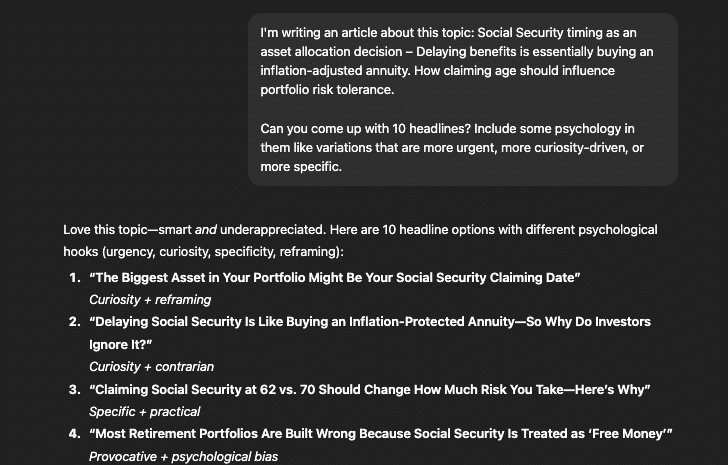
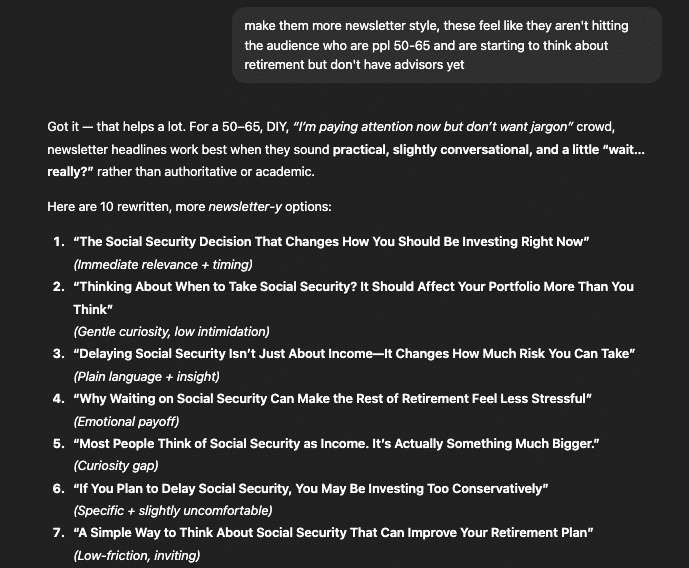
The Strategy: Prompt AI to generate ten to twenty headline variations based on psychological triggers—such as urgency, curiosity, specificity, or contrarianism. Similarly, ask for diverse opening hooks when an introduction feels sluggish.
The Value: While raw AI headlines can sometimes sound overly formulaic, reviewing a wide array of options sparks inspiration, allowing writers to mix, match, and refine elements into a compelling final title.
6. Advanced Editing and Proofreading
Human eyes are notoriously unreliable at catching errors in text they have read multiple times. The brain naturally fills in what it expects to see rather than what is actually written.
The Strategy: Paste drafts into AI assistants and instruct them to act as critical developmental editors. Ask the model to flag wordiness, convoluted sentence structures, or logical gaps. Alternatively, have the AI role-play as the specific target audience, identifying sections that feel confusing or unengaging. Coupled with dedicated proofreading extensions like Grammarly, this provides a rigorous multi-layered defense against typos and stylistic inconsistencies.
The Value: It acts as an objective second pair of eyes, catching oversights before the manuscript ever reaches a client’s desk.
7. Multi-Platform Content Repurposing
Producing a comprehensive 1,500-word article represents significant creative labor. Confining that content to a single publishing channel underutilizes its true market value.
The Strategy: Feed a completed article into an AI assistant and request specific derivative assets: a punchy LinkedIn post thread, key takeaways for a newsletter, short-form social media hooks, or executive summary bullets.
The Value: This transforms a single piece of long-form writing into five to ten distinct marketing assets, enabling a sustainable social media presence with minimal additional overhead. Furthermore, mastering content repurposing allows freelancers to package this exact service as an upsell for their clients.
8. Comprehensive Interview Preparation
Interviews with Subject Matter Experts (SMEs) drive the quality of authoritative journalism. The caliber of the questions directly dictates the depth of the resulting quotes.
The Strategy: Before an interview, brief your AI tool on the subject’s background, the publication’s angle, and recent industry trends. Ask the model to formulate ten targeted, high-value questions designed to extract specific, non-generic insights.
The Value: For writers entering an unfamiliar industry, this accelerates the learning curve, ensuring the conversation bypasses basic introductory definitions and immediately engages with advanced concepts.
9. Streamlining Transcript Management
Conducting SME interviews typically generates extensive audio recordings and messy transcripts via tools like Otter.ai. Sorting through thousands of words of raw dialogue is time-consuming.
The Strategy: Leverage the native chat features within modern transcription platforms or AI models. Once an interview is transcribed, prompt the system to locate specific thematic discussions, summarize key arguments, or extract standout verbatim quotes.
The Value: It eliminates the need to manually re-read hours of transcripts. Note: Every extracted quote must be cross-verified against the original audio file prior to publication to guarantee absolute accuracy.
10. Automated Marketing and Pipeline Tracking
Freelancers often struggle with the administrative tedium of tracking outreach, follow-ups, and conversion metrics in complex spreadsheets.
The Strategy: Utilize advanced workspace tools (such as Claude Cowork) to log marketing activities. At the end of each outreach session, dictate the date, contact name, outreach medium, and response status. Request monthly performance summaries, response-rate breakdowns, and pipeline conversions.
The Value: This gamifies the administrative process, maintains motivation through structured scorecards, and highlights operational bottlenecks—such as identifying whether low response rates stem from weak copy, improper targeting, or insufficient follow-ups.
Official Industry Insights and Perspectives
Industry leaders and veteran independent professionals emphasize that the integration of artificial intelligence is fundamentally a test of professional discipline.
"AI tools aren’t new anymore. If you’re a freelance writer and you’re not using them, you’re working harder than you need to. But there’s a difference between using AI well and using it badly. The freelancers who are thriving right now use AI to handle the tedious parts of the job so they can focus on the work that actually matters: the thinking, the interviews, the expertise, the relationships."
— Sean Ogle, Founder of Location Rebel
Experts warn against complacency. As basic, formulaic content production becomes entirely commoditized by automated systems, clients are placing a massive premium on authentic human elements—original reporting, lived experience, proprietary data, and nuanced industry connections.
What NOT to Do With AI: Avoiding the Pitfalls
While artificial intelligence is a powerful accelerator, misusing it can rapidly destroy a freelance writing career. To protect your professional reputation, avoid the following practices:
Publishing Raw, Unedited AI Output: Submitting unpolished AI-generated text is easily detected by discerning clients, editors, and modern search engine algorithms. It signals a lack of professional care and frequently leads to contract termination.
Outsourcing Core Creative Thinking: AI can organize, summarize, and format, but it cannot originate a unique worldview or authentic lived experience. If you outsource your core creative perspective, you reduce yourself to a commodity easily replaced by automated software.
Neglecting Fact-Checking: Large language models are prone to hallucinations—confabulating statistics, misattributing studies, or citing non-existent sources. Publishing unverified claims compromises your journalistic integrity.
Ignoring Data Privacy: Never paste sensitive client data, proprietary corporate strategies, or confidential information into public AI models, as inputs may be used to train future iterations of the software.
Future Outlook
The trajectory of the freelance economy points toward an increasingly automated, high-velocity future. Within the next few years, basic content generation will carry zero market value, treated by businesses as a commodity costing pennies.
However, this evolution does not spell the end of the freelance writer; rather, it elevates the profession. Writers who master AI as a foundational layer of their operational stack will transform into strategic editorial consultants. By delegating the administrative burden, research triage, and structural outlining to machines, human writers can dedicate 100% of their cognitive bandwidth to what humans do best: deep analytical thought, empathetic storytelling, compelling interviews, and enduring professional relationships.
The successful freelancer of tomorrow is not the one who writes the fastest, but the one who thinks the deepest—harnessing artificial intelligence to amplify human creativity rather than dilute it.