

Executive Overview
For public figures and authors, the polished highlight reel is the default currency of the internet. We are constantly inundated with success stories, book launches, and meticulously curated milestones that obscure the grinding, often chaotic reality behind them. Yet, transparent introspection remains a rare commodity.
Enter James Clear. Marking his sixth consecutive year of public self-auditing, the author and habit researcher has released his 2018 Annual Review—an unvarnished, deep-dive ledger of his professional triumphs, personal setbacks, and hard-won philosophical shifts.
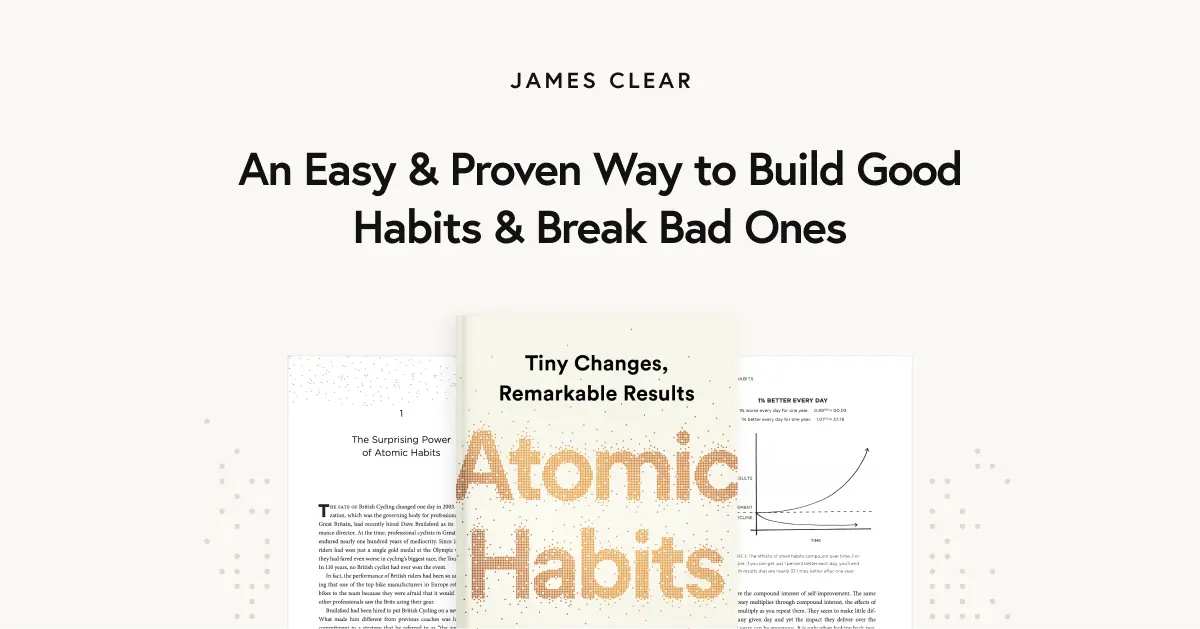
At the center of Clear’s 2018 narrative is the publication of Atomic Habits, a multi-year literary endeavor that transformed from a grueling, delayed writing process into a runaway global bestseller. However, Clear’s annual retrospective is far more than a victory lap. By laying bare his missed deadlines, declining workout frequencies, and shrinking creative output, Clear provides a masterclass in intellectual honesty. His review underscores a vital tenet of his own philosophy: true authority comes not from dispensing unblemished opinions, but from having "skin in the game" and applying one’s own frameworks to the messy reality of daily life.
Detailed Chronology: A Year of Triumphs and Friction
The arc of Clear’s 2018 can be viewed as a classic tension between explosive external growth and internal operational friction. The year began in the trenches of manuscript finalization, stretching through high-stakes global travel, culminating in a whirlwind media blitz, and ending in a quiet reckoning with personal habits.
Q1–Q2: The Crucible of Editing and Launch Pressures
January and February of 2018 found Clear deep in the frantic final edits of Atomic Habits. What began as a book deal announced during his 2015 Annual Review had morphed into a multi-year battle against writer’s block, structural overhauls, and shifting deadlines. During these early months, website traffic peaked, driven by intense foundational momentum. Yet, this period also marked the beginning of a sharp decline in long-form article output—a subtle leading indicator that would alter the trajectory of his digital business by year’s end.
Q3: The Release and Global Reception
On October 16, 2018, Atomic Habits finally hit shelves. Despite three years of obsessive refinement, Clear’s internal anxieties about the book’s reception were quickly dismantled by unprecedented market demand. The book outpaced even his highest projections, instantly capturing the public imagination and validating a core philosophy he has championed from day one: optimizing for reach over revenue. Rather than gating his insights behind high-priced barriers, Clear’s focus on broad distribution paid massive dividends as readers worldwide adopted his frameworks for behavioral change.
Q4: The Global Tour and the Cost of Momentum
Following the book’s launch, Clear embarked on an aggressive international travel and speaking schedule. Visiting new countries and stepping onto major stages forced an evolution in his personal logistics, pushing him to adapt his "ultralight travel" methodologies to accommodate keynote presentations. However, this intense late-year media tour across the United States came at a direct cost. His physical training routines plummeted, deadlines evaporated entirely, and the operational bandwidth required to maintain his weekly writing habit vanished beneath a mountain of promotional obligations.
Supporting Context & Metrics: The Ledger of a Bestseller
To understand the true cost of scaling a global platform, one must examine the metrics. Clear’s 2018 data reveals a fascinating paradox: record-shattering external impact accompanied by a quiet erosion of internal consistency.
The Reach-Versus-Revenue Paradigm
Clear has long maintained that his primary metric of success is reach rather than monetary accumulation. In 2018, that philosophy was put to the test on a massive scale. The launch of Atomic Habits created a flywheel effect that amplified his digital footprint across newsletters, social channels, and direct web traffic.
However, Clear’s data also exposed the hidden friction within these numbers. While top-line metrics looked formidable, his core engine of creation—writing weekly articles—stalled. After publishing a then-record low of 10 articles in 2017, Clear lowered the bar further in 2018. Website traffic, which peaked during the January/February manuscript push, steadily declined over the subsequent ten months. Invoking a core warning from Atomic Habits, Clear noted that current results are less important than current trajectory: a downward trend in foundational habits will eventually catch up to external success, regardless of temporary market tailwinds.
Physical Capital and the Myth of the "Small Drop"
Perhaps the most revealing metrics in Clear’s review involve his physical training. In 2017, Clear averaged 15.7 workouts per month. In 2018, that figure dropped to 11.8 workouts per month—a total of 141 exercise sessions for the year.
At first glance, a reduction of roughly four workouts per month might seem negligible—merely one missed session a week. Yet, the downstream consequences were profound. For the first time in a decade of serious training, Clear failed to hit a personal record (PR) in any major lift.
This metric serves as empirical proof of a broader psychological lesson: the margin between average performance and peak performance is far narrower than conventional wisdom suggests. A seemingly minor compromise in weekly consistency was the exact threshold separating personal breakthroughs from stagnation.
Philanthropic Impact and "Unproductive Days"
Amidst the commercial success of his book and courses, Clear formalized a structural commitment to philanthropy, partnering with the Against Malaria Foundation (AMF). By allocating 5 percent of after-tax profits to distributing insecticide-treated bed nets to protect families from malaria-carrying mosquitoes, Clear aligned his business model with a high-leverage intervention for global health.
This partnership fundamentally altered Clear’s relationship with productivity guilt. By embedding charitable contributions into every product sale, course registration, and article read, Clear established a psychological safety net: even on days when personal task lists went unfulfilled, the underlying commercial engine continued to generate tangible, life-saving value for the world.
Official Statements & Personal Reflections
In his review, Clear addresses the inherent awkwardness of publishing a deeply personal audit. To the outside observer, sharing triumphs feels like unearned boasting, while admitting failures feels like reckless vulnerability. Yet, Clear insists that public accountability is essential for maintaining authenticity.
On Optimism, Time, and "Margin of Safety"
One of the most candid admissions in Clear’s review centers on his chronic inability to meet deadlines and his chronically "optimistic view of time."
"When some people have an extra 15 minutes before an appointment, they think, ‘Great! I can leave now and arrive early.’ I think, ‘Perfect. I can do 15 more minutes of whatever I’m doing right now, leave at the last moment necessary, and arrive with one second to spare.’"
Clear openly wrestles with this behavioral quirk. While his hyper-optimistic scheduling allows him to cram an extraordinary volume of work into every hour, it completely obliterates his "margin of safety." When everything goes according to plan, the system works. But the moment a single variable shifts—be it a delayed flight, a protracted edit, or an unexpected media request—deadlines shatter. Rather than adopting a rigid corporate fix, Clear recognizes this as the structural trade-off of his high-output lifestyle.
Fundamental Truths of Mastery and Mindset
Distilling his year of intense pressure into actionable wisdom, Clear outlined several core realizations that emerged from his 2018 experiences:
- Focus on the Fundamentals: When complexity mounts, abandon cutting-edge tactics and return to high-return basics—sleep, physical movement, deep work, and relationship maintenance.
- The Dual Nature of Mastery: True progress requires both impatience (a bias toward immediate action and urgency) and patience (the ability to delay gratification and trust the cumulative power of small habits).
- The Importance of Artificial Challenges: Mental toughness, like a muscle, atrophies in the absence of resistance. When life fails to present difficult obstacles, individuals must manufacture their own challenges to maintain psychological resilience.
- The Power of Linguistic Boundaries: "No is a decision. Yes is a responsibility." Clear realized that saying yes to a single opportunity implicitly requires saying no to every other alternative, demanding far more rigorous defense of one’s time.
Future Outlook: Rebuilding the Foundation for 2019
As the curtain closes on 2018, James Clear stands at a fascinating crossroads. The launch of Atomic Habits has cemented his status as a premier global voice in behavioral psychology, introducing his frameworks to millions of new readers. Yet, the internal ledger reveals an author whose core creative engine—the disciplined, weekly act of writing—has been battered by the winds of commercial success.
Looking toward 2019, Clear’s mandate is clear: course correction. Having successfully conquered the summit of traditional book publishing, his immediate future involves stepping back from the chaotic reactivity of media tours and rebuilding his foundational writing habits.
The underlying lesson of Clear’s 2018 Annual Review transcends the metrics of book sales or gym performance. It is a reminder that personal development is not a linear ascent, but a perpetual process of calibration. Success does not eliminate the struggle; it merely changes the nature of the challenges we face. By holding up a mirror to his own miscalculations and triumphs, James Clear demonstrates that the most powerful habit an individual can cultivate is radical, unyielding honesty.
