In the contemporary digital economy, written content serves as the foundational driver of online customer acquisition. While traditional publishing often emphasizes literary nuance and stylistic elegance, high-performance copywriting operates under a fundamentally different paradigm: measurable conversion and return on investment (ROI). Data from digital marketing operations reveals that multi-million-dollar online enterprises—ranging from digital agencies to specialized educational communities like Copyblogger—rely predominantly on written marketing channels, including search-engine-optimized blog articles, targeted social media communications, and direct-response email newsletters.
The modern media landscape demands a re-evaluation of copywriting as a quantitative asset rather than a purely creative endeavor. The primary objective of conversion-focused copy is not to entertain, but to capture audience attention, establish trust, systematically address buyer objections, and guide prospective leads toward transactional action.
This analytical report outlines a ten-part tactical framework for digital copywriting. By examining customer psychology, competitive analysis, workflow engineering, algorithmic adaptation, and conversion measurement, this guide provides an authoritative roadmap for leveraging written communication as an enterprise growth asset.
Detailed Chronology of the Modern Copywriting Framework
The implementation of a high-converting copywriting strategy follows a structured, four-phase methodology. This chronological pipeline shifts focus from raw qualitative research to channel execution and continuous refinement.
Phase 1: Audience Intelligence and Competitive Deconstruction
1. Deep Customer Empathy Mapping
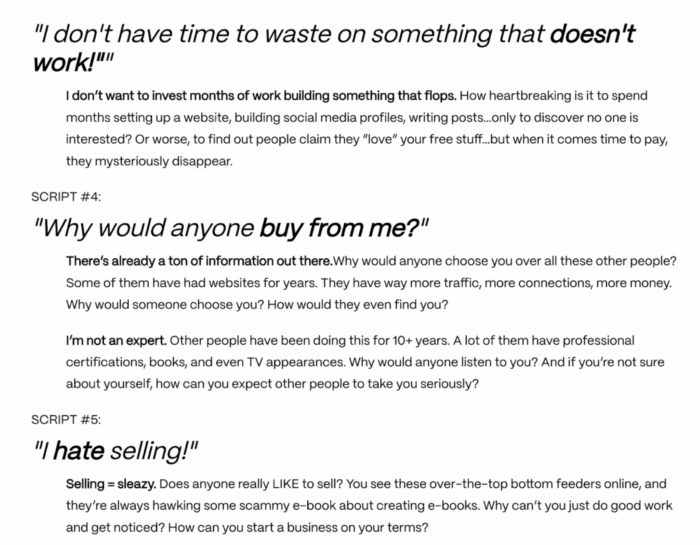
Effective copywriting requires mirroring the exact lived reality of the target demographic. Rather than relying on abstract buyer personas, high-performing copywriters capture the specific language, frustration points, and operational hurdles experienced by prospects.
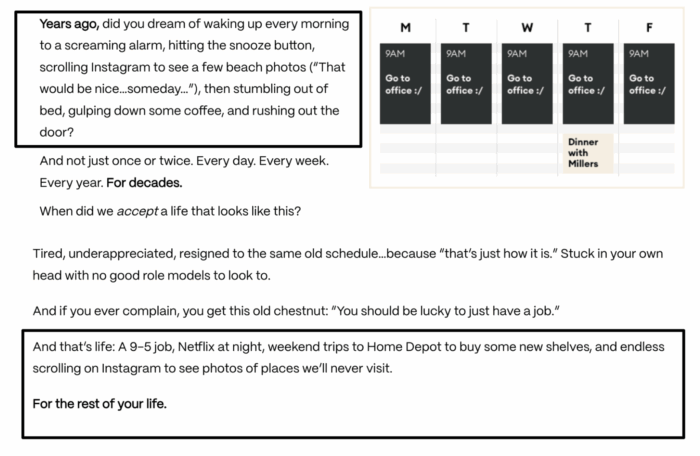
Pain Point Mirroring: High-converting landing pages articulate the prospect’s current situation with high specificity. For example, rather than offering generic advice like "increase your income," successful programs describe daily routines—such as the corporate 9-to-5 loop, evening streaming consumption, and repetitive weekend chores—to build immediate trust through shared context.
Tactical Data Extraction: When direct customer access is limited, writers analyze existing sales call transcripts using Large Language Models (LLMs) to identify recurrent objections. Alternative research channels include niche forums like Reddit and moderated Facebook groups, where raw, uncurated feedback highlights genuine buyer pain points.
2. Competitive Ad Auditing
Market leaders regularly spend substantial resources testing ad creative and copy. Analyzing competitors’ longest-running digital ad campaigns provides immediate insight into proven messaging strategies.
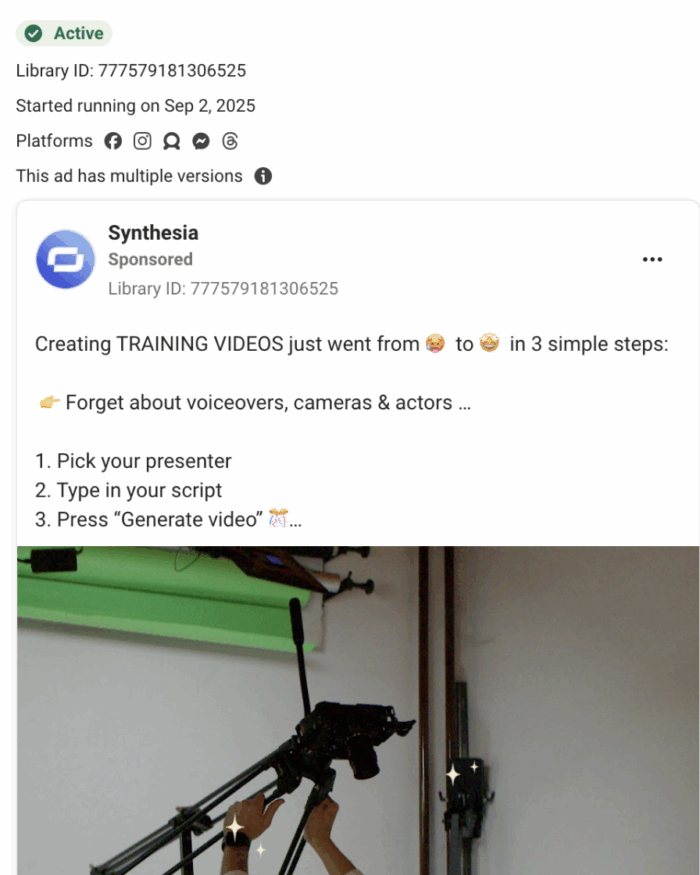
Ad Library Analysis: Using tools such as the Meta Ad Library and LinkedIn Ads Transparency Center, copywriters evaluate creative longevity. Ads that remain active over extended periods (e.g., 30 days or more) typically indicate profitability and sustained conversion performance.
Identifying High-Value Angles: Analyzing active competitor campaigns reveals underlying software or service pain points—such as data clutter in CRM systems or logistical friction in video production—allowing writers to position their messaging against validated market demand.
3. Swipe File Curation
Professional copywriters maintain repositories of high-performing headline frameworks, sales structures, and call-to-action (CTA) mechanics. Referencing curated databases—such as Neville Medhora’s SwipeFile.com—allows writers to evaluate campaign elements vetted by experienced direct-response strategists, minimizing reliance on unverified creative instincts.
Phase 2: Workflow Engineering and Augmented Drafting
   [ Raw Research Input ]
             │
             ▼
+-------------------------+
| Step 1: Subheading Maps | ──► Establishes logical narrative flow
+-------------------------+
             │
             ▼
+-------------------------+
| Step 2: Bullets & Media | ──► Populates sections with evidence & examples
+-------------------------+
             │
             ▼
+-------------------------+
| Step 3: Targeted Copy   | ──► Drafts conversion-focused text around key assets
+-------------------------+
4. Systematizing the Draft Process
To eliminate friction and maintain consistent production standards, copywriters rely on standardized drafting workflows tailored to specific content formats:
Subheading Outline Assembly: Establishing a structural narrative map before writing body copy to ensure logical progression.
Evidence and Graphic Integration: Inserting relevant visual data, screenshots, bullet points, and supporting documentation into each sub-section prior to drafting main paragraphs.
Targeted Section Drafting: Populating remaining narrative gaps around verified data points, preventing writer’s block and maintaining focus on conversion intent.
5. Practical Application and Micro-Ventures
Practical execution accelerates skill acquisition far more effectively than theoretical study. Copywriters refine their craft by managing active digital properties:
Personal Brand Channels: Maintaining personal profiles on platforms like LinkedIn or X (formerly Twitter) provides immediate feedback on headline hooks and message positioning.
Niche Asset Building: Running affiliate sites, managing dropshipping stores, or launching lightweight micro-SaaS applications forces writers to focus on high-intent conversion copy over superficial engagement metrics.
Search Intent Realities: Operating direct-to-consumer properties often highlights the crucial distinction between general informational traffic and commercial purchase intent, shifting the writer’s focus toward revenue-generating content strategies.
6. Strategic AI Augmentation
While generative AI models cannot fully replace human strategic vision, artificial intelligence functions effectively as a research and editing partner when deployed intentionally:
+----------------------------------------------------------------------------------+
|                            OPTIMIZED AI USE CASES                                |
+----------------------------------+-----------------------------------------------+
| FUNCTION                         | TACTICAL WORKFLOW                             |
+----------------------------------+-----------------------------------------------+
| Qualitative Memory Jogging       | Querying LLMs to identify common industry     |
|                                  | objections and pain point lists.              |
+----------------------------------+-----------------------------------------------+
| Structural Refinement            | Inputting convoluted drafts to generate       |
|                                  | alternative, highly readable phrasing options.|
+----------------------------------+-----------------------------------------------+
| Subject Matter Discovery         | Prompting models to locate real-world expert  |
|                                  | quotes and practitioner posts on social networks.|
+----------------------------------+-----------------------------------------------+
Phase 3: Platform Specialization and Qualitative Measurement
7. Channel-Specific Algorithmic Adaptation
Copywriting mechanics vary across distribution networks. Achieving reliable returns requires adapting messaging to the structural expectations of each platform:
Professional Social Networks (e.g., LinkedIn): Demands strong narrative hooks, peer-level insight, clear formatting, and authoritative industry positioning.
Direct-Response Email Marketing: Depends on compelling subject lines, clear contextual transitions, hyper-focused copy, and unambiguous calls to action.
8. ROI Measurement and Attribution Architecture
Distinguishing genuine conversion impact from superficial engagement metrics is essential for modern copywriters. High engagement numbers do not automatically translate to commercial performance.
Qualitative Commenter Analysis: On social channels, copy performance should be assessed by reviewing commenter profiles. Interactions from key decision-makers (such as directors or executives) represent high-value audience alignment, whereas interactions from junior profiles may indicate low commercial intent.
Form-Level Self-Reported Attribution: Implementing "How did you hear about us?" fields on demo requests and checkout pages helps attribute conversions directly to specific written assets or creator profiles.
Conversion Tracking via Google Analytics (GA4): Content writers tracking revenue impact establish event goals for lead-form submissions, newsletter signups, and direct sales, tying organic search traffic directly to pipeline growth.
Phase 4: Network Validation and Compound Execution
9. Community-Based Feedback Loops
Developing copy in isolation can blind writers to narrative weaknesses, unaddressed customer objections, or structural errors. Participating in structured professional communities provides critical objective feedback.
Peer-Level Copy Audits: Submitting drafts to established marketers helps identify weak points before public deployment.
Feedback Calibrations: Writers must weigh critiques against reviewer experience. Feedback from senior copywriters and revenue-focused marketers should take priority over advice from novice peers.
10. Operational Consistency and Execution Horizons
Copywriting success depends on sustained execution. As highlighted by investor Naval Ravikant’s operating principle—"Be impatient with action, patient with results"—copywriters must maintain high daily writing volume while taking a long-term view toward commercial returns.
Supporting Context & Performance Metrics
Data from high-converting marketing campaigns highlights a clear divergence between engagement-focused writing and conversion-focused copy. The following metrics illustrate key performance indicators for evaluating content quality across primary digital channels:
+------------------------------------------------------------------------------------+
|                      COPYWRITING CHANNEL PERFORMANCE MATRIX                        |
+---------------------+-------------------------+------------------------------------+
| CHANNEL             | PRIMARY KPI             | REVENUE CORRELATION IMPACT         |
+---------------------+-------------------------+------------------------------------+
| Organic Search /    | GA4 Conversion Event    | High when aligned with high-intent |
| Content Marketing   | Rate (%)                | buyer keyphrases.                  |
+---------------------+-------------------------+------------------------------------+
| B2B Ghostwriting    | ICP Engagement Ratio    | High when comments reflect target  |
| (LinkedIn/X)        | (% Executive Comments)  | buyer decision-makers.             |
+---------------------+-------------------------+------------------------------------+
| Direct Sales Pages  | Add-To-Cart / Form      | Direct linear correlation to       |
| & Funnels           | Completion Rate (%)     | revenue capture.                   |
+---------------------+-------------------------+------------------------------------+
| Paid Ad Campaigns   | Return On Ad Spend      | High; indicates messaging survival |
| (Meta/LinkedIn)     | (ROAS) & Ad Longevity   | in competitive ad auctions.        |
+---------------------+-------------------------+------------------------------------+
Analytical Case Study: B2B Software Copy Positioning
An evaluation of enterprise CRM software ad creative illustrates how shifting from generic feature descriptions to specific pain points improves message resonance:
Generic Feature Angle (Low Conversion Impact):"Our CRM software offers unified databases and custom reporting dashboards for enterprise sales teams."
Pain-Point Angle (High Conversion Impact):"Tired of losing deals because your CRM data is cluttered with outdated logs? Clean up your sales pipeline and prevent missed revenue opportunities."
The pain-point angle directly addresses the operational issue—lost deals caused by poor data visibility—leading to higher click-through rates (CTR) and lower cost-per-acquisition (CPA).
Official Statements and Industry Insights
Perspectives from industry leaders highlight the core principles of revenue-driven copywriting:
On the Core Purpose of Copywriting
"Becoming a better copywriter doesn’t mean you write more eloquently. In fact, the opposite is often true. Great copywriters are clear, concise, and ultimately convert readers into customers. Focus on how to generate more revenue from your words."
— Copyblogger Marketing Leadership
On Buyer Psychology and Customer Empathy
"The more precisely you can paint the picture of a prospect’s reality, the more effective you’ll be at converting them. It proves to the reader that your solution was built specifically for their situation."
— Ramit Sethi, Author and Founder of I Will Teach You To Be Rich
On Execution Discipline and Long-Term Horizons
"Be impatient with action, patient with results."
— Naval Ravikant, Entrepreneur and Investor
Future Outlook: The Evolution of Written Conversion Engines
As automated content generation tools become widespread, the total volume of published digital copy will continue to grow rapidly. However, increased volume often leads to market saturation and diluted quality across open marketing networks.
       [ Generative AI Content Expansion ]
                       │
                       ▼
      [ Digital Channel Saturation & Noise ]
                       │
                       ▼
+-----------------------------------------------------+
|      FUTURE STRATEGIC DIFFERENTIATION FACTORS       |
|                                                     |
|  1. Deep Qualitative Research & Human Proof         |
|  2. Proprietary Data & Expert-Led Insights          |
|  3. Intent-Driven Conversion Architecture           |
|  4. Precise Multi-Touch Attribution Modeling        |
+-----------------------------------------------------+
Key Trends Shaping Conversion Copywriting
Shift Toward Qualified Human Insights: Standard AI-generated copy will face declining engagement as audiences grow immune to generic marketing patterns. Successful copywriters will increasingly focus on primary research, original expert interviews, and firsthand operational insights.
Focus on Intent Over Pure Volume: Search engines and social media algorithms continue to reward content built for genuine user intent over superficial keyword density. The future of content strategy lies in creating authoritative assets tailored to specific commercial inquiries.
Tighter Integration of Attribution Technology: Marketing organizations will expect copywriters to understand attribution tools—such as GA4 analytics platforms, multi-touch tracking models, and self-reported intake workflows—enabling content teams to quantify their direct contribution to enterprise growth.
Growth of Niche Creator Networks: Highly targeted educational networks and professional communities, such as Copyblogger Academy, will play an increasingly central role in refining marketing talent. These hubs combine peer-led auditing, direct expert mentorship, and practical execution frameworks to help copywriters transition into high-earning growth strategists.
Ultimately, the future of copywriting belongs to practitioners who treat written communication not as static text, but as a dynamic, data-driven system engineered to capture target attention, build trust, and drive consistent customer acquisition.