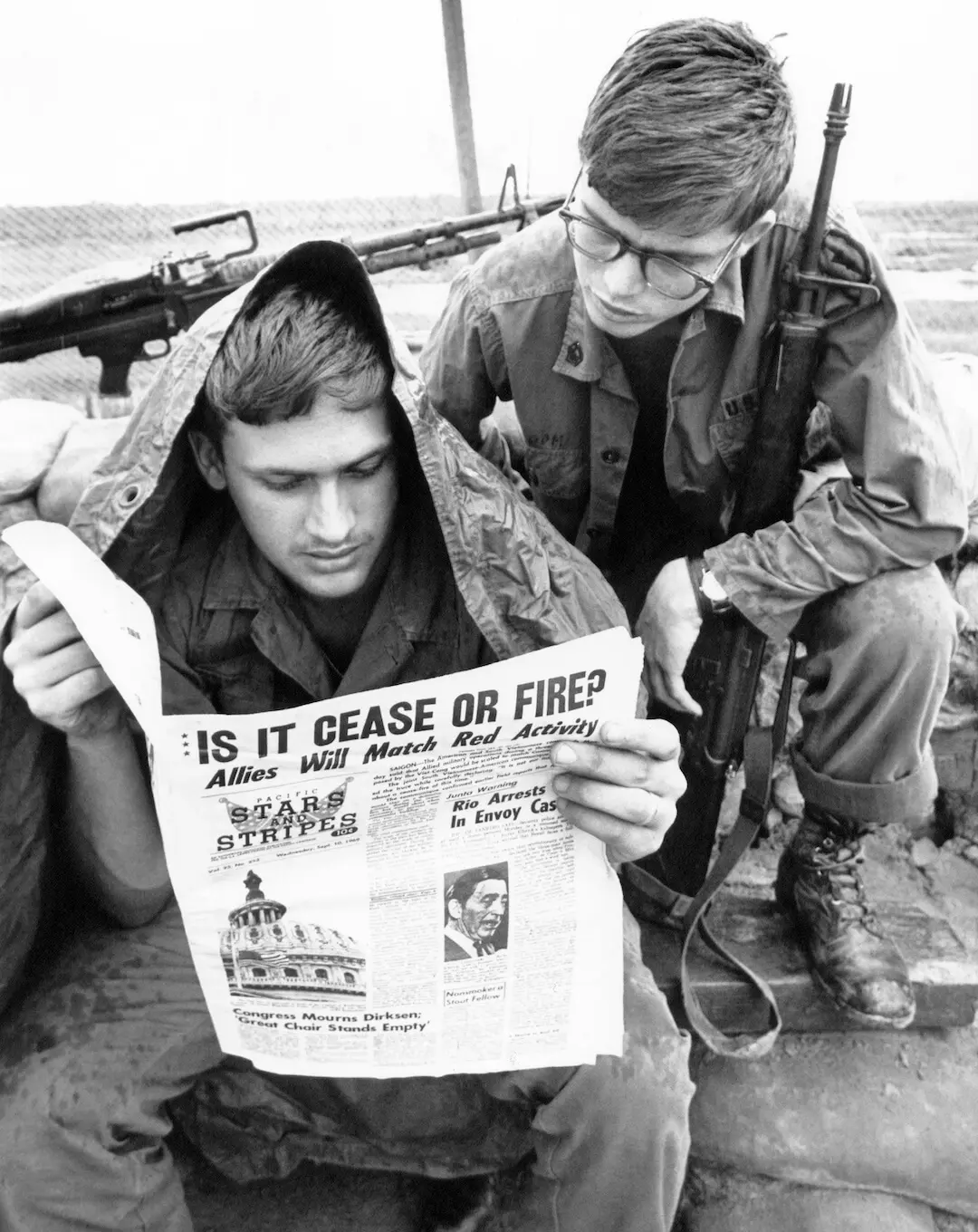
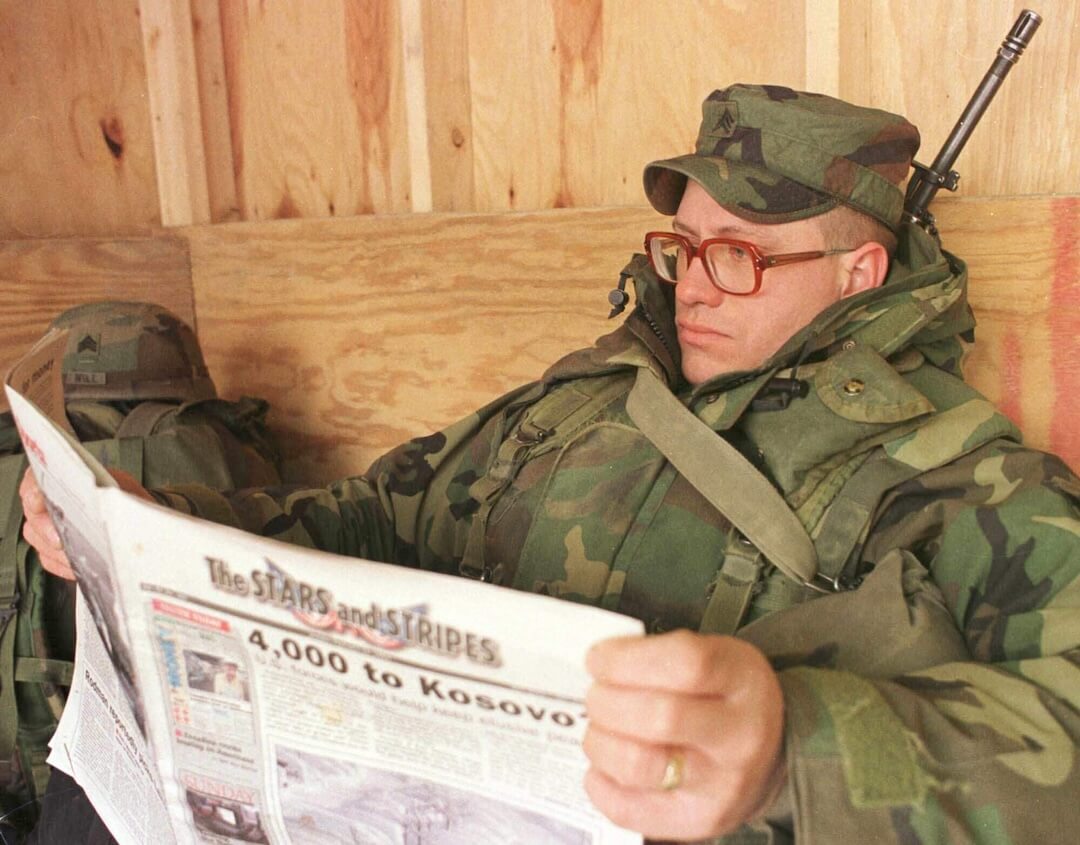
For well over a century, Stars and Stripes has served as an indispensable pillar of the military-journalistic ecosystem. It operates with a unique and delicate mandate: functioning as an editorially independent, trusted news source for 1.3 million active-duty U.S. troops, their families, and millions of veterans worldwide, despite being financially backed by the Department of Defense. Year after year, its investigative reporting has laid bare systemic failures, broken bureaucracies, and the hidden costs of military service, earning prestigious industry accolades along the way.
However, this vital tradition of editorial independence is facing an unprecedented existential crisis. The recent firings of Stars and Stripes Publisher Max Lederer and Editor-in-Chief Erik Slavin by the Trump administration and Defense Secretary Pete Hegseth mark a watershed moment in civil-military relations. Framed officially as acts of insubordination, these terminations coincide with a broader, deliberate administrative campaign to dismantle federal protections for independent military journalism, rescind longstanding directives against news management, and morph the publication into a customized "warfighter" mouthpiece.
As commercial competitors contract amid financial headwinds and the Pentagon tightens internal controls—ranging from mandatory press escorts to the systematic scrubbing of localized military social media accounts—the neutering of Stars and Stripes threatens to extinguish the last remaining truly independent watchdog for rank-and-file service members. Veterans of the beat, media historians, and journalism advocates warn that transforming the publication into an institutional public relations arm does not strengthen the military; rather, it emulates the closed-information architectures of authoritarian adversaries, ultimately eroding morale, accountability, and operational readiness from within.
Detailed Chronology: Anatomy of a Government Takeover
The structural dismantling of Stars and Stripes’ editorial independence did not happen overnight; it was executed through a calculated sequence of regulatory rollbacks, public posturing, and administrative retaliation against journalistic pushback.
The Regulatory Rollback (January 2026)
The campaign to bring the publication "to heel" shifted from rhetoric to reality in January. The Trump administration formally rescinded a cornerstone federal regulation and a 1993 Department of Defense policy directive that had long guaranteed the publication’s freedom from censorship. The original framework explicitly prohibited the calculated withholding of unfavorable news and mandated a free flow of information to readers without news management.
Upon the rescission of these rules, Pentagon spokesman Sean Parnell took to social media to signal the administration’s new vision. Parnell asserted that Stars & Stripes would be "custom tailored to our warfighters," focusing narrowly on weapons systems, fitness, lethality, and survivability while purging what the administration deemed "woke distractions."
The Breaking Point: Tough Questions and Public Defiance
Despite the administrative bluster, the newsroom continued to pursue hard-hitting watchdog journalism. In the months following the policy change, Stars and Stripes reported critically on the expanding Iran war casualty counts—including the addition of 60 service members to the toll—and Defense Secretary Hegseth’s controversial firings of well-respected general officers.
The pressure cooker reached critical mass in August 2026. A week and a half prior to the leadership ousters, the paper published a deeply moving and politically sensitive report headlined: “USS Abraham Lincoln families press Navy leaders over sailors’ mental health.” The piece highlighted a harrowing town hall meeting where the wife of a sailor—deployed amid a grueling 250-consecutive-day tour at sea—tearfully recounted receiving a message from her husband stating "he hopes he doesn’t wake up tomorrow."
The definitive rupture, however, can be traced directly to open defiance from the paper’s top leadership. Fired Editor-in-Chief Erik Slavin publicly rejected the notion of transforming the newsroom into a Pentagon PR wing. In a prominent CBS News segment, Slavin drew a hard line: "We need to be able to provide independent news to service members." He was echoed by Middle East reporter Lara Korte, who stated on air, "I’m working for Stars and Stripes, not for the Pentagon, not for any administration, not for any policymaker. I’m here to cover the military community."
The Firings and the Official Justification
Shortly following these high-profile media appearances and critical reporting cycles, the Pentagon pulled the trigger. Publisher Max Lederer and Editor-in-Chief Erik Slavin were summarily fired. The official justification cited by defense officials was insubordination. Yet, media analysts, journalism advocacy groups, and press freedom watchdogs point to the glaring temporal proximity between the publication of unvarnished reports on military mental health and the subsequent decapitation of the paper’s leadership team as clear evidence of viewpoint-based retaliation.
Supporting Context & Metrics: The Fragile Ecosystem of Military Journalism
To understand the profound impact of the Stars and Stripes takeover, one must examine the broader, shrinking landscape of defense journalism and the unique demographic it serves.
A Shrunken Beat
The golden era when every regional newspaper with a military base in its circulation zone fielded a dedicated military affairs reporter is long gone. Today, the day-to-day watchdog reporting on America’s armed forces falls to a remarkably small cadre of journalists. While a handful of local investigative reporters—such as Sig Christenson of the San Antonio Express-News—continue to punch above their weight, the heavy lifting of military reporting is left to national organizations, commercial trade publications, and Stars and Stripes.
Private-sector competitors, such as the Military Times stable (encompassing the Army Times, Navy Times, Marine Times, and Air Force Times) alongside digital platforms like Military.com, produce admirable work. However, their output and institutional footprint are vastly dwarfed by Stars and Stripes, which maintains large, dedicated bureaus across Europe, the Pacific, and its Washington, D.C., headquarters.
The Economic Reality of Serving the Troops
Rank-and-file service members and their military families represent a distinct demographic that does not conform to traditional commercial advertising models. Former Stars and Stripes reporter Leo Shane, speaking to Poynter, noted:
"They don’t shop the way other people do. They shop at the commissary. This is a group that won’t have a commercial market for an outside news organization to play to."
Because the commercial viability of a dedicated military newspaper is virtually nil outside of direct government funding or defense-adjacent subsidies, private competitors have steadily retreated. By 2024, the publications under the Military Times banner had slashed their U.S.-based editorial staffs in half, and Military.com similarly scaled back its original reporting. This economic vacuum leaves Stars and Stripes as the solitary, irreplaceable lifeline providing independent, specialized news to deployed service members and their families—news focused on pay scales, GI benefits, healthcare accessibility, and quality-of-life issues at far-flung installations like Ramstein Air Base.
A History Etched in Crisis
The roots of Stars and Stripes run deep into the American experiment. Originally printed by Union troops during the Civil War, the publication was successfully revived during World War I and World War II. As the Second World War drew to a close, military leadership recognized a fundamental truth: as long as American sons and daughters were stationed across oceans to safeguard national interests, they deserved an independent hometown newspaper of their own.
For decades, that model proved remarkably resilient, allowing the paper to break monumental, system-shaking stories that ultimately forced institutional reform and made the U.S. military stronger. Historical touchstones of this vital watchdog journalism include:
The Vietnam War: Exposing the mechanical failures and jamming hazards of the early M16 rifles, which directly endangered frontline infantrymen.
The Post-9/11 Era: Uncovering the horrific, neglectful outpatient conditions endured by severely wounded Iraq and Afghanistan war veterans at Walter Reed Army Medical Center.
Modern Deployments: Chronicling the bureaucratic nightmares and logistical failures trapping families after chaotic non-combatant evacuations, such as the naval base evacuations in Bahrain.
Official Statements and Competing Visions
The ideological battle lines over the future of Stars and Stripes reveal a fundamental clash of philosophies regarding civil-military relations, free speech, and institutional accountability.
The Administration’s Defense: Modernization or Control?
The Trump administration and its appointees have framed their intervention as a necessary modernization effort designed to align the media outlet with core warfighting readiness. Pentagon spokesman Sean Parnell argued that the publication needed to be steered away from perceived cultural distractions and oriented entirely toward the operational realities of a new generation of service members.
In a statement posted to social media following the regulatory revisions, Parnell emphasized:
"Stars & Stripes will be custom tailored to our warfighters. It will focus on warfighting, weapons systems, fitness, lethality, survivability, and ALL THINGS MILITARY."
In the administration’s view, a government-funded newspaper should act as an effective instrument of force morale and tactical alignment rather than an independent journalistic enterprise that investigates command failures, questions high-level appointments, or platform families airing grievances about base mental health resources.
The Journalistic Pushback: The Danger of State Media
Veterans of the military press view the administration’s rationale as a dangerous euphemism for state censorship. Former reporters and media advocates emphasize that independent journalism is tailored to the warfighter because it speaks truth to power on their behalf.
Sig Christenson, co-founder of Military Reporters & Editors, delivered a blunt assessment of the administration’s actions in an interview with Poynter, characterizing the leadership purges as a "dagger to the heart of that newspaper" and warning against the perils of institutional self-delusion:
"You know what kind of military reads its own government’s propaganda? The Russians. The Chinese. Not the best armies."
Joe Gould, a former Army Times reporter now with NOTUS, underscored that healthy competition and rigorous independent scrutiny between government-backed and private military reporters historically forced the institution to address internal flaws before they festered into public scandals. Gould warned that the broader administrative crackdown—which includes ongoing legal battles over mandatory press escorts inside the Pentagon and the mass consolidation and deletion of local military social media accounts by the Army—creates a chilling effect across the entire defense beat.
Future Outlook: The Chilling Effect on Transparency and Readiness
As the dust settles on the ouster of Max Lederer and Erik Slavin, the long-term trajectory for Stars and Stripes—and the broader ecosystem of defense reporting—grows increasingly bleak.
The convergence of several restrictive policies paints an alarming picture for public accountability within the Department of Defense:
The Neutralization of Watchdog Media: By asserting direct administrative control over the leadership and editorial direction of Stars and Stripes, the Pentagon risks transforming a proud, independent journalistic institution into an uncritical house organ.
Systemic Information Sinks: The Army’s recent pivot to eliminate thousands of decentralized social media accounts in favor of a singular, monolithic voice—combined with restrictive internal press escort rules—signals an overarching strategy to manage information flows tightly and suppress dissenting internal perspectives.
The Disappearance of Grassroots Accountability: When rank-and-file service members and their families lose their trusted, independent avenues for airing systemic grievances—such as delayed healthcare, substandard base housing, overextended deployments, and mental health crises—those problems do not disappear; they simply fester in the dark, ultimately eroding operational readiness and troop morale from the inside out.
The ultimate irony of the campaign against Stars and Stripes lies in its premise. By attempting to sanitize the military’s public image and shield leadership from accountability, the administration threatens to strip away the very mechanism that keeps the armed forces honest, resilient, and connected to the democratic society they swear an oath to defend. Without a free, fearless, and independent military press, the U.S. armed forces risk losing not only their historical commitment to transparency, but the hard-earned trust of the very service members who bear the ultimate burden of national defense.