

Executive Overview
A decade ago, corporate boardrooms and marketing departments debated the basic utility of social media platforms, frequently dismissing visual networks like Instagram as fleeting novelties rather than foundational channels for commerce. Today, that skepticism has been completely upended. Creators are no longer peripheral tactical assets tacked onto the tail-end of a media plan; they sit at the epicenter of corporate strategy from day zero. Modern digital creators command equity stakes in multinational corporations, architect complex business empires, and operate self-sustaining media entities that rival traditional entertainment conglomerates in both reach and cultural relevance.
This paradigm shift has fundamentally transformed the commercial expectations governing brand-creator partnerships. It has simultaneously elevated the internal operational maturity required for creators to survive and scale behind the scenes.
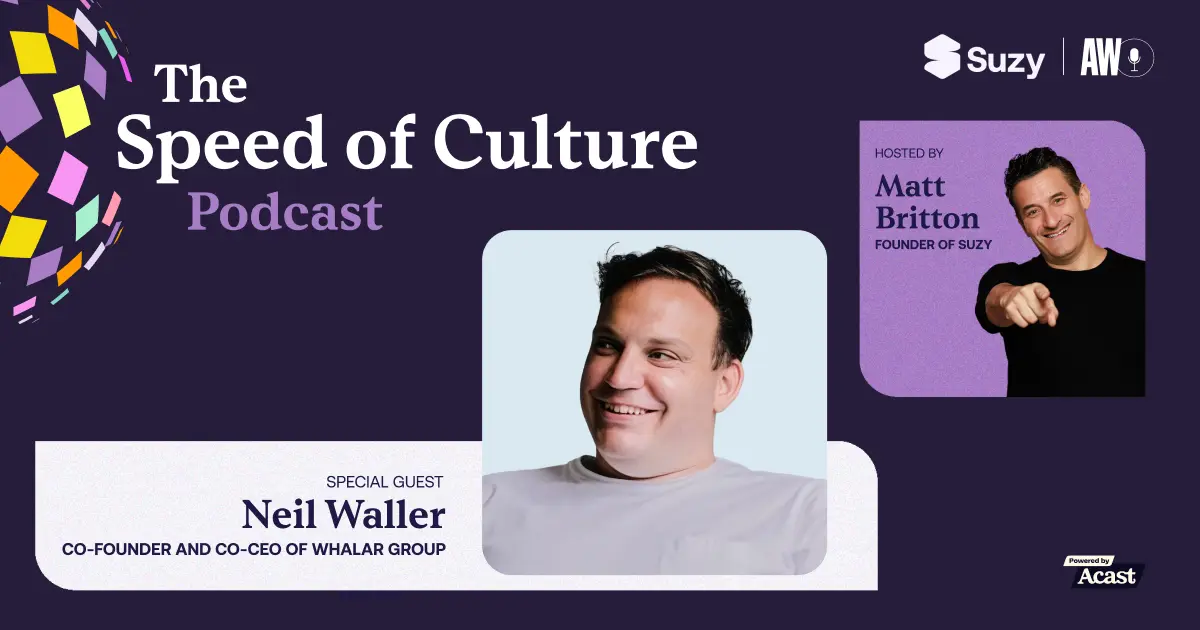
On a recent episode of The Speed of Culture podcast, Matt Britton sat down with Neil Waller, co-founder and co-CEO of the Whalar Group, to dissect these sweeping industry transformations. Waller offered a masterclass in how empirical experimentation, profound mutual respect, and disciplined operational rigor are dictating the contours of the creator economy’s next phase. Furthermore, Waller provided an incisive look into the paradoxical future of the digital landscape: an era where generative artificial intelligence (AI) will flood the ecosystem with hyper-abundant content, simultaneously making trusted human tastemakers more economically valuable than ever before.
Detailed Chronology: From Direct-to-Consumer Roots to a Global Ecosystem
To understand where the creator economy is heading, one must examine its foundational origins. Long before influencer marketing agencies became multi-million-dollar enterprises, Waller and his co-founder James were carving out an early foothold in the direct-to-consumer (DTC) space. Operating on platforms like Shopify, the duo launched independent brands that relied heavily on digital tastemakers to drive customer acquisition, brand awareness, and bottom-line sales.
Proof Before the Pitch
Crucially, Whalar’s institutional thesis did not materialize from a sterile, theoretical agency pitch deck. It was forged in the trenches of real-world retail trial and error. By deploying early-stage creators to market their own DTC products, Waller and James gathered firsthand empirical evidence proving that creator-led content could systematically influence and alter real consumer purchasing behavior.
For modern marketers, the underlying lesson is profound: corporate conviction regarding new media models is exponentially more credible when it stems from direct experimentation and empirical validation rather than recycled industry buzzwords.
Embracing Agility Over Predictability
Reflecting on the early trajectory of the Whalar Group—which launched in 2016 as an influencer marketing outfit before expanding into a sprawling six-company creator ecosystem—Waller actively pushes back against the deterministic narrative that his company’s success was engineered through infallible foresight.
Their early DTC watch brand succeeded not because they possessed a crystal ball, but because they embraced operational agility. They could test concepts rapidly, decode market signals in real time, and ruthlessly pivot toward strategies that gained genuine consumer traction. While market timing played a role, Waller attributes their survival and subsequent growth to a willingness to be wrong before finding out what was right. In a digital marketplace that was changing by the day, this iterative mindset proved infinitely more valuable than clinging to a rigid, conventional business plan.
Supporting Context & Metrics: The Mechanics of Modern Influence
As the creator economy matures into a multi-billion-dollar global juggernaut, the metrics governing its success have shifted dramatically. Vanity metrics—such as raw follower counts and passive impressions—are rapidly giving way to deep-funnel analytics, equity integration, and infrastructural stability.
Moving Beyond the "Authenticity" Trap
For years, the marketing lexicon has been saturated with a single, ubiquitous buzzword: "authenticity." Marketers endlessly demanded that creators remain "authentic," often creating an impossible standard that pitted commercial viability against creative integrity.
Waller argues that the industry has outgrown this superficial framework, suggesting that mutual respect is a far more useful and sustainable operational standard. True collaboration requires a two-way street of understanding:
- The Brand’s Responsibility: Brands must deeply comprehend why a specific audience trusts a creator, resisting the urge to strip away the creator’s unique voice through heavy-handed corporate compliance.
- The Creator’s Responsibility: Creators must respect the commercial realities of the business, grasping what the brand represents, the strategic parameters of the campaign, and the specific business outcomes the enterprise needs to achieve.
The most potent and commercially successful collaborations live in the fertile ground between total corporate brand control and unchecked creative anarchy.
The Rise of the Creator-Business Partner
The integration of creators into corporate ecosystems has graduated from transactional endorsement deals to structural equity partnerships. Brands are increasingly bringing creators into the fold during the initial ideation phases rather than treating them as hired megaphones at the completion of a campaign strategy.
By contributing distinct creative frameworks, granular audience insights, and direct equity value, modern creators are positioning themselves as vital business partners. As these digital operators scale into legitimate media and entertainment powerhouses, forward-thinking brands are recognizing the immense upside of forging long-term, multi-tiered relationships that transcend the limitations of the traditional sponsored post.
Operational Rigor as the Ultimate Differentiator
In the early days of social media, raw charisma, aesthetic flair, and viral momentum were enough to build a lucrative digital presence. However, Waller issues a stark warning to aspiring creators and agencies alike: charisma and good ideas can generate initial momentum, but they cannot compensate for deficient execution over the long haul.
As creator-led enterprises scale into complex, multi-faceted businesses, the underlying infrastructure becomes the ultimate determinant of survival. Professional management teams, crystal-clear internal processes, legal compliance, and disciplined financial execution are non-negotiable. It is this unglamorous operational rigor that transforms fleeting digital attention into a sustainable, enduring business enterprise.
Official Statements & Industry Insights
During their wide-ranging conversation on The Speed of Culture, Neil Waller provided several critical insights regarding the maturation of the digital landscape. Below is an analytical synthesis of his core perspectives on the industry’s structural evolution:
"We didn’t start Whalar with a theoretical agency deck; we started by testing our own assumptions on Shopify using real creators and real budgets. Conviction has to come from empirical proof, not PowerPoint presentations."
— Neil Waller, Co-Founder and Co-CEO of Whalar Group
This foundational philosophy underscores why many traditional agencies struggle to adapt to the creator economy. Without practitioner-level experience, legacy institutions often approach creator marketing with an outdated broadcast mindset. Waller’s approach emphasizes that modern marketing requires an entrepreneurial operator’s mentality—one where experimentation supersedes rigid forecasting.
On the shifting nature of brand-creator dynamics, Waller emphasized that the industry has moved past the era of the unilateral brand brief:
"Mutual respect has officially replaced ‘authenticity’ as our industry’s guiding standard. Brands must understand the sanctity of the creator-audience bond, and creators must respect the commercial objectives of the enterprise. That intersection is where magic and ROI actually happen."
Future Outlook: The Barbell Effect of Artificial Intelligence
Perhaps the most compelling dimension of Waller’s vision for the future involves the impending intersection of the creator economy and generative artificial intelligence.
As AI tools become more sophisticated and widely accessible, the marginal cost of producing digital content is plummeting toward zero. The immediate consequence of this technological leap will be an unprecedented tidal wave of hyper-abundant, hyper-personalized content flooding every digital channel. For brands and consumers alike, the digital sphere risks becoming an overwhelming sea of algorithmic noise.
The Barbell Content Economy
Rather than viewing AI as an existential threat to human creativity, Waller predicts that it will act as a massive economic amplifier for trusted tastemakers. He outlines a "barbell" economic model for the future of content:
- The Abundant Base (AI-Generated & Generic): At one end of the barbell, automated and AI-generated content will proliferate infinitely. Content production will become commoditized, cheap, and ubiquitous.
- The Value Peak (Human Taste & Curation): At the opposite end of the barbell, human taste, curation, and trusted points of view will experience a dramatic surge in economic value. As consumers drown in endless choices generated by algorithms, they will increasingly lean on trusted human tastemakers and verified brands to filter the noise and dictate what is actually worthy of their attention.
The Danger of the Middle
Sandwiched between these two extremes lies the most perilous zone for brands and creators alike: the generic middle. Content that lacks a distinct point of view, cultural authority, or a trusted human curator will find it increasingly difficult to capture attention, let alone drive commercial conversion.
As the digital ecosystem accelerates, the ultimate winners will be those who combine operational excellence with undeniable human taste—proving that in an age of artificial intelligence, genuine human connection remains the ultimate currency.