

Executive Overview
For decades, the standard playbook for the software industry has relied on a simple premise: build a better mouse trap, launch a standalone application, and convince users to add yet another icon to their desktop, another tab to their browser, and another monthly subscription to their corporate ledger. Today, this philosophy of "more is more" is facing a severe reckoning.
Modern professionals are drowning in digital clutter. The constant friction of context-switching—jumping between specialized AI chat wrappers, terminal commands, project management tools, and document editors—has become a primary source of workplace burnout and cognitive fatigue. Users do not wake up hoping to navigate yet another fragmented, flashy "smart" workflow. They want solutions that respect their existing mental models, eliminate high-frequency friction points, and operate quietly in the background of their established routines.
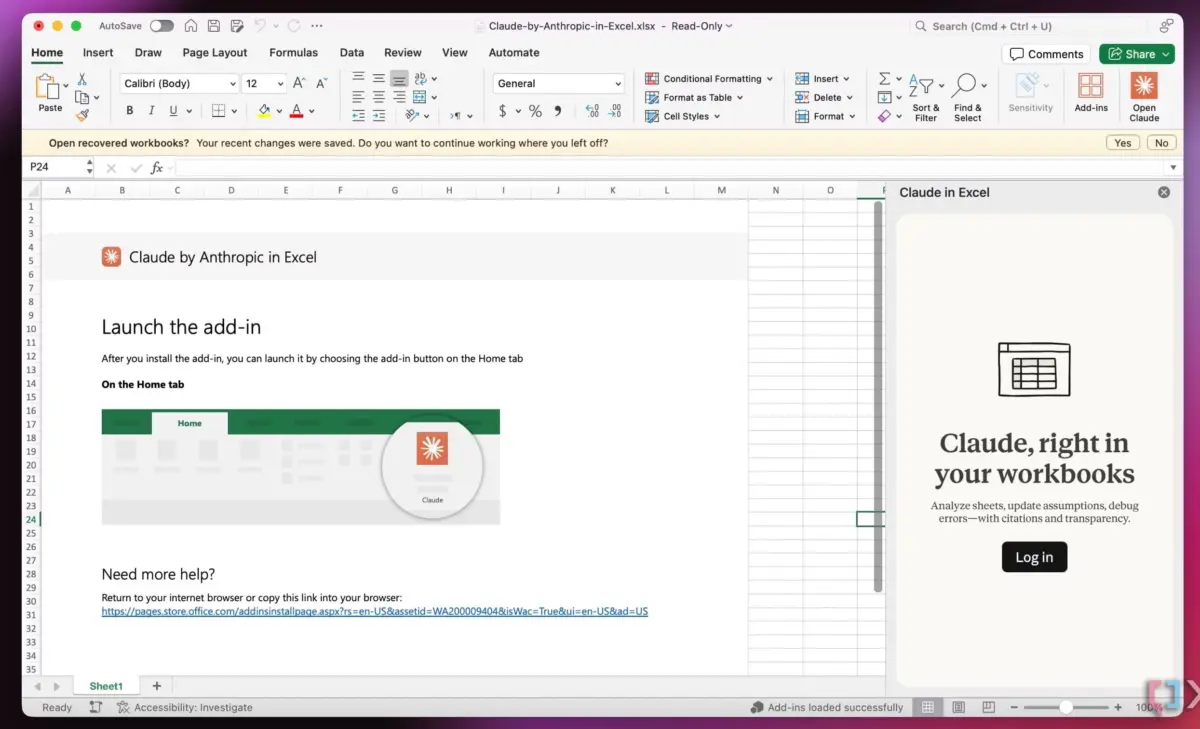
This reality has catalyzed a paradigm shift in user experience (UX) design, moving away from loud, disruptive "AI-first" architectures toward what industry experts term "Quiet AI" and system-level integrations. By embedding intelligence directly where work already happens—such as Claude operating natively within Microsoft Excel or intelligent file systems executing background rules based on folder intent—software developers are finally prioritizing user workflow over product novelty. This investigative feature examines the decline of standalone application fatigue, the rise of contextual, embedded AI, and how the future of interface design will be defined by invisibility rather than intrusion.
Detailed Chronology: The Evolution from Siloed Tools to Ambient Intelligence
To understand the current fatigue surrounding digital tools, one must trace the historical trajectory of software development and user interaction paradigms over the last twenty years.
Phase 1: The Fragmentation Era (Early 2000s–2010s)
During the boom of cloud computing and Software-as-a-Service (SaaS), the prevailing design philosophy was modular segregation. Every distinct business problem—be it customer relationship management, expense tracking, document collaboration, or task management—spawned its own dedicated application. While this era democratized access to specialized software, it inadvertently created the modern workspace dilemma: digital fragmentation. Users were forced to act as manual human bridges, copying data from one siloed environment, transforming it, and pasting it into another.
Phase 2: The "AI-First" Disruption (2022–2024)
Following the explosive public deployment of generative large language models (LLMs), the software market flooded with "AI-first" products. Companies raced to market with standalone chat interfaces, prompt-driven workspaces, and proprietary prompt-engineering tools.
- The Promise: Revolutionary productivity boosts through autonomous agents and generative workflows.
- The Reality: Users quickly grew weary of opening a separate browser tab to chat with an AI, copy-pasting the output back into their primary working environment, and dealing with hallucinations or loss of conversational context. The "AI-first" movement largely ignored decades of established design decisions and user mental models, demanding that humans conform to the constraints of the technology rather than vice versa.
Phase 3: The Pivot to Quiet AI and Embedded Systems (2024–Present)
Recognizing the unsustainable nature of tool fatigue, forward-thinking UX architects and platform engineers have begun shifting toward ambient, contextual intelligence. Instead of demanding that users adopt new platforms, developers are weaving advanced capabilities directly into foundational applications—such as spreadsheets, word processors, and file management directories. This evolution marks the death of the standalone workflow utility and the birth of "Quiet AI."
Supporting Context & Metrics: The Cost of Context-Switching
The urgency behind seamless integration is not merely aesthetic; it is deeply rooted in cognitive psychology and workplace efficiency metrics.
The Cognitive Toll of Context-Switching
Research in human-computer interaction consistently demonstrates that knowledge workers lose significant amounts of time and mental energy when switching between disparate applications.
- The Attention Residue Effect: When a user transitions from an active document editor to a secondary AI chatbot window, a fraction of their attention remains anchored on the previous task. Multiple studies indicate it can take upwards of 15 to 20 minutes to regain deep focus after a significant interruption.
- Error Rates: Fragmented workflows dramatically increase the likelihood of manual transcription errors, miscommunication between data pipelines, and missed deadlines. Juggling multiple interfaces forces users to hold disparate system rules in their working memory simultaneously.
The Rise of "High-Friction" Pain Points
According to modern UX feedback loops, user dissatisfaction does not stem from a lack of features, but from an excess of friction in three critical areas:
- High Severity: Tasks that carry significant risk if executed incorrectly (e.g., financial reporting, legal compliance, complex data modeling).
- High Frequency: Repetitive administrative duties that consume hours of daily bandwidth (e.g., document sorting, PDF summarization, formatting spreadsheets).
- High Frustration: Interactions requiring unnatural inputs, such as complex terminal commands or convoluted multi-turn prompt chains to achieve simple file manipulations.
When AI is introduced to solve these pain points via isolated, standalone tools, it often increases frustration rather than alleviating it. Conversely, embedding these capabilities directly into the user’s native environment yields immediate, measurable productivity gains.
Official Statements and Industry Insights: Redefining AI Interfaces
Design leaders and UX pioneers are increasingly vocal about the need to realign software development with natural human behavior.
Vitaly Friedman, renowned interface designer and creator of Design Patterns For AI Interfaces, has long argued against the uncritical adoption of disruptive tech tropes. In discussions surrounding modern UX patterns, Friedman notes:
"We often hear about shiny new tools that change everything (yet again). But in practice, most people don’t need more tools to deal with in their daily lives. What we actually need are better integrations of useful capabilities that neatly align with our existing and established mental models."
This perspective highlights a fundamental blind spot in contemporary product development: the tendency of tech companies to optimize for venture capital excitement rather than day-to-day utility. Users do not derive satisfaction from navigating complex terminal commands or marveling at "smart" workflows that require extensive configuration. They value efficiency that arrives without cognitive tax.
Furthermore, industry implementations are validating the concept of "Quiet AI." The integration of powerful language models directly into established productivity suites—such as Claude’s native integration within Microsoft Excel, PowerPoint, and Word—exemplifies this shift. Users can analyze rows and columns, generate summaries, or draft documentation directly inside their working environment. They are no longer forced to switch contexts, export CSV files, or disrupt their flow state.

Architectural Breakthroughs: Folder Instructions and System-Level AI
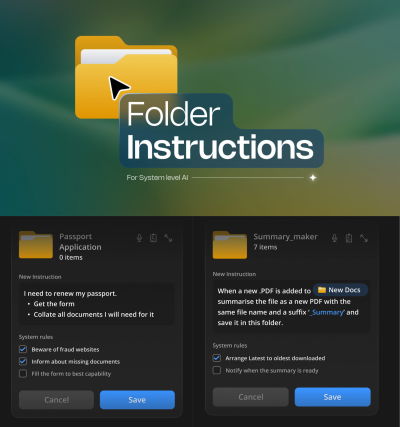
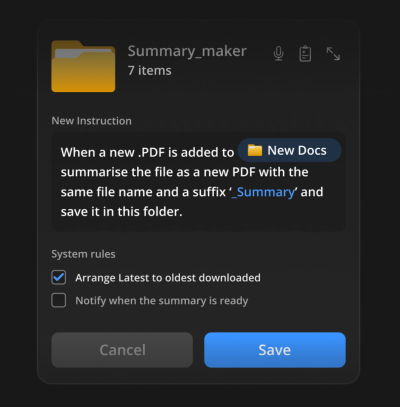
One of the most promising developments in reducing software friction is the concept of Folder Instructions for System-Level AI—pioneered by design thinkers like Karthikeya GS. This architectural pattern demonstrates how ambient intelligence can be integrated into foundational operating systems without requiring new applications.
How Folder Instructions Work
Traditionally, organizing digital files requires manual, tedious labor: creating directories, naming files consistently, moving documents to appropriate sub-folders, and generating summaries or metadata by hand.
Under the folder instruction paradigm, the digital folder itself becomes an intelligent agent governed by user-defined intent:
- Intent-Driven Configuration: Users assign specific rules and instructions to a folder based on its purpose (e.g., a "Passport Application" folder configured to automatically parse PDFs, verify document validity, and organize expiration dates).
- Local Scope and Permissions: Unlike cloud-based black-box agents that demand sweeping system access, folder instructions operate locally and are scoped specifically to the designated directory, giving users absolute control over privacy and execution boundaries.
- Ambient Execution: When a file is dropped into the folder, the system quietly executes the predefined instructions—summarizing text, formatting data, or validating contents—without requiring a chat prompt or an application switch.
This approach honors the user’s centuries-old mental model of physical file organization while supercharging it with invisible, automated assistance.
Future Outlook: The Next Decade of Human-Computer Interaction
As the software ecosystem matures past the initial hype cycle of generative AI, the trajectory for the next ten years points resolutely toward invisibility, ambient assistance, and hyper-integration.
1. The Disappearance of the "AI App"
Standalone AI wrappers and single-purpose chat apps will likely consolidate or fade into obscurity. Just as standalone spell-checkers disappeared once spell-checking became a quiet, native feature of every word processor, generative capabilities will dissolve into the fabric of operating systems and enterprise software suites.
2. Context-Aware Operating Systems
Future user interfaces will rely heavily on predictive, quiet intelligence that understands local context—reading screen states, recognizing active applications, and anticipating repetitive tasks without explicit prompting. The goal will be zero-UI for routine operations: the computer simply does what needs to be done based on established user intent.
3. Education and Design Ethics
As highlighted by specialized curricula such as Design Patterns For AI Interfaces, the next generation of product designers must be trained not in how to build louder, more attention-grabbing features, but in how to design responsibly, respectfully, and quietly. The measure of a great AI feature in the future will not be how often the user interacts with it, but how seamlessly it disappears into the background while getting the job done.

Conclusion
The era of accumulating digital tools is drawing to a close. Knowledge workers are no longer willing to sacrifice their focus on the altar of technological novelty. By rejecting the noisy disruption of "AI-first" silos and embracing the subtle, powerful efficiency of "Quiet AI" and system-level integrations like folder instructions, the software industry can finally deliver on its ultimate promise: amplifying human capability without multiplying human friction.