

Executive Overview
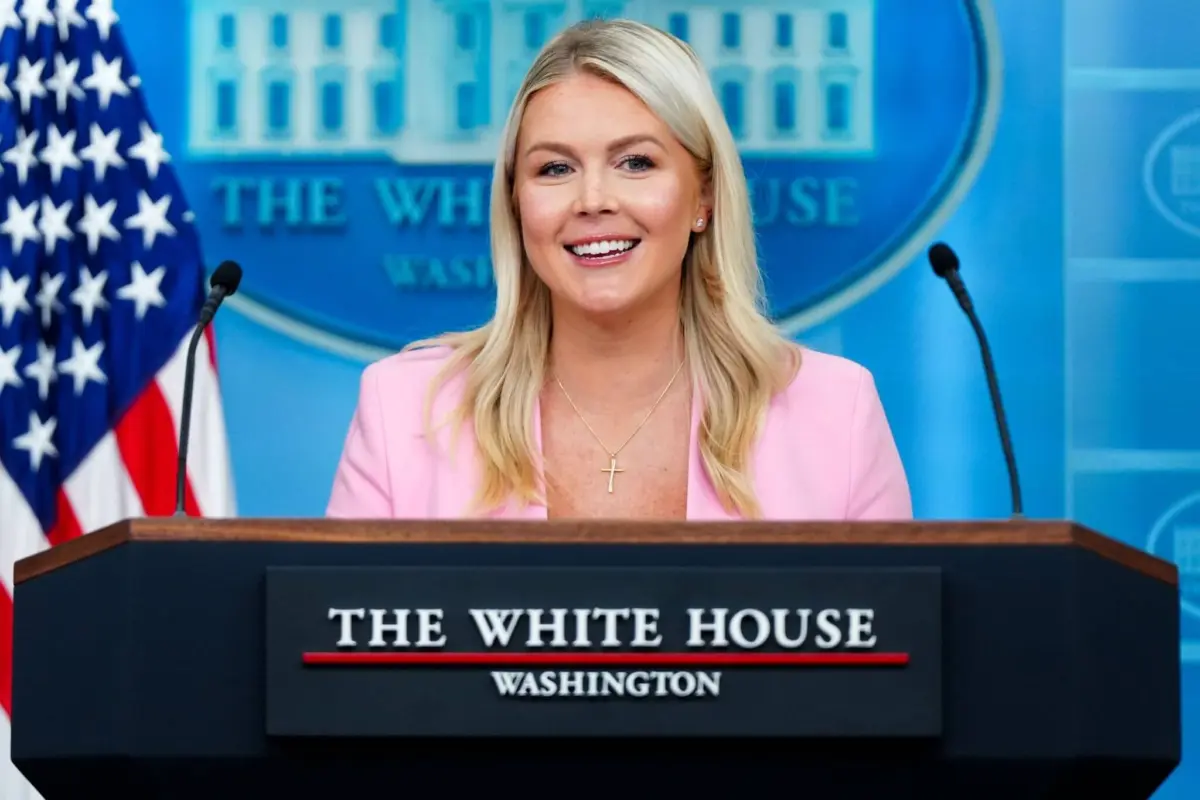
Less than two years after making history as the youngest White House press secretary ever appointed at the age of 27, Karoline Leavitt has officially stepped down from her high-profile role. Now 29, Leavitt’s departure marks the end of a turbulent, intensely scrutinized, and historically significant tenure at the podium of the executive mansion. Her final day, culminating on a Thursday, brought to a close an era defined by aggressive media defense, fierce political polarization, and the grueling realities of modern political communication.
In an emotional exit interview on NewsNation’s Morning in America with anchor Markie Martin, Leavitt described her exit as a "very surreal feeling" and characterized her time speaking on behalf of President Donald Trump as "the adventure of a lifetime." However, beneath the polished facade of political theater lies a deeply personal human story. Leavitt is stepping down just four months after welcoming her second child, balancing the relentless demands of a 24/7 news cycle with the responsibilities of motherhood, with her oldest child having just turned two the month prior.
Leavitt’s resignation casts a sharp spotlight on the structural incompatibilities between top-tier political leadership and family life, while also igniting broader discussions regarding internal friction within the West Wing. According to veteran journalists and political analysts, Leavitt’s exit may be just the beginning of a larger wave of staff departures amid growing internal discontent. As Washington speculates about her successor, the future of the White House press office hangs in the balance, facing questions about transparency, strategy, and the enduring influence of a president who acts as his own ultimate communications director.
Detailed Chronology: From Historic Appointment to Sudden Departure
The arc of Karoline Leavitt’s tenure as press secretary is a testament to the accelerated pace of contemporary American politics. Appointed to the post in her late twenties, Leavitt quickly established herself as one of the administration’s most visible and polarizing defenders.
The Early Days and Meteoric Rise
When Leavitt assumed the mantle of White House press secretary, she shattered age-barrier records, bringing a digital-first, combative media strategy to the daily briefing room. Her background as a campaign spokesperson and her alignment with the administration’s core populist base equipped her for the ideological battles that define modern media relations. Day after day, she stood before the White House press corps, fielding aggressive inquiries regarding policy decisions, legal controversies, and presidential statements with unyielding loyalty.
The Turning Point: Motherhood and Realignment
The tipping point for Leavitt’s departure arrived in May, with the birth of her second child. Navigating the responsibilities of two children under the age of three while holding the most demanding communications job in the free world proved to be an insurmountable logistical and emotional challenge.
In her interview with Markie Martin, Leavitt articulated the internal conflict that ultimately forced her hand:
"Welcoming my daughter into this world in May, your heart changes as a mom. Only mothers understand that. And I just prayed on it and talked to my husband night after night about what to do… Every day as a working mother is a challenge. You have to make sacrifices. You have to prioritize your time. And you have to say no to a lot of opportunities that come your way because you want to be there for bedtime with your kids every night."
Recognizing that the position demands round-the-clock dedication—literal 24/7 availability—Leavitt concluded that she could no longer divide her loyalties between her family and the Oval Office. On Thursday, she met with reporters outside the White House for the final time, offering a parting sentiment that caught many by surprise: "I’ll miss you guys. I know that’s probably not something anyone would expect me to say, but obviously it’s been great working with all of you."
Supporting Context & Metrics: Polarization, Press Reception, and Internal Friction
Leavitt’s tenure was rarely characterized by consensus. To her supporters, she was a fearless communicator who successfully defended a besieged administration against hostile media framing. To her critics, however, her tenure represented a departure from institutional norms of governmental transparency.
The Critical Perspective
Writing for The New Republic, Edith Olmsted captured the sentiment of the administration’s fiercest critics:
"So long Karoline Leavitt, we hardly knew ye — and what we did know, we didn’t like. As press secretary, Leavitt lied all the time. She parroted the president’s fake stories, conspiracy theories, and baseless accusations. She defended his lack of transparency and antagonized his critics."
This dichotomy underscores the partisan chasm through which modern White House press operations are viewed. The daily briefing room transformed under Leavitt from an informational clearinghouse into a stage for ideological proxy wars, where metrics of success were measured less by factual consensus and more by viral moments on social media and steadfast loyalty to the president’s narrative.
Internal Discontent in the West Wing
Beyond Leavitt’s personal reasons for stepping down, reporting from veteran journalists indicates that her exit coincides with broader systemic fatigue within the administration. During an appearance on Peter Alexander’s MS NOW show, State of Play, The New York Times White House correspondent Maggie Haberman offered a sobering assessment of the internal climate at 1600 Pennsylvania Avenue.
Haberman stated bluntly that it is "not a happy White House," noting that President Trump is "not in a great place with his staff, according to everyone we talked to." She added:
"He is lashing out a lot, which tends to happen when things are not going well. Most people have decided that they want to go do something else."
While Haberman acknowledged that incoming personnel will inevitably step up to fill vacancies, her commentary suggests that Leavitt’s departure is indicative of a broader exhaustion among top-tier staff, transforming the White House into an increasingly volatile workplace environment.
Official Statements and Succession Speculation
With Leavitt’s departure official, attention immediately turned to the question of succession. Who will step into the most visible media role in American politics?
The Search for a Successor
Leavitt noted that while the final decision rests entirely with the president, she has offered her input regarding the essential qualities required for the job. Early speculation focused on CNN contributor Scott Jennings as a potential frontrunner; however, subsequent reports indicated that such an appointment is unlikely.
Instead, insiders suggest that the White House may temporarily adopt a rotating roster of officials to conduct press briefings. This strategy aligns with a long-standing reality of the Trump administration, noted by Leavitt herself: President Trump ultimately acts as his own "true communications director and press secretary." Any individual occupying the physical podium must navigate the shadow of a chief executive who prefers to communicate directly with the public via digital platforms and impromptu press gaggles.
Future Outlook: What Lies Ahead for Leavitt and the Administration?
As Leavitt transitions out of public office and into private life, intense media speculation has followed her every move regarding her next career milestone.
Media Rumors and Reality Checks
Headlines recently buzzed with unverified reports, such as a Daily Mail claim suggesting Leavitt was in "secret talks to join TV’s most controversial show"—ABC’s daytime talk program The View. However, media analyst Brian Stelter of CNN quickly debunked the sensationalized implications of the report, clarifying that Leavitt had merely received a standard invitation to appear as a guest, rather than being tapped for a permanent co-hosting or official contributor role. Furthermore, sources at ABC confirmed that all existing co-hosts are returning for the upcoming season.
Despite the immediate need for a quieter lifestyle focused on her young children, media observers believe Leavitt’s post-White House trajectory is fairly predictable. Following in the footsteps of previous administration mouthpieces like Jen Psaki and Kayleigh McEnany, a transition into television commentary, political consulting, or high-profile media ventures remains a strong long-term possibility once her children are older.
Broader Implications for the Administration
For the White House, Leavitt’s exit serves as a critical stress test. Maintaining message discipline, managing adversarial press relationships, and projecting administrative stability are paramount as the political landscape shifts toward upcoming electoral cycles. Whether the administration can find a successor capable of matching Leavitt’s relentless media energy—while navigating the internal turbulence documented by veteran reporters like Maggie Haberman—remains one of the defining questions of the administration’s current chapter.
Ultimately, Karoline Leavitt leaves behind a complex legacy. By prioritizing her family at a pivotal juncture in her life, she has highlighted the profound human cost of high-stakes political service. Yet, her tenure will be remembered as a masterclass in aggressive modern political communication, setting a high—and fiercely contested—bar for whoever next steps up to the White House podium.