

Executive Overview
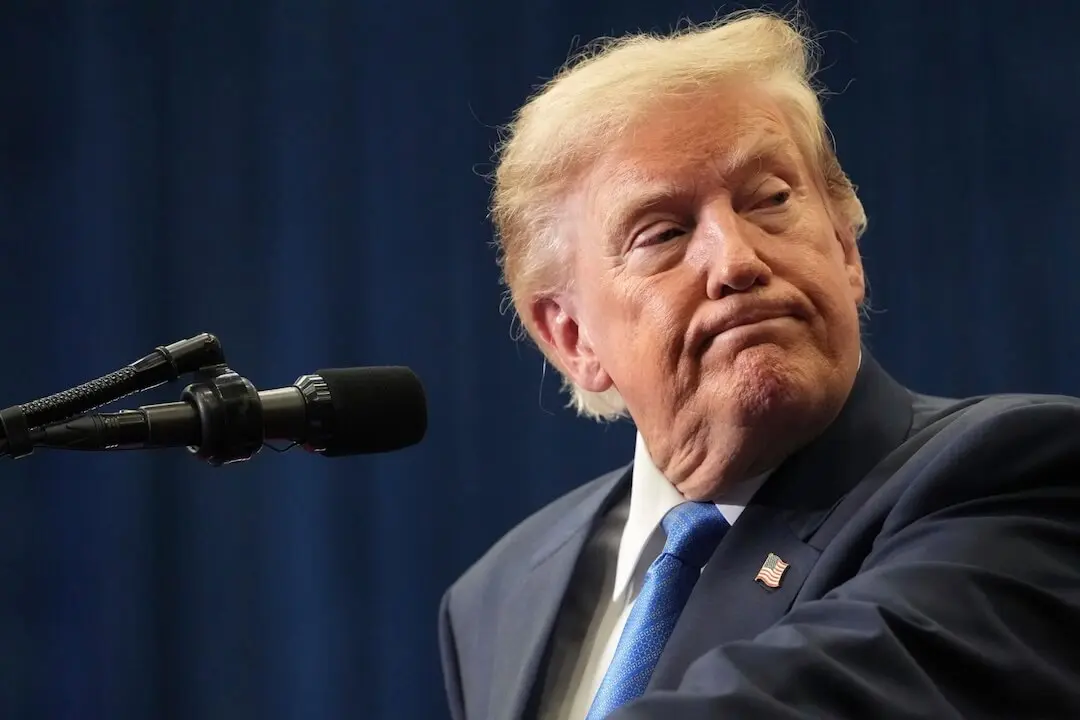
In an escalating series of confrontations between the executive branch and the American news media, tensions reached a critical inflection point over the final weekend of August 2026. President Donald Trump publicly demanded that the Federal Communications Commission (FCC) take punitive action against NBC News and Meet the Press moderator Kristen Welker. This extraordinary demand followed a segment in which Welker accurately analyzed the mixed electoral outcomes of candidates endorsed by the former president.
Simultaneously, the administration’s friction with the fourth estate extended well beyond broadcast studios. Over the same 48-hour period, President Trump launched a series of vicious personal attacks on New York Times reporter Maggie Haberman following coverage of a planned scheduling conflict regarding the 25th-anniversary 9/11 commemoration. Compounding these rhetorical assaults, the U.S. Department of the Treasury denied press credentials to veteran economic reporters from The New York Times, The Wall Street Journal, and Bloomberg News ahead of high-level G20 finance meetings in North Carolina.
These developments unfold against a backdrop of aggressive federal maneuvering. Under FCC Chairman Brendan Carr, the commission has increasingly crossed into territory traditionally viewed as protected by the First Amendment. From investigating corporate parent diversity policies to initiating license renewal challenges against major network affiliates, the regulatory agency is increasingly leveraged as an instrument of political retaliation. Combined with explosive reporting regarding the Pentagon’s covert installation of conservative social media influencers into civilian policy roles, these events paint a picture of a systematic campaign to undermine independent journalism, manage public perception, and silence institutional scrutiny.
Detailed Chronology of Events
The Meet the Press Dispute and FCC Intercession
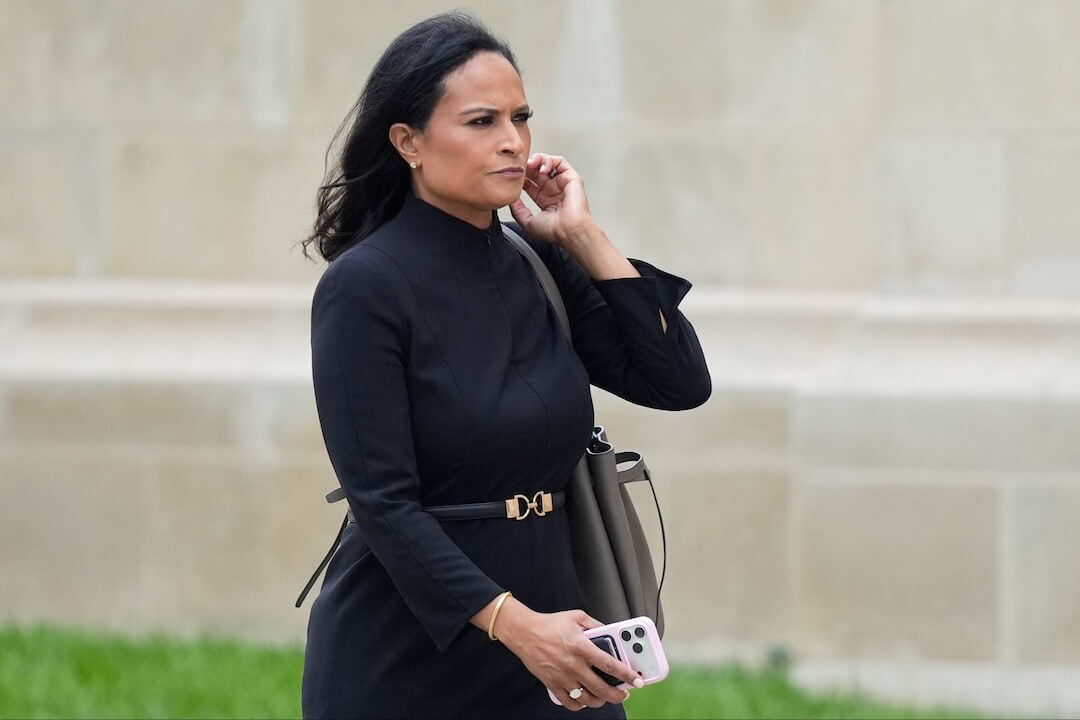
The sequence of events leading to President Trump’s latest demands began on Sunday morning, prior to the broadcast of NBC’s Meet the Press. During a promotional preview with Washington, D.C., NBC affiliate WRC-TV, moderator Kristen Welker discussed the political landscape ahead of the midterm elections. Welker noted that Trump would "loom large" over the upcoming contests, highlighting his endorsements in various primary races. She accurately observed that these endorsements had yielded mixed results, citing specific examples such as the primary victory of Senator Darline Graham in South Carolina.
Despite the analytical accuracy of Welker’s commentary, the characterization of his electoral record drew immediate ire from the former president. Taking to Truth Social, Trump denounced Welker as the "unpopular ‘hostess’ of the once great Meet the Press now considered Meet the Fake Press."
The rhetorical escalation quickly shifted from personal insult to institutional threat. Writing that Welker’s commentary constituted a "purposeful inaccuracy," Trump openly called for regulatory intervention:
"Because of this purposeful inaccuracy, she will be reported to the FCC for rebuke or punishment."
In subsequent posts, Trump directly addressed FCC Chairman Brendan Carr, urging the commission to take action against what he termed a "Threat to our Country." Trump wrote, "THE FAKE POLLS USED BY OUR CROOKED MEDIA ARE OUT OF CONTROL, AND SOMETHING MUST BE DONE ABOUT IT. FCC TO THE RESCUE!"
Targeting Print Media: Maggie Haberman and the 9/11 Ceremony Coverage
The hostility toward journalists was not confined to broadcast television. Just days prior, on Friday, August 27, The New York Times published an investigative report detailing that President Trump did not plan to attend the upcoming 25th-anniversary ceremony commemorating the September 11 terrorist attacks at the World Trade Center. According to four sources cited in the report, the decision stemmed in part from the organizers’ longstanding policy barring political remarks, which conflicted with the former president’s desire to deliver a speech.
In response, Trump unleashed a vitriolic attack on Truth Social targeting Times reporter Maggie Haberman, one of four journalists credited on the piece. Trump labeled Haberman an "unattractive person both inside and out" and characterized her as a "SCAMMER," "PHONY," and "stalker."
The attack drew immediate condemnation from across the media landscape, with The Daily Beast categorizing the remarks as "vile" and CNN anchor Jake Tapper calling them "disgusting and beneath the office." A spokesperson for The New York Times defended the integrity of the reporting, emphasizing that the story relied on multiple well-placed sources and that the White House communications team had been provided an opportunity to comment prior to publication without contesting the core facts.
The G20 Credential Denials in Asheville
As rhetorical battles played out online, tangible administrative barriers were erected against the press corps in North Carolina. Ahead of the Group of 20 (G20) high-level finance meetings in Asheville—where global leaders gathered to discuss inflation, bond markets, and ongoing international conflicts—the U.S. Department of the Treasury denied press credentials to several prominent economic journalists.
Among those locked out of the proceedings were Alan Rappeport, a veteran economic policy reporter who has covered the Treasury Department for The New York Times through nearly a dozen G7 and G20 summits since 2017, and Matt Grossman of The Wall Street Journal. Bloomberg News reporters were similarly excluded.
While the Treasury Department granted credentials to some international correspondents, Nicole Taylor, a spokesperson for The New York Times, condemned the move as "not just another disturbing effort by the administration to undermine independent journalism, but a blatant attempt to evade public scrutiny." The Treasury Department defended its roster by noting it had accredited nearly 300 journalists from various domestic and international outlets, asserting that Treasury Secretary Bessent would engage extensively with diverse media figures throughout the summit.
Supporting Context & Metrics: Regulatory Overreach and Political Realities
The Legal Boundaries of the FCC
President Trump’s demands that the FCC penalize journalists for reporting he dislikes run headfirst into established statutory law and constitutional precedent. Legal scholars and agency officials alike were quick to point out that the FCC possesses no legal authority to police journalistic commentary or punish broadcasters for political reporting.
The FCC’s own governing mandate explicitly states that the agency "cannot prevent the broadcast of any particular point of view." Anna Gomez, the lone Democratic commissioner on the FCC, issued a sharp public rebuke via social media:
"As I’ve said many times, the FCC has no authority to punish journalists this administration doesn’t like. These threats to press freedom are dangerous. They undermine the foundation of our democracy, and they have no place in it."
Despite these statutory limitations, media analysts have expressed deep concern over the posture of FCC Chairman Brendan Carr. Under Carr’s leadership, the commission has demonstrated an unprecedented willingness to push the boundaries of its regulatory authority.
Earlier in the year, Carr issued implicit threats to broadcasters over their coverage of the Iran war following similar Truth Social complaints from Trump. In April, Carr initiated a formal challenge to ABC’s local station licenses—an action widely seen as retaliatory, occurring just one day after Trump called for the firing of comedian Jimmy Kimmel. These regulatory challenges have often been rationalized through parallel investigations into corporate diversity, equity, and inclusion (DEI) practices at parent companies like Disney and Comcast.
Verifying the Record: The Reality of Trump’s Endorsements
Central to Trump’s anger toward Kristen Welker was her characterization of his primary endorsements as having "mixed results." A substantive review of the 2026 primary cycle demonstrates that Welker’s analysis was empirically accurate.
While Trump-backed candidates scored significant victories in several high-profile races—such as Texas Attorney General Ken Paxton defeating incumbent Senator John Cornyn, and Julia Letlow defeating Senator Bill Cassidy in Louisiana—the former president’s endorsement slate also suffered notable defeats. High-profile losses included gubernatorial candidates Burt Jones in Georgia and Randy Feenstra in Iowa, alongside Representative Cory Mills (R-Florida) in his reelection bid.
David Axelrod, senior political commentator and chief political analyst for CNN, captured the absurdity of the regulatory threats in a social media statement:
"This is absolute lunacy. The idea that the FCC should ‘rebuke’ broadcasters for noting the mixed results of candidates @POTUS has endorsed lately, or news orgs for polls reflecting his lagging #s, is pure harassment."
Official Statements and Institutional Responses
The coordinated pressure campaign has drawn robust defenses from major journalistic institutions, unions, and press freedom organizations.
- NBC News Statement: In the wake of Trump’s attacks on Kristen Welker, NBC News released a definitive statement backing its anchor: "Kristen is one of the best in the business and we stand by her."
- The New York Times Company: Responding both to the personal attacks on Maggie Haberman and the credential denials at the Treasury Department, Times representatives underscored the unwavering commitment of their reporting staff. Regarding the G20 exclusions, corporate communications emphasized that shutting out specialized economic journalists directly impairs the public’s right to understand critical financial and geopolitical policies.
- Department of Homeland Security (DHS): The administration also pushed back aggressively on investigative reporting from other fronts. When The New York Times published an exposé detailing harrowing accounts from deportees alleging abuse, shackling, and extreme confinement during ICE expulsion flights to Africa, the DHS issued a blistering response on social media. Dismissing the investigation as a "hoax," the agency claimed that media fabrications were fueling a dramatic increase in assaults against law enforcement personnel. The Times defended its reporting, noting that the investigation relied on exhaustive interviews with ten separate deportees and rigorous cross-verification with administrative records.
Future Outlook: The Intersection of National Security and Media Influence
As the political season intensifies, the intersection of executive power, regulatory oversight, and information control presents profound challenges for the future of American democracy.
The disclosure by The Washington Post journalists Dan Lamothe and Tara Copp regarding the Pentagon’s secret installation of conservative military influencers into civilian policy roles highlights a parallel strategy: bypassing traditional journalistic filters entirely while attempting to neutralize critical outlets. By embedding online influencers—who actively amplify Defense Secretary Pete Hegseth’s viewpoints and target administration critics—within government structures, the administration is actively reshaping the information ecosystem from within.
The normalization of regulatory threats against broadcast licenses, the weaponization of credentialing processes to exclude critical reporters, and the personal vilification of journalists reporting on matters of public interest signal a troubling paradigm shift. As legal battles—such as Disney’s First Amendment lawsuit against the FCC—continue to wind their way through the federal court system, the ultimate check on these executive overreaches will likely rest with the judiciary. Until then, the institutional guardrails protecting the freedom of the press face an unremitting pressure test unlike any seen in modern American history.