

Executive Overview
The traditional corporate organizational chart has long maintained a strict boundary between marketing and sales. Historically, the Chief Marketing Officer (CMO) operated as the custodian of brand equity, customer acquisition channels, and creative messaging, while the sales organization focused on pipeline execution, conversion rates, and revenue generation. However, macroeconomic headwinds, evolving consumer behaviors, and the demand for absolute capital efficiency are rewriting these corporate playbooks.
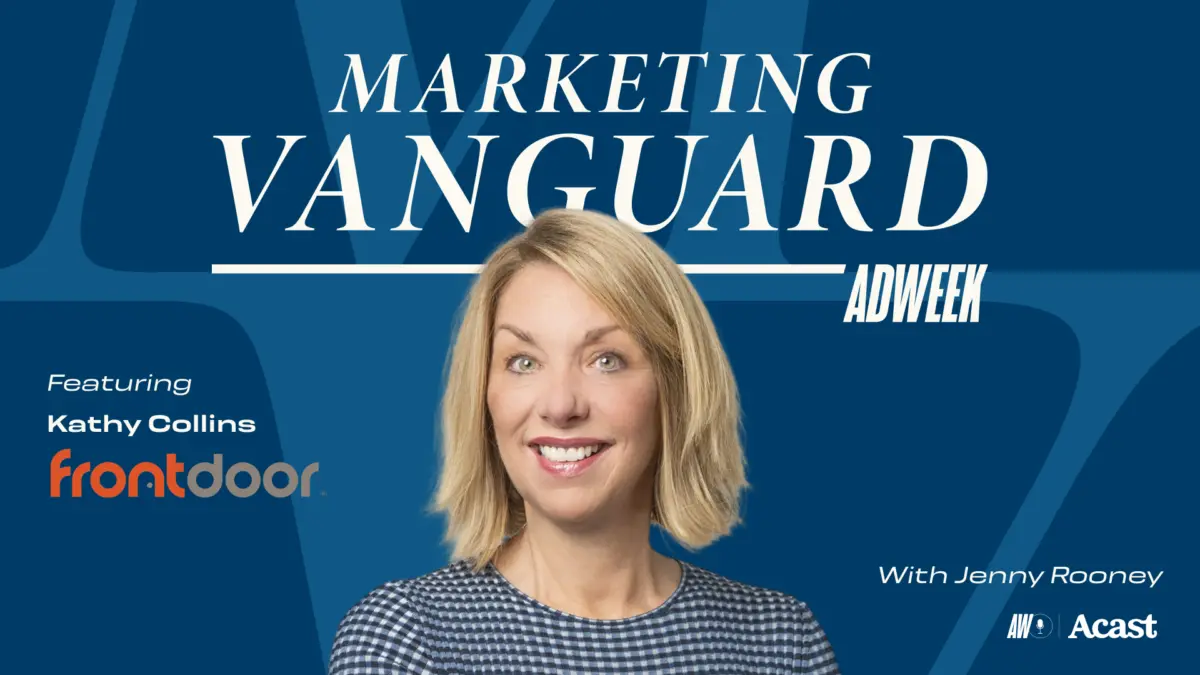
In the latest installment of Marketing Vanguard, host Jenny Rooney sits down with Kathy Collins, Senior Vice President and Chief Revenue Officer (CRO) at Frontdoor, to examine what happens when a career built on marketing excellence expands to encompass sales, finance, and total revenue accountability. Collins’ career trajectory—spanning iconic consumer brands such as Lee Jeans, H&R Block, Massage Envy, and now Frontdoor—serves as an illustrative case study for the modern executive. Her transition from CMO to CRO highlights a fundamental transformation: how an expanded scope redefines the questions leaders ask, shifts their relationship with financial metrics, and alters their communication strategies across multidisciplinary teams.
This article explores the mechanics of this executive evolution. Through a detailed analysis of Collins’ insights, we examine how cross-category fluency sharpens audience identification, why modern growth leaders must become conversant in unit economics, how leading a sales organization refines cross-departmental communication, and why legacy audience assumptions must be continuously challenged in an era of rapid demographic shifts.
Detailed Chronology: From Creative Stewardship to Financial Accountability
The CMO Dilemma: Designing the Brand vs. Owning the Bottom Line
For decades, the role of the CMO was evaluated largely through the lens of brand awareness, campaign reach, and creative impact. While these elements remain vital, they often kept marketing leadership at a remove from the hard financial mechanics of the enterprise. When a leader operates exclusively within a marketing silo, the metrics that keep them awake at night typically involve share of voice, cost per acquisition (CPA), and creative reception.
When Kathy Collins stepped into the role of Chief Revenue Officer at Frontdoor—having originally joined the company as CMO—her entire operational aperture shifted. Suddenly, the purview expanded beyond marketing to include direct ownership of sales operations and enterprise-wide revenue targets. This structural shift forced a rapid recalibration of her daily focus.
As Collins notes in her conversation with Rooney, the transition changes the fundamental nature of the questions an executive asks. Rather than asking simply whether a campaign is resonating creatively, a CRO must ask how that campaign alters the unit economics of the business, how it impacts lifetime value (LTV), and how it influences top-line performance down to the granular level of daily transactions.
Becoming "Obsessed with Numbers"
One of the most candid admissions Collins shares in the episode is her evolution into someone "a little obsessed with numbers." This is not to suggest that she was previously indifferent to data; rather, the nature and immediacy of the data changed entirely.
As CRO, Collins found herself working in lockstep with the Chief Financial Officer (CFO) and internal analytics teams on a daily basis. This level of collaboration requires a fluency in financial modeling that goes far beyond marketing analytics. Executives who bridge the marketing-revenue divide must understand:
- Marginal Return on Investment: Knowing precisely which financial levers can be dialed up or down in real-time to optimize cash flow and customer acquisition.
- Full-Funnel Unit Economics: Tracing a dollar spent on top-of-funnel brand awareness all the way through to bottom-line retention and renewal rates.
- Predictive Revenue Modeling: Using historical data not just to evaluate past campaigns, but to forecast quarterly revenue with institutional precision.
This numerical obsession transforms how strategy is executed. Marketing becomes less an exercise in aesthetic storytelling and more a disciplined, quantitative science where every creative asset is tied directly to measurable enterprise value.
Supporting Context & Metrics: Breaking the Silos of Sales and Marketing
The Communication Gap Between Sales and Marketing
One of the most persistent friction points in modern corporations is the cultural and linguistic divide between sales and marketing teams. Marketing professionals often speak in the nuanced, strategic language of brand positioning, emotional resonance, and audience personas. Sales professionals, by contrast, operate in the immediate, pragmatic language of quota attainment, objection handling, and pipeline velocity.
When Collins assumed leadership over the sales organization at Frontdoor, she experienced this linguistic barrier firsthand. She realized that strategies and concepts that sounded perfectly clear and compelling through a marketing lens often failed to land with the sales force.
Her solution to this challenge was deceptively simple yet profoundly effective: reframe the question through the listener’s lens.
If a sales team struggles to grasp a corporate initiative, the failure does not lie with the team’s comprehension; it lies with leadership’s delivery. By adapting her vocabulary, aligning strategic objectives with the daily realities of sales reps, and stripping away corporate jargon, Collins discovered that small linguistic adjustments could generate massive improvements in cross-functional alignment. When sales and marketing speak the same language, lead handoffs become smoother, messaging consistency improves, and overall conversion rates climb.
"Edutainment" and the Battle Against Category Sam
eness
Beyond organizational alignment, Collins’ marketing background has profoundly influenced how Frontdoor—and specifically its flagship brand, American Home Shield—approaches consumer engagement in a crowded marketplace.
Home warranties and home service plans are notoriously difficult products to market. They require consumer education because the mechanics of home repair coverage are not always intuitive to the average buyer. However, traditional educational content is often dry, easily ignored, and prone to blending into a "sea of sameness."
To combat this, Frontdoor embraced a strategy of "edutainment"—the intentional fusion of category education with high-impact humor. Through strategic collaborations with comedic talent like Rachel Dratch, the brand shifted its creative output. Instead of simply listing policy terms and coverage limits, Frontdoor deployed entertaining narratives that demystified the product while capturing consumer attention.
According to Collins, this approach has delivered measurable results across the entire funnel:
- Differentiation: In a category dominated by functional, commoditized messaging, humor creates immediate brand distinction.
- Awareness: Entertaining creative assets generate higher organic engagement and social sharing.
- Demand and Conversion: By lowering cognitive load through humor, consumers grasp the value proposition faster, leading to improved awareness-to-demand conversion rates.
Official Statements and Industry Implications
Challenging Audience Assumptions in a Shifting Economy
Perhaps one of the most strategic insights Collins shares is the danger of stagnant audience assumptions. For years, companies like Frontdoor historically targeted younger, first-time homeowners, building demographic profiles based on traditional life-stage milestones.
However, macroeconomic realities—including surging home prices, fluctuating interest rates, and evolving multi-generational living patterns—have radically disrupted these historical norms. Consumer segments are fluid, and demographic assumptions can expire far faster than executive teams realize.
Collins challenges marketers and revenue leaders to adopt an active posture of continuous validation:
"Your audience assumptions can expire faster than you think… Consumer segments move. The job is to keep checking the data, challenge inherited audience assumptions, and pivot when real behavior changes."
This philosophy underscores the core thesis of Collins’ career trajectory. Whether evaluating creative messaging, analyzing financial ledgers, or targeting demographic segments, the modern CRO must prioritize curiosity over comfort. Sticking to legacy playbacks because they worked five years ago is a recipe for irrelevance. True leadership requires the intellectual humility to look at changing market data, admit when previous assumptions no longer hold true, and pivot the organization accordingly.
Future Outlook: The Rise of the Unified Revenue Leader
The conversation between Jenny Rooney and Kathy Collins on Marketing Vanguard serves as a signpost for where executive leadership is heading. The era of the isolated CMO whose responsibilities end at the top of the funnel is giving way to a more integrated, financially accountable model of leadership.
As companies face complex economic landscapes, the artificial divide between brand building and revenue generation is dissolving. The leaders who will thrive in the coming decade are those who can seamlessly blend the creative empathy of a master marketer with the analytical rigor of a Chief Financial Officer and the operational pragmatism of a head of sales.
Key Takeaways for Future-Facing Executives:
- Embrace Financial Literacy: Marketing leaders aspiring to broader roles must master unit economics, lifetime value metrics, and full-funnel financial accountability.
- Translate, Don’t Just Communicate: Bridge the gap between departments by reframing strategies through the operational lens of the team receiving them—especially when aligning marketing and sales.
- Prioritize Edutainment in Complex Categories: Cut through commoditized markets by combining necessary consumer education with engaging, memorable storytelling.
- Interrogate Your Data Continuously: Never assume target demographics are static. Regularly audit historical audience assumptions against live behavioral data to catch shifts before competitors do.
By tearing down departmental silos and cultivating cross-functional curiosity, executives like Kathy Collins are redefining what it means to lead modern enterprises toward sustainable, profitable growth.
