

Executive Overview
As the political landscape braces for the high-stakes tremors of the upcoming midterm elections, President Donald Trump finds himself navigating an unfamiliar and deeply precarious political reality. Speaking from Dallas in what increasingly resembles a valedictory farewell tour, a fatigued and visibly defensive Trump offered a striking directive to his Texas base: “Hold your nose” and vote for controversial Senate candidate Ken Paxton, a man the president candidly labeled a “pain in the ass.”
The moment encapsulated the paradox of contemporary Republican politics. Trump, whose political longevity has been fueled by relentless persistence, transactional grievance, and an unmatched appetite for retribution, now confronts the very real prospect of a historic electoral wave against his party. With recent polling data and private admissions from the Oval Office pointing toward massive congressional losses next month, the administration’s grip on power is showing profound signs of strain.
This commentary explores the convergence of economic friction, foreign policy miscalculations, legal fallout, and internal party fracturing that threatens to upend the current political order. As the administration leans into polarizing rhetoric and controversial military posturing—typified by escalating tensions with Iran and heavy-handed immigration enforcement—critics and allies alike are forced to confront a central question: Does the current executive leadership possess enough political capital to weather the storm, or is the sun finally setting on the MAGA era?
Detailed Chronology: From Dallas to the Brink of the Midterms
The closing weeks of the 2026 midterm cycle have accelerated at a breakneck pace, marked by erratic campaign stops, administrative turmoil, and mounting anxieties within the Republican caucus.
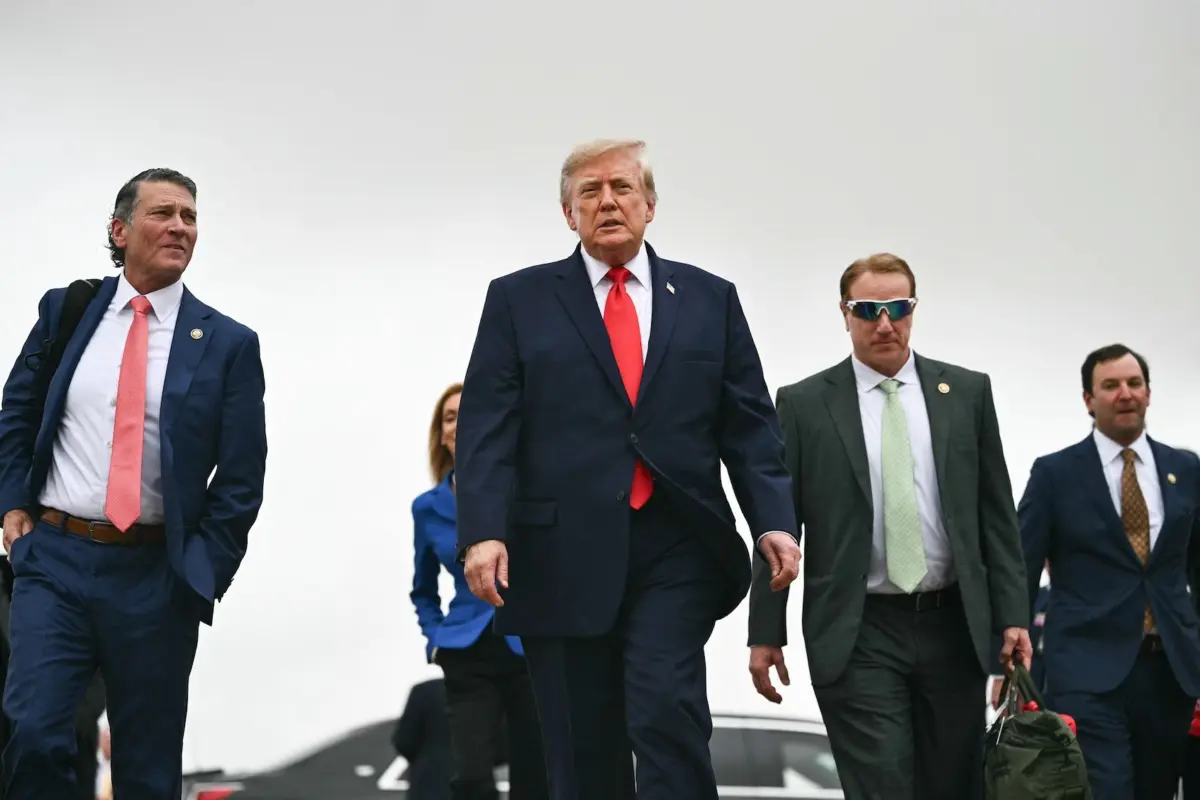
- October 1, 2026: Air Force One touches down at Dallas Fort Worth International Airport, marking the beginning of a high-stakes swing through Texas and Oklahoma. Stepping off the aircraft, President Trump wastes little time highlighting internal party friction, publicly endorsing Ken Paxton while simultaneously undercutting him with characteristic bluntness.
- The Rapid Transit: Following the Dallas event, the presidential motorcade—colloquially known as “The Beast”—reportedly accelerates to nearly 100 mph to make a connecting appearance in Oklahoma, symbolizing the frantic pace of a White House desperately trying to outrun worsening political headwinds.
- Early October White House Dispatches: In an extraordinary signal of vulnerability, an email circulated to supporters by the campaign acknowledges the profound gravity of the current political climate, explicitly warning, “This could be my final four weeks as president.” Simultaneously, public statements from the Oval Office regarding potential military escalations with Iran underscore a foreign policy strategy increasingly reliant on inflammatory rhetoric rather than diplomatic resolution.
- The Congressional Front: On Capitol Hill, congressional surrogates attempt to deflect mounting public scrutiny by launching aggressive counter-offensives against former special counsel Jack Smith. During a highly publicized and widely criticized Senate hearing, lawmakers attempt to paint Smith’s tenure as politically motivated, only to be rebuffed by the former prosecutor’s insistence on institutional norms and factual integrity.
Supporting Context & Metrics: The Anatomy of a Political Crisis
To fully understand the turbulence defining the current administration, one must examine the intersection of systemic institutional decay, controversial policy outcomes, and shifting voter sentiment.
Institutional Wear and Tear
The physical state of Washington D.C.’s iconic cultural and political landmarks has increasingly mirrored the chaotic administrative style of the executive branch. Observers have noted significant deterioration in public spaces, from structural delays surrounding the East Room of the White House and the Kennedy Center to neglected grounds near the National Mall. These localized indicators of institutional neglect have fed broader public narratives regarding government efficacy and stewardship.
Immigration Enforcement and Civil Liberties
The Department of Homeland Security, under the leadership of officials like Markwayne Mullin, has faced intense scrutiny following reports of at least 58 fatalities within Immigration and Customs Enforcement (ICE) facilities. Defending the administration’s hardline posture, leadership has routinely dismissed humanitarian concerns, framing rigorous detention policies as an unyielding enforcement of federal statute. This hardline approach has polarized suburban voters and galvanized opposition demographics ahead of the midterms.
Foreign Policy and Economic Pressures
- The Iran Standoff: Persistent threats of military intervention in the Middle East have unsettled global energy markets and raised diesel fuel prices domestically, placing an added burden on working-class families.
- Global Entanglements: Continued friction involving traditional NATO allies, shifting dynamics in Ukraine, and escalating trade tensions with China have created a complex geopolitical matrix that the administration struggles to manage cohesively.
Official Statements and Perspectives
The ideological battle lines shaping the midterms are vividly illustrated by the contrasting public postures of executive officials, congressional defenders, and institutional figures defending the rule of law.
The Executive Defense:
Defending the administration’s turbulent record, MAGA loyalists continue to champion the president’s direct style as an antidote to institutional stagnation. Supporters frequently frame controversies as deliberate challenges to a hostile political establishment. As one rally attendee in Dallas noted, the president’s unorthodox rhetoric is viewed by his base simply as "presidential humor"—a raw, unfiltered expression of anti-establishment sentiment.
The Defense of Institutional Integrity:
In stark contrast, former special counsel Jack Smith pushed back forcefully against legislative attacks, reiterating the nonpartisan foundation of his investigations:
"My service has spanned both Republican and Democratic administrations. I am not a politician, and I have no partisan loyalties. My career has been dedicated to serving our country by upholding the rule of law and the core principles on which our country was founded… The charges against President Trump were the result of the evidence. Grand juries in two separate districts reached this conclusion based on his actions."
Internal Party Anxieties:
Privately, Republican strategists have expressed profound alarm over the president’s open concessions regarding potential midterm losses. By publicly tying his personal political brand to vulnerable down-ballot candidates—and simultaneously encouraging voters to adopt aggressive tactics at the ballot box—Trump risks turning a standard legislative referendum into a volatile test of executive grievance.
Future Outlook: What Lies Beyond the Midterms?
As the nation looks past the immediate horizon of next month’s elections, the trajectory of American politics remains shrouded in uncertainty.
Should the electoral blowout widely anticipated by independent forecasters materialize, the immediate aftermath is likely to be characterized by intense political friction. A diminished legislative majority—or a complete reversal of congressional control—would effectively stall the administration’s remaining domestic agenda, likely triggering a cascade of recriminations, investigations, and institutional gridlock.
Furthermore, the post-Trump ecosystem within the Republican Party is already taking shape. Figures such as Vice President JD Vance and Senator Marco Rubio are quietly positioning themselves as potential heirs to the conservative movement. While Vance continues to navigate the populist lane carved out by Trump, other establishment figures attempt to project a steadier administrative hand.
Ultimately, the central question for American democracy is whether the political system can absorb and move past the era of grievance-driven polarization. As the administration’s core messaging increasingly relies on existential warnings and calls for retribution, the electorate’s verdict next month will serve as a definitive referendum on the sustainability of the current political model. Whether that verdict brings a renewed commitment to institutional stability or plunges Washington deeper into chaos remains the defining suspense of our time.