

Executive Overview
The intersection of digital subcultures, youth celebrity, and severe criminal allegations reached a critical juncture in Massachusetts courtrooms as prominent "looksmaxxing" influencer Braden Peters—widely known across digital platforms by his online moniker, "Clavicular"—surrendered to authorities to face felony charges of rape and drug-facilitated sexual assault. Peters, a central figure in the hyper-masculine, aesthetic-optimization online ecosystem, entered a plea of not guilty during his arraignment on Thursday, formally answering to a multi-count indictment stemming from an alleged incident in May 2025 at his family’s residence on Cape Cod.
The case has cast a harsh, analytical spotlight on the largely unregulated and insular world of "looksmaxxing"—a subculture dedicated to maximizing physical attractiveness through exercise, grooming, and sometimes extreme or unverified physiological interventions. Beyond the immediate legal gravity of the charges, the case highlights the complex legal and social dynamics surrounding influencer culture, where online clout, cross-country collaborations, and private personal interactions frequently blur.
During the Thursday proceedings, a Massachusetts judge ordered Peters to post a $10,000 cash bail, an amount his defense team successfully argued was appropriate given his lack of prior felony convictions and absence of flight risk. However, the court imposed strict conditions of release: Peters was mandated to surrender his valid passport and issued a strict no-contact order prohibiting any direct or indirect communication with his accuser, fellow internet personality Aleksandra Vasilevna Mendoza, known professionally as Alorah Ziva, or any online commentary regarding her.
As this high-profile legal battle unfolds, it serves as a watershed moment for the digital creator economy. The allegations cut to the heart of accountability within micro-celebrity circles, forcing platforms, followers, and legal systems to grapple with the offline consequences of online personas. This comprehensive report explores the timeline of the allegations, the anatomy of the civil and criminal filings, the emerging contours of the defense strategy, and the broader cultural implications of the "Clavicular" controversy.
Detailed Chronology: From Cape Cod to the Courtroom
The events precipitating Peters’ arrest and subsequent arraignment trace back to a spring weekend in May 2025, though the ripple effects of that encounter continue to reverberate across the digital landscape. To understand the gravity of the legal developments, it is essential to trace the chronology of the interactions between Peters and Mendoza, the shifting legal strategies, and the eventual intervention of the Commonwealth of Massachusetts.
The May 2025 Encounter
According to police reports obtained by The New York Times and court documents filed in connection with both civil and criminal proceedings, the alleged offenses took place on May 23, 2025. At the time, Mendoza was 17 years old. She had traveled to Cape Cod to visit Peters at his family’s private estate, a meeting ostensibly arranged for collaborative content creation within the niche influencer ecosystem they both inhabited.
What began as a professional networking opportunity among internet personalities quickly deteriorated, according to Mendoza’s initial legal complaints. Investigators allege that during the visit, Peters provided alcohol to Mendoza—who was under the legal drinking age of 21—leading to a state of profound intoxication. Court filings outline a sequence of events wherein Mendoza became incapacitated, rendering her legally and physically incapable of granting consent. The accusations detail multiple instances of non-consensual sexual contact, including an incident where Mendoza awoke to find Peters penetrating her while she was asleep. Furthermore, the civil and police reports introduce alarming allegations regarding the administration of an unapproved substance, described in documents as potentially containing methamphetamine-like properties, without her knowledge or informed consent.
The Civil Action and Strategic Refiling
The legal fallout initially materialized in the civil courts. In April 2025 (with subsequent filings and amendments aligning with the timeline of events), Aleksandra Vasilevna Mendoza filed a civil lawsuit against Peters in federal or state jurisdiction, leveling severe claims that included civil battery, intentional infliction of emotional distress, and fraud. The initial civil complaint laid bare the harrowing details of the Cape Cod encounter, establishing a public record of the accusations that would later form the bedrock of the criminal indictment.
However, as the legal strategy evolved, Mendoza’s legal representation executed a tactical pivot. In October, Mendoza refiled the civil suit, strategically removing the explicit sexual assault allegations from the civil complaint. Legal analysts observing the case noted that this maneuver was designed to streamline the civil proceedings and avoid evidentiary conflicts or depositions that might inadvertently complicate or compromise the impending criminal prosecution. Mendoza’s attorney maintained that the adjustment to the civil docket was procedural and would have no bearing on the vigor with which the Commonwealth pursued criminal accountability.
Grand Jury Indictment and the September Charges
Recognizing the severity of the allegations, law enforcement and prosecutors in the Commonwealth of Massachusetts launched a comprehensive investigation. In September, the state formally escalated the matter by filing a formal criminal indictment against Peters.
The state’s charges were comprehensive, encompassing two distinct felonies and a related misdemeanor:
- Rape: A primary felony charge addressing the core allegations of non-consensual sexual intercourse.
- Drug Charge Related to Sexual Intercourse: A secondary felony addressing the administration or utilization of controlled or unapproved substances in connection with the sexual assault.
- Procuring Liquor for Underage Individuals: A misdemeanor charge stemming from the provision of alcohol to Mendoza, who was 17 at the time of the incident.
The Arraignment and Bail Proceedings
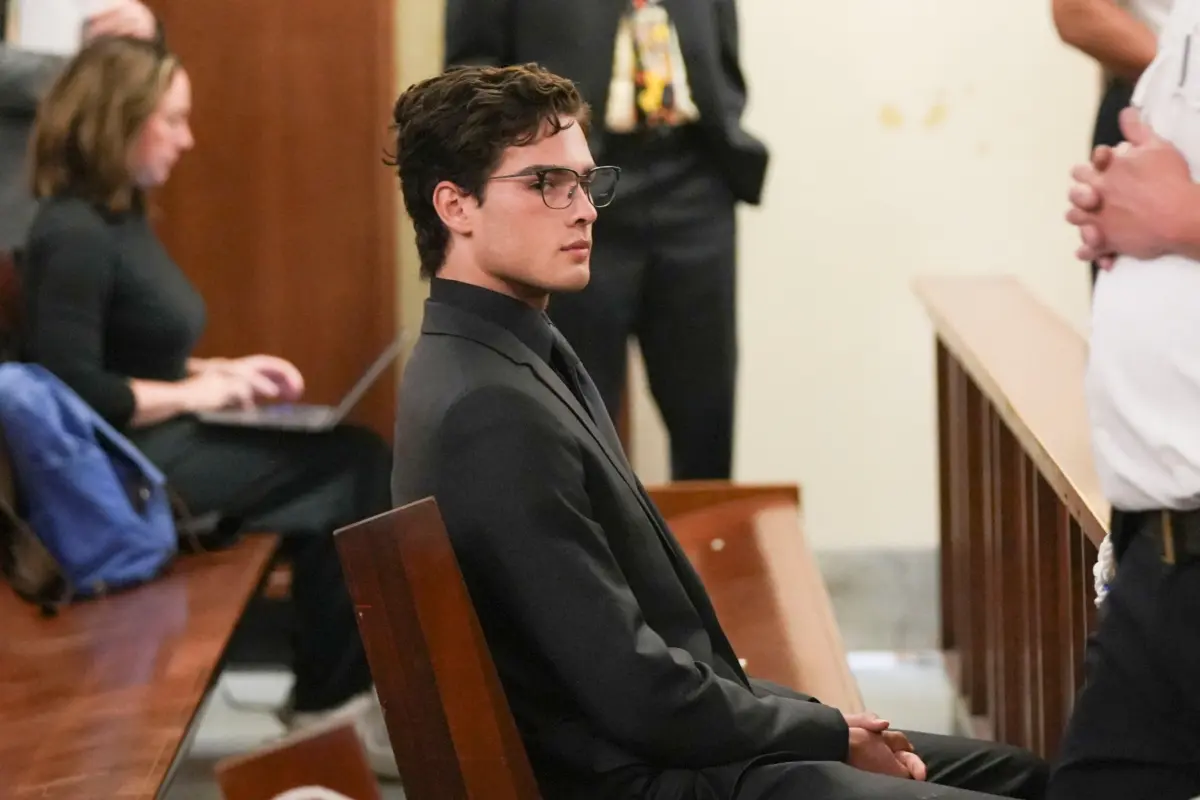
The legal trajectory culminated on Thursday with Peters’ formal arraignment in a Massachusetts courtroom. Pleading not guilty to all counts, Peters stood before the bench as legal arguments regarding his pre-trial detention were weighed.
The preceding day, Peters’ defense attorneys mounted an aggressive push for a minimal bail structure, submitting comprehensive legal memoranda detailing why their client should not be remanded or subjected to exorbitant financial hurdles. They argued successfully that Peters—despite his controversial public profile—maintained deep community ties, had no history of felony convictions, and possessed no incentive to flee jurisdiction.
Ultimately, the presiding judge set bail at $10,000, which Peters paid in cash on Thursday afternoon. As conditions of his release, and in addition to surrendering his passport to prevent international travel, Peters was bound by strict judicial orders to maintain absolute radio silence regarding Mendoza, both in physical proximity and across all digital platforms.
Supporting Context & Metrics: The "Looksmaxxing" Phenomenon
To fully contextualize the legal troubles of Braden Peters, one must examine the peculiar cultural ecosystem that propelled him to prominence. "Clavicular" was not a mainstream celebrity in the traditional Hollywood mold; rather, he was a titan of a burgeoning, highly specialized digital subculture known as "looksmaxxing."
Defining "Looksmaxxing"
"Looksmaxxing" is an internet-born portmanteau of "looks" and "maximizing." It represents an extreme evolution of physical self-improvement, heavily rooted in online forums, TikTok, and YouTube communities. Adherents—largely young men—engage in rigorous, sometimes obsessive regimens designed to optimize their facial structure, body composition, and overall aesthetic appeal.
The practices range from conventional fitness and grooming routines to more controversial techniques, such as "mewing" (tongue posture exercises claimed to reshape the jawline), bone-smashing (an extreme and dangerous pseudoscience involving intentional micro-fracturing of facial bones), and the use of unverified supplements and pharmaceuticals.
Within this ecosystem, influencers like Peters achieved micro-celebrity status by dispensing advice, documenting their own physical transformations, and cultivating loyal digital armies of impressionable followers. Peters, adopting the moniker "Clavicular" (an homage to the clavicle bone structure prized within the community as a marker of masculine frame), amassed a significant following by projecting an aura of aesthetic mastery and confidence.
The Economics of Infamy
The "looksmaxxing" community operates on engagement metrics driven by controversy, hyperbole, and rigid ideological frameworks regarding masculinity and social hierarchy. For influencers like Peters, digital real estate translates directly into monetization opportunities through brand partnerships, private coaching, Discord communities, and merchandise sales.
However, this hyper-online lifestyle often creates a dangerous disconnect between digital personas and real-world accountability. Peters’ career had already been marred by antecedent controversies prior to the Massachusetts rape charges. Notably, he previously courted mainstream and digital condemnation after posting content that depicted him shooting a dead alligator in Florida—an incident that showcased a pattern of leveraging shock value and provocative behavior for online engagement.
The juxtaposition of Peters’ curated, untouchable digital persona with the sobering reality of a felony courtroom underscores a broader cultural reckoning. As subcultures migrate from obscure internet forums to mainstream visibility, the legal systems governing physical spaces are increasingly forced to intervene when digital bravado spills over into real-world criminality.
Official Statements and Legal Posture
As the case transitions from the investigative phase to pre-trial litigation, both the prosecution and the defense are locking in their respective legal strategies. While official commentary from the principals involved remains measured, court documents and preliminary motions have provided a clear window into how the trial will likely be contested.
The Defense Strategy: Anticipating Trial Arguments
During Wednesday’s bail hearings, Peters’ defense team offered a preliminary glimpse into the factual assertions they intend to deploy at trial to contest the charges. Rather than relying solely on procedural technicalities, the defense’s filings suggest a strategy centered on contextualizing the post-incident relationship between Peters and Mendoza.
According to court records cited by NBC News, Peters’ lawyers argued that the interactions between the two influencers following the alleged May 23 incident undermine the credibility and consistency of the accusations. The defense highlighted instances where Mendoza allegedly continued to collaborate with Peters on social media content well after the date of the reported assault. Furthermore, defense filings pointed to statements made by Mendoza in which she characterized Peters as "so nice."
Crucially, the defense submitted a piece of physical evidence designed to challenge the narrative of non-consensual victimization: a handwritten note allegedly authored by Mendoza. According to the court filings, the note reads:
"Braden, you have my loyalty 100% […] I admire the man you are."
Legal experts note that while such evidence is frequently deployed in pre-trial motions to argue for reduced bail or to challenge the accuser’s credibility, its admissibility and persuasive power before a jury will be rigorously tested during trial proceedings. Defense counsel is expected to frame the encounter as consensual or argue that subsequent communications contradict the severe nature of the criminal charges.
Prosecution and Accuser Stance
Conversely, the Commonwealth of Massachusetts, backed by the detailed investigative findings of local law enforcement and the corroborating medical and police reports obtained by The New York Times, is positioning the case as a severe violation of statutory and common law regarding consent and incapacitation.
The prosecution’s case relies heavily on the principle of legal incapacity due to intoxication, arguing that even in the presence of subsequent communications or collaborative digital output, an individual who is profoundly intoxicated or asleep cannot legally grant consent. The timeline of the civil suit, the police reports documenting Mendoza’s age at the time (17), and the chemical allegations regarding unapproved substances form a formidable prosecutorial matrix that prosecutors believe warrants felony conviction.
Mendoza’s legal representation has maintained a disciplined public posture. Following Thursday’s arraignment, counsel for Mendoza declined to offer any public comment on Peters’ not-guilty plea, choosing instead to let the criminal indictment and ongoing legal filings speak for themselves. Similarly, representatives for Braden Peters declined to issue statements outside of the courtroom, adhering to a strict legal containment strategy while Peters navigates his release conditions.
Future Outlook: What Lies Ahead for the Case
As Braden Peters returns to the public eye under strict judicial constraints—sans passport, monitored by the court, and legally barred from digital contact with his accuser—the broader ramifications of the "Clavicular" case are only beginning to unfold.
Anticipated Legal Timeline
The case is currently slated to move through the Massachusetts superior court system over the coming months. Pre-trial motions will likely dominate the immediate legal calendar. Defense attorneys are expected to file motions to suppress certain evidence or challenge the specifics of the drug-related felony charge, while prosecutors will work to solidify their witness list and expert testimonies regarding chemical incapacitation and digital forensics.
A trial date, while not yet firmly cemented on the docket, is anticipated to draw intense national and international media scrutiny. The trial will test the judiciary’s ability to navigate complex digital subcultures, examining whether online personas, collaborative social media posts, and internet-era dynamics can be fairly evaluated within the traditional framework of criminal jurisprudence.
Cultural and Industrial Fallout
Beyond the courtroom, the case serves as a cautionary tale for the creator economy. Platforms that host "looksmaxxing" content and similar hyper-masculine or aesthetic-optimization communities are facing renewed scrutiny regarding the offline behaviors of their top-tier creators. The swiftness with which Peters’ digital empire has been overshadowed by legal infamy demonstrates that platform popularity provides no immunity from the rule of law.
For the community of followers who once looked to "Clavicular" for guidance on self-improvement, the arraignment represents a jarring reality check. The trial will undoubtedly force a broader reckoning within digital subcultures regarding accountability, consent, and the stark divide between online performance and offline criminality.
As the legal wheels grind forward in Massachusetts, the case of Braden Peters stands as a defining legal battleground of the influencer era—one where the pursuit of digital perfection collided irrevocably with the unyielding gravity of the criminal justice system.